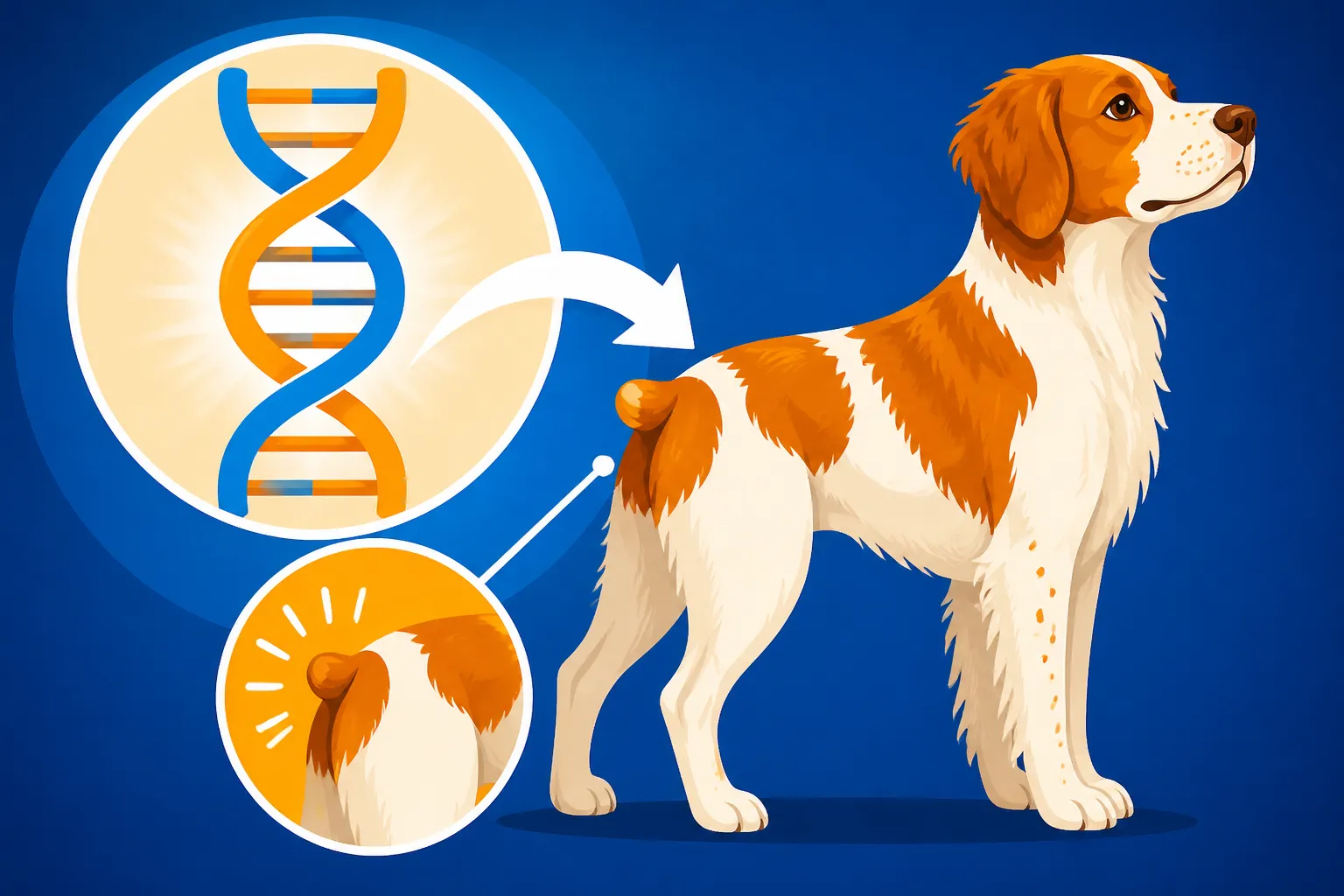
Which Gene Makes a Brittany Tailless
A Brittany with a naturally short tail may have inherited a well-known canine gene variant, but appearance alone cannot confirm the cause. A puppy may also have a docked tail or a different congenital condition. This guide explains which gene is involved, how inheritance works, what DNA testing can tell you, and what owners and breeders should consider next.
The gene linked to a Brittany’s natural bobtail
The T-box gene and the natural bobtail variant
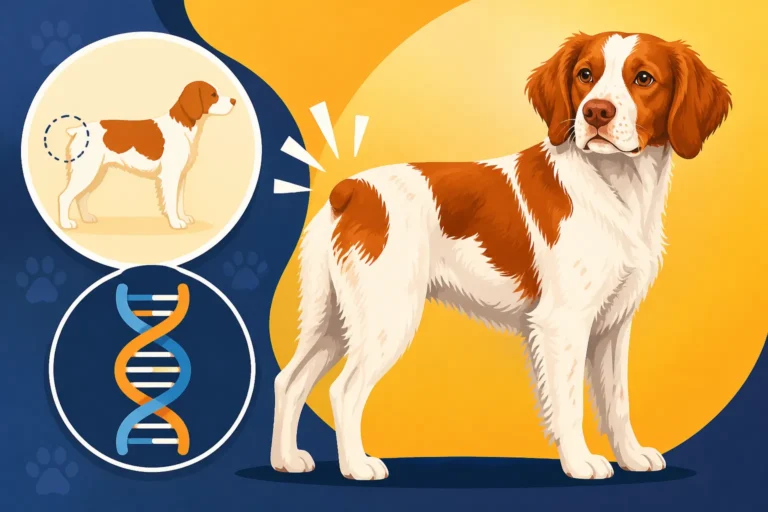
The gene most commonly associated with a natural bobtail in dogs is TBXT, also known as the T-box transcription factor gene or simply the T gene. It plays a role in early development, including the formation of the spine and tail. A particular variant in this gene has been linked to naturally shortened tails in several dog breeds.
A Brittany that carries the variant may be born with a short tail or a small tail stump rather than a full-length tail. The length can vary: one puppy may have a barely visible stump, while another has a more noticeable short tail. That variation means you can’t reliably identify a dog’s genetic status just by looking.
You may see the term natural bobtail shortened to NBT in breed discussions. It describes a tail that is naturally short from birth, rather than one shortened by surgical docking. The gene most often connected with this trait is discussed in Why Some Brittanys Are Born Without a Tail and Which Gene Makes a Brittany Tailless.
How the variant is inherited
The natural bobtail variant is generally described as dominant: a dog with one copy may show the trait. However, the inheritance is not as simple as “two bobtailed parents make a litter of bobtailed puppies.” A dog’s visible tail length can vary, and an individual’s appearance does not tell you with certainty which copies of the variant it carries.
There is an important breeding concern. In dogs, inheriting two copies of the commonly discussed TBXT natural bobtail variant has been associated with embryonic loss. That means some embryos may not survive to birth when both parents pass on the variant. The exact outcomes in a particular mating should be discussed with a veterinarian or a veterinary geneticist using the dogs’ test results, rather than guessed from tail length.
This is one reason to ask about the parents’ health and genetic testing instead of relying on a breeder’s description such as “natural bobtail line.” For background on family history and variation within the breed, see Whether a Natural Bobtail Runs in Brittany Lines.
How to tell a natural bobtail from a docked tail
A short tail does not prove which cause is responsible
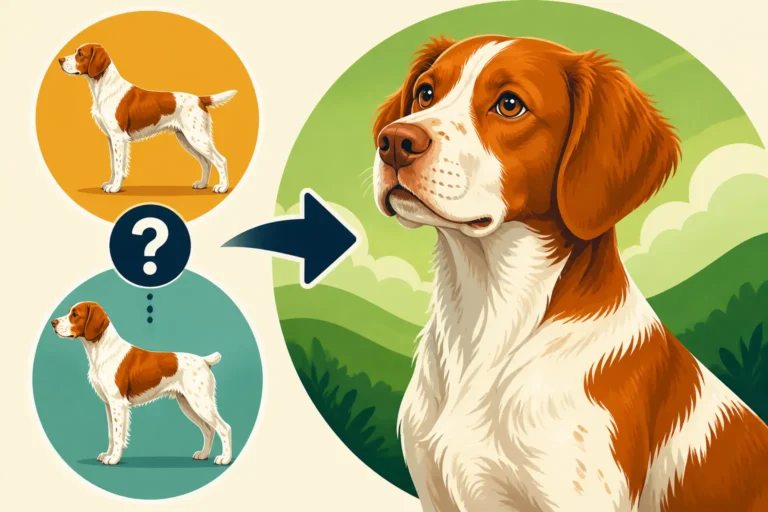
A Brittany with a short tail might have been born that way, had its tail docked, or have a different developmental difference affecting the tail. A photograph or a quick glance usually can’t distinguish these possibilities with confidence, especially if the dog is an adult or its early records are incomplete.
If you’re considering a puppy, ask the breeder directly whether the tail is natural or docked and request supporting records. For a rescue dog, the history may be unknown. In that case, a veterinarian can examine the tail and review any available records; a DNA test may help determine whether the dog carries the known variant, though it cannot explain every possible cause of a shortened tail.
The distinction matters for both health history and breeding decisions. Natural bobtail is a genetic trait. Docking is a procedure performed after birth, and its legality and acceptance vary by location. The related guides Whether a Brittany's Tail Is Docked and How Long a Docked Brittany Tail Should Be offer more context on the difference.
What a DNA test can and cannot establish
A test that checks for the known TBXT variant can tell you whether that particular variant was detected in the dog’s sample. It may be useful when confirming a suspected natural bobtail or planning a breeding. Follow the testing provider’s sample instructions carefully, since a sample that is contaminated or collected incorrectly may affect the result.
A DNA result is not a full diagnosis of every tail or spinal condition. A negative result for the known variant does not mean a short tail has no genetic explanation; it means that particular variant was not identified. Nor does a positive result replace a physical examination if the dog has pain, weakness, trouble walking, or problems controlling urination or bowel movements.
If you are buying a puppy, ask for the actual report rather than a verbal assurance that the dog is “genetically clear” or “naturally tailed.” Clarify which variant was tested and whether the result belongs to the puppy or its parents. If the result will influence a breeding decision, have a veterinary professional help interpret it.
What Brittany owners should watch for
Tail length alone is not a health diagnosis
A naturally short tail, by itself, does not tell you that a Brittany is unwell. Many dogs with natural bobtails live active lives, and tail length should not be treated as a diagnosis of spinal disease. What matters is the dog’s overall function and whether there are signs that warrant veterinary attention.
Contact a veterinarian if a puppy or adult has persistent pain around the tail or lower back, unusual weakness in the hind legs, difficulty walking, or changes in bladder or bowel control. These signs are not proof that the bobtail variant is responsible; they can have several causes and deserve an examination.
During a routine visit, mention that your dog has a natural bobtail or an unexplained short tail. Share any DNA results and the puppy’s history if you have them. This gives the veterinarian a clearer picture without assuming the tail shape explains every symptom.
Everyday care for a short tail
For most owners, caring for a bobtailed Brittany is straightforward. Check the tail area during ordinary grooming, especially if the coat is thick or the dog has a small stump that is easy to overlook. Look for redness, swelling, scabs, tenderness, or a change in how your dog carries its tail. If you notice a problem, avoid applying medication or attempting home treatment without veterinary guidance.
A short tail also does not automatically mean a dog needs special equipment. Choose a well-fitting collar or harness based on the dog’s body and activity, and make sure it does not rub. If you are gathering general grooming or travel supplies, Chewy is one retailer owners may browse; check product sizing and suitability for your dog rather than choosing an item based on tail length alone.
Some owners wonder whether a bobtail affects communication or movement. Dogs use more than their tails to communicate, including posture, facial expression, and movement, but tail shape can influence the signals another dog sees. Give greetings space and watch the dogs’ whole body language. For more on the physical role of the tail, see Whether a Brittany's Tail Affects Its Balance.
Responsible breeding and puppy-buying questions
Why two bobtail dogs should not be paired casually
Because the commonly discussed variant may have serious consequences when inherited in two copies, breeders should not make mating decisions based solely on whether a dog looks bobtailed. A short tail does not reveal the dog’s full genetic status, and a long tail does not necessarily answer every question about its ancestry or test results.
Before a planned litter, breeders should identify which dogs have been tested, understand how the specific variant is inherited, and discuss the mating with a veterinarian or veterinary geneticist. They should also consider the full health picture of both dogs, not just the tail trait. A puppy buyer can ask what testing was done and how the results influenced the pairing.
If a breeder cannot explain the difference between a natural bobtail and a docked tail, or cannot provide clear records for claims about genetic testing, it is reasonable to pause and ask more questions. The guide Whether Two Bobtail Brittanys Should Be Bred covers the breeding question in more detail, while How Many Brittanys Are Born Tailless discusses how the trait appears in the breed.
Questions to ask a breeder or rescue
When talking with a breeder, ask whether the puppy was born with a short tail or had a docked tail, and whether documentation supports that history. If the breeder says the puppy is a natural bobtail, ask whether the relevant genetic test was performed and request the report. You can also ask whether the parents were tested and how the results informed the breeding plan.
With a rescue dog, you may not be able to recover the full history. That is common, and it does not make the dog a poor choice. Have a veterinarian examine the tail and note any concerns in the medical record. If knowing the genetic cause matters to you or affects future breeding plans, ask whether a DNA test is appropriate.
When comparing puppies, don’t treat a naturally short tail as proof of better health, a special working ability, or a particular temperament. It is one inherited physical trait. A careful decision considers health records, temperament, the breeder’s openness, and whether the dog’s needs fit your household.
Disclaimer
This article is for general informational purposes only and does not constitute professional advice. Laws, prices and regulations vary by location and change over time. Consult a qualified professional for guidance on your specific situation.