Whether a Natural Bobtail Runs in Brittany Lines
A Brittany puppy with a tiny tail can leave you wondering whether it was born that way or docked. Natural bobtails do occur in Brittany lines, but tail length alone cannot tell you why a particular dog has a short tail. This guide explains how the trait is inherited, what DNA testing can and cannot clarify, and what to ask a breeder.
Do natural bobtails run in Brittany lines
The short answer is yes
Natural bobtails occur in Brittanys, and the trait can run in family lines. Some puppies are born with tails that are noticeably shorter than a typical full-length tail. The amount of tail can vary, though, so “bobtail” does not always mean completely tailless.
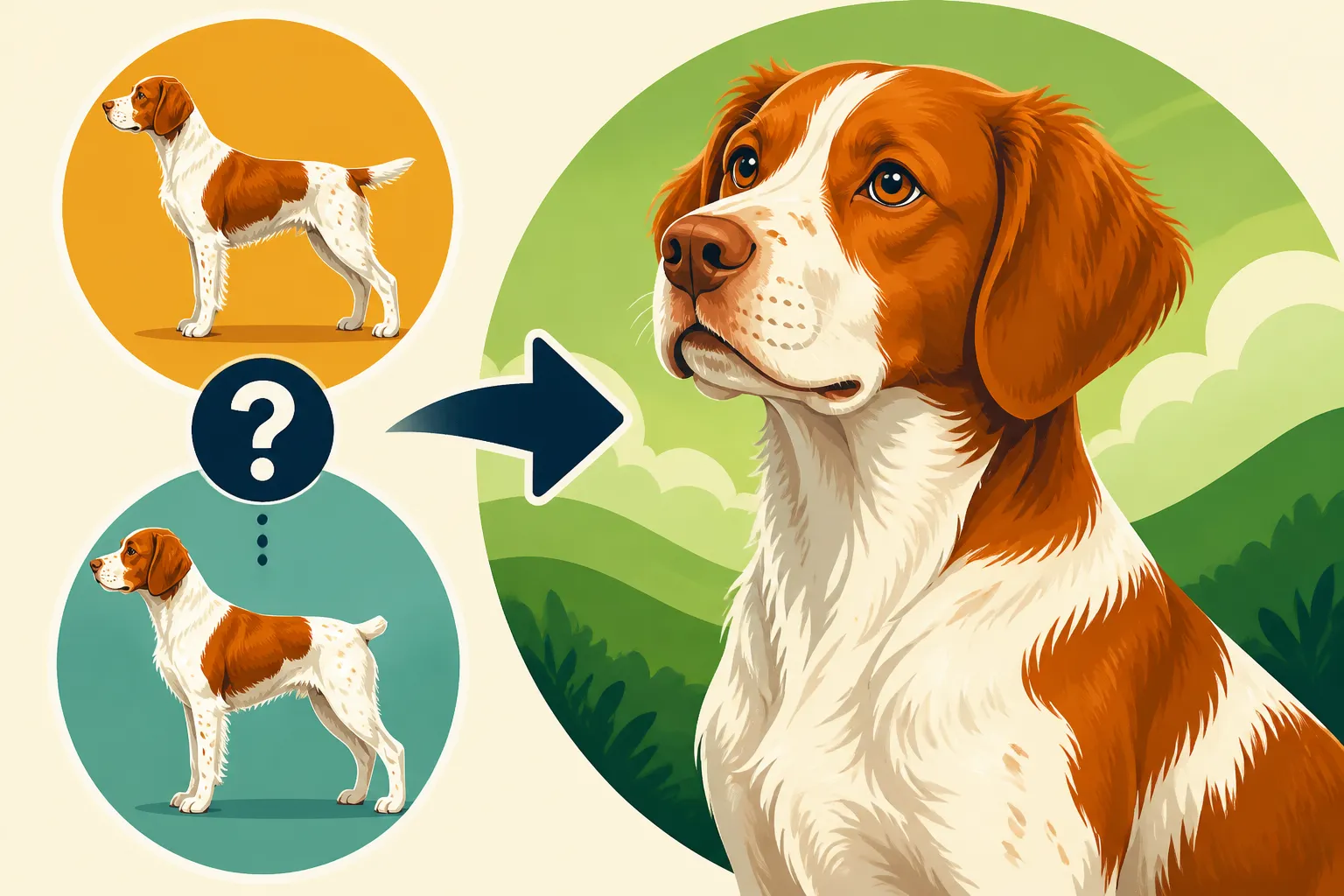
You may see several tail lengths among Brittanys, even within dogs that share a family background. A short tail can be a sign of inherited natural bobtail, but appearance alone is not proof. A dog may also have had its tail docked, or its tail may be short for another reason.
If you are just learning the breed, Some Brittanys Are Born Without a Tail offers broader context on why a Brittany’s tail can look different from one dog to another. The key point is that a short tail is a trait to ask about, not a reliable shortcut for identifying a dog’s pedigree, hunting ability, temperament, or health.
A natural bobtail is different from a docked tail
A natural bobtail is present at birth. Docking is the shortening of a tail after birth, typically through a procedure carried out when a puppy is very young. In an older puppy or adult dog, the appearance may not make the difference obvious, particularly if the tail is very short.
That uncertainty can matter when you are considering a puppy. A breeder should be able to tell you whether the puppy was born with its tail length or whether it was docked. Ask for the explanation directly, and ask how the breeder documents it. A photograph from the first days of life may help, but the breeder’s records and consistent answers matter more than a picture on its own.
Breed history can also add confusion. People sometimes use “bobtail” to describe any short-looking tail, whether it is natural or docked. For a clearer distinction, see Whether a Brittany's Tail Is Docked. If you are comparing dogs for a show or another organized event, check the relevant rules rather than assuming that a certain tail length automatically qualifies or disqualifies a dog.
Tail length does not tell the whole story
It is tempting to treat a naturally short tail as a special marker of a particular kind of Brittany. It is not a dependable indicator of whether a dog comes from field or show lines, whether it will hunt, or whether it is a good match for your home. Those questions are better answered through the dog’s temperament, the parents’ history, the breeder’s practices, and your own plans.
A natural bobtail also does not mean the dog has no tail-related needs. Even a short tail should be checked for irritation, injury, or skin problems, just as you would check the rest of the dog. Most owners will not need a special care routine solely because a Brittany was born with a short tail, but any discomfort or change in the area deserves attention from a veterinarian.
How the natural bobtail trait is inherited
A genetic trait can appear in family lines
Natural bobtail in dogs is associated with an inherited genetic change, and the trait can be passed from parent to offspring. That is why it may appear repeatedly within related dogs or a particular breeding line. But inheritance is not a visual guarantee: a puppy’s tail length should not be used as the only evidence of its genetic status.
Researchers have associated canine natural bobtail with a change in the T-box gene. The exact interpretation for an individual Brittany depends on the test used and the dog’s results. If you are looking at pedigrees, remember that a family tree can show patterns, but it cannot replace a validated genetic test or reliable breeding records.
For more on the genetic background, read Which Gene Makes a Brittany Tailless. The word “tailless” can sound absolute, but natural bobtail can mean a range of shorter tail lengths. The visible result may not look identical from one dog to the next.
A litter may not look uniform
Puppies from the same litter can have tails that look different in length. That does not automatically mean the breeder has misrepresented the dogs or that the puppies have different parents. A litter’s appearance can reflect the inheritance of traits and the variation in how those traits show up.
When you visit a litter, ask the breeder to explain what they know about the parents’ tails and whether either parent has been genetically tested. If the breeder says a puppy has a natural bobtail, ask what evidence supports that statement. A thoughtful breeder should be able to distinguish what they know from what they are inferring based on appearance.
This is also a good moment to ask about the breeder’s overall health and breeding practices rather than focusing on one visible feature. What a Brittany Spaniel Breeder Should Have Tested can help you think about health questions beyond tail length. A bobtail is not a substitute for health screening, sound temperament, or careful matching of the parents.
A short tail is not a measure of quality
Whether a Brittany has a long tail, a natural bobtail, or a docked tail does not establish that it is a better dog. It does not tell you how it will behave in the field, how it will respond to training, or whether it will be healthy. Buyers sometimes get caught up in a distinctive physical trait because it is easy to notice, while overlooking the harder questions that matter throughout the dog’s life.
Instead, ask how the breeder evaluates puppies and matches them to homes. If you plan to hunt, ask about the parents’ working history and the breeder’s expectations for the puppy. If you want a companion, ask about the puppy’s individual temperament and the kind of daily activity the breeder expects it to need.
How to confirm whether a Brittany has a natural bobtail
Start with the breeder’s records
If you are considering a puppy, ask the breeder whether the tail was naturally short at birth or docked. Ask to see the available records, and make sure the answer is consistent across conversations and paperwork. If the puppy is already grown, ask the owner or breeder what documentation they have from when the dog was born.
A registration document or pedigree may provide useful background, but it may not answer the specific question of whether a tail was shortened after birth. Likewise, a current photo cannot always establish what the tail looked like on the day the puppy was born. The most useful evidence is clear documentation from the breeder, supplemented by genetic information where appropriate.
Ask these questions in a calm, practical way:
- Was the puppy born with this tail length?
- Were any puppies in the litter docked?
- What do you know about the parents’ tail lengths?
- Has either parent or the puppy had a relevant genetic test?
- Can you show me the records that support your answer?
These questions do not need to sound confrontational. A responsible breeder should understand why a buyer wants a clear answer.
Understand what a DNA test can tell you
A DNA test may help determine whether a dog carries a genetic variant associated with natural bobtail. Before relying on a result, confirm that the test is appropriate for the dog and the question you are asking. Ask which laboratory performed the test, what variant it evaluates, and how the result is interpreted for Brittanys.
Some owners start by browsing pet retailers, including Chewy, when looking for canine DNA-testing options. If you find a listing through a retailer such as Chewy, check the test’s laboratory, the specific trait it examines, and whether the provider explains results in a way that applies to your dog. A product description alone is not the same as a clear interpretation from the testing provider.
If you are comparing a test mentioned by a breeder with a kit you found through Chewy, ask whether they assess the same genetic variant. Different tests may focus on different traits, and a general breed-identification test may not answer a specific bobtail question. Chewy can be a starting point for product research, but use the testing provider’s documentation to understand what a result means.
A negative result also needs context. It should not be treated as proof that a short tail was docked unless the test and records support that conclusion. A veterinarian or knowledgeable genetic testing provider can help interpret the result alongside the dog’s history.
| What you observe | What it may suggest | What to check next |
|---|---|---|
| A puppy has a short tail from birth | Natural bobtail may be possible | Ask for breeder records and relevant genetic information |
| An adult Brittany has a short tail | It may be natural, docked, or short for another reason | Ask the breeder or previous owner for its history |
| Several related dogs have short tails | The trait may run in that family | Review pedigrees and ask whether testing was done |
| A DNA result reports a bobtail-associated variant | The dog may carry the tested variant | Confirm the laboratory’s interpretation and test scope |
| The breeder cannot explain the tail’s history | The cause may be undocumented | Avoid treating appearance alone as proof |
Be cautious with assumptions
A dog’s short tail does not prove that it carries a particular mutation, and a longer tail does not tell you everything about its genetic background. Tail length is useful as an observation, but it is not a replacement for records or genetic testing.
If a breeder makes a broad claim such as “all puppies in this line are naturally bobtailed,” ask what that statement is based on. The answer might be direct observation, family history, or testing; those are not interchangeable forms of evidence. A clear explanation lets you understand what is known and what remains uncertain.
What prospective Brittany owners should consider
Ask about breeding decisions, not just appearance
When a natural bobtail appears in a breeding line, it is reasonable to ask how the breeder considers that trait in mating decisions. The discussion should be about responsible breeding and the health of the dogs, not simply whether a certain tail length looks desirable.
Ask whether the breeder has discussed the trait with a veterinarian or genetic testing provider and how they interpret the available information. Do not assume that a dog with a natural bobtail should or should not be bred based on appearance alone. Breeding decisions involve the health, temperament, and genetic background of both dogs, as well as the breeder’s goals and applicable standards.
For a focused discussion of this issue, see Whether Two Bobtail Brittanys Should Be Bred. That topic is especially relevant if you are buying a puppy with plans to breed or if you are evaluating a breeder’s choices. A responsible breeder should be willing to explain their reasoning without promising that one visible characteristic makes a dog suitable for breeding.
Consider event rules and local requirements
Rules about tail length, docking, and eligibility can vary by location and by organization. If you hope to show a Brittany or enter another event, look up the specific rules that apply before making assumptions. A naturally short tail and a docked tail may be treated differently in some contexts, and local laws can affect whether docking is permitted.
The same care applies if you are buying a puppy from another region or country. Ask the breeder what was done to the puppy’s tail, if anything, and make sure the paperwork is clear. If you want to understand how docking rules may vary, read Whether Docking Is Banned Where a Brittany Owner Lives. For show-related questions, Whether an Undocked Brittany Can Be Shown and Whether a Long Tailed Brittany Is Penalized offer useful related context.
Keep the trait in perspective
A natural bobtail is one small part of a Brittany’s story. It can be inherited and can appear within family lines, but it is not a reliable measure of a dog’s overall quality or future. If you are choosing a puppy, prioritize clear records, health information, temperament, and a good fit for the life you can offer.
The most helpful approach is straightforward: ask whether the tail was present at birth, request the breeder’s records, and use a suitable genetic test if a definitive answer matters. That way, you are not left guessing from a photograph or a short tail alone.
Disclaimer
This article is for general informational purposes only and does not constitute professional advice. Laws, prices and regulations vary by location and change over time. Consult a qualified professional for guidance on your specific situation.