American Brittany and Epagneul Breton Went Separate Ways
It's easy to get confused when you hear people talk about "Brittany Spaniels" versus just "Brittanys," or mention "Epagneul Bretons" as if they're something entirely different. The truth is, these are all terms for variations of the same beloved pointing breed, but over time, they've evolved in distinct ways across the Atlantic. This guide will walk you through how the American Brittany and the Epagneul Breton, while sharing a common ancestry, eventually forged their own paths, leading to unique characteristics and standards that cater to different hunting styles and preferences.
The Shared Roots of a Remarkable Breed
Before we delve into the differences, it's crucial to understand that both the American Brittany and the Epagneul Breton spring from the same well-loved hunting stock. Imagine the misty, rural landscapes of Brittany, a region in northwest France, where centuries ago, a versatile bird dog began to take shape. These were dogs bred by local hunters and poachers alike, valued for their keen noses, stamina, and cooperative nature. They were truly dogs of the people, working tirelessly to put game on the table.
Humble Beginnings in Brittany, France
The story of the Brittany begins not in grand kennels or with aristocratic breeders, but in the fields and hedgerows of rural France. The farmers and market hunters of the region needed a dog that could do it all: locate game, point steadfastly, and retrieve downed birds, all while remaining a manageable size and a good-natured companion in the home. These early dogs were often referred to simply as "Brittany dogs" or "dogs of Brittany." They weren't bred to a strict, written standard initially; rather, their utility in the field was their defining characteristic. Imagine a hunter trying to feed his family, where every pheasant or partridge brought home truly mattered. He wasn't thinking about a dog's ear set or angulation, but whether it could find birds in thick cover and bring them back without a fuss. It was a practical approach to breeding, focused purely on performance. If you're curious about the origins, you might find more in Where the Brittany Comes From.
Early Development and the First Standard
As these highly effective hunting dogs gained recognition, particularly in the late 19th and early 20th centuries, formal efforts began to establish a breed standard. This was a crucial step in solidifying the traits that made the Brittany so special. The first official breed standard for the Epagneul Breton (which literally means "Breton Spaniel" in French) was established in France in 1907. This early standard aimed to preserve the qualities that made the breed so popular: its relatively compact size, its biddable temperament, and its outstanding hunting prowess. They were particularly prized for their "point and retrieve" style, a unique combination for a dog often associated with spaniels. This initial standard set the stage for all future Brittanys, defining the ideal physical appearance and working characteristics that breeders would strive to maintain. It was a moment when a regional working dog began its journey to international recognition, but also laid the groundwork for future divergence.
The Atlantic Divide: How the Breeds Separated
The journey of the Brittany to North America marked a pivotal point in its history. While the breed's fundamental traits remained, the demands and preferences of American hunters and breeders began to subtly, and then more significantly, steer its development in a different direction from its French cousins. It's a fascinating example of how culture and environment can shape a breed over time, even one with a strong, shared heritage.
The Brittany's Arrival in North America
The first Brittanys began arriving in the United States in the early 20th century, particularly after World War I. American hunters quickly recognized the breed's potential as a versatile gun dog. They found the Brittany to be intelligent, energetic, and eager to please, making it an excellent companion for hunting upland game. However, the American hunting landscape often differed from that in France. Vast open plains, larger fields, and the use of horseback hunting in some regions meant that a wider-ranging dog became increasingly desirable. This environmental shift started to influence breeding choices, even if unconsciously at first. The dogs still had that inherent bird sense, but the way they were expected to apply it began to shift.
Divergent Breeding Goals and Preferences
Once in America, the Brittany's development began to diverge. American breeders, often influenced by the popular English and Irish Setters, started to favor a dog with greater ground speed and a wider range. They sought Brittanys that could cover more territory more quickly, particularly important for hunters on foot who wanted to maximize their coverage or for those participating in field trials where expansive searching was rewarded. Meanwhile, back in France, the Epagneul Breton continued to be bred for its traditional close-working style, excelling in smaller, denser covers and remaining within easy gun range for a walking hunter. These differing priorities eventually led to distinct physical and behavioral characteristics. The breed wasn't simply adapting; it was actively being shaped by human preferences. This led to a situation where what was considered an ideal Brittany in one country might be seen as less than ideal in another, setting the stage for the formal split.
The American Brittany: A Hunter's Companion
The American Brittany, as recognized by the American Kennel Club (AKC), is a testament to the North American hunting tradition. It embodies a blend of classic Brittany traits with adaptations that suit the vastness and style of hunting prevalent in the United States. Owners often appreciate their American Brittanys for their boundless energy and enthusiasm in the field, making every hunt an adventure.
Emphasis on Range and Speed in the Field
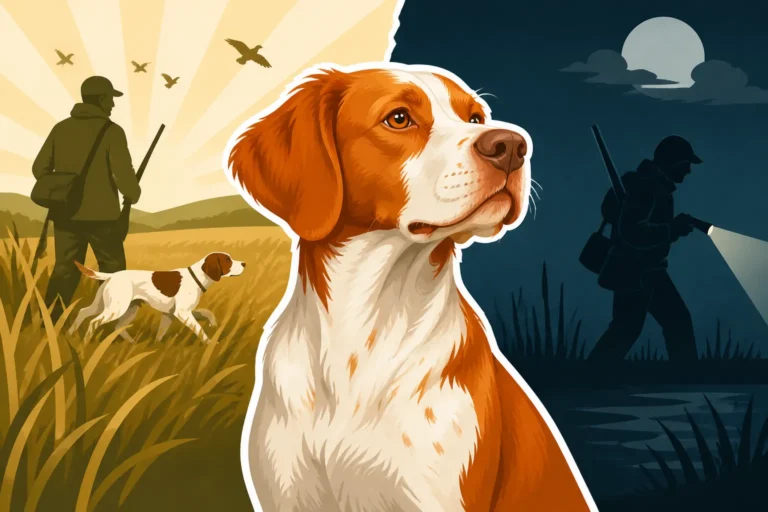
If you're out in the wide-open country of the Midwest, hunting pheasants or grouse, you need a dog that can cover serious ground. That's precisely what American Brittany breeders aimed for. They selected for dogs that displayed a strong desire to range far out, systematically quartering fields and searching for scent. This emphasis on range and speed makes the American Brittany an excellent choice for hunters who want to cover a lot of territory, whether on foot or from horseback. They are known for their tireless work ethic and their ability to maintain a strong pace throughout the hunting day. Many American Brittany owners will tell you that their dogs live for those wide-ranging searches, where they can really stretch their legs and use their incredible noses. How Far an American Brittany Ranges gives more insight into this characteristic.
Physical Characteristics of the American Standard
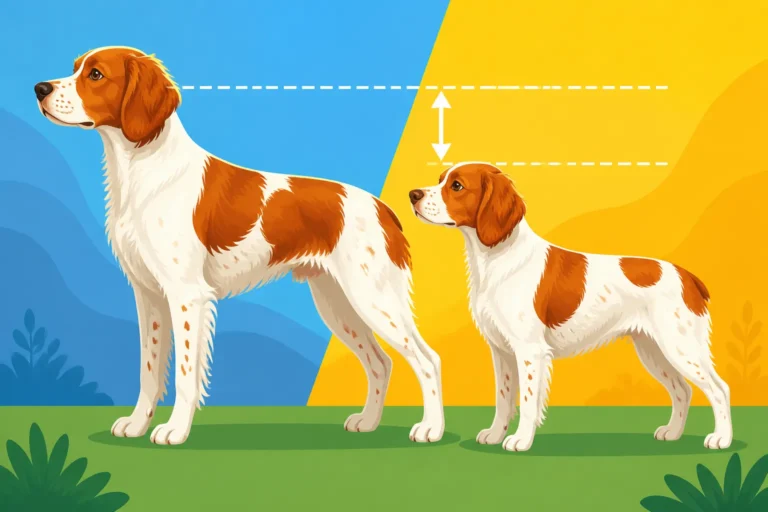
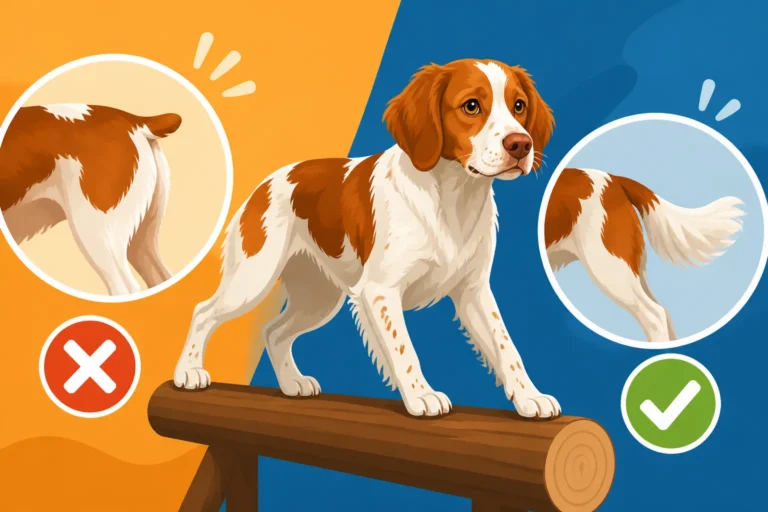
The American Brittany generally presents a slightly leggier, more athletic build than its European counterpart, reflecting its breeding for speed and endurance. The AKC standard describes a dog that is compact, yet sufficiently long in leg to gracefully cover ground. While both types are medium-sized, the American Brittany often appears a bit more refined and less cobby. Their coat is typically dense, flat, or wavy, and comes in combinations of orange and white or liver and white, sometimes with roan patterns. Ticking, those small flecks of color, is also common. The distinctive bobtail, either natural or docked, is a hallmark. It's not just about looks; these physical traits are tied directly to their function. For instance, a denser coat provides protection from the elements and briars, something important for a dog that spends hours crashing through cover. The focus is always on a dog that is "fit for function."
The "Spaniel" Dropped: A Name Change Reflecting Purpose
Perhaps the most telling sign of the divergence came in 1982 when the American Kennel Club officially dropped "Spaniel" from the breed's name, changing it simply to "Brittany." This wasn't just a minor tweak; it was a significant declaration. In the U.S., the term "spaniel" often conjured images of flushing dogs, like Cocker or Springer Spaniels, whereas the Brittany was, first and foremost, a pointing breed. The name change solidified its identity within the pointing dog group, aligning it more closely with breeds like the German Shorthaired Pointer or English Setter, rather than its flushing cousins. This move reflected the breed's evolution in America and how its working style had come to define it. It was a clear statement that the American Brittany's primary role was to locate game and hold a staunch point, a crucial distinction for hunters. You can read more about this historic change in When the AKC Dropped Spaniel From the Brittany's Name.
The Epagneul Breton: Europe's Compact Hunter
Across the ocean, the Epagneul Breton has maintained a more traditional profile, reflecting the hunting practices and landscape of its native France and broader Europe. These dogs are highly valued for their intense focus, cooperative nature, and suitability for hunters who work cover on foot.
Close-Working and Versatile Field Style
The Epagneul Breton is often celebrated for its "hunt for the gun" mentality, meaning it naturally works within close range of its handler. This is ideal for walking hunters in areas with dense cover, where a wide-ranging dog might quickly disappear or flush birds out of shooting range. They are known for their methodical, close-quarter searching, meticulously working through brambles and thickets to pinpoint game. While they might not cover the vast distances of their American cousins, their intensity and thoroughness are unparalleled. This breed excels in versatility, often retrieving naturally and adapting well to different types of game birds and terrain. Many European hunters find the Epagneul Breton's cooperative spirit and desire to please make them incredibly satisfying partners in the field. How Close a French Brittany Hunts delves deeper into this trait.
Physical Distinctions and the French Standard
Compared to the American Brittany, the Epagneul Breton generally has a more square, cobby build. The French standard emphasizes a powerful, compact, and elegant dog with a shorter back and a generally stockier appearance. Their heads are often described as more refined, with expressive eyes. While coat colors are similar – orange and white, liver and white, and roan – there's a particular distinction when it comes to the black coloration. This brings us to a significant point of divergence that's been quite a discussion point over the years. The physical differences, while subtle to the untrained eye, are distinct enough to be noticeable to a seasoned breeder or hunter familiar with both types. These distinctions reflect the different ideals that breeders in each region have pursued.
The Importance of the Black Color Debate
One of the most notable distinctions, and often a point of passionate discussion among enthusiasts, is the allowance of black in the coat color. The French standard for the Epagneul Breton explicitly excludes black, considering it a disqualifying fault. This means that a purebred Epagneul Breton will not have black in its coat, nose, or eye rims. This preference likely stems from early breeding choices and historical aesthetics within France. In contrast, the American Brittany standard does permit black as a color, though it is less common than orange and white or liver and white. This difference highlights how distinct breeding philosophies can evolve over time, even from a common ancestor. For some purists of the Epagneul Breton, the absence of black is a non-negotiable aspect of their breed's identity, a tradition held dear through generations. You might also be interested in Which Colors a Brittany Comes In for more context.
Key Differences in Temperament and Training
While both types of Brittanys share a genetic predisposition for bird hunting and a generally cheerful disposition, the subtle shifts in breeding priorities have led to some discernible differences in their typical temperaments and, consequently, their ideal training approaches. Understanding these nuances can make a world of difference when choosing a puppy or working with your dog in the field.
American Brittany: Bold and Independent
The American Brittany, bred for its wider range and independent search, often exhibits a more assertive and self-reliant temperament. These dogs are confident in venturing further from the handler, relying on their own instincts to find game. They possess a vibrant, outgoing personality and an almost endless well of energy. This boldness can be a huge asset in the field, as they're less likely to be deterred by challenging cover or difficult scenting conditions. However, this independence means that consistent, clear training is paramount. They need to understand boundaries and expectations, especially regarding recall and handling. Without proper guidance, their innate drive to explore can lead them astray. Their energetic nature also demands significant exercise; an under-exercised American Brittany can become a frustrated, destructive companion. Imagine a dog that loves nothing more than to run freely, wind in its face, pursuing every whiff of bird scent – that's the American Brittany spirit.
Epagneul Breton: Intense and Focused
In contrast, the Epagneul Breton tends to be known for its intense focus and strong desire to work with the handler. This type often displays a slightly softer, more sensitive nature than the American Brittany, making them highly biddable and responsive to correction. Their intensity is channeled into their close-working style, meticulously covering ground within gun range and maintaining constant communication with their human partner. This strong handler focus means they are often easier to keep in close contact in the field and are generally less prone to ranging out of sight. Their sensitivity, however, means that harsh training methods can be counterproductive, potentially shutting them down or making them timid. Positive reinforcement and gentle, consistent guidance work best with the Epagneul Breton. They thrive on cooperation and are typically eager to please, making them a joy to train for the right owner.
Training Considerations for Each Type
Given these temperamental differences, the training approach for each Brittany type can vary significantly. For the American Brittany, early and consistent emphasis on recall and "whoa" is crucial, often benefiting from long check cords and potentially an e-collar (used responsibly and humanely) to reinforce commands at a distance. Their drive needs to be channeled, not stifled. They respond well to exciting, reward-based training that leverages their high energy. For the Epagneul Breton, building a strong bond and relying on clear, gentle communication will yield the best results. Their natural tendency to stay close and please makes them highly receptive to nuanced handling. Both types benefit from early socialization and exposure to a variety of environments, but the methods of control and encouragement might differ. For example, a Chewy training treat pouch filled with high-value rewards might be a constant companion for an American Brittany owner working on recall, while an Epagneul Breton might be just as motivated by verbal praise and a gentle touch.
Understanding the Standards: AKC vs. FCI/CEB US
The official breed standards serve as blueprints for breeders, guiding them in their efforts to produce dogs that embody the ideal characteristics of the breed. The divergence between the American Brittany and the Epagneul Breton is most clearly defined by the different standards upheld by the major kennel clubs: the American Kennel Club (AKC) in the U.S. and the Fédération Cynologique Internationale (FCI), often interpreted through clubs like the Club de l'Epagneul Breton des USA (CEB US), internationally. These documents are more than just guidelines; they are the distillation of generations of breeding philosophy.
American Kennel Club AKC Standards
The AKC standard for the Brittany (without "Spaniel") describes a well-balanced, leggy dog, strong, active, and energetic. It places significant emphasis on the dog's ability to cover ground with grace and efficiency, reflecting the preference for a wider-ranging hunting style. The standard details acceptable colors (orange and white, liver and white, roan, with or without ticking, and notably, allows black), coat texture, head structure, and overall conformation, all with an eye towards a dog that can perform tirelessly in the field. The bobtail, either natural or docked to a specific length, is characteristic. A key aspect of the AKC standard is the promotion of "dual champions"—dogs that achieve both conformation and field titles, highlighting the breed's enduring versatility. The standard is a living document, interpreted by judges and strived for by breeders, all aiming to preserve the American Brittany as a top-tier gun dog.
Fédération Cynologique Internationale FCI and CEB US Standards
The FCI, which governs many international kennel clubs including the French, recognizes the breed as the Epagneul Breton. Its standard, and therefore the standard followed by organizations like the CEB US, emphasizes a compact, short-backed dog that is powerfully built but not heavy. The description often highlights elegance and harmonious proportions. Crucially, the FCI standard strictly prohibits black in the coat or on the nose, considering it a disqualifying fault. The tail is naturally short or docked, and the colors are orange and white, or liver and white, with or without roan. The focus is on a close-working, versatile gundog, suitable for all types of game and terrain. The CEB US, for instance, actively promotes the French standard and philosophy, ensuring that Epagneul Bretons imported or bred in the US adhere to these European ideals. This allows enthusiasts in North America to own and hunt with dogs that truly represent the traditional French type, fostering a community around those specific characteristics.
Impact on Breeding and Showing
These differing standards have a profound impact on breeding programs and dog shows. Breeders of American Brittanys select for the traits outlined in the AKC standard, aiming for the desired range, speed, and overall conformation that allows for efficient field work over large areas. This influences everything from parent selection to puppy evaluation. Similarly, breeders of Epagneul Bretons meticulously adhere to the FCI standard, prioritizing the compact build, close-working instinct, and color purity. When you attend a dog show, whether an AKC conformation event or a specialty show for Epagneul Bretons, you'll see judges evaluating dogs based on these specific, sometimes contrasting, ideals. It's why a dog that might win "Best in Show" as an American Brittany might not even be eligible for an Epagneul Breton competition due to its black markings, and vice-versa. It truly demonstrates how How a French Brittany Differs From an American One can be seen in tangible ways.
Choosing the Right Brittany for Your Lifestyle
Deciding between an American Brittany and an Epagneul Breton isn't just about their lineage; it's about matching a dog's inherent traits and historical purpose with your own lifestyle and hunting preferences. Both are magnificent dogs, but their nuances mean one might be a significantly better fit for you than the other.
For the Avid Foot Hunter and Small Property Owner
If you're a walking hunter who prefers to work relatively close to your dog, navigating dense cover in smaller fields or woodlands, the Epagneul Breton might be your ideal partner. Their natural tendency to work within gun range means you won't spend your hunt trying to call back a dog that's disappeared over the horizon. Their intense focus and biddability make them a joy to handle on foot, ensuring that birds are pointed within easy shooting distance. This type is also often a great fit for families living on smaller properties, as their close-working nature translates well into being more contained in a smaller yard, provided they still get ample exercise and mental stimulation. Think of someone hunting grouse in tight cover or quail in thick brush – the Epagneul Breton's style shines here. If you're looking for a dog that stays nearby, Whether a French Brittany Suits a Walking Hunter is a key consideration.
For the Hunter Covering Large Expanses or Horseback
On the other hand, if your hunting grounds consist of vast prairie, expansive crop fields, or open sagebrush country, and you want a dog that can cover massive amounts of ground quickly, the American Brittany is likely your match. Their breeding emphasis on range and speed makes them unparalleled at systematically searching large areas, often allowing a hunter to cover more territory in a single outing. They are particularly favored by hunters who might follow their dogs on ATVs or horseback, or those participating in field trials where wide-ranging efforts are rewarded. This style allows the dog to maximize its chances of encountering game in broad landscapes. Their stamina is legendary, and they thrive on the challenge of a truly big search. Just be prepared for the level of commitment required to manage and train a dog with such a powerful drive to explore.
Considerations Beyond the Field
It's not just about hunting; these dogs are family members too. Both types of Brittanys are known for their affectionate, eager-to-please nature, making them wonderful companions in the home. However, their energy levels and exercise needs are non-negotiable. An American Brittany, with its wider-ranging instincts, might require even more structured exercise and mental engagement outside of hunting season to prevent boredom and destructive behaviors. This could mean longer runs, biking alongside them, or participating in dog sports like agility or flyball. An Epagneul Breton, while still high-energy, might find satisfaction in slightly shorter but more intense play sessions, coupled with mental challenges like scent work. Regardless of the type, both thrive on being part of the family and suffer if left isolated for long periods. Consider your daily routine, your ability to provide consistent exercise, and your comfort level with their inherent energy before making a choice. Remember, a bored Brittany, of either type, can turn into a canine wrecking ball. Items from Chewy like durable chew toys and puzzle feeders can be a lifesaver for keeping their minds active when you can't be out in the field.
Preserving the Legacy of Both Brittanys
The story of the American Brittany and the Epagneul Breton is one of both unity and divergence, a testament to the adaptability and enduring appeal of a truly remarkable breed. Dedicated individuals and organizations on both sides of the Atlantic work tirelessly to ensure that these distinct lines continue to thrive, preserving the qualities that make each type unique and valuable.
Dedicated Breed Clubs and Their Missions
Breed clubs play a critical role in guiding the future of both Brittany types. In the United States, the American Brittany Club (ABC) champions the American Brittany, promoting the AKC standard, organizing field trials and conformation shows, and supporting health initiatives. Their mission is to preserve the breed's hunting instincts and maintain its physical and temperamental integrity as an American gun dog. They educate prospective owners, register litters, and oversee a vast network of enthusiasts. Similarly, for the Epagneul Breton in North America, organizations like the Club de l'Epagneul Breton des USA (CEB US) serve as guardians of the French standard and tradition. The CEB US focuses on maintaining the original characteristics of the Epagneul Breton, often requiring that dogs be registered with both their club and the French registry to ensure adherence to European lines and breeding philosophy. These clubs are the backbone of the breed's preservation, ensuring that the unique qualities of each type are not lost.
The Future of the Brittany Legacy
The commitment of these clubs and passionate individual breeders ensures that the legacy of the Brittany, in all its forms, will continue for generations to come. While the American Brittany and the Epagneul Breton have indeed "gone separate ways" in terms of specific standards and preferred hunting styles, they remain intrinsically linked by their shared historical roots and their fundamental purpose as outstanding bird dogs. The existence of two distinct, yet related, types offers a wonderful choice for hunters and dog enthusiasts, allowing them to select a Brittany that perfectly aligns with their specific needs and desires. Whether you choose a wide-ranging American Brittany or a close-working Epagneul Breton, you're bringing home a piece of history—a vibrant, intelligent, and devoted companion whose heart beats for the field. And no matter which type you choose, remember that high-quality nutrition, like the performance formulas found on Chewy, is essential for keeping these active dogs in peak condition throughout their lives. The overall health and longevity are often a testament to good breeding and care, as explored in The Twelve to Fourteen Years a Brittany Gets. Both varieties stand as proud examples of what thoughtful breeding and dedicated ownership can achieve.
| Feature | American Brittany (AKC) | Epagneul Breton (FCI/CEB US) |
|---|---|---|
| Primary Goal/Style | Wide-ranging, fast, expansive search for larger areas | Close-working, methodical, intense for dense cover |
| Typical Range | 50-100+ yards from handler | 30-50 yards from handler, often closer |
| Build | Generally leggier, more athletic, less cobby | More compact, square, powerful but elegant |
| Black Color | Permitted in coat, nose, eye rims | Disqualification (not permitted) |
| Temperament (General) | More bold, independent, assertive | Often more intense, focused, biddable, sensitive |
| Ideal Hunter | Covers large ground, horseback, field trial participant | Walking hunter, dense cover, "hunt for the gun" partner |
| Registries | American Kennel Club (AKC) | Fédération Cynologique Internationale (FCI), CEB US |
Disclaimer
This article is for general informational purposes only and does not constitute professional advice. Laws, prices and regulations vary by location and change over time. Consult a qualified professional for guidance on your specific situation.