Whether a Brittany’s Nose Can Be Pink
A Brittany’s nose can be pink, and in some dogs that color is normal rather than a sign of illness. The confusing part is that a nose can also lose pigment because of sun exposure, irritation, or a skin condition. This guide explains how to tell a naturally pink nose from a change that deserves a closer look.
When a pink nose is normal in a Brittany
Coat color and natural nose pigment
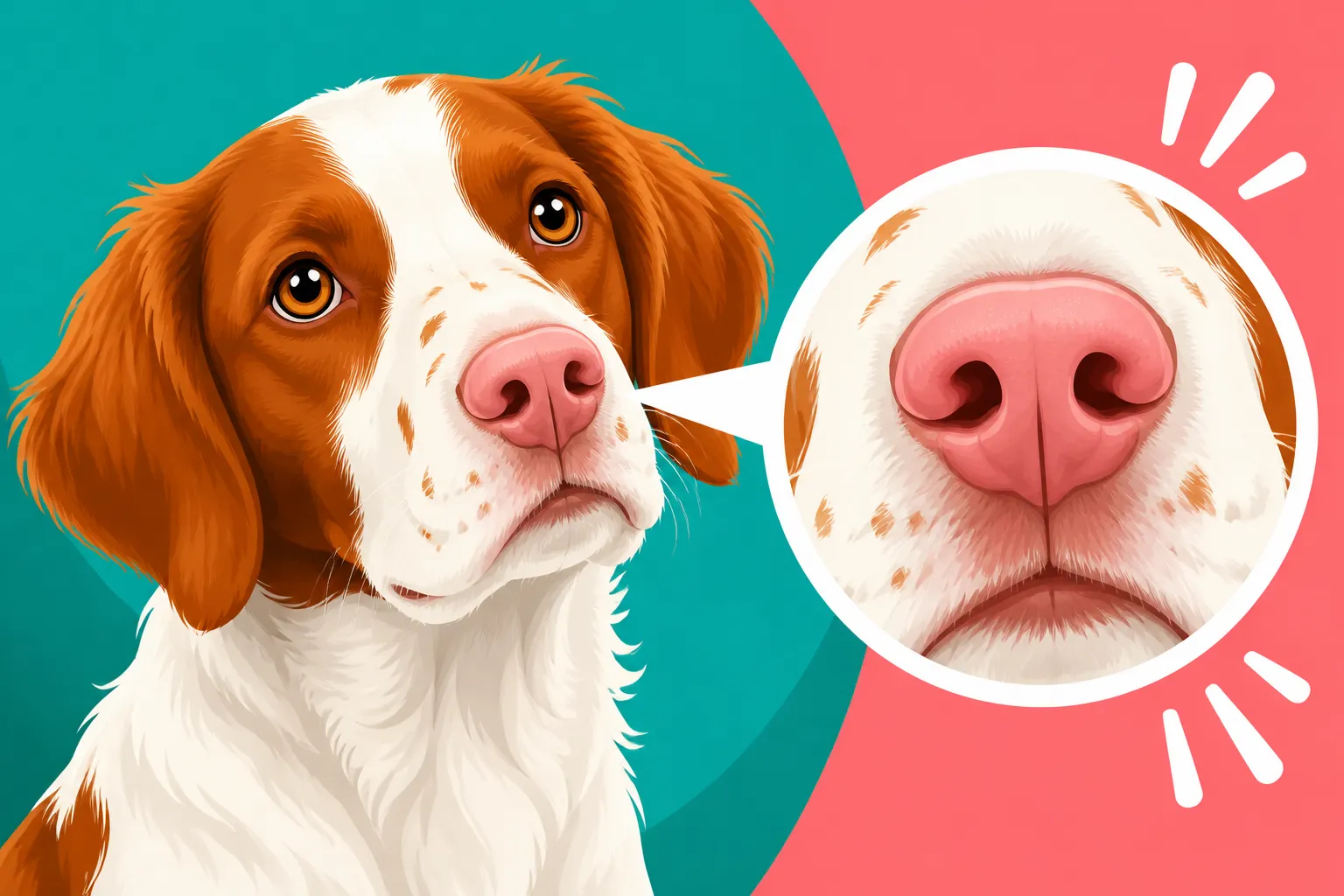
Brittanys can have noses in shades that include fawn, tan, brown, and deep pink, with pigment often harmonizing with the dog’s coat. A pinkish nose is therefore not automatically a fault or a health concern. The breed’s permitted coat colors and markings vary too, so it helps to consider the whole dog rather than judging nose color on its own. For more on the range of coat shades, see Which Colors a Brittany Comes In.
A puppy may have a nose that looks lighter than an adult dog’s, and the amount of visible pigment can vary among individuals. The key question is whether the color is stable and even, or whether it has changed. A healthy, naturally pale nose typically looks like the dog’s usual nose: the surface is intact, both nostrils look normal, and there is no swelling, soreness, or discharge.
That distinction matters because a pink nose can mean two different things to an owner. One Brittany may simply have naturally light pigment. Another may have developed a pale patch after previously having a darker nose. If you are unsure which description fits, compare recent photos and ask your veterinarian to examine the nose rather than trying to identify the cause by color alone.
A simple way to judge what you are seeing
Look at the nose in good natural light, then check whether the color is consistent across the surface. A uniform pink or tan tone that has been present for as long as you can remember is generally less concerning than a new, irregular area of fading. Also notice the texture: ordinary nose pigment should not come with crusting, open sores, bleeding, or persistent irritation.
Try to remember whether the change appeared gradually or suddenly. A dog that has always had a pink nose is different from one whose dark nose has developed a pale stripe over a short period. If your Brittany’s coloring has shifted as it has grown, the article Whether a Brittany's Color Changes as It Grows may help you think through normal changes in appearance.
A brief record can make a vet visit more useful. Take a clear photo in natural light, note when you first noticed the color, and write down any changes in texture or behavior. That is especially helpful when the change is subtle and difficult to describe in the exam room.
| What you notice | What it may suggest | A sensible next step |
|---|---|---|
| Even pink or tan pigment that has always been there | Natural pigmentation | Mention it during routine care if you have questions |
| A gradual seasonal lightening without sores | Possible seasonal pigment change | Monitor and protect the nose from strong sun |
| A new pale patch, especially with irritation | Acquired pigment loss or another skin issue | Arrange a veterinary assessment |
| Crusting, cracks, bleeding, sores, or swelling | More than a color difference may be present | Contact your veterinarian promptly |
| Nose changes along with symptoms elsewhere | A broader health issue may need consideration | Describe all symptoms to your veterinarian |
Why a Brittany’s nose may become lighter
Seasonal fading and sun exposure
Some dogs experience seasonal changes in nose pigment. Owners often call this “snow nose,” although it can happen without snow. A nose may become lighter during part of the year and darken again later. The change is usually about pigment, not the nose’s basic structure: the surface remains smooth and comfortable, and the dog is otherwise acting normally.
Sun exposure is another factor to consider. A pale or partly depigmented nose may be more vulnerable to sun irritation than a fully pigmented one, particularly during long periods outdoors. Brittanys that hunt, hike, or spend time in open areas may get substantial sun exposure even when the weather feels cool. Shade and breaks matter, and a veterinarian can advise whether a dog-specific sun product is appropriate. For more context, read How Sun Worsens a Brittany's Lupus and Whether a Brittany Needs Sunscreen on Its Nose.
If you are considering a product, do not assume that sunscreen or balm made for people is safe for dogs. Dogs can lick their noses, and some ingredients may be unsuitable if swallowed. Ask your veterinarian what type of product is appropriate and how to use it. Retailers such as Chewy may be a place to browse for dog-formulated options, but the product label and your veterinarian’s guidance should lead the decision.
Irritation, injury, or skin disease
A scrape, repeated rubbing, or other irritation can affect the nose’s appearance. A dog that pushes its face through brush, paws at its muzzle, or rubs against a crate or bedding may develop a sore area. In those cases, the color change may be accompanied by tenderness, redness, a rough surface, or a small wound. Avoid scrubbing the area or applying household creams; those steps can irritate the skin further or expose the dog to ingredients it may lick.
A persistent loss of pigment can also be associated with skin conditions. One condition veterinarians may consider is discoid lupus, which can affect the nose and cause changes such as pigment loss, crusting, or sores. A pale nose by itself does not establish that diagnosis. The pattern, skin surface, other symptoms, and veterinary examination all matter. You can learn more in What Discoid Lupus Does to a Brittany's Nose and Signs a Brittany Has Discoid Lupus.
If you notice cracking or bleeding, do not treat it as a cosmetic issue. Those symptoms can have several causes and may need examination, particularly if they persist or return. The guide Why a Brittany's Nose Cracks and Bleeds covers why a damaged-looking nose deserves more attention than a simple, even pink color.
How to tell when a pink nose needs veterinary attention
Changes worth checking rather than watching indefinitely
Contact your veterinarian if a previously dark nose develops a new pale patch, especially if the change continues to spread or comes with a change in texture. Crusting, open sores, bleeding, swelling, persistent redness, or signs of pain are also reasons to seek advice. If your Brittany is rubbing its face, pawing at its muzzle, eating less comfortably, or acting unusually tired, mention those details as well.
The urgency depends on what else is happening. A stable, naturally pink nose on a comfortable dog is different from a rapidly changing nose with painful sores. When in doubt, call your clinic and describe what you see; the staff can help you decide whether your dog should be seen promptly or at a routine appointment.
Take photos from the same angle and in similar lighting if you are monitoring a mild change. This helps distinguish an actual progression from differences caused by lighting or a wet nose. Do not delay a veterinary appointment just to collect photos if the area is painful, bleeding, or worsening.
What your veterinarian may assess
Your veterinarian will likely ask when the change began, whether it comes and goes, and whether your dog has had recent sun exposure, rubbing, or injury. They may examine the nose and surrounding skin, check for irritation elsewhere, and ask about other changes in your dog’s health. Depending on the appearance and history, they may recommend further tests or a follow-up visit. An examination is the way to sort out a harmless pigment variation from a condition that needs treatment; appearance alone cannot confirm the cause.
If a skin condition is suspected, a veterinarian may discuss how to confirm it and what care is suitable. For example, How Discoid Lupus Is Diagnosed in a Brittany explains why diagnosis involves more than noticing a light-colored nose. Treatment depends on the actual cause, so avoid using leftover medication or someone else’s nose balm without veterinary advice.
Bring your notes and photos, and mention any changes in appetite, energy, or comfort. If you have already tried a product, tell the veterinarian its name and how often you used it. Chewy or another pet retailer may carry nose-care products, but shopping for a balm should not replace finding out why the nose changed. A product may soften dry skin without addressing an underlying problem.
Caring for a Brittany with a pale nose
Everyday sun and skin protection
If your Brittany’s nose is naturally pink or has become lighter, make sun protection part of outdoor planning. Offer shaded rest, especially during extended time outdoors, and avoid leaving your dog in a sunny spot without a way to move into shade. On a hunt or hike, check the nose along with the rest of your dog’s face for redness, tenderness, or a change in texture after the outing.
Ask your veterinarian whether a dog-specific sunscreen is suitable for your dog’s nose. Follow the product’s directions and keep it away from the eyes and mouth. If you shop at Chewy, look specifically for products formulated for dogs and review the ingredients with your veterinarian rather than choosing a product simply because it is labeled as a balm or sun lotion.
Do not apply sunscreen over a sore, cracked, or bleeding area unless your veterinarian says to. A damaged surface may need a different kind of care, and licking can complicate home treatment. If the nose becomes irritated after using a product, stop using it and contact your clinic for advice.
A calm routine for checking the nose
A quick check during ordinary grooming is often enough. Look for a new patch of pigment loss, cracks, crusts, or a change in the surface. Make it part of a broader check after outdoor activity, particularly if your Brittany has been running through cover or spending a long time in direct sun. A routine check is not a substitute for veterinary care, but it can help you notice a change before it becomes difficult to describe.
If you are comparing products or keeping basic care supplies at home, Chewy may be one shopping option, but avoid buying treatments to diagnose the problem yourself. For a nose that is simply pink and healthy-looking, there may be nothing to treat. For a nose that is changing or uncomfortable, the most useful next step is an examination, not a shelf full of remedies.
Ultimately, color alone tells only part of the story. A Brittany’s nose can naturally be pink, while a newly pale, sore, or damaged nose deserves attention. Watch for changes in both pigment and skin condition, protect exposed skin from strong sun, and ask your veterinarian when the appearance is new or concerning.
Disclaimer
This article is for general informational purposes only and does not constitute professional advice. Laws, prices and regulations vary by location and change over time. Consult a qualified professional for guidance on your specific situation.