Whether a Brittany’s Eyes Should Be Dark
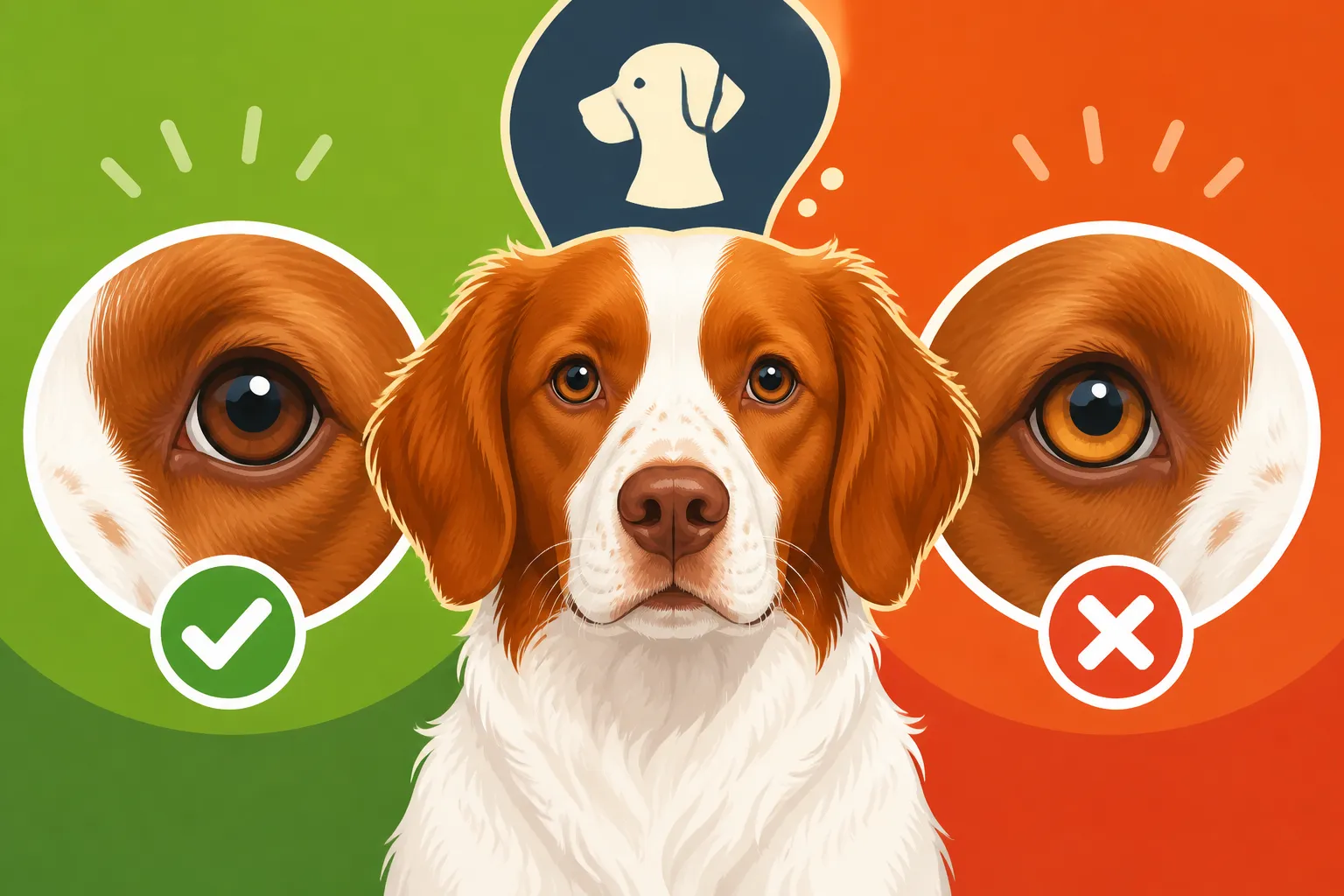
A Brittany’s eyes are often described as dark, but “dark” does not mean every healthy dog must have nearly black eyes. Brittany eyes are generally amber to brown, with color that harmonizes with the coat. This guide explains what the breed standard prefers, how a puppy’s eyes may change, and when an eye-color difference deserves a veterinary check.
What eye color is expected in a Brittany
The breed standard favors a dark, harmonious eye
Brittanys are known for an alert, soft expression. Breed descriptions favor dark eyes, often described as dark amber, and call for eye color to harmonize with the dog’s coat. In everyday terms, a Brittany may have brown eyes, deep amber eyes, or a shade between the two. The exact appearance can vary from dog to dog.
“Dark” is a preference in the breed’s appearance, not a medical rule that every eye must be the same shade. Eye color also needs to be considered in context: the dog’s coat, age, lighting, and individual pigmentation can all affect how the eyes look to you. A warm amber eye may appear much lighter in bright sunlight than it does indoors.
If you are comparing a dog with the breed standard, remember that eye color is only one part of the overall picture. Structure, movement, coat, and temperament matter too. For more background, see Which Colors a Brittany Comes In and What an Orange and White Brittany Looks Like.
Brown and amber are not the same as black
People sometimes say a Brittany has “black eyes” when they mean the eyes look very dark from a distance. On closer inspection, the iris is usually brown or deep amber rather than truly black. That distinction is useful when you are assessing appearance, but it usually does not signal a health problem either way.
An eye can also look lighter or darker depending on the light, the angle, and the color of the surrounding coat. A pale face marking may make an eye seem more striking, while dark markings nearby can make it appear less noticeable. A quick phone photo is especially unreliable for judging the exact shade because reflections and camera settings can change how an eye looks.
| What you notice | What it may mean | What to do |
|---|---|---|
| Brown or dark amber eyes | Common Brittany eye colors | Note the shade in ordinary light; no special action is needed if the eyes look healthy |
| Amber eyes that appear lighter outdoors | Light and reflection can change how eye color looks | Compare them indoors and outdoors before drawing conclusions |
| A puppy’s eyes look lighter than an adult’s | Puppy eye color may not be settled yet | Ask your veterinarian about development at routine visits |
| A sudden change in one eye’s color or appearance | Could reflect an eye change rather than normal coloring | Contact a veterinarian, especially if there is redness, cloudiness, pain, or a change in vision |
| Blue, very pale, or mismatched eyes | Less typical for the breed | Have a veterinarian assess the eyes and vision rather than judging color alone |
Eye color can be part of a conformation discussion, but it is not a substitute for an eye exam. A Brittany with dark eyes can still develop an eye condition, and an otherwise healthy dog should not be treated as ill just because its eyes are a little lighter than another dog’s.
How a Brittany puppy’s eye color can look different
Give a young puppy time to mature
Puppies do not always show their eventual adult eye shade right away. As a puppy grows, the eyes may appear to deepen or settle into a more recognizable brown or amber tone. The timing and degree of change can vary, so it is better not to make a final judgment from a very young puppy’s appearance.
If you are choosing a puppy, ask the breeder what they have observed in adult dogs from the same family. A breeder may be able to show you relatives and explain how their eye color developed. Still, family examples are only a guide; they cannot guarantee an exact eye shade in an individual puppy.
A puppy’s eye color is also only one small part of assessing a litter. Look at the puppies’ overall health, behavior, and development, and ask what health evaluations have been completed for the parents. For eye-related questions, When a Brittany Puppy's Eyes Should Be Checked offers more context on veterinary eye checks during puppyhood.
Coat color can affect the way the eyes appear
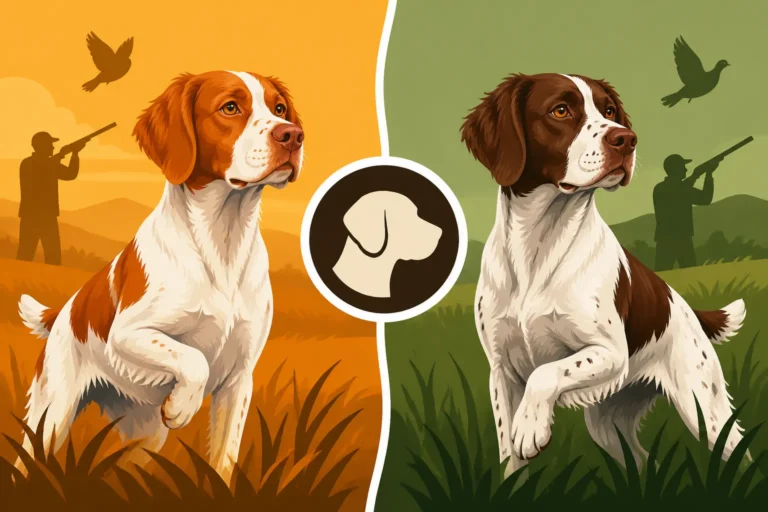
Brittany coat colors include orange and white, liver and white, and patterns with ticking or roan. Those coat shades can change the contrast around the face, which may make the same eye color seem more or less noticeable. A deep brown eye beside a light blaze can look especially dark, while an amber eye may seem less vivid against darker facial markings.
That visual effect does not mean the dog’s eye pigment has changed. If both eyes look clear and comfortable and your dog behaves normally, a difference in how striking the eyes appear from one photograph to another is often just lighting or contrast. Compare the eyes in natural, indirect light before deciding that their color has changed.
A dog’s nose color and eye color are separate features, even though both contribute to the face’s overall expression. A lighter nose does not automatically mean the eyes should be lighter, and dark eyes do not prove that the nose pigment is ideal. If you are curious about another facial pigment question, read Whether a Brittany's Nose Can Be Pink.
When eye color is worth asking a veterinarian about
A shade difference is not the same as an eye problem
Some Brittanys simply have eyes that look lighter than the preferred dark amber shade. If the color has been stable, both eyes appear clear, and the dog is not squinting or rubbing at them, eye shade alone is generally not an emergency. It is still reasonable to mention it during a routine examination, especially if you are unsure whether you are seeing normal variation.
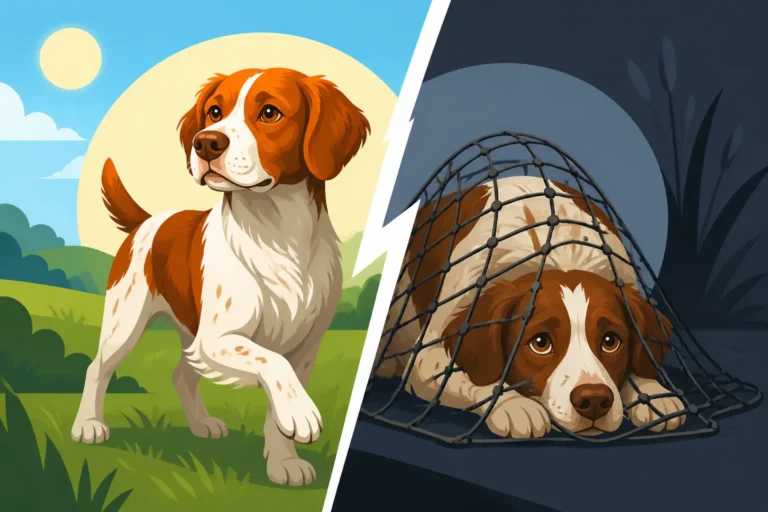
A change that appears suddenly is different. For instance, if one eye that has always looked brown begins to look cloudy, blue-gray, red, or noticeably different from the other, do not assume it is a harmless pigment change. A veterinarian needs to examine the eye to determine what is happening. Color by itself cannot identify the cause.
The same is true if your dog seems to have trouble finding a toy, hesitates on stairs, bumps into objects, or behaves differently in dim light. Dogs can adapt quietly to changes in vision, so owners sometimes notice a change in confidence or navigation before they notice a clear difference in the eyes.
Watch for discomfort and sudden changes
Contact a veterinarian promptly if your Brittany has a painful-looking eye, persistent squinting, excessive tearing, redness, swelling, discharge, cloudiness, or a sudden difference between the pupils. Pawing at the face or keeping one eye closed can also signal discomfort. If the change is sudden or severe, seek urgent veterinary advice rather than waiting to see whether it settles.
Do not put human eye drops, leftover medication, or home remedies into your dog’s eye unless a veterinarian has specifically told you to. Some products can irritate the eye or make it harder to assess the problem. If there is debris or discharge around the eyelids, avoid pressing on the eyeball or trying to remove anything that appears stuck to the surface.
Eye color cannot rule out inherited or acquired eye disease. For information about conditions that may affect vision, see Retinal Dysplasia in a Brittany Spaniel and Glaucoma in a Brittany Spaniel. These conditions require veterinary assessment; they cannot be diagnosed by looking at iris color in a photo.
Eye care and health checks for Brittany owners
Make routine observation part of everyday care
You do not need to inspect your Brittany’s eyes obsessively. A calm, quick look during brushing or after an outing is usually enough to notice a change. Check that the eyes look clear, the lids are not swollen, and your dog is not squinting or rubbing its face. After a run through brush, look for visible debris around the eyes, but do not dig around or try to remove anything embedded.
If there is mild dirt on the fur below the eye, use a clean, soft cloth dampened with water to wipe the surrounding fur gently. Use a separate clean area of the cloth for each eye, and avoid touching the eyeball. If you need to replace a basic grooming cloth, Chewy is one place owners may look for general pet-care supplies; choose a soft, clean cloth rather than a medicated product for use near the eyes.
If you are considering an eye-cleaning product, ask your veterinarian whether it is appropriate for your dog and how it should be used. A product intended for general facial grooming is not automatically safe to put in the eye. Chewy and other pet retailers may carry a range of grooming items, but the label and your veterinarian’s guidance matter more than the product’s placement on a shelf.
Ask about eye exams and certification
Routine veterinary visits give your veterinarian a chance to look at the eyes as part of a broader health check. If your Brittany is a puppy, a breeding prospect, or a dog with a family history of eye problems, ask whether a more specific eye examination is appropriate. The right schedule depends on the dog’s age, health, and purpose; it is not determined by whether the eyes look dark.
Owners considering breeding or buying a puppy can ask what eye evaluations have been completed for the parents and whether documentation is available. A general check during a regular appointment and a formal eye certification are not necessarily the same thing. Ask what examination was performed, who performed it, and whether the records apply to the particular dog you are discussing. For more on this, see Whether a Brittany Needs a Yearly Eye Exam and How Often a Brittany's Eyes Should Be Certified.
If you are organizing records or packing for a trip to the veterinarian, keep a note of when you first noticed a change, whether it affects one or both eyes, and any accompanying signs such as rubbing or discharge. A photo taken in consistent natural light can help show how the appearance has changed, but it does not replace an examination. If you need a small grooming kit for the car or home, Chewy is one possible retailer for ordinary supplies such as a clean cloth; avoid using eye medication unless your veterinarian has prescribed or approved it.
In short, dark amber or brown eyes are typical and preferred in the Brittany, but the precise shade varies. Focus less on matching an ideal color and more on whether the eyes are clear, comfortable, and behaving normally. Chewy may be convenient for basic grooming supplies, but any sudden eye change or sign of discomfort belongs with a veterinarian, not a shopping cart.
Disclaimer
This article is for general informational purposes only and does not constitute professional advice. Laws, prices and regulations vary by location and change over time. Consult a qualified professional for guidance on your specific situation.