Whether a Brittany’s Color Changes as It Grows
A Brittany puppy can look noticeably different from the dog it becomes: pale patches may seem darker, ticking can become more visible, and the coat may change texture as it matures. That can make it hard to tell whether your dog’s color is genuinely changing or simply becoming easier to see. This guide explains what’s normal, what affects appearance, and when a change deserves attention.
How a Brittany’s coat color develops
The underlying pattern is present from birth
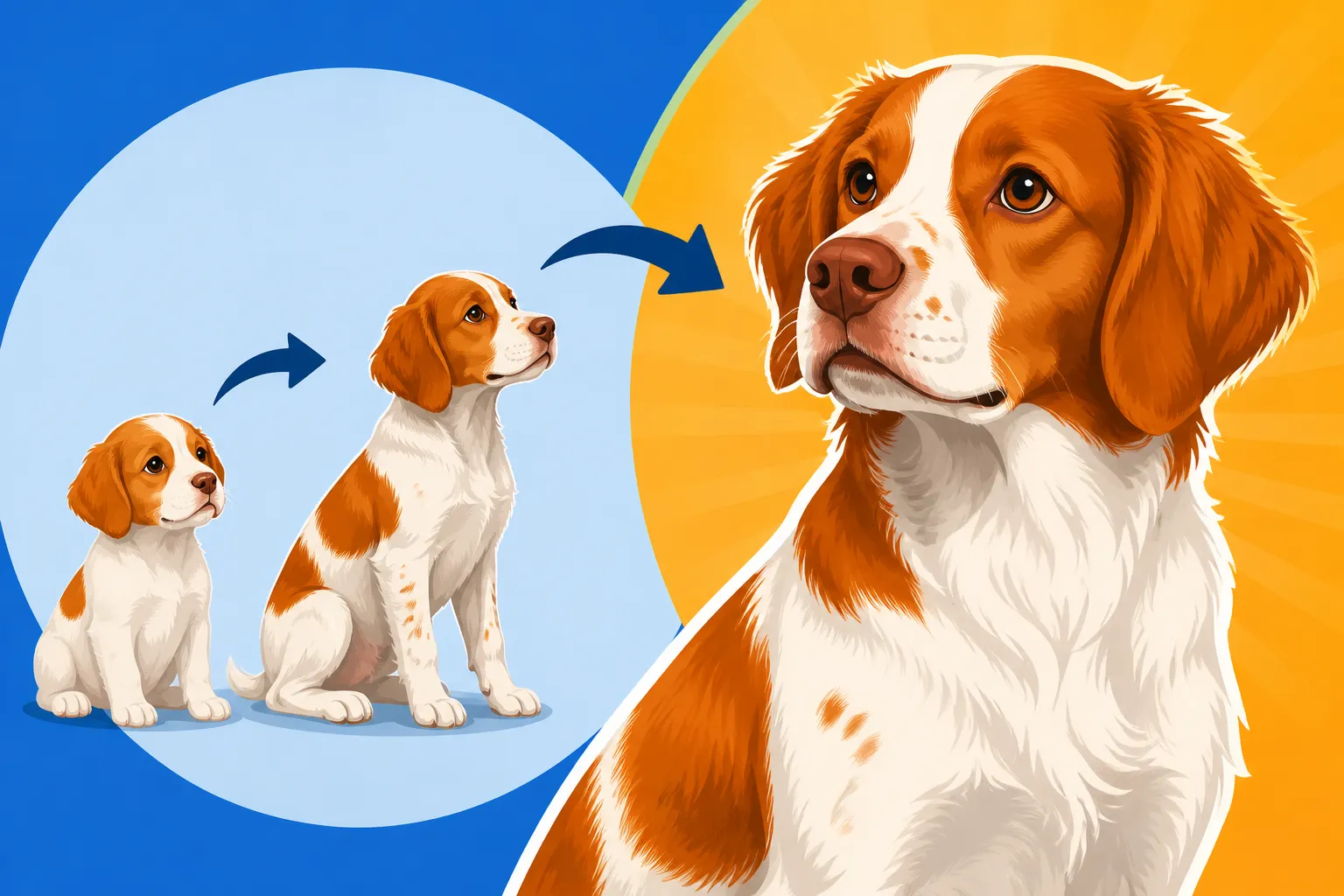
A Brittany’s basic coat pattern is determined by its inherited traits. Puppies are generally born with the main areas of white and color already in place, even when those markings look soft-edged or less vivid at first. As the puppy grows, its coat changes, so the same pattern may look more defined.
For example, an orange-and-white puppy may seem to have a mostly white body with a few light orange patches. Later, the orange areas may appear richer or more noticeable. That doesn’t necessarily mean new markings have appeared; the longer, denser coat and changing contrast can make existing color easier to see.
A puppy’s coat is not a perfect preview of its adult coat. The hair may be shorter and finer, and the overall appearance can change as the puppy sheds its first coat and grows a more mature one. For a closer look at common patterns, see Which Colors a Brittany Comes In, What an Orange and White Brittany Looks Like, and What a Liver and White Brittany Looks Like.
Ticking and roaning may become more noticeable
Small colored flecks in white areas are often called ticking. A coat with a blended, mottled appearance may be described as roan. These markings can be easy to miss on a very young puppy, especially when the hairs are short, pale, or covered by fluff. As the coat grows and sheds, the markings may become easier to see.
That can create the impression that a Brittany is gaining spots. Often, the change is more about visibility than a completely new color pattern: colored hairs may stand out more as the coat length, density, and contrast change. Lighting also matters. A few flecks that disappear in a dim room may be obvious in daylight.
The amount and distribution of ticking vary from dog to dog. If you’re comparing a puppy with its littermates, remember that two puppies with similar parentage can still have different amounts of visible ticking. Whether Ticking Is Allowed on a Brittany explains how these markings fit into the breed’s appearance.
Puppy and adult coats can look different
A puppy’s soft coat can give way to a coat that feels coarser or lies differently. The change in texture may affect how color appears, even when the underlying pattern remains the same. Longer feathering on the ears, legs, or tail area can also make some colored sections seem more prominent.
The transition is gradual, not a one-time switch. You may notice small differences over months as the puppy sheds, grows, and develops adult feathering. Regular brushing helps you see the coat clearly and catch debris or tangles that can disguise its natural color. For basic coat-care expectations, see What a Brittany's Coat Is Like and Where a Brittany's Feathering Grows.
Why a Brittany’s color can seem to change
Shedding and coat growth alter the look
When a puppy sheds, the old coat may come out unevenly. For a while, the coat can look patchy, dull, or less uniform than usual. New hair may also have a slightly different appearance from the puppy hair it replaces. That can be surprising if you expected the color in an early photo to stay exactly the same.
Adult coat growth changes the way light reflects, too. A short coat may look smooth and even, while longer hair can create shadows and make patches appear deeper in color. Feathering may also collect dust, burrs, or dried mud, which can change how the coat looks until it is cleaned.
A simple photo comparison can help you separate real development from changes in lighting. Take pictures in similar natural light, from the same angle, every few months. Avoid comparing a sunlit outdoor picture with an indoor photo taken under warm bulbs; the same orange or liver coat can look quite different in those conditions.
Sun, dirt, and stains can affect appearance
Time outdoors can lighten or dull hair, particularly on areas exposed to strong sunlight. Mud, grass stains, and other grime can temporarily darken or discolor the coat. These effects usually change the appearance of the hair rather than the dog’s underlying pattern.
After a walk or hunt, check the feathering and belly for debris. A thorough brushing or rinse may reveal the coat’s usual color again. If you’re choosing a brush or gentle dog shampoo, Chewy may be one place to browse, but choose products made for dogs and follow the product directions. A bath is not needed after every outing; brushing and spot-cleaning may be enough.
A coat that looks a little faded after a sunny season is different from a sudden change in the skin itself. If the skin beneath the hair becomes red, sore, flaky, or unusually dark, or your dog is scratching persistently, ask your veterinarian rather than treating it as a cosmetic coat issue.
Grooming can make markings easier to see
Matted or tangled feathering can hide the coat’s natural pattern. Once the hair is brushed out, colored areas may look more defined simply because the strands are separated and lying smoothly. Trimming can also change the visual balance of the coat, even though it does not alter the pigment in the hair that remains.
For most owners, gentle, consistent brushing is a better way to keep the coat readable than frequent clipping. Be especially patient around the ears, legs, and other areas where feathering can tangle. If you’re looking for grooming supplies, Chewy can be a convenient place to compare brushes and dog-safe coat products. Focus on suitability and comfort, not on products that promise to change your dog’s color.
| What you notice | Common explanation | What to do |
|---|---|---|
| Flecks appear in white areas | Ticking may be easier to see as the coat develops | Take photos in consistent daylight and watch over time |
| Orange or liver patches seem richer | Adult coat growth, lighting, or contrast may affect appearance | Compare photos taken in similar conditions |
| Coat looks dull after outdoor activity | Dust, mud, or plant debris may be coating the hair | Brush or rinse as appropriate |
| Coat looks lighter after time outdoors | Sun exposure may have affected the hair’s appearance | Monitor the coat and protect your dog from excessive heat and sun |
| Skin looks irritated or changes suddenly | A skin or health issue may be involved | Contact your veterinarian |
What changes are normal and what are not
Changes that usually fit normal development
A gradual shift in how visible the markings are is common as the puppy coat changes. Ticking may become clearer, feathering may develop, and the coat may look fuller or more textured. The dog’s overall pattern, however, is not expected to transform into an entirely different pattern as it grows.
It can help to keep a short coat-development record. Note your Brittany’s age, any shedding, and whether the coat has recently been washed or spent a lot of time outdoors. A photo every few months gives you a much fairer comparison than relying on memory, especially when the differences happen gradually.
If you have questions about a puppy’s expected adult appearance, ask the breeder what they have observed in related dogs. A breeder may be able to explain how the coat in that family tends to develop, but individual adult coats can still vary. The color itself does not tell you how well a Brittany will hunt or what its temperament will be; Whether Color Says Anything About a Brittany's Hunting covers that distinction.
Changes that merit a closer look
A gradual coat change without discomfort is usually less concerning than a sudden change accompanied by skin symptoms. Pay attention if the hair is falling out in patches, the skin is inflamed or scabby, your dog seems itchy, or the affected area is spreading. Persistent odor or discomfort can also signal that something besides ordinary coat development is going on.
Color changes can also be caused by staining or contact with something in the environment. If you suspect a product, plant, or other substance has affected the coat or skin, prevent further exposure and contact your veterinarian for advice. Don’t use human hair dye, bleach, or color-enhancing products on your dog; they can irritate skin and may be unsafe if licked.
When a change worries you, take a clear photograph and note when you first saw it. Bring that information to your veterinary appointment, along with details about itching, bathing, new products, or recent outdoor exposure. Chewy may offer grooming products, but a product should not take the place of veterinary care when the skin looks unhealthy or the change is sudden.
How to follow your Brittany’s coat as it grows
Make comparisons that are actually useful
Use natural daylight and take pictures from a few consistent angles: side, back, and face. Try to photograph the coat when it is clean and dry, without strong shadows or colored indoor lighting. Comparing pictures taken under similar conditions makes it easier to see whether markings are developing or whether the difference comes from the camera and surroundings.
Take note of coat texture as well as color. A puppy with short, soft hair may look quite different from the same dog with adult feathering. If a white patch seems to have gained spots, part the hair gently and look closely at whether you can see individual colored hairs or whether dirt and staining are sitting on the coat.
Brushing gives you a chance to inspect the skin and remove debris, but avoid over-brushing or using tools that scrape the skin. A suitable grooming routine can keep the coat comfortable and make changes easier to notice. If you’re shopping for a brush or dog-safe shampoo, Chewy is one option for comparing supplies; ask your veterinarian or groomer if you are unsure what type is appropriate for your dog’s coat.
Keep color in perspective
A Brittany’s coat can become more visually distinctive as the dog matures, but color is only one small part of the dog. Coat development does not predict health, ability, or personality. A puppy that looks unusually pale in one photo may simply be standing in bright light; a puppy with subtle ticking may show it more clearly after its coat changes.
If the dog is comfortable, the skin looks healthy, and the changes are gradual, there is usually no need to chase a particular shade or try to preserve the puppy appearance. Let the coat develop naturally, keep it clean and brushed, and note anything unusual. For broader care guidance, How Often a Brittany Needs Brushing and Whether a Brittany's Feathering Should Be Trimmed offer useful next steps.
If you are uncertain whether a change is normal, your veterinarian can assess the coat and skin in person. That is especially helpful when the change is rapid, patchy, or paired with irritation. A few well-lit photos and a simple timeline can make that conversation more productive.
Disclaimer
This article is for general informational purposes only and does not constitute professional advice. Laws, prices and regulations vary by location and change over time. Consult a qualified professional for guidance on your specific situation.