Whether a Brittany Needs Its Teeth Brushed
Oh, the age-old question that many a Brittany owner mulls over while their beloved companion is showering them with enthusiastic, slightly fishy-smelling kisses: do these high-energy, bird-crazy dynamos actually need their teeth brushed? It’s a common frustration, isn't it? You've got enough on your plate managing their boundless energy, field training, and making sure they don't eat the couch, so adding another daily chore can feel like just one more thing you don't have time for. But trust me, as someone who's been around Brittanys for decades and seen the consequences of neglecting dental hygiene, this isn't just about fresh breath; it's about their overall health and comfort. This guide is going to walk you through the undeniable importance of canine dental care, specifically for our active Brittanys, and equip you with practical strategies to keep their pearly whites healthy.
The Hard Truth About Canine Dental Health – It's Not Just About Bad Breath!
We all know that distinct "dog breath" smell. Sometimes it's a little gamey, sometimes it's downright offensive. Most of us just chalk it up to being a dog. But what many folks don't realize is that bad breath, or halitosis, is rarely just bad breath. It's often the first, most obvious red flag waving furiously that something isn't quite right inside your Brittany's mouth. Ignoring it can lead to a cascade of problems that are not only painful for your dog but can also lead to significant veterinary bills down the line. It's an area of pet care that's often overlooked, dismissed as cosmetic, or simply too daunting to tackle, but it truly shouldn't be.
Why Dental Care Often Falls Through the Cracks for Dog Owners
Let's be honest, canine dental care isn't typically on the top of the list when you first bring home a bouncy Brittany puppy. You're focused on Whether a Brittany Needs Puppy Class, house training, and basic obedience. Then, as they grow, your attention shifts to field work, building that incredible bird drive, and keeping them fit for long days outdoors. Dental care feels like an afterthought, a luxury even, compared to all the pressing training and exercise needs. It's not something we naturally think about for dogs in the same way we do for ourselves. After all, dogs don't complain about toothaches with words, and their stoic nature means they'll often hide discomfort until a problem is severe.
Another big hurdle is simply not knowing where to start, or feeling overwhelmed by the thought of trying to get a wiggly, energetic Brittany to sit still for a tooth-brushing session. Many owners attempt it once or twice, face resistance, and then give up, assuming it's an impossible task. There's also a misconception that hard kibble or dental chews alone are enough to keep teeth clean, which, while helpful, often isn't the whole picture. The reality is, consistent, proactive dental care is a cornerstone of your Brittany's long-term well-being, just as vital as their annual vaccinations or ensuring they get enough protein in their diet.
The Silent Threat: How Plaque and Tartar Accumulate on a Brittany's Teeth
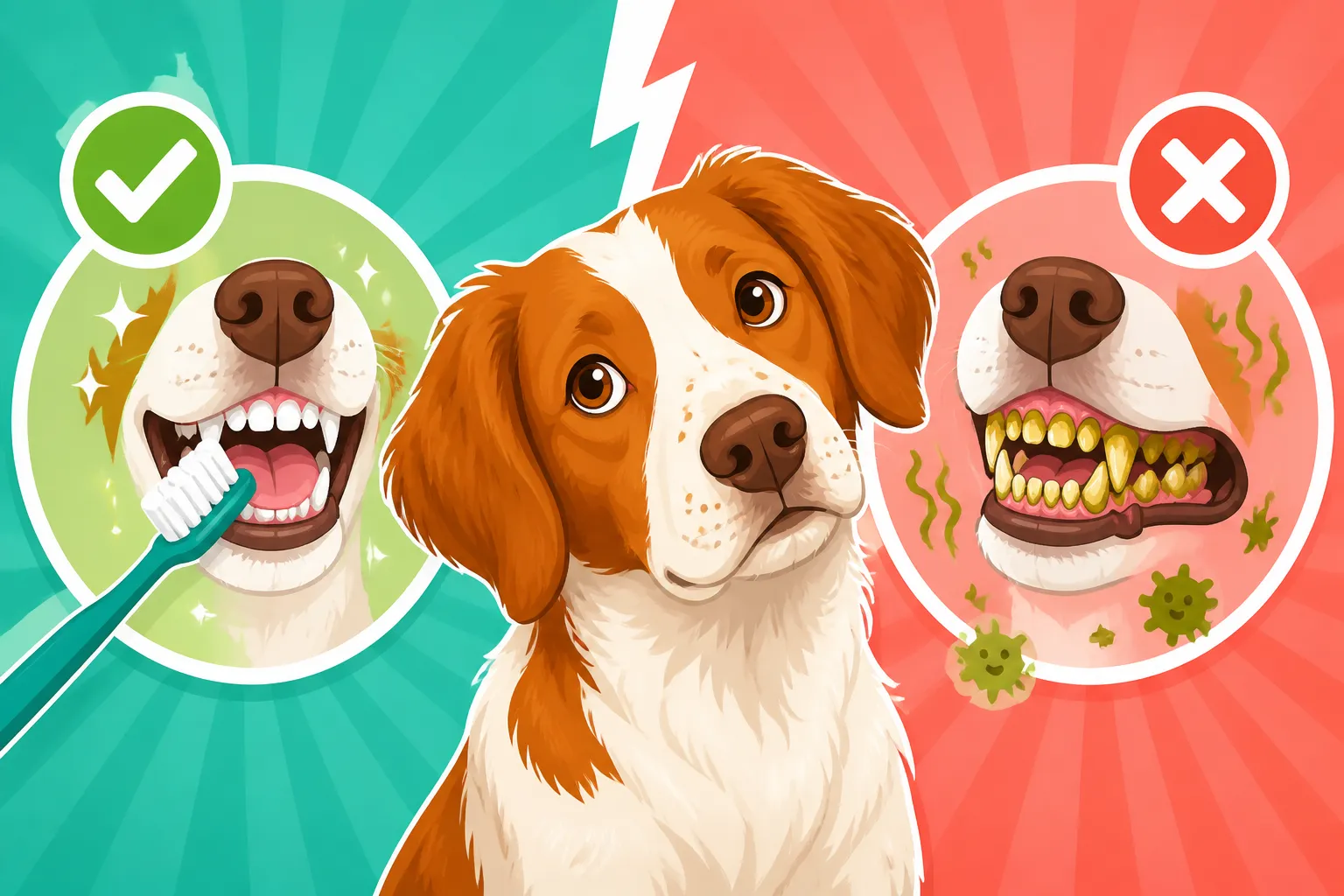
The process of dental disease in dogs is strikingly similar to humans. It all begins with plaque, a sticky, colorless film composed of bacteria, food particles, and saliva that constantly forms on the tooth surface. Every time your Brittany eats, tiny bits of food combine with bacteria in their mouth, creating this film. If plaque isn't removed regularly, usually within 24-48 hours, it starts to mineralize and harden, transforming into tartar (or calculus). Tartar is rough, off-white to brownish, and clings tenaciously to the teeth, particularly along the gum line.
Once tartar forms, it creates a rough surface that attracts even more plaque, accelerating the cycle. The critical issue with tartar isn't just its unsightly appearance; it's a haven for bacteria that irritates the gums. Because a Brittany's diet typically consists of commercial kibble or wet food, which isn't designed to mechanically clean teeth in the same way that tearing at raw meat might (as their wild ancestors would), this accumulation happens naturally and often rapidly. Without intervention, this bacterial buildup at the gum line is the gateway to more serious issues, silently brewing beneath the surface while your dog continues to happily point birds in the field.
The Specific Risks a Brittany Faces Without Proper Dental Hygiene
Ignoring those early signs of plaque and tartar on your Brittany's teeth can have far-reaching consequences that extend well beyond just a little bad breath. It's not just about losing a tooth or two; the bacterial infections that take root in the mouth can become a constant source of inflammation and pain, severely impacting your dog's quality of life and even shortening their lifespan. Given that The Twelve to Fourteen Years a Brittany Gets is already a relatively short time, we want every one of those years to be as healthy and comfortable as possible.
From Gingivitis to Periodontal Disease: The Progression of Oral Problems
The first stage of dental disease is gingivitis, which is essentially inflammation of the gums. You might notice your Brittany's gums looking a little red, swollen, or even bleeding when they chew on something hard. This is where the plaque and tartar really start to do their damage. The bacteria release toxins that irritate the gum tissue, causing this inflammatory response. At this stage, gingivitis is usually reversible with professional cleaning and diligent home care. It’s like a warning shot, telling you it’s time to take action.
However, if gingivitis is left untreated, it progresses to periodontal disease. This is where things get serious and often irreversible. The bacteria from the plaque and tartar start to migrate deeper below the gum line, attacking the supporting structures of the teeth – the bone and ligaments that hold the teeth in their sockets. Pockets form between the gums and teeth, collecting even more bacteria, pus, and debris. This leads to chronic pain, loose teeth, abscesses, and eventually, tooth loss. Imagine having a constant, dull ache in your mouth, or the sharp pain of an exposed nerve, and you get a sense of what your Brittany might be enduring. This stage not only causes immense discomfort but also makes eating painful, potentially leading to weight loss or changes in eating habits, which can be particularly concerning for active hunting dogs who need consistent nutrition to maintain their energy levels in the field.
Beyond the Mouth: Systemic Health Issues Linked to Poor Dental Care
Perhaps the most alarming aspect of untreated dental disease is its systemic impact. The mouth is not an isolated system; it's intricately connected to the rest of the body. When bacteria flourish in the oral cavity due to periodontal disease, they don't stay confined there. These bacteria can easily enter the bloodstream through the inflamed gum tissue, traveling to distant organs and causing secondary infections or exacerbating existing conditions. It's a silent pathway for trouble.
For example, bacteria from severe periodontal disease are frequently linked to heart disease. They can colonize heart valves, leading to infections like endocarditis, which is a serious inflammation of the heart's inner lining. Similarly, the kidneys and liver, organs responsible for filtering waste and detoxifying the body, can be stressed and even damaged by a constant barrage of bacterial toxins from the mouth. Chronic inflammation from dental disease also puts a strain on the immune system, making your Brittany more susceptible to other illnesses. This is why when your vet performs What a Brittany's Yearly Bloodwork Should Cover, they are looking at markers that can be influenced by systemic inflammation, some of which might originate in the mouth. What starts as a simple oversight with brushing can snowball into issues that significantly compromise your Brittany's overall health and vitality over its The Twelve to Fourteen Years a Brittany Gets.
Brushing Your Brittany's Teeth: Is It Truly Necessary, or Just a Nice-to-Have?
Let's cut right to the chase: yes, brushing your Brittany's teeth is truly necessary. While some breeds might get away with less intensive care due to genetic factors or mouth structure, no dog is immune to plaque and tartar buildup. For an active Brittany, who relies on good health and energy, maintaining oral hygiene is foundational to their well-being. It’s not just a suggestion; it’s a critical component of responsible pet ownership, much like ensuring they have adequate exercise or a balanced diet. Think of it this way: you brush your teeth every day, and your dog’s teeth are subject to the same processes of decay and plaque formation.
The Gold Standard: Why Brushing Remains the Most Effective Method
Daily or at least every-other-day brushing is undeniably the gold standard for preventing dental disease in dogs. Why? Because it’s the most effective mechanical removal of plaque before it has a chance to harden into tartar. Just like with human teeth, the bristles of a toothbrush physically dislodge the sticky bacterial film from the tooth surfaces and along the gum line. Dental chews, special kibbles, or water additives can help, but they simply cannot replicate the thoroughness of manual brushing. They might clean some surfaces or reduce bacteria in saliva, but they rarely reach all the nooks and crannies where plaque loves to hide, particularly on the inner surfaces or towards the back of the mouth.
Using a toothpaste specifically formulated for dogs (never human toothpaste, as it contains xylitol and fluoride which are toxic to dogs) adds another layer of protection. These enzymatic toothpastes help to break down plaque and kill bacteria, further enhancing the cleaning action of the brush. Consistency is key here. Just as a single trip to the gym won't get you fit for a marathon, a single brushing session every few weeks won't prevent the continuous buildup of plaque. It needs to be a regular habit, integrated into your routine. This proactive approach can significantly delay or even eliminate the need for costly and stressful professional dental cleanings under anesthesia later in your Brittany's life, saving you both trouble and money over the long haul of What a Brittany Costs Over Its Lifetime.
Addressing the "My Dog Hates It!" Dilemma: Tips for Successful Brushing
If you've ever tried to brush your Brittany's teeth and ended up with more slobber on your shirt than on the brush, you're not alone. Many owners face resistance, and it's easy to get discouraged. The key is patience, positive reinforcement, and a gradual approach. Your Brittany is intelligent and sensitive; they will pick up on your frustration, so try to make it a calm, rewarding experience.
Here’s a step-by-step approach that often works:
- Start Slow and Young (if possible): If you have a puppy, begin accustoming them to having their mouth handled early on. Gently touch their muzzle, lift their lips, and touch their gums with your finger. Reward them lavishly with praise and high-value treats. For an adult Brittany, you can still start slow; it just might take a little longer.
- Introduce Taste, Not Texture: Put a tiny dab of dog-specific toothpaste on your finger and let your Brittany lick it off. Most dog toothpastes come in appealing flavors like poultry or peanut butter, which can make them more receptive. Once they enjoy the taste, try rubbing a bit directly on their gums with your finger.
- Finger Brush First: Once they tolerate your finger in their mouth, try a finger brush (a small brush that fits over your finger). This gives them a softer introduction to the brushing sensation and gives you more control. Focus on just a few teeth at first, gradually increasing the number of teeth and the duration over several days or weeks.
- Transition to a Dog Toothbrush: When they're comfortable with the finger brush, move to a soft-bristled dog toothbrush. These are designed with angled heads and softer bristles to be comfortable for canine mouths. Again, start with short sessions, focusing on the outside surfaces of the upper teeth, as this is where plaque tends to accumulate most. Gradually work your way around the mouth.
- Positive Reinforcement is Crucial: Always end each session, no matter how short or successful, with enthusiastic praise, a favorite toy, or a special treat. You want your Brittany to associate tooth brushing with positive outcomes.
- Consistency Over Perfection: Aim for daily brushing, but don't beat yourself up if you miss a day. Even brushing a few times a week is significantly better than no brushing at all. The goal is to establish a routine that you and your Brittany can stick to long-term.
Remember, your Brittany is a sensitive breed; What Happens When You Shout at a Brittany or apply too much force will be counterproductive. Keep it gentle, upbeat, and short in the beginning. Many owners find that setting a specific time for dental care, perhaps right after their evening meal or a quiet snuggle session, helps make it a habit.
Alternatives and Supplements: When Brushing Isn't Enough or Is Impossible
While daily brushing is indeed the gold standard, sometimes life gets in the way, or your Brittany simply refuses to cooperate despite your best efforts. For some dogs, the texture of the brush, the taste of the paste, or past negative experiences can make brushing a battle. In these scenarios, or as a complement to brushing, there are other tools and strategies that can help manage plaque and tartar. It's crucial, however, to understand their limitations and not mistake them for a complete replacement for manual cleaning or professional veterinary care.
Dental Chews, Water Additives, and Special Diets: What Works and What Doesn't
Let's talk about the array of products designed to aid dental health.
- Dental Chews: These can be quite effective if they are chosen carefully. Look for chews that are specifically designed for dental health and have been given a Veterinary Oral Health Council (VOHC) seal of approval. This seal indicates that the product meets certain standards for plaque and/or tartar reduction. The mechanical action of chewing these harder, textured treats helps scrape away plaque from the tooth surface. Brands like Greenies or VeggieDent are popular choices and can often be found on platforms like Chewy or Amazon. However, no dental chew can reach every tooth surface, especially the crucial gum line, as effectively as a brush. They are best used as an adjunct to brushing, or as a primary method if brushing is truly impossible. Be mindful of calorie content, especially for Brittanys who might gain weight easily if not exercising regularly during the off-season.
- Water Additives: These typically contain ingredients that help reduce bacteria in the mouth or break down plaque in the saliva. They're very easy to use—you just add them to your dog's drinking water. While they can contribute to fresher breath and a reduction in overall bacterial load, they don't provide the mechanical scrubbing action needed to remove existing plaque and tartar effectively. Think of them as a preventative measure, not a treatment for existing dental disease.
- Specialized Dental Diets: Some prescription dog foods are formulated with a unique kibble design that has a larger size and a fibrous texture. This encourages the tooth to penetrate the kibble further before it breaks, providing a "scrubbing" action on the tooth surface. These diets also often contain ingredients that help prevent tartar buildup. They can be very beneficial, especially for dogs prone to dental issues, but they require a vet's recommendation. For a working Brittany who needs specific nutrition for energy, like those that might benefit from a performance food you'd find from brands that sell through Chewy or Amazon, you'd want to discuss how a dental diet fits into their overall caloric and nutritional needs with your vet.
It's helpful to view these alternatives as supportive measures. They might slow down plaque accumulation, but they are generally less effective than direct, mechanical brushing in removing it. A good strategy is to combine multiple approaches – perhaps dental chews a few times a week, a water additive daily, and brushing as often as your Brittany tolerates.
The Role of Professional Dental Cleanings Under Anesthesia
Despite your best home care efforts, almost all dogs will eventually need a professional dental cleaning. This is because once plaque hardens into tartar, it cannot be removed by brushing or dental chews alone. It requires specialized veterinary tools and techniques. These cleanings are performed under general anesthesia, which sounds daunting to many owners, but it's crucial for a thorough and safe procedure.
Under anesthesia, your veterinarian can:
- Perform a thorough oral examination: This allows them to detect issues that might not be visible in an awake dog, such as painful lesions, fractured teeth, or growths.
- Scale teeth above and below the gum line: Using ultrasonic and hand scalers, they meticulously remove all plaque and tartar, including the crucial areas hidden beneath the gum line where periodontal disease truly takes hold.
- Polish the teeth: After scaling, the teeth are polished to smooth out any microscopic etches left by the scaling, making it harder for plaque to adhere in the future.
- Perform dental X-rays: This is vital to assess the health of the tooth roots and surrounding bone, which are often the true indicators of the severity of periodontal disease. Problems like bone loss, abscesses, or impacted teeth are only visible on X-rays.
- Perform extractions if necessary: Severely diseased or painful teeth that cannot be saved are humanely extracted, alleviating chronic pain for your Brittany.
It’s completely understandable to be concerned about anesthesia, but modern veterinary anesthesia protocols are very safe. Your vet will conduct a thorough pre-anesthetic exam and often bloodwork (similar to What a Brittany's Yearly Bloodwork Should Cover) to ensure your dog is a good candidate. Skipping professional cleanings to avoid anesthesia can lead to more severe, painful, and ultimately more complex and costly problems in the long run. Often, delaying a necessary dental procedure results in a dog needing multiple extractions rather than just a routine cleaning, compounding the recovery and expense. These cleanings are a vital part of your Brittany's Caring for an Old Brittany plan too, as older dogs can be more susceptible to dental issues.
| Dental Care Method | Primary Benefit | Effectiveness for Plaque | Effectiveness for Tartar | Best Use Case |
|---|---|---|---|---|
| Tooth Brushing | Mechanical plaque removal, gum stimulation | High | Low (prevents formation) | Daily prevention, gold standard |
| Dental Chews | Mechanical abrasion, fresh breath | Moderate | Low (some reduction) | Supplement to brushing, reward, VOHC certified |
| Water Additives | Reduce oral bacteria, fresh breath | Low to Moderate | Low | Daily adjunct to brushing, mild prevention |
| Dental Diets | Mechanical cleaning, tartar prevention | Moderate | Low (prevents formation) | Long-term preventative, vet-recommended |
| Professional Cleaning | Comprehensive cleaning, sub-gingival care | High | High | Necessary for existing tartar, annual check-up |
Creating a Lifelong Dental Care Routine for Your Brittany
Establishing good dental habits isn't a one-time event; it's a commitment that lasts your Brittany's entire life. Just like their training or their exercise regimen, it needs consistency and adaptability as they age. A healthy mouth contributes significantly to their overall vitality, energy levels, and ability to enjoy their food, which are all critical for a happy, active Brittany. Starting early makes a huge difference, but it's never too late to begin.
Starting Young: Introducing Dental Habits to Your Brittany Puppy
If you're bringing home a Brittany puppy, you have a fantastic opportunity to make dental care a positive, normal part of their routine from day one. Begin with gentle handling of their mouth, lifting their lips, and touching their gums when they are calm and relaxed. Pair these interactions with praise and tiny, high-value treats. You want to create a positive association, so they learn that mouth handling means good things happen. This early desensitization is paramount.
As they become comfortable, introduce a tiny bit of dog-specific toothpaste on your finger for them to lick. Then, very briefly, rub it on a few teeth. Gradually introduce a finger brush or a soft puppy toothbrush. Keep sessions extremely short – just a few seconds initially – and always end on a positive note before they get restless. Puppies are naturally curious and often more accepting of new sensations than adult dogs who might have already developed a dislike for mouth handling. Making it a game, perhaps after a playtime session when they're a little tired and cuddly, can set them up for a lifetime of easier dental care. Remember that early experiences, even for something as simple as brushing, heavily influence a Brittany's temperament and cooperation in the long run. This foundational work will pay dividends when they reach adulthood.
Maintaining Consistency: Making Dental Care a Natural Part of Your Day
Once you've introduced dental care, the challenge becomes maintaining consistency, especially with an active breed like the Brittany. Life gets busy, hunting seasons ramp up, and sometimes a quick brushing session can feel like just one more thing on a packed schedule. However, integrating it into an existing routine makes it much easier to stick with. For example, if your Brittany always gets a belly rub before bedtime, add a quick brush to that ritual. If they get a special treat after their morning walk, make that treat contingent on a quick teeth cleaning.
Here are a few tips to help you stay on track:
- Set a Schedule: Pick a specific time each day or every other day that works for you. Maybe it's after their last meal of the day, or during a quiet evening snuggle.
- Keep Supplies Handy: Have your Brittany's toothbrush and toothpaste easily accessible. If you have to dig through a cabinet every time, you're more likely to skip it.
- Utilize a Dental Care Checklist: During their How Often a Brittany Needs a Wellness Exam, ask your vet to give their teeth a quick check. This helps keep you accountable and catches issues early. Also, consider setting calendar reminders on your phone for brushing days.
- Consider Seasonal Adjustments: During intense hunting seasons, your Brittany might be exhausted, and adding a brushing session might be difficult. You might rely more heavily on VOHC-approved dental chews (available from places like Chewy) or water additives on those days, and then ramp up brushing again during the off-season. Just don't let it slide completely.
- Observe for Changes: Pay attention to any changes in their breath, gums (redness, swelling), or chewing habits. Brittanys are notoriously stoic and will hide pain, so a subtle shift might be the only sign of trouble. If you notice anything concerning, don't hesitate to consult your veterinarian.
Remember that a clean mouth contributes to a healthy body, impacting everything from their ability to eat How Much an Adult Brittany Eats comfortably to their overall longevity. Proactive dental care is an essential component of their long, happy, and healthy life with you.
Disclaimer
This article is for general informational purposes only and does not constitute professional advice. Laws, prices and regulations vary by location and change over time. Consult a qualified professional for guidance on your specific situation.