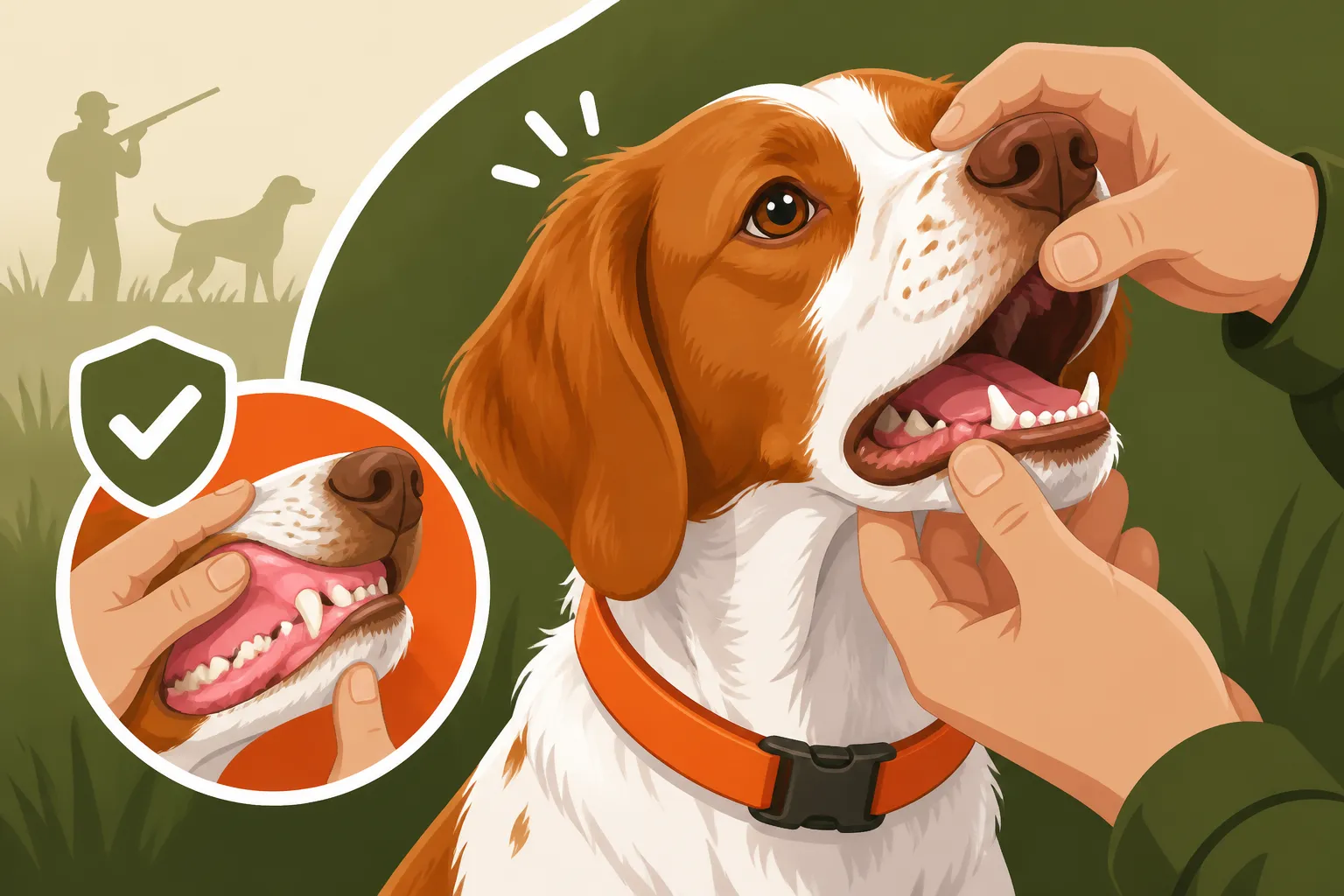
How to Check a Brittany’s Mouth After a Hunt
After a thrilling day in the field, it's easy to just load up your Brittany and head home, tired but satisfied. But overlooking a quick yet crucial post-hunt check can lead to silent suffering for your dedicated hunting partner. This guide will walk you through exactly how to thoroughly examine your Brittany's mouth after a hunt, helping you spot potential issues before they become serious problems.
Why a Post-Hunt Mouth Check Is Non-Negotiable for Your Brittany
Our Brittanys are incredible athletes, driven by instinct and a desire to please, often pushing through dense cover with incredible enthusiasm. But this very dedication, combined with the rugged environments they work in, puts their mouths at significant risk. They use their mouths for retrieving, for investigating, and sometimes, regrettably, for just crashing through obstacles. What seems like a minor inconvenience can quickly escalate into a painful, debilitating, and costly issue if not caught early.
The Hidden Dangers of Oral Injuries
Think about the terrain your Brittany covers: thorny thickets, matted grasses, sharp stubble, and even discarded trash. It's a minefield for their mouths. A simple stick picked up or a run through a patch of burrs can leave behind splinters, thorns, or even grass awns like foxtails deeply embedded in the gums, under the tongue, or between teeth. These aren't just superficial cuts; they can fester, leading to painful abscesses, severe infections, and even systemic illness if bacteria enter the bloodstream. Our dogs are stoic and often hide their pain until it's quite advanced, making these hidden dangers all the more insidious. The Injuries a Brittany Picks Up in the Field highlights the array of dangers they face, and oral injuries are definitely high on that list.
Beyond the immediate pain and infection, these injuries can have a profound impact on your Brittany's overall health and future hunting performance. A dog with a sore mouth won't eat properly, leading to weight loss and a decline in energy. It might refuse to retrieve or even shy away from the joy of the hunt because of the memory of pain. Imagine trying to perform your best with a throbbing toothache or a shard of wood stuck in your cheek – it's no different for our Brittanys. What starts as a small puncture can become a chronic issue if not addressed, potentially affecting their ability to enjoy their natural instincts.
Long-term dental health is also at stake. Repeated trauma to the teeth can lead to chips, fractures, or even loosening of teeth, which can invite infection and premature tooth loss. An infection in the mouth can spread to other parts of the body, affecting organs like the heart or kidneys. It’s not just about a pretty smile; it’s about a healthy foundation for their entire body. Being proactive ensures that their oral health supports their vibrant, active lifestyle for years to come.
Early Detection Prevents Bigger Problems and Vet Bills
Let's be honest, vet bills can really add up, especially when dealing with emergencies or complex medical procedures. A simple infection, if allowed to worsen, can require sedation, X-rays, extensive oral surgery, and multiple rounds of antibiotics. These costs quickly dwarf the few minutes it takes for a regular post-hunt check. Catching a small thorn before it embeds deeply or an early chip in a tooth before it fractures completely can save you hundreds, if not thousands, of dollars and a lot of emotional stress worrying about your beloved companion.
Beyond the financial aspect, early detection offers peace of mind. Knowing that your Brittany is comfortable and free from pain allows you to enjoy the memories of the hunt rather than replaying scenarios in your head, wondering if they picked up something nasty. It’s about being a responsible dog owner, understanding the risks, and taking simple, consistent steps to mitigate them. A quick check after every outing becomes as routine as cleaning your gun or putting away your gear – just another part of the post-hunt ritual that ensures everyone, especially your dog, is safe and sound.
Furthermore, consistent checks mean you become intimately familiar with your Brittany's normal mouth. You'll know the usual color of their gums, the feel of their teeth, and any unique quirks. This familiarity makes it much easier to spot an abnormality quickly. If you only check when there's an obvious problem, you might miss subtle signs that, to an experienced eye (which you'll become!), would indicate an emerging issue. This proactive approach not only prevents severe health problems but also strengthens the bond you share, as your Brittany learns to trust your gentle handling. It’s an investment in their comfort and your shared adventures.
Your Step-by-Step Guide to a Thorough Mouth Examination
Performing a thorough mouth check doesn't require a veterinary degree, just a little patience and a methodical approach. The key is to be gentle, keep your Brittany calm, and use good lighting. This isn't about being rough or causing discomfort; it's about a quick, yet comprehensive, inspection that your dog will learn to tolerate, especially if it's consistently paired with positive reinforcement.
Gathering Your Supplies
Before you even start, make sure you have everything you need laid out. Rummaging for supplies with a tired, possibly fidgety, Brittany isn't going to make the process smoother. Here's a basic kit:
- Headlamp or a bright flashlight: Critical for seeing into dark corners of the mouth.
- A pair of disposable gloves: For hygiene and grip, especially if things are wet.
- Saline solution or clean water: In a squirt bottle to rinse debris or flush minor cuts. You can often find pet-safe saline washes online or at stores like Chewy.
- Gauze pads or clean cloths: For wiping away saliva or blood and for gently drying areas.
- Treats: Small, high-value treats to reward cooperation.
A quiet, well-lit area is ideal. If you're still at the truck, use the truck's interior light and a headlamp. At home, a bathroom or kitchen with good overhead lighting works well. It's important that you can see clearly into every nook and cranny. Many of the problematic items like foxtails are small and can hide effectively. Having your supplies at the ready, perhaps as part of your larger field first aid kit, makes the process efficient. What a First Aid Kit for a Brittany Should Hold gives a great overview of essentials, and mouth-checking items definitely belong there.
Ensuring good lighting is paramount. You'd be surprised what a tiny splinter or a barely visible puncture wound can become if left unnoticed. A headlamp keeps both your hands free, allowing you to gently manipulate your dog's mouth. Furthermore, having a helper can make a world of difference, especially if your Brittany is new to this routine or particularly tired. One person can hold the dog steady and offer praise, while the other conducts the examination. Remember, slow and steady wins the race; rushing through it increases the chance of missing something important or making your dog resent the process.
For supplies, consider keeping a dedicated "post-hunt care kit." You can easily find items like sterile saline, gauze, and even small, portable headlamps on Amazon or at local drugstores. Having these on hand, always stocked and ready, removes any excuse for skipping the check. Some owners even carry a small, unbreakable mirror to help see the very back of the mouth, though this might be advanced for a beginner. The goal is to make it as easy as possible for you to do the right thing for your dog.
Inspecting Lips, Gums, and Inner Cheeks
Start by gently lifting your Brittany's upper lip, then pulling down the lower lip. Systematically examine the outer surfaces of the lips for any cuts, punctures, or swelling. Pay close attention to the corners of the mouth where debris can collect. You’re looking for anything out of the ordinary, any redness, or any signs of irritation. Remember, even a small scratch can be a gateway for infection.
Next, move to the gums. With your thumb and forefinger, gently lift the lips to expose the gums along the top and bottom jaw. The gums should be a healthy pink color (unless your Brittany has naturally pigmented gums, which is common). Look for any areas of redness, swelling, bleeding, or pale spots. Sometimes, a tiny stick or a piece of debris can get lodged right along the gum line, causing irritation. Run a gloved finger lightly along the gums to feel for any bumps or foreign objects. If you notice any unusual color, it could be a sign of systemic issues, so keep that in mind. What a Brittany's Yearly Bloodwork Should Cover often includes checks that relate to gum health.
Finally, tackle the inner cheeks. This is where many irritants, especially those pesky grass awns or small twigs, love to hide. Gently push a finger into the cheek pouch and pull it taut, visually scanning the entire inner surface. You might need to use your other hand to hold the lip back. Again, look for any punctures, scrapes, redness, or swelling. Foxtails are notorious for burrowing into these soft tissues, creating an entry point for bacteria and causing significant pain. Be thorough and don't rush this part.
Examining Teeth and Tongue
The teeth are next on your list. Gently open your Brittany's mouth by placing your thumb on one side of their upper jaw, behind the canine tooth, and your fingers on the opposite lower jaw. Then, gently apply pressure and tilt their head back slightly. This usually encourages them to open wide enough for you to get a good look. Examine each tooth individually, from the front to the back molars. Look for chips, cracks, excessive wear, or any loose teeth. Pay special attention to the large carnassial teeth at the back, which can be prone to fractures from chewing on hard objects. Old food or debris can sometimes get caught between teeth, leading to gum irritation. Whether a Brittany Needs Its Teeth Brushed delves into general dental care which is important year-round.
Now, for the tongue. This can be tricky, as many dogs don't appreciate having their tongue handled. With a gentle but firm grip, try to pull the tongue out slightly to one side. Look for any lacerations, punctures, or embedded foreign objects. Grass seeds, thorns, and small splinters can easily lodge in the soft tissues of the tongue, causing discomfort and potential infection. The underside of the tongue and the area where it connects to the floor of the mouth are also prime hiding spots for debris. A common culpit that hides here is a foxtail; Where Foxtails Hide on a Brittany provides more context on this particular menace.
Lastly, quickly inspect the roof of the mouth and, if you can see them, the tonsils. The roof of the mouth can sometimes harbor splinters or other sharp objects that get pressed against it during chewing or retrieving. The tonsils are located in the back of the throat and, when healthy, are usually not visible or barely so. If you see them red, swollen, or protruding, it could indicate an infection or irritation, although this is less common from a direct hunting injury unless a very large object was swallowed or impacted. Once you're done, offer plenty of praise and those high-value treats!
| Oral Area | What to Look For | Potential Issues | Immediate Action |
|---|---|---|---|
| Lips | Cuts, punctures, swelling, redness, trapped debris | Lacerations, abscesses, embedded thorns | Rinse with saline, clean minor cuts. |
| Gums | Redness, swelling, bleeding, pale spots, embedded objects | Gingivitis, splinters, punctures, foreign body granuloma | Gently remove superficial debris. |
| Inner Cheeks | Punctures, scrapes, swelling, grass awns (foxtails) | Abscesses, deep punctures, migrating foreign bodies | Flush with saline; do not pull deeply embedded objects. |
| Teeth | Chips, cracks, fractures, loose teeth, excessive wear | Pain, infection, broken roots | Note location; seek vet attention for anything significant. |
| Tongue | Lacerations, punctures, embedded debris, swelling | Painful cuts, deep foreign bodies | Rinse; consult vet for anything deep or bleeding heavily. |
| Roof of Mouth | Punctures, abrasions, embedded objects | Deep splinters, infection | Inspect carefully; professional removal if embedded. |
What to Do When You Find Something Concerning
Finding an injury or something amiss in your Brittany's mouth can be alarming, but it's important to remain calm and assess the situation methodically. Your calm demeanor will help keep your dog calm, making it easier to address the issue. Not every discovery requires an emergency vet visit, but knowing when to act and when to seek professional help is crucial.
Dealing with Minor Issues in the Field
If you find something small and superficial, like a tiny piece of leaf, a blade of grass, or a small, easily accessible thorn that hasn't deeply embedded, you can often address it right there. Use your gloved fingers or a pair of clean, blunt tweezers to gently remove the object. After removal, generously rinse the area with sterile saline solution or clean water from your What a Brittany's Field Water Setup Costs kit. This helps flush out any lingering irritants and cleanses the minor wound. Monitor the spot over the next few days for any signs of swelling or infection. How to Treat a Brittany's Scrapes at the Truck covers similar minor field wound care, and the principles apply here too.
However, there's a huge caveat: never attempt to remove anything that is deeply embedded, bleeding profusely, or that you cannot easily grasp. Pulling on a deeply embedded foxtail, for instance, can break it apart, leaving pieces behind that are even harder to remove and can migrate further into tissues. Trying to remove a broken tooth fragment could cause more damage or introduce infection. If you encounter any of these scenarios, or if your Brittany is in significant pain and resisting your attempts, it’s always best to err on the side of caution.
When in doubt, it’s always better to consult your veterinarian. Even if it's a minor cut, a quick phone call to their office can offer reassurance or advise you on specific home care instructions. You might be asked to send a photo or describe the injury in detail. Remember, your vet is your partner in your dog's health. It’s better to make an unnecessary call than to let a serious problem go unnoticed or mishandled, especially after a long day of hunting when your dog might already be tired and stressed.
Recognizing Signs of Serious Injury or Infection
Sometimes, an injury isn't immediately obvious, or a minor issue can quickly develop into something more serious. It's vital to recognize the signs that warrant immediate veterinary attention. One of the most common red flags is persistent swelling around the mouth, jaw, or face, especially if it appears to be growing. This can indicate a deep infection, an abscess, or even a reaction to a venomous bite. Excessive or uncontrolled bleeding is, of course, an emergency, as is any difficulty breathing or swallowing. A reluctance to eat or drink, or changes in how your Brittany chews their food, can also point to significant oral pain. Pay attention to how your Brittany acts in the truck after the hunt. What a Brittany Needs Within an Hour of a Hunt is often about initial recovery, but also early injury checks.
Other concerning signs include a foul odor emanating from the mouth, which is often indicative of bacterial infection or rotting tissue. Discolored discharge, whether pus-like or bloody, is another clear signal that something is seriously wrong and requires veterinary intervention. Your Brittany might also persistently paw at their mouth, drool excessively, or rub their face on the ground or furniture more than usual. Lethargy, fever (which you can check by taking their rectal temperature if you know how, or observing if they feel unusually warm), or an overall depressed demeanor are general signs that your dog is unwell and could be battling a significant infection or pain.
These symptoms indicate that the problem is beyond a simple field fix and requires professional assessment. Your vet may need to sedate your Brittany for a thorough examination, take X-rays to look for embedded objects or bone damage, or prescribe antibiotics and pain medication. Leaving these issues untreated can lead to worsening infection, greater tissue damage, and prolonged recovery times. Don't hesitate if you see any of these signs; a swift response can make all the difference in your Brittany's recovery and overall well-being. How Often a Brittany Needs a Wellness Exam stresses the importance of routine checks, but emergency care is just as critical.
Prevention: Minimizing Oral Risks for Your Hunting Brittany
As the old saying goes, an ounce of prevention is worth a pound of cure. While you can't eliminate all risks in the unpredictable world of hunting, there are many proactive steps you can take to minimize the chances of your Brittany developing oral injuries. These strategies not only protect their mouth but also contribute to their overall health and enjoyment of the sport.
Proactive Field Management
One of the most effective ways to prevent oral injuries is to be mindful of the cover your Brittany is working. While they are bred to plunge into dense brush, try to scout ahead or choose areas where extreme thorns, broken branches, or large amounts of sharp stubble are less prevalent. Of course, this isn't always possible, especially on wild bird hunts, but awareness is key. If you know you're headed into a particularly hazardous area, consider a shorter hunt or more frequent breaks to check your dog.
Regular breaks during a hunt aren't just for resting; they're prime opportunities for quick checks. Every time you stop for water, gently lift your Brittany's lips and do a rapid visual scan. Offer them water from a clean bowl or bottle – How Much Water a Brittany Needs on a Hunt really emphasizes hydration, and a clean water source helps prevent ingesting harmful bacteria or debris. A quick swig of water can also help dislodge any small items before they have a chance to embed. This brief moment of attention can prevent a minor irritation from escalating.
Training the "Leave It" command is also incredibly valuable, not just for birds, but for preventing your Brittany from picking up questionable items in the field. A solid "Leave It" can deter them from mouthing a sharp stick, a piece of trash, or a thorny branch. Consistency in training these basic commands translates directly to safety in the field. It empowers you to direct your dog away from potential dangers, offering a layer of protection that goes beyond physical examination.
Maintaining General Oral Health Year-Round
A healthy mouth is a resilient mouth. Year-round care plays a huge role in minimizing the impact of any field-related injuries. Regular dental check-ups with your veterinarian are non-negotiable. During these annual exams, your vet can identify any underlying dental issues, such as tartar buildup, gum disease, or early signs of tooth decay, which could weaken the mouth's ability to withstand trauma. What a Brittany's Dental Costs might seem like an extra expense, but it's an investment in preventing more serious problems down the line.
Providing appropriate chew toys can also help strengthen teeth and keep them clean, but be careful to avoid anything that is too hard and could cause fractures. Bones or antlers, for example, can be problematic for power chewers. Opt for softer, pliable chews that satisfy their urge without risking dental damage. Regular brushing, if your Brittany tolerates it, is also a fantastic way to maintain gum health and prevent tartar accumulation, creating a healthier environment that's less susceptible to infection if an injury does occur.
Finally, a high-quality diet is fundamental to overall health, including oral health. A well-nourished Brittany will have a stronger immune system, allowing them to better fight off infections should an injury occur. Brands like Ollie, known for their fresh, minimally processed ingredients, contribute to a dog's general well-being, which in turn supports everything from their coat to their oral tissues. Just like for humans, good nutrition is the bedrock of good health, and a healthy dog recovers faster and resists disease better, meaning they'll be ready for many more seasons in the field. What Changes in an Aging Brittany shows how good care early on truly impacts their later years.
Disclaimer
This article is for general informational purposes only and does not constitute professional advice. Laws, prices and regulations vary by location and change over time. Consult a qualified professional for guidance on your specific situation.