Whether a Brittany Should Be Watered Immediately
It's an age-old instinct: your Brittany bursts out of the field, tongue lolling, sides heaving, looking utterly parched after hours of intense work. Your heart goes out to them, and the immediate impulse is to grab the biggest bowl and let them slurp to their heart's content. But holding back that urge, just for a few moments, can be one of the most important things you do for your hunting partner's health. This guide will walk you through the safest and most effective ways to rehydrate your Brittany after a strenuous day, minimizing risks and ensuring their well-being.
The Temptation of the Thirsty Dog: Why Immediate Gulping Is Risky
That panting, thirsty dog at the end of a long day in the field is a powerful image, and as loving owners, our first thought is always to quench that thirst as quickly as possible. We’ve all been there, watching our Brittany drink for what feels like an eternity, only to then worry if we did the right thing. It’s natural to want to provide relief, but giving a dog, especially a deep-chested breed like a Brittany, unrestricted access to a large volume of water immediately after intense exercise can lead to serious, even life-threatening, health issues.
Understanding the Dangers of Rapid Water Intake
When a dog is overheated and dehydrated, their body is already under stress. Their internal systems are working hard to cool down and recover. Introducing a large amount of cold water rapidly can shock the system and, more importantly, introduce excessive air into the stomach if they gulp it down too quickly. This rapid ingestion, combined with an already active gut from exercise, creates a perfect storm for a condition every Brittany owner dreads: bloat.
Bloat, or Gastric Dilatation-Volvulus (GDV), is a terrifying condition where the stomach fills with gas and often twists, cutting off blood flow and preventing anything from moving through. Deep-chested breeds, like our beloved Brittanys, are particularly susceptible due to their anatomical structure. Beyond bloat, another less common but equally serious risk is water intoxication, or hyponatremia, which can occur if a dog drinks an excessive amount of water too quickly, diluting their body's electrolyte balance. Both scenarios are emergencies requiring immediate veterinary attention.
The Real Risks: Bloat and Water Intoxication in Working Brittanys
As a Brittany owner, especially if your dog is an active hunter, you're probably already keenly aware of the concern around bloat. Our dogs are built for endurance, for covering ground, and that means their bodies are subjected to significant physiological stress during a hunt. Knowing the specific risks associated with rehydration is crucial for keeping them safe.
Gastric Dilatation-Volvulus (GDV) – The Brittany's Silent Threat
Bloat is not just an upset stomach; it's a critical emergency. When a Brittany has been running hard, their stomach contents can slosh around, and their digestive system is working overtime. If they then gulp down a large volume of water too quickly, they also swallow a lot of air. This air, combined with gas produced by digestion, can cause the stomach to rapidly expand. In some cases, this distended stomach then twists on itself, effectively sealing off both the entrance and exit, trapping gas, food, and fluids.
The signs of bloat come on quickly and demand immediate action. You might notice your Brittany pacing, trying to vomit but nothing comes up (retching), drooling excessively, having a distended or firm abdomen, and showing signs of extreme discomfort or pain. They might collapse or appear weak. Time is of the essence if you suspect bloat; every minute counts. Whether a Brittany Bloats is a real concern, and proper hydration practices are one of the key preventative measures.
Water Intoxication: When Too Much Good Becomes Bad
While less common than bloat, especially after an active day where the dog is losing fluids, water intoxication (hyponatremia) is still a risk to be aware of. This occurs when a dog consumes an excessive amount of water in a short period, leading to a dangerous drop in sodium levels in their bloodstream. The body's cells, in an attempt to balance these levels, start to swell, particularly brain cells. This swelling can lead to severe neurological symptoms.
Symptoms of water intoxication can include lethargy, bloating (but not necessarily the twisted stomach of GDV), vomiting, loss of coordination, dilated pupils, excessive salivation, and in severe cases, seizures, coma, and even death. It's a risk often associated with dogs playing vigorously in water, like repeatedly diving for toys, but it can also happen if a highly dehydrated dog is allowed to drink an unchecked, massive quantity of water.
The Safe Sips: Best Practices for Rehydrating Your Brittany
So, how do we properly rehydrate our exhausted, thirsty Brittany without putting them at risk? The key is control, gradual introduction, and patience. Think of it as nursing them back to hydration, rather than letting them overwhelm their system.
The Immediate Aftermath: Cool Down First
Before offering any water, prioritize cooling your Brittany down. Get them into the shade, off the hot ground, and start bringing their body temperature down gradually. This might involve draping a cool, damp towel over their back and armpits, or having them stand in a shallow stream or cool puddle if available. How to Cool a Brittany Down After a Run offers more detailed methods. Once their panting has subsided significantly and they seem a bit calmer, it’s time for water.
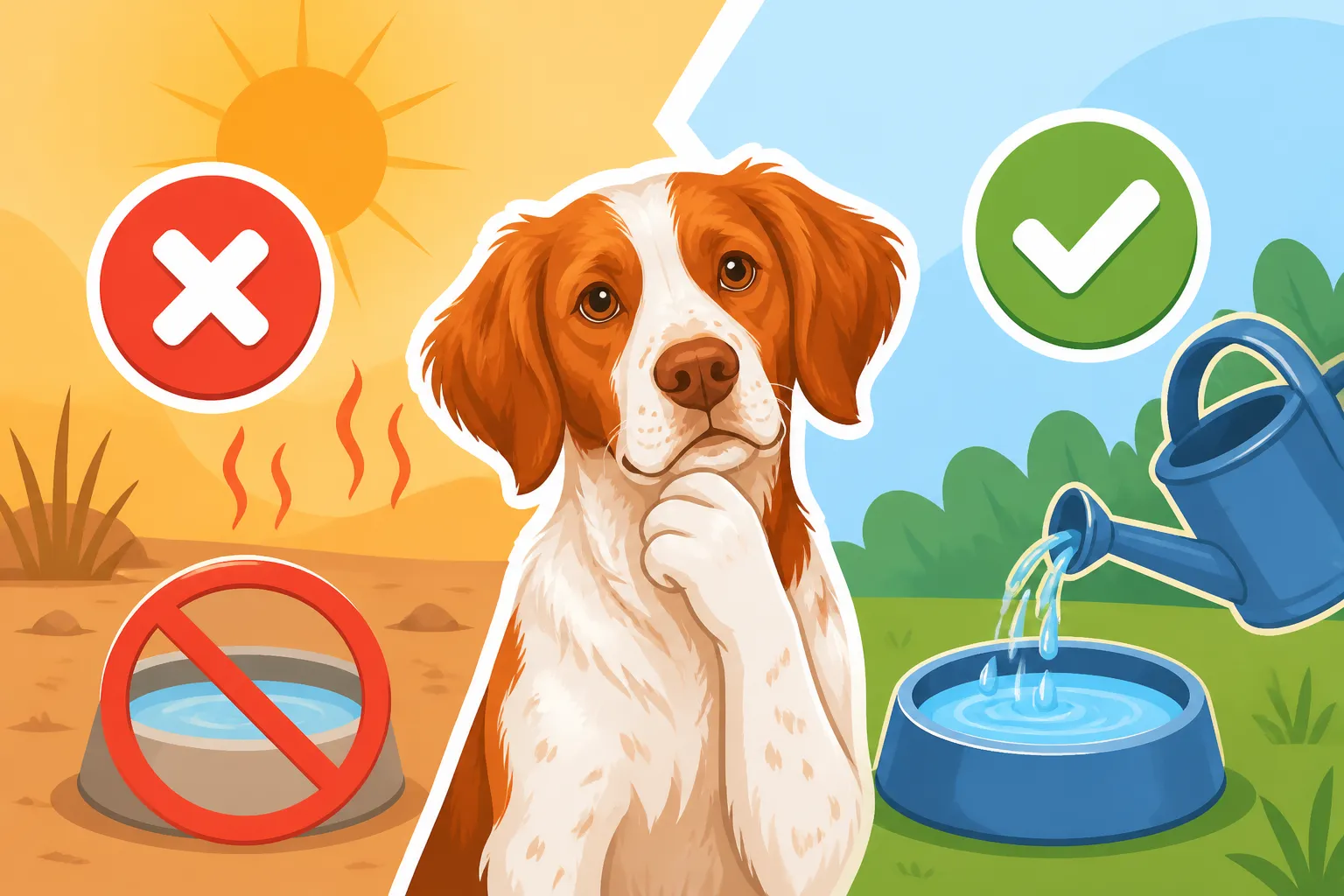
When you do offer water, start with a small amount. Don't fill a huge bowl. A good rule of thumb is a quarter to a half cup every 5-10 minutes. This allows their body to slowly absorb the fluid without overwhelming their stomach or creating a frenzy of gulping. Use a collapsible bowl (you can find great options on Amazon or Chewy for field use) to control the serving size. If your Brittany is still actively panting or seems overly excited, wait another minute or two. Observe how they drink; if they're still gulping down air with the water, make them stop, let them rest, and try again with an even smaller amount.
Strategic Hydration During and Before the Hunt
Proper hydration isn't just about what happens at the end of the day; it's a strategy that spans before and throughout the hunt. Proactive hydration is your best defense against deep dehydration, which in turn makes the end-of-hunt rehydration safer.
Before the Hunt: Ensure your Brittany is well-hydrated before you even hit the field. Offer water regularly throughout the day leading up to the hunt. Some owners even add a little unflavored Pedialyte or a canine-specific electrolyte supplement to their water bowl a few hours before intense activity. Make sure they have access to fresh water right up until you load them into the truck. How Much Water a Brittany Drinks a Day might be surprising, but it's important to keep them topped up.
During the Hunt: Even in the midst of exhilarating bird work, short, controlled water breaks are vital. Bring plenty of water with you – don't rely solely on natural sources, as Whether a Brittany Gets Giardia From Field Water is a legitimate concern. During natural lulls in the action, or when you take a break, offer your dog a small amount of water. Again, control the volume. A few ounces at a time is usually sufficient to wet their mouth and provide a little top-up without filling their stomach. If you're on a long day in the field, remember that How Long a Brittany Can Hunt in a Day depends heavily on their conditioning and proper hydration. Quality dog foods, like those from Ollie, often have good moisture content from their ingredients, which can also contribute to overall hydration, but it’s no substitute for fresh water.
Here’s a quick comparison of safe vs. risky hydration practices:
| Practice | Description | Risk Level | Recommended Action |
|---|---|---|---|
| Cool-down First | Allowing 10-15 minutes of rest and cool-down before water. | Low | ALWAYS prioritize cooling before offering water. |
| Small, Frequent Sips | Offering 1/4 – 1/2 cup of water every 5-10 minutes. | Low | BEST PRACTICE for post-exercise rehydration. |
| Ad-lib Water Access | Unlimited water immediately after intense exercise. | High | AVOID this, especially with a hot, gulping dog. |
| Electrolyte Supplement | Adding canine-specific electrolytes to water before a hunt. | Low | Good for proactive hydration, consult your vet. |
| Field Water Only | Relying on streams/puddles for hydration during a hunt. | Moderate | RISKY: Carry your own water to avoid contaminants. |
| Monitoring Intake | Observing how much and how quickly your dog drinks. | Low | ESSENTIAL to prevent overconsumption. |
| Forced Water Intake | Making a dog drink when they resist. | Low | Don't force; check for other issues if they won't drink. |
Recognizing and Responding to Dehydration
Even with the best intentions and practices, sometimes our Brittanys can still get dehydrated, especially during exceptionally long or hot days. Knowing the signs and how to react quickly can make all the difference. Signs a Brittany Is Overheating in the Field often overlap with signs of dehydration, as the two frequently go hand-in-hand.
Key Indicators Your Brittany Is Dehydrated
Look beyond just a panting dog. A truly dehydrated Brittany will show more specific signs. The easiest test is to gently lift the skin on their back, between their shoulder blades. If it snaps back quickly, they're likely okay. If it's slow to return or stays tented, they're likely dehydrated. Their gums might also appear tacky, dry, or pale, and their eyes could look sunken. Another indicator is decreased urine output or very dark, concentrated urine.
They might seem lethargic, weak, or disoriented. In severe cases, they might even collapse. If you notice these more serious symptoms, your dog needs immediate veterinary attention, not just water. At this point, simply offering water might not be enough or could even be dangerous if they're too weak to drink properly. Having a well-stocked What a First Aid Kit for a Brittany Should Hold can include items like oral rehydration solutions, but always seek professional advice for severe cases.
When to Seek Veterinary Help
If your Brittany shows any signs of severe dehydration, bloat (distended abdomen, unproductive retching, pacing), or water intoxication (disorientation, seizures), it's a veterinary emergency. Don't wait. Get to the nearest emergency vet immediately. These conditions can progress rapidly and can be fatal without prompt medical intervention. Always err on the side of caution. Even if it turns out to be nothing serious, peace of mind and your dog's safety are always worth it. Prevention and careful management of hydration are your best tools in avoiding these scary scenarios in the first place.
Disclaimer
This article is for general informational purposes only and does not constitute professional advice. Laws, prices and regulations vary by location and change over time. Consult a qualified professional for guidance on your specific situation.