Whether a Brittany Quarters or Runs Straight
One of the most common questions new Brittany owners, especially those eager to take their dog afield, have is how their furry partner will actually cover ground. Will your Brittany methodically sweep back and forth like a well-oiled machine, or will they take off like a rocket in a straight line, seemingly missing birds as they go? This guide will demystify the concepts of quartering and running straight, helping you understand your Brittany's natural tendencies and how to work with them for a successful hunt.
Understanding Field Coverage: Quartering vs. Running Straight
When we talk about a bird dog covering ground, we're really looking at how efficiently and effectively they search for game. There's a big difference between a dog that quarters and one that primarily runs straight, and each style has its place, though one is generally preferred for walking hunters.
What Does Quartering Mean in Bird Hunting?
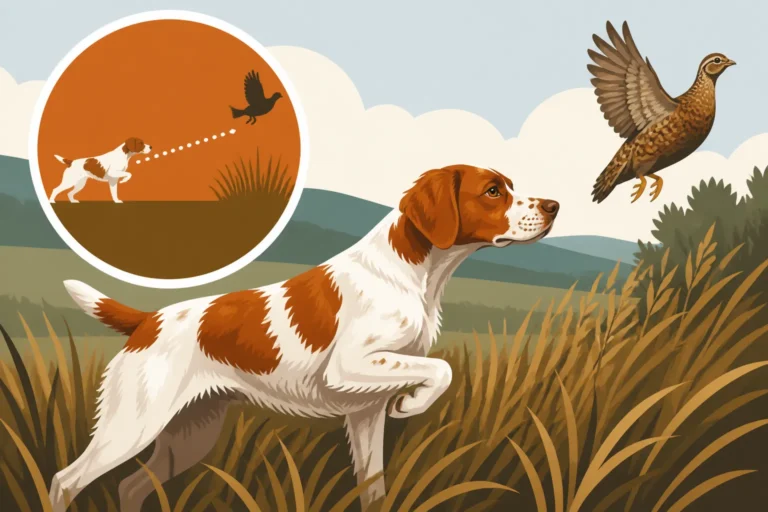
To "quarter" means the dog works in a methodical zigzag pattern, moving back and forth across the cover in front of the hunter. Imagine drawing a series of "L" shapes or broad "S" shapes on the ground, always moving forward but covering the width of the field. The dog is essentially sweeping the area, scenting into the wind, and staying within a reasonable distance of the hunter. This pattern is often taught or encouraged because it maximizes the chances of finding birds, as the dog is systematically checking all available cover rather than just running through it. A dog that quarters well is constantly evaluating wind direction, scent, and terrain, adjusting its pattern to put itself in the best position to pick up bird scent. It’s a partnership where the dog works for the gun, not just with the gun.
For a foot hunter, a dog that quarters consistently is a dream. You want to walk through a field knowing your dog has effectively searched every foot of it for scent. This also makes it easier to keep track of your dog, crucial when you're navigating dense cover or varied terrain. When a Brittany quarters correctly, they are using their nose to cut scent cones, moving into the wind, and then checking back with you, perhaps with a quick glance or a brief pause, before turning and sweeping the other way. This isn't just a random back and forth; it's an intelligent, scent-driven dance.
The Straight Runner: When and Why it Happens
A dog that "runs straight" essentially means they are covering ground in a more linear fashion, often pushing forward quickly without consistently sweeping side-to-side across the hunter's path. This isn't necessarily a fault, but it can be less efficient for some hunting styles, especially if you're hunting smaller patches of cover or don't have perfect visibility. A straight runner might be a dog that's incredibly keen on finding birds, pushing out far ahead in hopes of picking up a distant scent. They might rely more on sight or a broad, distant scent cone rather than meticulously working closer cover.
Sometimes, a dog runs straight because it hasn't been properly introduced to the concept of working with the hunter. It might be an enthusiastic but inexperienced puppy, or a dog that's been allowed to free-range without much direction in its early training. While this dog might still find birds, it often means the hunter has to work harder to keep up, or a lot of ground goes unchecked. Imagine hunting a field of CRP grass: if your dog just runs a straight line down the middle, it's missing all the potential birds hiding along the edges or in pockets of thicker cover. A truly wide-ranging dog, like some American Brittanys, might cover a lot of ground quickly, but if they aren't checking back or adjusting their pattern, they can blow past game. An American Brittany Ranges Wide and a French One Stays Close highlights how different lines approach range.
The Brittany's Natural Tendencies and Instincts
Brittanys are renowned for their bird sense and natural hunting instincts. They are born to find and point game, but their exact style of covering ground can vary significantly based on genetics, individual temperament, and early experiences.
The Innate Drive to Hunt
At their core, Brittanys are intelligent, energetic dogs with a strong desire to please and an undeniable passion for birds. This innate drive is what makes them such fantastic hunting companions. They want to find birds, and they are usually highly biddable, meaning they are eager to learn and respond to direction. How Biddable a Brittany Is is a testament to their willingness to cooperate. This combination of strong prey drive and biddability means that while a Brittany might have a natural inclination, they are also highly trainable to adopt the desired hunting pattern.
A Brittany's scenting ability is incredible. They use their nose constantly, interpreting wind currents and ground scent with remarkable precision. This natural talent is a huge asset when it comes to quartering, as they are inherently driven to find the source of a bird's scent, even if it means working a pattern to cut across the wind and pinpoint the location. They don't just run; they hunt.
Influence of Breeding Lines: American vs. French Brittanys
The question of quartering versus running straight often ties into the distinction between American Brittanys and French Brittanys (Epagneul Bretons). While both are the same breed, selective breeding over generations has emphasized different traits, particularly concerning range and hunting style.
- American Brittanys: These dogs are often bred for a wider range, suited for large open fields and horseback trials. Their natural tendency might be to run bigger, covering ground with speed and exuberance. While they can be trained to quarter, their instinct might be to stretch out further and push ahead. This doesn't mean they run straight blindly, but their natural pattern often covers more ground per pass. For a hunter who covers a lot of ground on foot, managing this wider range might require more deliberate training to teach them to shorten their sweeps and check in more frequently. Whether an American Brittany Suits Horseback Trials touches on this wider range.
- French Brittanys (Epagneul Bretons): French lines, conversely, are typically bred to hunt closer, making them ideal for walking hunters in smaller fields or denser cover. Their natural pattern is often a more compact, methodical quarter, staying within easy gun range and frequently checking back with the handler. This is a desirable trait for many foot hunters who appreciate a dog that naturally works the ground effectively without getting too far out. Whether a French Brittany Suits a Walking Hunter explores this suitability.
It’s important to remember that these are generalizations. There are wide-ranging French Brittanys and close-working American Brittanys. What matters most is the individual dog and the training it receives.
Training for Effective Field Coverage
Regardless of your Brittany's natural inclinations, consistent and positive training is key to developing a dog that quarters effectively and hunts for the gun. The goal isn't to break their spirit but to channel their natural drive into a productive hunting pattern.
Starting Young: Foundation Training
The journey to a well-quartering Brittany begins long before they see their first wild bird. Puppy socialization and basic obedience are paramount. A Brittany is a soft breed, meaning they respond best to positive reinforcement and gentle, consistent handling. The Brittany Is the Softest of the Pointing Breeds emphasizes this. Shouting or harsh corrections can make a Brittany shut down or become timid, which is the last thing you want in a bird dog.
Start with teaching a strong "here" or "come" command in distraction-free environments, gradually adding distractions. This recall is the absolute bedrock of field control. A long check cord, readily available on platforms like Amazon, is an invaluable tool for teaching your puppy to stay within a reasonable range and to come when called, even when their nose is on the ground. You can use it to gently guide them into sweeping patterns, changing direction as you walk. Online training programs, such as those offered by BAXTER & Bella, can provide excellent guidance for building these foundational skills using positive methods, making sure your Brittany learns to associate working with you as a rewarding experience.
Developing the Quartering Pattern
Once your Brittany understands basic commands and has a reliable recall, you can start shaping their quartering pattern. This is best done in an open field with light cover where you can easily observe and guide them.
- Walk a Straight Line: Begin by walking a straight line into the wind. Encourage your dog to move out to one side, then use your voice, a whistle, or a gentle tug on the check cord to turn them and send them back across your front to the other side.
- Use Hand Signals and Voice Commands: As they get the hang of it, start associating these turns with specific hand signals (e.g., a sweep of the arm) and voice commands (e.g., "hup" or "over").
- Reinforce Check-ins: Praise and reward them generously when they turn and sweep, especially when they glance back at you. You want them to understand that working in cooperation with you is the most rewarding thing. This teaches them to "hunt for the gun" – a crucial concept. Teaching a Brittany to Hunt for the Gun is a vital component here.
- Introduce Birds Gradually: Once they have a consistent pattern, introduce training birds like pigeons or quail. Place them in the field strategically so your dog finds them during a proper sweep. This reinforces that quartering leads to birds. How to Start a Brittany on Pigeons offers practical steps.
- Use a Whistle: A whistle is far more effective than your voice in the field. Teach them to stop on a single blast ("whoa") and to turn on multiple short blasts. Teaching a Brittany Whoa is another fundamental skill that makes quartering much smoother.
Consistency is key. Short, frequent training sessions are far more effective than long, infrequent ones. How Long a Brittany's Training Session Should Be recommends keeping them brief and positive.
Addressing a Dog That Runs Too Wide or Straight
If you find your Brittany consistently running too wide or straight, don't despair! This is a common challenge, and it's certainly something you can work on.
- Re-establish Recall: Go back to basics with your "here" command. If their recall isn't 100% reliable, you can't expect them to stay within a desired range.
- Use a Longer Check Cord: A 30 to 50-foot check cord can be your best friend. It allows you to let them range a bit while still having physical control to guide them back, reinforce turns, and keep them within a reasonable distance. You can find excellent quality check cords on Amazon.
- Change Terrain: Sometimes, a dog runs wide because the cover is too sparse. Try working them in slightly denser cover where birds are more likely to hold, which might naturally encourage them to work more methodically.
- Consider an E-Collar (Carefully!): For managing range in an already well-trained dog, an E-collar (electronic collar) can be a useful tool, but only after extensive foundation training. It should never be used for initial teaching or punishment, but rather as a communication tool to reinforce known commands at a distance. If you're considering an E-collar, seek guidance from an experienced gun dog trainer. Whether a Brittany Needs an E Collar delves into this topic.
- Build the Habit: The more you consistently work them in a quartering pattern, the more it will become their natural way of hunting. Whether Range Can Be Trained Out of a Brittany affirms that with patience, you can influence their working style.
Quartering vs. Running Straight: A Comparison
To help visualize the differences and choose what's right for your hunting style, here's a quick comparison:
| Feature | Quartering Dog | Straight Running Dog |
|---|---|---|
| Search Pattern | Systematic zigzag, sweeping across hunter's front | More linear, often pushes far ahead |
| Efficiency | Maximizes bird finding in varied cover; thorough | Can miss birds in side cover; potentially faster cover |
| Hunter Control | Easier to keep track of; works with the gun | Requires more effort to keep up; can get out of range |
| Best For | Walking hunters, smaller fields, dense cover | Large open fields, horseback hunting (if managed) |
| Trainability | Can be developed with consistent training | Natural tendency for some lines; needs range management |
| Bird Finding | High probability of encountering scent cones | Relies on wider scent cones or flushing |
A well-trained Brittany will intuitively adjust its range and pattern based on the cover, wind, and presence of birds. In dense cover, they might work closer and tighter. In open fields, they might extend their range, but still maintain that essential quartering pattern, always checking in and working for you.
Ultimately, the goal is to have a responsive, biddable Brittany that hunts with intelligence and enthusiasm. Whether they naturally quarter or need more guidance, their eagerness to please and incredible nose make them a joy to train and hunt with. You'll soon see why the Brittany is such a beloved bird dog.
Disclaimer
This article is for general informational purposes only and does not constitute professional advice. Laws, prices and regulations vary by location and change over time. Consult a qualified professional for guidance on your specific situation.