How Close a French Brittany Hunts
It's a common dilemma for hunters looking at a Brittany: you've heard whispers that French Brittanys hunt "closer," but what does that really mean for your time in the field? Many new owners feel a bit lost trying to decipher the nuances between the different lines, especially when their ideal hunt involves less chasing and more focused work. This guide will walk you through the inherent hunting style of the French Brittany, the factors that shape its range, and practical ways to train for that coveted close-working companion, helping you understand precisely what to expect and how to achieve it.
Understanding the French Brittany's Inherent Hunting Style
When we talk about a French Brittany, often referred to by its original name, Epagneul Breton, we're discussing a dog whose very essence was forged in a different hunting tradition than its American counterpart. This isn't just a slight variation; it's a fundamental difference in how they were bred to interact with the hunter and the land. Understanding this historical context is key to appreciating their natural working distance.
The Historical Context of French Breeding
Imagine the rolling, often dense, and varied terrain of Brittany, France. Here, hunting was traditionally done on foot, often in smaller, more intimate coverts, and for smaller game birds like partridge, woodcock, and quail. The French hunter typically didn't have vast, wide-open prairies where a dog could disappear for hundreds of yards. Instead, they needed a dog that would work within gun range, stay connected, and check in frequently. This environment and hunting style naturally selected for dogs with a shorter, more methodical range.
Over generations, breeders in France actively cultivated this trait. They valued a dog that was biddable, intelligent, and attentive to its handler, always keeping an eye on where the hunter was. This preference became deeply ingrained in the breed's genetics and its written standard. The result is a dog often described as a "foot hunter's dog," one that covers ground efficiently but always with the hunter's proximity in mind. It's a testament to selective breeding that these dogs instinctively prefer a closer pattern, a stark contrast to some of the wider-ranging breeds.
Why a Closer Hunt Matters
For many hunters, a closer-working dog isn't just a preference; it's a necessity. If you're trudging through thickets, dense woodlands, or smaller parcels of land, having a dog that ranges too far becomes a liability. You spend more time trying to locate your dog, risking lost birds, and potentially missing out on critical pointing opportunities. A close-working French Brittany allows the hunter to maintain control, ensures the dog is always within sight or hearing, and optimizes the chances of getting on a pointed bird quickly and efficiently.
Moreover, a closer hunt often translates to a stronger bond between dog and handler in the field. The dog is constantly aware of your presence, reading your cues, and adjusting its search pattern based on your movements. This cooperative effort makes the hunt a truly shared experience, rather than two independent entities searching the same area. It’s about teamwork, precision, and efficiency, especially for those who cherish the intimate connection with their gun dog. For those who walk significant miles, a dog that naturally stays within a reasonable distance conserves both your energy and theirs. Whether a French Brittany Suits a Walking Hunter delves deeper into this benefit.
Factors Influencing a French Brittany's Range
While French Brittanys are renowned for their closer hunting style, it's not a universal constant set in stone for every single dog. Several factors play into the actual working range you'll experience with your individual dog, from the deepest roots of its lineage to the ground beneath its paws. Understanding these influences can help you anticipate, guide, and even modify your dog's behavior in the field.
Genetics and Individual Variation
Even within the French Brittany lines, there's a spectrum of natural range. While the breed standard and generations of selective breeding aim for a closer working dog, individual genetics still play a significant role. Just like in any family, some puppies might inherit a slightly bolder, wider-ranging tendency from a distant ancestor, while others will be textbook examples of close-quarter specialists. This is why it's crucial to research a breeder and inquire about the working style of the dam and sire, as well as their previous offspring. Observing the parents hunt can give you a very strong indication of what to expect from a puppy.
Beyond the initial genetic predisposition, a dog's natural talent, intelligence, and even personality contribute to its range. A highly biddable and attentive dog, for instance, might be more inclined to check in frequently and adjust its pattern based on your movements. Conversely, a more independent or headstrong individual, while still a French Brittany, might test the boundaries of "close" a bit more. It's not just about the breed; it's about the unique dog standing in front of you. How Biddable a Brittany Is and What a Brittany's Temperament Is Really Like offer more insights into these individual traits.
Terrain and Cover Considerations
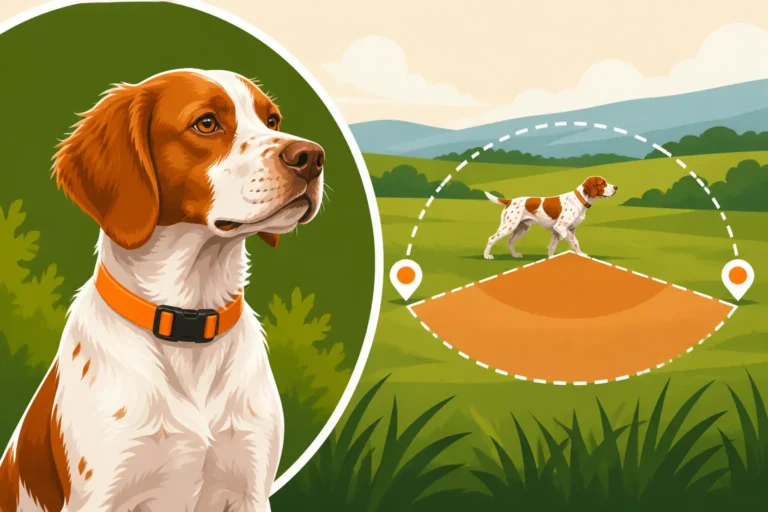
The environment where you're hunting profoundly impacts how a French Brittany works. A dog that naturally hunts within 50 yards in dense cattails or heavy timber might instinctively extend its range to 75-100 yards when introduced to an open prairie. This isn't necessarily a fault; it's an intelligent dog adapting its search pattern to the available cover and scenting conditions. When there's less visual obstruction and scent is carried further, the dog might perceive a wider sweep as more efficient.
Consider a hunt in a vast CRP field versus a tight grouse cover. In the CRP, a dog might be expected to cover more ground to locate birds. In heavy grouse cover, however, an expansive search pattern is inefficient and would quickly put the dog out of sight and gun range. A well-bred and properly trained French Brittany should demonstrate an innate ability to adjust its range to the conditions, tightening up in dense cover and perhaps widening slightly in more open terrain, but always with the underlying directive to stay within a reasonable distance of the gun. This adaptive intelligence is one of their most valuable traits, ensuring they are productive in diverse hunting scenarios.
The Hunter's Role and Expectations
You, the hunter, are perhaps the most significant factor in shaping and maintaining your French Brittany's hunting range. Your expectations, commands, and consistency in training will either reinforce or undermine the dog's natural inclination. If you consistently allow your dog to range out of sight or beyond effective gun range without correction, it will learn that such behavior is acceptable. Conversely, consistent praise for close-in work and gentle, timely corrections for ranging too wide will solidify the desired pattern.
Your movements in the field also dictate the dog's range. If you stride confidently and consistently, the dog will learn to pattern off your pace. If you're erratic, stopping frequently, or moving too slowly, a keen dog might get ahead of you. It's a partnership, and effective communication is key. This includes using a whistle for directional commands and recall, which helps maintain contact even when the dog is momentarily out of sight in thick cover. Establishing clear expectations from the very first hunts will lay the groundwork for a cooperative, close-working gun dog for years to come. Teaching a Brittany to Hunt for the Gun is all about this partnership.
Training Techniques to Reinforce Close-Working Habits
Even with a genetically predisposed close-working dog like the French Brittany, effective training is paramount to shaping and maintaining that ideal hunting range. Training isn't about breaking their spirit; it's about channeling their natural abilities and desire to please into a cooperative field performance. These techniques build a strong foundation and provide the tools for consistent communication.
Early Foundation and Socialization
The journey to a close-working French Brittany begins long before their first bird contact. From puppyhood, focus on establishing a strong bond and teaching fundamental obedience commands in various environments. A puppy that respects and understands its handler's commands in the backyard is more likely to carry that deference into the field. Socialization, too, plays a critical role. Expose your puppy to different sights, sounds, and textures – especially those it will encounter during a hunt. This creates a confident, well-adjusted dog that isn't easily distracted or spooked by new surroundings.
Walks on a leash and check cord are invaluable early training tools. Start in open areas, allowing the pup to explore but always keeping them within a reasonable distance. Use your voice, a whistle, and consistent leash pressure to guide them. Reward heavily for checking in, for staying close, and for paying attention to you. Programs like those offered by BAXTER & Bella provide structured, positive-reinforcement methods that can be incredibly helpful for new Brittany owners, guiding you through these crucial early stages of development and fostering a responsive companion. A well-socialized and obedient young Brittany will naturally look to you for direction, making it much easier to define its hunting range later on.
Utilizing Check Cords and Whistles
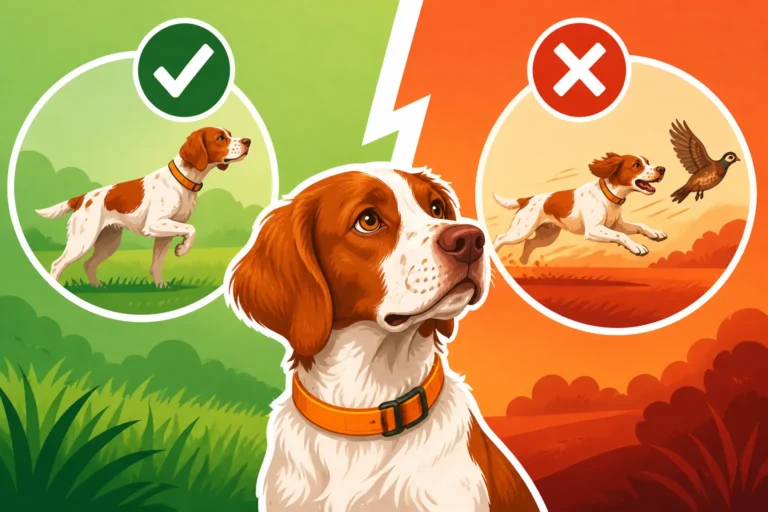
The check cord is your best friend when teaching a French Brittany its acceptable hunting range. Start with a longer cord, perhaps 30-50 feet, in an open field with minimal distractions. Allow your dog to work out, and when it starts to go beyond the desired range, simply stop, apply gentle pressure on the cord, and call it back with your whistle or voice. As the dog returns, praise it enthusiastically. This teaches the dog that going too far results in a gentle, non-aversive check and a call back to the desirable zone. Repeat this consistently, gradually increasing the length of the cord or the complexity of the cover.
The whistle is another indispensable tool. It cuts through wind and cover, allowing for consistent communication at a distance. Teach a clear "come" signal (often a series of short toots) and a "stop" or "whoa" command (usually a long, single blast). Practice these commands regularly, both on and off the check cord, so they become ingrained. When your Brittany is quartering (searching back and forth) and starts to drift too wide, a whistle command can redirect them back into a tighter pattern without you having to raise your voice or physically intervene. You can find excellent quality, durable check cords and whistles on Amazon, making it easy to equip yourself for this essential training. What a Check Cord and Whistle Cost a Brittany Owner provides more detail on these essential tools.
E-Collar Introduction for Refinement
For many serious bird hunters, the electronic collar, or e-collar, becomes a crucial tool for refining and enforcing desired behaviors, including hunting range, especially in situations where a check cord is impractical. It should never be used as a primary training device or for punishment, but rather as a communication enhancer, reinforcing commands the dog already understands. The goal is to create a seamless, subtle connection where the dog associates a low-level stimulation with a verbal or whistle command it knows.
Start e-collar training in a controlled environment, reinforcing known commands like "come" or "whoa" at a very low, discernible level. The dog should understand that the stimulation is a precursor to a command it already knows. In the field, if your French Brittany is ignoring a whistle command to check in or is consistently pushing the boundaries of its range, a low-level stimulation, immediately followed by the whistle, reinforces the desired action. The key is timing and consistency. The e-collar allows for immediate correction at a distance, preventing the dog from rehearsing undesirable wider-ranging behavior. This helps the dog understand the invisible boundaries of its hunting pattern and allows for continued refinement, making your Brittany a more precise and cooperative hunting partner. Whether a Brittany Needs an E Collar and What an E Collar Costs a Brittany Owner offer further considerations on this tool.
| Trait / Breed | French Brittany (Epagneul Breton) | American Brittany |
|---|---|---|
| Typical Hunting Range | Closer (20-80 yards) | Wider (80-200+ yards) |
| Primary Hunting Style | Foot hunter, methodical, cooperative | Horseback trials, expansive search |
| Bred For | Small game, dense cover, handler focus | Open fields, fast ground coverage |
| Check-in Frequency | Very frequent | Less frequent |
| Temperament (General) | Highly biddable, sensitive, eager to please | Biddable, energetic, independent in search |
| Ideal Hunter | Walking hunter, dense cover, intimate hunt | Hunter covering large areas, horseback |
Common Challenges and How to Address Them
Even with the best breeding and a strong foundation, every dog presents unique challenges. A French Brittany's natural inclination for a closer hunt is a huge advantage, but there can still be moments where they push the boundaries. Recognizing these challenges and having a plan to address them is part of being a responsible and effective handler.
When a French Brittany Ranges Too Wide
It's a familiar scenario: your French Brittany, usually so attentive, suddenly seems to have forgotten its boundaries and is pushing further out than you'd like. This can be frustrating, especially when you've invested time in fostering that close-working relationship. There are several reasons this might happen. Perhaps the cover is more open than usual, tempting the dog to expand its search. Maybe it's a particularly birdy area, and the dog's prey drive is overriding its desire to stay close. Or, it could simply be a momentary lapse in focus.
The key to addressing this is consistent and timely correction. If you're using a check cord, a gentle tug and a clear "here" or "come" command will redirect them. If you've progressed to an e-collar, a low-level stimulation immediately followed by your whistle command for "come" or "shorten up" can be very effective. It’s crucial that the correction happens as the dog is starting to range too wide, not after it's already hundreds of yards away. This allows the dog to clearly associate its action (ranging wide) with the consequence (the correction). Reinforce positive behavior when they do stay close with praise and sometimes a small treat. Remember, consistency is your most powerful tool. How to Shorten a Brittany's Range offers more specific techniques.
Maintaining Focus in Distracting Environments
Hunting environments are rarely sterile. Other hunters, dogs, farm animals, wildlife, and even unusual scents can easily pull a dog's attention away from the task at hand and, by extension, away from you. A French Brittany, with its keen nose and high energy, can be particularly susceptible to these distractions. When a dog loses focus, it often extends its range as it becomes engrossed in whatever has caught its attention.
To combat this, start training in less distracting environments and gradually introduce more complex scenarios. Practice your recall and "whoa" commands in areas with increasing levels of distraction. If you notice your dog's attention wavering, immediately call them in, make them sit or "whoa" for a moment, and re-engage their focus before releasing them to hunt again. This teaches them that even amidst chaos, your commands take precedence. Carrying highly palatable treats can be useful for reinforcing attention in high-distraction situations. Over time, your French Brittany will learn to filter out irrelevant distractions and maintain its focus on the hunt and its handler, ensuring it stays within the desired working range. How Often a Brittany Should Check In is also important here.
Comparing French and American Brittany Hunting Styles
While they share a name and a common ancestry, the French Brittany (Epagneul Breton) and the American Brittany have evolved along distinct paths, resulting in notable differences in their hunting styles, particularly their range. Understanding these distinctions is fundamental for any prospective owner or hunter to choose the right dog for their specific needs and hunting terrain.
Distinctions in Breed Standards
The divergence in hunting style between the French and American Brittanys is rooted deeply in their respective breed standards and the historical preferences of their originating countries. In France, the ideal Epagneul Breton was developed to be a close-working dog, suitable for a foot hunter navigating diverse, often dense European cover. The French standard emphasizes a dog that is compact, highly intelligent, and always connected to the hunter, working within effective shotgun range. Their range is typically described as 20 to 80 yards, adjusting keenly to cover and wind, always coming back to check in.
In contrast, when the Brittany arrived in America, it encountered vast, open prairies and a hunting culture that favored faster, wider-ranging dogs, often hunted from horseback. The American Brittany Club's standard, while still valuing biddability and a keen nose, allowed for a more expansive hunting pattern. American field trial circuits encouraged dogs that could cover ground quickly and boldly, often ranging 100 to 200 yards or more, though still expected to check in periodically. This genetic selection over generations in different environments led to the distinct working styles we see today. An American Brittany Ranges Wide and a French One Stays Close expands on this historical split.
Practical Implications for Hunters
For the modern hunter, these distinctions have very practical implications. If you're primarily a walking hunter, tackling thick brush, dense woods, or smaller properties, a French Brittany's natural close-working tendency is a tremendous asset. You'll spend less time searching for your dog and more time focused on the bird work, enjoying a more intimate, cooperative hunt. Their methodical search pattern ensures thorough coverage of the ground within gun range, reducing the chance of missed birds.
However, if your hunting grounds consist of vast expanses of open prairie or agricultural fields, and you prefer to cover ground quickly, perhaps even from horseback or an ATV, an American Brittany might be a more suitable choice. Their wider range allows them to cover more territory in less time, ideal for finding scattered coveys across large landscapes. While an American Brittany can be trained to hunt closer, their natural inclination is to stretch out. Conversely, trying to force a French Brittany to maintain a very wide range consistently goes against its inherent wiring and can lead to a frustrated dog and handler. Understanding How a French Brittany Differs From an American One before you choose your puppy is key to a harmonious partnership in the field.
Disclaimer
This article is for general informational purposes only and does not constitute professional advice. Laws, prices and regulations vary by location and change over time. Consult a qualified professional for guidance on your specific situation.