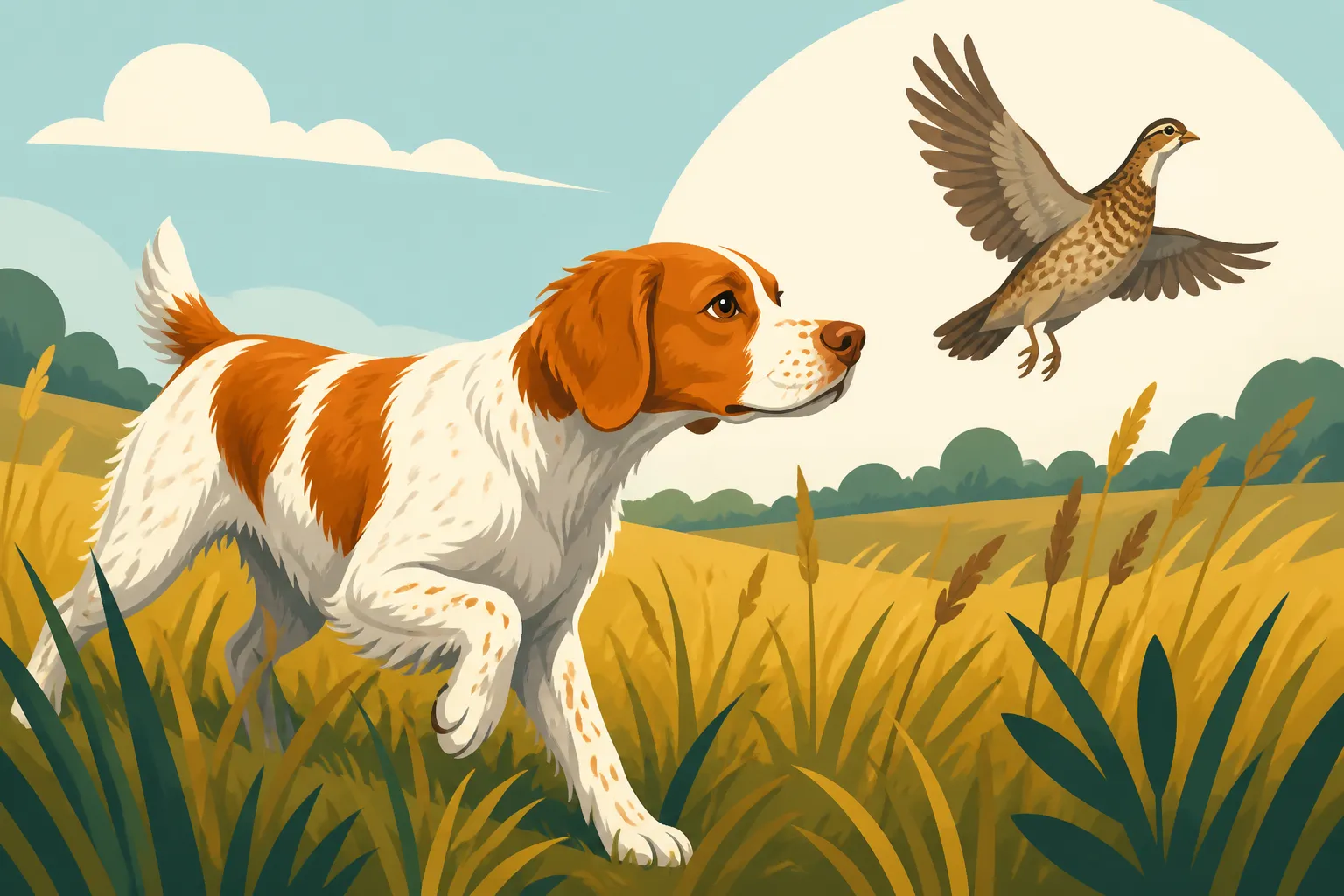
How a Brittany Finds Its First Bird
The sheer joy of watching your Brittany spaniel lock onto its first bird is an experience etched into the memory of every bird dog owner. But for newcomers, the path to that moment can feel a bit mysterious. You might wonder if it’s truly innate, or if you need some secret formula to unlock that potent prey drive. This guide is here to demystify the process, walking you through the incredible journey of how a Brittany taps into its instincts and finds that very first feathered friend.
The Innate Bird Dog: What's in a Brittany's DNA?
It's truly remarkable to watch a Brittany work in the field, seemingly born with an internal compass guiding them to game. This isn't magic, though it often feels like it. It's the culmination of centuries of selective breeding, honing instincts that lie dormant until the right moment. Understanding this deep-seated heritage can help you appreciate and nurture these incredible abilities in your own dog.
A Legacy of Pointing and Hunting
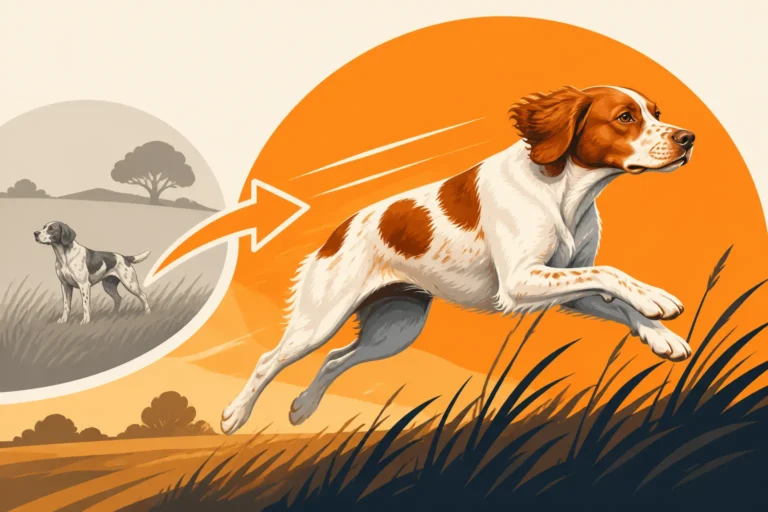
The Brittany, or Epagneul Breton as they're known in their homeland, was developed in the rugged, bird-rich regions of Brittany, France, specifically to locate and point upland game birds. We're talking about a history that stretches back to the 17th century, refined by humble poachers and skilled hunters alike who needed a close-working, efficient partner. Unlike some other sporting breeds that might flush birds, the Brittany's primary job is to find the bird, point it with unwavering intensity, and hold that point until the hunter arrives. This instinct isn't just to chase or retrieve; it's a refined sequence of behaviors: search, locate, point, and then, upon command, allow for the flush and retrieve. This complex set of behaviors is deeply ingrained, making the Brittany a truly exceptional pointing dog. Their very purpose, their entire genetic blueprint, is designed for this specific task. When you see your Brittany freeze, nose high, tail rigid, you are witnessing generations of selective breeding at its finest, an ancient dance between dog and bird.
The Drive to Seek and Find
Beyond the distinctive point, a Brittany possesses an insatiable drive to seek. This isn't just random sniffing; it's a purposeful, systematic search for scent. They have an innate curiosity and boundless energy that fuels their desire to cover ground, always looking for that tell-tale odor of game. Imagine a highly motivated detective, tirelessly following every lead, and you're getting close to how a Brittany operates in the field. This drive is part of What a Brittany's Temperament Is Really Like – they are busy, intelligent dogs with a job to do. From a young age, you'll observe this intense curiosity and investigative nature. They'll explore every nook and cranny of your yard, meticulously sniffing out every new scent. This isn't just about playing; it's about engaging their powerful olfactory system and understanding their environment. This inherent drive ensures that they're not just waiting for birds to appear but actively seeking them out, maximizing their chances of a successful find in varied terrains and cover.
Early Signs of Birdiness in a Brittany Puppy
It’s often said that you can see a bird dog in a puppy, and with Brittanys, this is especially true. While they might not be locking on pheasants in your living room, there are subtle yet clear indicators that their bird dog instincts are already stirring, just waiting to be nurtured. Keeping an eye out for these early signs can be incredibly rewarding and helps you understand your puppy's natural predispositions.
Puppy Pointers and Scent Work
Even before they've ever seen a feather, many Brittany puppies will exhibit rudimentary pointing behaviors. It might be a momentary freeze when they spot a butterfly fluttering past, or a rigid stance as they stalk a stray leaf blowing in the wind. These aren't perfect field points, of course, but they are flashes of that inherent drive. More commonly, you'll see them intensely tracking a scent. Maybe it's a crumb dropped on the floor, or the faint odor of a squirrel that ran across the lawn. They'll drop their nose to the ground, tail often straight out, and follow that invisible trail with a determination that belies their age. This early scent work is critical. Their powerful noses are already hard at work, mapping out the world through smell. Providing opportunities for scent exploration, like hiding treats or playing gentle retrieve games in tall grass, can help cultivate this natural talent. Think of it as their brain starting to build the neural pathways for future bird work, even if they're still clumsy and a little unsure of their footing.
Playtime as Training Ground
Believe it or not, much of a Brittany puppy's "training" for bird work happens through seemingly innocent play. Chasing after a tossed toy, pouncing on imaginary prey, or engaging in a vigorous game of hide-and-seek all contribute to developing crucial skills. These activities build their prey drive, enhance their coordination, and improve their ability to focus and problem-solve. When your puppy is tearing around the yard, exploring every new smell, or intently watching a bird feeder, they are, in their own way, practicing. It’s vital to encourage this natural exuberance and curiosity. Every positive interaction, every game of fetch, every exploration of a new environment helps to build their confidence and readiness for actual bird work. Exposing them to different textures, sounds, and environments is also key. A puppy that has been exposed to a variety of safe, positive experiences is more likely to be a bold, confident hunter later on. Remember, Brittany puppy should be socialized heavily to ensure they are well-adjusted and resilient, which directly translates to their ability to handle new situations in the field, like the excitement of a live bird.
The First Introduction: Setting the Stage for Success
Bringing a Brittany to its first bird is an exciting milestone, but it's crucial to approach it with thoughtful preparation and patience. This isn't just about "finding" a bird; it's about creating a positive, confidence-building experience that encourages their natural instincts without overwhelming them. The goal is to ignite that spark, not to extinguish it with too much pressure or distraction.
Choosing the Right Environment
The success of a Brittany's first bird encounter largely hinges on the environment. You want a place that's quiet, secure, and as free from distractions as possible. A small, grassy field with some light cover, or even a large, fenced yard, can be ideal. Avoid bustling parks, areas with heavy traffic, or places with other dogs running loose. The idea is to create a focused, low-pressure situation where your puppy can concentrate solely on the bird. Think of it as a controlled laboratory setting for their instincts. If you're using a pigeon or quail, you'll want to ensure the area is contained enough that the bird can be retrieved easily, or at least that your dog can't lose it if it flies a short distance. Some trainers like to use a long check cord, available on platforms like Amazon, attached to the puppy during these initial sessions. This allows you to guide them gently and prevent them from chasing too far or getting into trouble, offering a sense of security for both you and your pup.
The Role of Training Birds
When it comes to the first introduction, nothing quite beats a live bird. Pigeons and quail are commonly used, as they provide realistic scent and movement without being too intimidating for a young dog. A pigeon, for instance, can be kept in a bird bag or launcher. You might start by simply holding the pigeon and letting your puppy sniff it, making a positive association with the bird's scent. Then, you can release the bird, allowing it to flutter or fly a short distance. Observe your Brittany's reaction closely. Does it show curiosity? Does it point, even for a split second? This initial exposure should be short and sweet, always ending on a high note. The key is controlled exposure. A common technique is to plant a bird under a net or in a bird launcher, which helps control its flight and allows your puppy to lock onto the scent and point without immediately flushing. This allows the puppy to build confidence in its pointing ability. Remember, When a Brittany Puppy Should Meet Its First Bird is usually quite young, sometimes as early as 3-4 months, but always dependent on the individual puppy's confidence and development.
The Scent Cone and the Wind: A Brittany's Compass
A Brittany's nose is its most valuable tool in the field, a sophisticated instrument that allows them to detect birds from incredible distances. But it's not just about having a good nose; it's about understanding how scent travels and how to work with the wind to maximize its effectiveness. This knowledge is fundamental to how a Brittany finds that first bird and every bird thereafter.
Understanding Scent and Air Currents
Imagine the scent of a bird as an invisible cloud, an "odor cone" that drifts downwind from its source. This scent isn't static; it's carried by air currents, influenced by temperature, humidity, and terrain. A Brittany's brilliance lies in its ability to interpret this invisible information. They don't just sniff randomly; they actively work to intersect this scent cone. As they move across the field, their nose constantly samples the air. When they hit the edge of a scent cone, they instinctively turn into the wind, following the increasing concentration of scent until they pinpoint the bird's exact location. It’s an intricate dance of olfaction and navigation. Factors like heavy humidity can make scent hang lower, while dry, windy conditions can disperse it quickly. A seasoned Brittany will adjust its hunt accordingly, understanding these nuances of scent dispersion. This keen awareness of the environment is why Whether a Brittany Handles Wind Correctly is such a crucial aspect of their performance, demonstrating their natural intelligence in the field.
Quartering and Working the Wind
The characteristic "quartering" pattern of a Brittany isn't just for show; it's a highly efficient method of covering ground and maximizing their chances of encountering a scent cone. Picture a dog running back and forth in a zigzag pattern, always keeping the wind in its face, or slightly to the side. This allows them to effectively sweep a wide area, continually picking up new scent information. If the wind is blowing from left to right, the Brittany will typically work a pattern that allows them to run mostly into that wind, swinging wide on each side, then turning back into the breeze. As they mature and gain experience, they learn to adjust their pattern to the cover density and terrain, working closer in heavy brush and ranging wider in open fields. An American Brittany, for instance, is often bred to cover a much larger area, exhibiting an expansive range as described in How Many Yards an American Brittany Runs Out. This is a learned and refined skill that develops over time, moving from an instinctual back-and-forth motion to a truly strategic hunt, making every stride count in their quest for game. This tireless pursuit, guided by their nose and the wind, is the heart of how a Brittany finds its first bird.
The Magic of the Point: From Instinct to Steadiness
The point is arguably the most iconic and captivating behavior of a Brittany. It's the moment when all their searching, all their scent work, culminates in a breathtaking freeze, a statue of pure intensity. While it stems from deep instinct, refining this natural inclination into a steady, reliable point is a testament to both the dog's inherent ability and thoughtful training.
The Natural Pointing Stance
When a Brittany hits scent and locates a bird, something primal takes over. Their body goes rigid, often with one front leg raised, their head and tail aligned with the direction of the bird. Their muscles tense, eyes fixated, and their breathing may even become shallow as they enter a state of absolute focus. This isn't a conscious decision; it's an involuntary "freeze" response, an ancient predator's pause before the pounce, but adapted by selective breeding into a signaling tool for the hunter. They are telling you, in no uncertain terms, "Bird here!" You can see the intensity radiating from them, a laser focus on the feathered prey that they've detected. Sometimes, a young pup might just subtly stiffen, or just pause with its nose pointed. These early, less refined points are still incredibly valuable, as they show the underlying instinct is present and ready to be developed. It's truly a magical moment to witness, a silent conversation between dog and hunter.
Encouraging and Refining the Point
While the natural pointing instinct is strong, a wild, uncontrolled point isn't always helpful to a hunter. The goal is to encourage that raw instinct and then gradually introduce steadiness and control. When your puppy first points, the most important thing is to avoid rushing in or startling them. Praise them calmly, reinforcing that their behavior is exactly what you want. You might gently walk up to them, reassure them, and then quietly flush the bird yourself. Over time, you'll begin to introduce the "Whoa" command, which teaches them to hold their position until released. Using a check cord, again easily sourced from places like Amazon or specialist dog training suppliers, can be invaluable here. You can gently apply pressure to hold them in place during the point, teaching them that staying still leads to the reward of a flushed bird. The transition from a natural, excited point to a steady, controlled one requires patience and consistent repetition, gradually molding that raw instinct into a reliable partnership. It's a journey towards Teaching a Brittany to Hold Point Until You Arrive, ensuring they remain steadfast and allow you to get into position for the shot.
The Retrieval Instinct: Bringing the Bird Home
Finding and pointing the bird is only half the job for a versatile pointing dog like the Brittany. The other half, equally crucial, is the retrieve. Imagine the frustration of a downed bird lost in thick cover! A reliable retrieve ensures that all the hard work of the point doesn't go to waste. While many Brittanys show a natural inclination for retrieving, the path to a consistent "to hand" retrieve might require a bit more guidance.
Natural Retrievers vs. Force Fetch
Many Brittany puppies are born with a strong desire to pick up and carry things, a natural inclination that makes retrieving training much easier. You'll see them carrying toys, socks, or even the mail with pride. This "desire to retrieve" is a fantastic foundation. However, a natural retrieve often means they'll bring the item near you, or drop it a few feet away, or even play keep-away. This isn't ideal for a hunter who needs a bird brought directly to hand, every single time. This is where the discussion of "force fetch" often comes up. Force fetch is a structured training method that teaches a dog to pick up, hold, and deliver an object on command, regardless of whether they initially want to. It instills reliability and is not about cruelty, but about clear communication and compliance. While it sounds intimidating, many skilled trainers and online programs, such as those offered by BAXTER & Bella, can guide owners through humane and effective force fetch techniques, if deemed necessary. It's a way to ensure that the natural desire to retrieve is channeled into a dependable, predictable action.
From Field to Hand
The goal of retrieval training is a "retrieve to hand"—meaning the dog brings the bird directly to you and releases it only when commanded. This requires patience and consistency. Start with dummies in a controlled environment, praising every step of the way. Make the retrieve a fun, positive game. As your Brittany progresses, introduce cold birds (birds that have already been retrieved or are deceased) to get them accustomed to the feel and scent of real game. Gradually move to retrieving freshly shot birds in the field. A key aspect is encouraging a "soft mouth"—the ability to carry a bird gently without damaging it. This is often a natural trait in Brittanys, but can be reinforced by using appropriate dummies and gentle handling. Remember, consistency is key. Every retrieve, whether in the yard or the field, should reinforce the desired behavior. While some Brittanys are natural retrieving prodigies, others might need more formal work. Understanding Whether a Brittany Needs Force Fetch for a reliable retrieve is a common consideration for serious bird hunters, as it ensures that no downed bird is ever left behind.
Common Challenges and Troubleshooting
Even with the strongest instincts, the journey from raw puppy to polished bird dog is rarely without its bumps. Brittanys are intelligent and eager, but like all dogs, they can present unique training challenges. Acknowledging these common hurdles and knowing how to approach them with patience and understanding is crucial for both you and your furry hunting partner.
The Overly Excited or Bumping Brittany
One of the most common, and sometimes frustrating, challenges is the overly enthusiastic Brittany that "bumps" or flushes birds prematurely. They've found the bird, they know it's there, and their excitement gets the better of them, leading them to rush in and cause the bird to fly before you're ready. This is particularly prevalent in young dogs whose prey drive is immense but whose control hasn't yet caught up. It’s not that they don’t want to point; it's that their exuberance overrides their ability to hold steady. The key to addressing this is teaching steadiness. This often involves intense work on the "Whoa" command, using a check cord to reinforce standing still, even when the bird flushes. Many trainers will work with a dog on a launcher, sending the bird out when the dog is steady, and if the dog moves, they bring it back to the exact spot to reset. It requires immense patience and consistency, gradually building the dog's self-control. This journey towards Teaching a Brittany Steady to Wing is vital for a true hunting partner, as a dog that bumps birds too often can ruin a hunt.
The Shy or Hesitant Hunter
On the opposite end of the spectrum is the Brittany who is shy or hesitant around birds, or perhaps even gun-shy. This can be heartbreaking for an owner who dreams of a bird dog. Sometimes this shyness stems from a lack of proper socialization as a puppy, or a negative experience early on, such as being startled by a loud noise or handled too roughly. In these cases, it’s crucial to rewind and rebuild confidence. Start with very gentle introductions to birds, perhaps just letting them observe a bird in a cage from a distance, rewarding any calm curiosity. Avoid any pressure or force. Gradually decrease the distance over multiple, short, positive sessions. For gun shyness, never introduce loud noises suddenly. Instead, pair distant, soft noises (like a starter pistol) with highly rewarding treats or play, gradually increasing volume and proximity over time. Online programs, like those offered by BAXTER & Bella, can provide structured, positive reinforcement methods for shy dogs. Recognizing Signs a Brittany Puppy Is Shy early on is important, as early intervention with positive experiences can prevent these issues from becoming entrenched, ensuring your Brittany develops into a confident and enthusiastic hunter.
Integrating Training with Natural Instincts
The journey of developing a Brittany into a capable bird dog is a beautiful blend of nurturing innate talent and layering on skilled training. It's about respecting their natural abilities while shaping them into a cooperative, reliable hunting partner. This isn't a one-and-done process; it's an ongoing commitment that culminates in a truly exceptional companion in the field.
The Role of a Good Trainer or Mentor
While Brittanys are highly biddable and often considered easier to train than some other pointing breeds, there's no shame in seeking expert guidance. In fact, for many first-time bird dog owners, a good trainer or mentor is invaluable. An experienced professional can read a dog's body language, understand its quirks, and apply proven methods to address specific challenges you might encounter. They can help you identify a puppy's natural strengths and weaknesses, guide you through critical developmental stages, and fine-tune your techniques. Sometimes, simply observing an experienced hunter with their Brittany can teach you more than any book. They can demonstrate how to handle a check cord effectively, how to read a dog's point, or how to properly introduce a gun without causing fear. Even if you choose to do most of the training yourself, a few sessions with a professional can set you on the right path and help you avoid common pitfalls. Finding a mentor or trainer through local Brittany clubs or gun dog associations is often the best approach.
Consistent Exposure and Field Time
Ultimately, there is no substitute for consistent exposure to birds and real-world field experience. Instincts, however strong, need to be sharpened and reinforced through repetition and success. This means regular trips to bird fields, whether it's hunting preserves or wild bird cover (where regulations allow). Each outing, even if it's just for an hour, provides invaluable learning opportunities. Your Brittany learns to navigate different types of cover, to adapt to varying wind conditions, and to handle the myriad distractions the wild presents. It's through these repeated, positive experiences that their natural bird sense matures into reliable, effective hunting behavior. They learn to trust their nose, their judgment, and most importantly, to work as a team with you. It's a long-term commitment, but the rewards are immense. The question of How Many Seasons Before a Brittany Is Finished is a common one, and the answer often boils down to consistent, quality field time. While a dog can be competent in its first year, true "finish" — that seamless, intuitive partnership — usually takes several seasons of shared experiences and learning in the great outdoors.
| Stage of Bird Work | Natural Instinct (Brittany's DNA) | Training & Refinement (Owner's Role) | Goal |
|---|---|---|---|
| Search/Find | Innate drive to seek scent, natural quartering, keen nose | Encouraging exploration, exposure to varied cover, reading wind patterns | Efficiently locate game, cover ground effectively |
| Point | Instinctive freeze response upon scenting bird | Steadiness training ("Whoa"), holding point until commanded, patience | Hold point reliably until hunter is ready to flush |
| Flush/Shot | Intense focus, anticipation of bird's movement | Steady to wing (not chasing flush), steady to shot (not fearing gun) | Remain steady, allow hunter to shoot |
| Retrieve | Desire to pick up and carry objects ("soft mouth") | Force fetch (if needed), retrieve to hand, gentle delivery | Consistently bring downed bird directly to hand without damage |
| Cooperation | Biddable, eager to please temperament | Recall training, consistent commands, positive reinforcement, partnership | Work as a responsive, reliable team in the field |
Disclaimer
This article is for general informational purposes only and does not constitute professional advice. Laws, prices and regulations vary by location and change over time. Consult a qualified professional for guidance on your specific situation.