Whether a Brittany Is Good With Toddlers
Bringing a new baby, or having a rapidly growing toddler, into a household with an active, enthusiastic Brittany Spaniel can feel like managing a whirlwind. Many parents worry about how their beloved, high-energy dog will adapt to a small, unpredictable human. This guide is here to walk you through the Brittany temperament and offer practical strategies to ensure a safe, happy, and harmonious relationship between your spirited companion and your curious toddler.
Understanding the Brittany Temperament Around Little Ones
Brittanys are widely celebrated for their boundless energy, sharp intelligence, and incredibly affectionate nature. These are wonderful traits, of course, but when you introduce a curious, sometimes clumsy, toddler into the mix, it's perfectly natural to wonder how these characteristics will actually play out in daily life. Will their enthusiasm be too much? Will their sensitivity mean they're easily overwhelmed? This section will delve into the core characteristics of the Brittany breed and discuss how they generally adapt to the unpredictable, often loud, world of small children.
The Brittany's Energetic Nature and Toddler Interactions
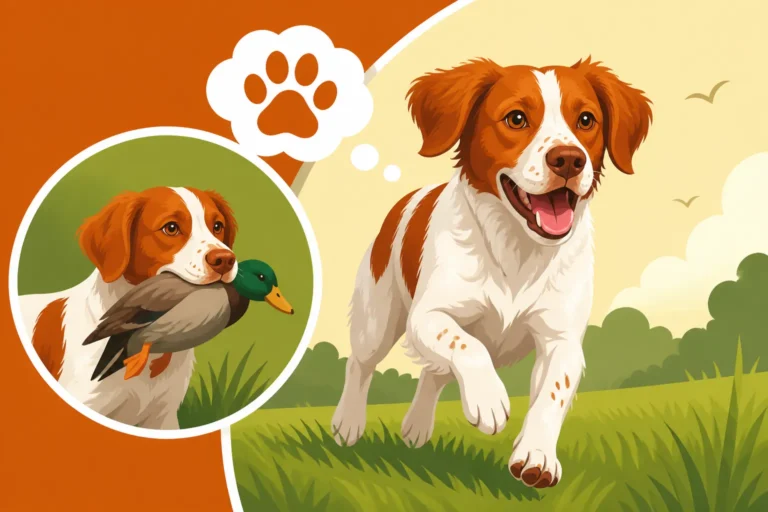
Let's be honest, Brittanys are built for action. Their very essence is about covering ground, finding birds, and working tirelessly in the field. This high drive and stamina mean they genuinely need significant physical and mental exercise every single day. A Brittany that hasn't had an outlet for its energy isn't just a bit antsy; it's a dog with a full tank looking for ways to burn it off, and your house (and toddler) might become part of its unwitting obstacle course. A well-exercised Brittany is almost always a calmer, more settled Brittany, but even then, their natural exuberance can be a lot for a tiny human navigating the world on wobbly legs.
Imagine your Brittany doing a happy zoomie through the living room, a common sight in many Brittany homes. For an adult, it's often endearing, maybe a little inconvenient. For a toddler who's just learned to walk and is still a bit unsteady, a dog suddenly appearing at high speed can be genuinely frightening, or worse, lead to an accidental bump or fall. It's rarely malicious; it's just pure, unadulterated Brittany joy that sometimes lacks an "off" switch or an awareness of delicate little humans. Understanding this innate energy is the first step toward managing it effectively in a multi-species household. Making sure your Brittany gets ample exercise, ideally before your toddler is up and active, can make a world of difference. How Much Exercise a Brittany Needs Off Season
Their Sensitivity and Affectionate Side
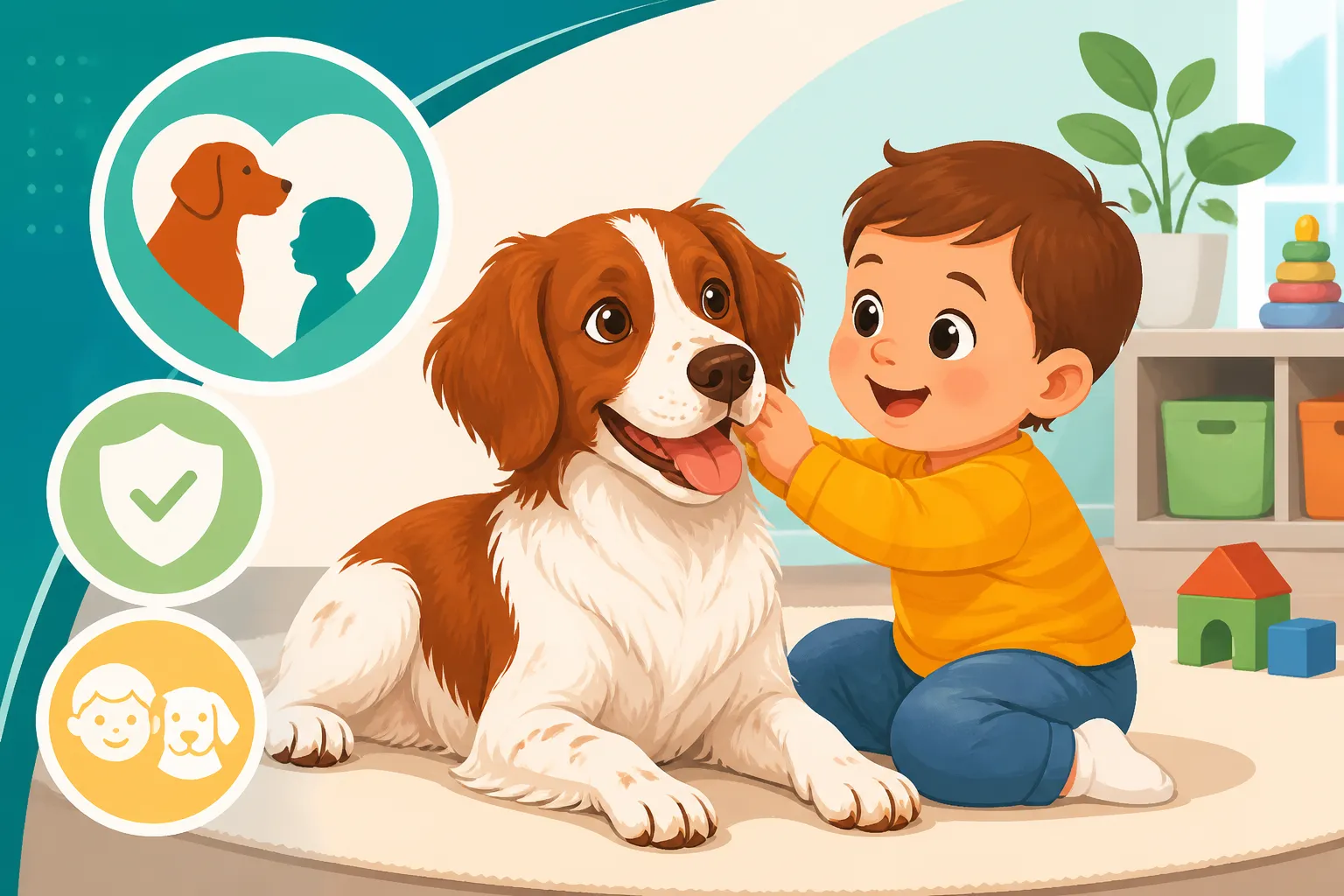
Despite their drive and tenacity in the field, Brittanys are often lovingly described as "soft" dogs. What this means in practice is that they are highly sensitive to tone of voice, body language, and correction. They thrive on positive reinforcement and can wilt under harsh reprimands. This inherent sensitivity extends to their emotional connections, too. They crave companionship and human interaction, often becoming incredibly affectionate members of the family, wanting to be involved in everything you do. This means they often adore being part of the family unit, including the smallest members, and want to be close to them.
Their affectionate nature can mean they love to cuddle or gently nudge, which is lovely for older children and adults. However, a toddler's unpredictable movements, loud noises, or unintentional grabbing can sometimes startle a sensitive Brittany. This isn't to say they'll react poorly, but it means their interactions need careful supervision to prevent accidental negative experiences that could erode trust. A Brittany that feels secure and understood will be much more tolerant and gentle. Their desire to be close also means they're not usually the type of dog to ignore a child; they'll want to be right there, experiencing life with them, which brings both joy and the need for careful management. How Sensitive a Brittany Is to Correction
Natural Instincts: Prey Drive and Resource Guarding
While generally renowned for their good nature and eagerness to please, Brittanys are, at their core, hunting dogs. They possess a natural prey drive that, while typically directed at game birds, is an instinctual part of their being. A fast-moving, squealing toddler, especially one making high-pitched sounds or running erratically, can sometimes inadvertently trigger this instinct in a dog, particularly if the Brittany isn't well-socialized or if its energy isn't adequately managed. It's not about aggression, but about a powerful, innate urge that needs to be understood and controlled in a home environment.
Similarly, resource guarding, though not a breed-specific trait of Brittanys (any dog can exhibit it), is always a consideration in any household with young children. This refers to a dog's tendency to protect its food, toys, or even favored resting spots from others. A toddler, being naturally curious and having underdeveloped concepts of personal space, might inadvertently approach a dog's food bowl or attempt to take a favored toy, which could lead to an unwanted defensive reaction from the dog. Proactive training and consistent management are absolutely essential to prevent these situations from escalating, ensuring both your dog and your toddler feel secure and respected in their shared home.
Navigating Potential Challenges: Common Scenarios and Solutions
Even the most well-behaved and extensively trained Brittany can present unique challenges when sharing a home with a toddler. It's not about expecting perfection, but about being realistic, anticipating these situations, and having clear, actionable strategies ready to go. From accidental bumps to innocent misunderstandings, proactive intervention is always better than reactive damage control.
Accidental Knock-Overs and Over-Exuberance
This is probably one of the most common concerns parents voice, and it's a valid one. A Brittany's enthusiasm, especially when greeting someone or playing, can sometimes far outweigh its awareness of delicate human anatomy, particularly a toddler's. Imagine this: you walk through the door after a quick trip to the grocery store, and your Brittany, overjoyed to see you, bursts into a happy run through the house. In its path is your toddler, who is still mastering the art of walking. A quick turn, an excited jump to get closer to you, or simply a burst of speed can easily send a wobbly toddler sprawling.
It’s crucial to understand that this behavior almost never stems from aggression or ill intent. It's pure, unadulterated Brittany joy and excitement, often coupled with a powerful body and a single-minded focus. However, the impact on a toddler can be significant: a fall, a bump, or even just being knocked over can be frightening and painful. The key is prevention and consistent training. Work on teaching your Brittany to greet people calmly, perhaps with a "sit" command, and always be mindful of their energy levels when the toddler is active. Practicing controlled greetings when guests arrive, or even when family members return home, can help generalize this behavior to all situations, including those involving your little one. Whether a Brittany Knocks Small Children Over
Managing Excitement and Jumping
Toddlers are tiny chaos agents, bless their hearts. Their natural exuberance, often accompanied by squealing, running, dropping food (oh, the dropped food!), and sudden movements, can act like a giant "excitement" button for many dogs, including Brittanys. These behaviors, while completely normal for a toddler, can be incredibly irresistible, or sometimes even annoying, to a dog. A Brittany might interpret the toddler's running as an invitation to chase and play, or the dropped food as a delightful, unexpected treat. This can quickly escalate into a situation where the dog is jumping, nipping playfully (but painfully), or simply overwhelming the child.
Teaching your Brittany impulse control around these specific triggers is absolutely paramount for a peaceful coexistence. Commands like "off" (to discourage jumping), "leave it" (for dropped food or toys), and a reliable "place" command (sending them to a designated spot) are invaluable. Consistency is key here. Every family member needs to reinforce these commands every single time. It's not just about stopping the behavior, but redirecting that excitement into something more appropriate. For example, when your toddler starts to get riled up, redirect your Brittany to a favorite chew toy or a short, calming training session in another room, away from the toddler's immediate vicinity.
Protecting Your Brittany's Space and Belongings
Just as toddlers desperately need their own safe spaces – their cribs, their playpens, their quiet corners – so too does your dog. A Brittany, like any dog, needs a designated area where it can retreat, relax, and know for certain it will not be bothered by tiny, curious hands. This becomes incredibly critical when curious little hands start exploring everything in the house, often without understanding boundaries. Without a safe haven, a dog might feel constantly on edge, leading to stress or even defensive behaviors if its space is continually invaded.
Establishing clear boundaries for both your child and your dog is not just helpful, it's essential. This means defining what the dog's special items are (food bowls, beds, favorite toys) and ensuring the toddler understands these are "doggy things" to be left alone. More importantly, it means giving your Brittany a physical sanctuary. This might be a crate, a dog bed in a quiet room, or a sectioned-off area of the house. Teaching your dog that this space is theirs, and teaching your toddler that when the dog is in its space, they are to be left undisturbed, fosters mutual respect and reduces potential conflicts. When your dog feels secure in its own territory, it's much more likely to be relaxed and tolerant elsewhere in the home.
| Brittany Trait | How it Impacts Toddlers | Mitigation Strategy |
|---|---|---|
| High Energy | Accidental bumps, over-exuberance, overwhelming presence. | Ample exercise before toddler is active; teach calm greetings. |
| Affectionate | Desire for close contact, nudging, potential for accidental knocks. | Supervise interactions; teach gentle touch; give dog a retreat. |
| Sensitive | Startled by loud noises, sudden movements, quick toddler actions. | Create calm zones for the dog; teach child gentle play; positive reinforcement. |
| Prey Drive | Toddler's running/squealing could trigger chase instinct. | Train "leave it"; redirect attention; manage energy levels. |
| Resource Guarding | Toddler approaching dog's food/toys could trigger defense. | Feed separately; teach "drop it"; manage dog's high-value items. |
Proactive Training and Socialization for Harmony
The foundation for a successful, peaceful dog-toddler relationship is truly built long before the toddler arrives on the scene, or as soon as both are in the home. It’s not about hoping for the best; it’s about preparing for it. Consistent, positive training and careful, ongoing socialization are not just good ideas—they are absolutely non-negotiable for creating a harmonious household.
Early Socialization and Puppy Training
When you bring a Brittany puppy into your life, the clock starts ticking on socialization. Exposing your Brittany puppy to a wide variety of sights, sounds, smells, and experiences is crucial, and that absolutely includes supervised, positive interactions with respectful children of all ages, if possible. This doesn't mean letting children swarm your puppy; it means controlled, gentle introductions where the puppy learns that children are a normal, non-threatening, and even pleasant part of their world. Puppy classes can be invaluable here. They offer a structured environment for teaching basic manners, appropriate social skills with other dogs and people, and foundational obedience. A well-socialized puppy is far more likely to grow into a well-adjusted adult dog that can handle the unpredictable nature of a toddler without stress or fear.
Think of it as building a robust emotional toolkit for your dog. A puppy that has positive experiences with children early on will be less likely to be fearful or overly reactive later. Many online resources and courses, like those offered by BAXTER & Bella, can provide excellent guidance for puppy parents on how to properly socialize and train their young Brittanys, even before formal classes begin. These platforms often offer step-by-step instructions that are perfect for new owners. Whether a Brittany Puppy Should Be Socialized Heavily Whether a Brittany Needs Puppy Class
Teaching Foundational Commands and Impulse Control
You simply cannot overstate the importance of solid obedience commands, especially when a toddler is in the house. Rock-solid "sit," "stay," "down," and a lightning-fast "come" command are the bare minimum. But even more critical for a Brittany living with a toddler are commands like "leave it" and "wait." These aren't just parlor tricks; they are lifesavers. "Leave it" can prevent your Brittany from snatching that dropped cracker before your toddler even realizes it's gone, or from picking up a small, potentially dangerous toy. "Wait" can keep your dog from bolting out the door when your child is near or from rushing excitedly towards a child that's just woken up from a nap.
A reliable "place" command, which teaches your dog to go to a designated bed or mat and stay there until released, is also a true game-changer. This allows you to remove your dog calmly from potentially overwhelming situations, like a toddler having a meltdown, or to create space when your child needs to play undisturbed on the floor. Consistent practice, using positive reinforcement, will make these commands second nature to your intelligent Brittany. Remember, Brittanys are incredibly biddable and eager to please, so with patience and clear communication, they learn quickly. How Biddable a Brittany Is
Establishing Rules for Both Dog and Toddler
This isn't just about training the dog to behave around the child; it's equally about teaching the human children how to interact respectfully and safely with the dog. Toddlers, by their very nature, are learning about the world through touch and exploration. They might pull ears, grab tails, try to ride the dog, or approach during meal times. While a well-trained Brittany might tolerate a lot, it's unfair and potentially dangerous to expect them to endlessly endure such interactions without supervision or boundaries.
Therefore, establishing clear and consistent rules for both the dog and the toddler is paramount. This means strict "no-go" zones for the toddler when the dog is resting, clear guidelines about never disturbing the dog while it's eating, and teaching gentle hands for petting. For the dog, it means understanding that certain areas are off-limits, or that certain times are "quiet times" when they need to be on their "place." Parents must be the consistent enforcers of these rules, acting as the interpreters and protectors for both species. Children are capable of learning, even at a young age, if the rules are simple, consistent, and gently reinforced.
Creating a Safe and Structured Environment
A safe home environment for a Brittany and a toddler isn't a static concept; it's a dynamic one that evolves as both your dog and your child grow and change. It requires a thoughtful combination of physical barriers, unwavering supervision, and consistent daily routines. This proactive approach helps to prevent problems before they start, fostering a relationship built on trust and respect rather than tension.
Physical Barriers and Safe Zones
When you have a curious toddler and an active Brittany, baby gates quickly become your absolute best friends. They are indispensable tools for managing the household dynamics. Baby gates allow you to create safe, temporary separation when needed, giving both your dog and your child a much-needed break from each other. Perhaps your toddler is having a particularly energetic play session, or your Brittany just finished a long hunt and needs quiet time to rest. A gate allows you to manage these situations without conflict.
Similarly, a dog crate, when introduced positively and seen as a comfortable, safe den by your Brittany, is vital. It provides a sanctuary where your dog can retreat to sleep, chew a bone undisturbed, or simply escape the noise and unpredictable movements of a toddler. Strategic placement of these barriers – perhaps a gate across a hallway leading to the dog's quiet room, or a crate tucked away in a low-traffic area – can prevent unwanted interactions and ensure that your Brittany has a consistent place of peace. You can find a wide variety of reliable baby gates and dog crates on Amazon, perfect for setting up these essential safe zones in your home. Whether a Brittany Can Be a Kennel Dog
Constant Supervision and "Management, Not Miracles"
This point cannot be stressed enough: never, ever leave a dog and a toddler unsupervised, regardless of how trustworthy your Brittany is. This isn't about doubting your dog's character; it's about acknowledging that both toddlers and dogs can be unpredictable, and accidents can happen in an instant, even with the best intentions. Parents are the essential interpreters and protectors in this unique interspecies relationship. You are the one who can read your dog's subtle body language cues (a yawn, a lip lick, a slight turning away) that indicate stress or discomfort long before a growl or snap. You are also the one who can redirect a toddler's grabby hands or overly enthusiastic approaches.
This principle is often called "management, not miracles." You manage the environment and the interactions to set both your dog and your child up for success. This isn't just about preventing bites or serious injuries; it's also about preventing fear, frustration, and accidental bumps or nips on both sides. Every negative interaction, even a minor one, can erode trust and create lasting anxiety. Your constant presence, even if you're just sitting quietly in the room, acts as a crucial safety net and allows you to intervene gently and immediately when needed.
Routine and Predictability
Brittanys, like many breeds, thrive on routine and predictability. They are intelligent dogs who benefit from knowing what to expect throughout their day. Establishing a predictable schedule for feeding, exercise, training sessions, and quiet time can significantly reduce anxiety, boredom, and hyper-activity, all of which can contribute to undesirable behaviors. A dog that knows when its needs will be met is a calmer, more relaxed dog.
This predictability helps your Brittany adapt to the sometimes chaotic and unpredictable nature of a toddler. If your dog knows it will get its vigorous run in the morning, or its quiet time in the crate after lunch, it will be better equipped to handle a sudden burst of toddler energy without becoming overly stimulated. A consistent routine also makes it easier for you to plan supervised interactions and ensure your Brittany gets adequate mental and physical stimulation, which is key to preventing problem behaviors that stem from boredom or pent-up energy. What an Under Exercised Brittany Does at Home
Conclusion: Brittany and Toddler Harmony Is Possible
Bringing up a Brittany Spaniel and a toddler in the same household is certainly a journey that requires patience, consistency, and a deep understanding of both your canine companion and your little human. Brittanys are intelligent, affectionate, and energetic dogs that, with the right approach, can be wonderful family members even alongside the youngest children.
It all boils down to proactive management, dedicated training, and unwavering supervision. By respecting your Brittany's natural instincts and sensitivities, providing ample outlets for their energy, creating safe spaces, and consistently teaching appropriate boundaries to both your dog and your toddler, you can absolutely foster a loving and harmonious environment. It’s a commitment, yes, but the bond that can form between a Brittany and a child is truly one of life's greatest joys.
Disclaimer
This article is for general informational purposes only and does not constitute professional advice. Laws, prices and regulations vary by location and change over time. Consult a qualified professional for guidance on your specific situation.