Whether an Aging Brittany Still Wants to Hunt
It’s a bittersweet question that many Brittany owners eventually face: does my aging companion, who once flew through the fields with boundless energy, still genuinely want to hunt? It's a tough pill to swallow when you notice your beloved Brittany slowing down, not bounding out of the truck with the same zeal, or perhaps struggling to clear a fallen log that was once a mere hop. This isn't just about their physical ability; it's about honoring their spirit and ensuring their golden years are filled with comfort and joy, while still tapping into that deep-seated instinct that defines them. This guide will explore how to understand, support, and adapt to your senior Brittany's hunting desires, ensuring they can enjoy the fields for as long as possible.
Understanding the Aging Brittany's Drive
The very essence of a Brittany is tied to the hunt. They are bred for it, live for it, and find immense satisfaction in the work. When they get older, it's easy to project our human frailties onto them and assume their desire diminishes alongside their physical prowess. But often, that's not the full picture.
The Hunter's Heart Never Truly Fades
You know that twinkle in their eye when you pick up your bird vest, even if their steps are slower? That's the hunter's heart. For a Brittany, hunting isn't just a physical activity; it's a profound mental and instinctual engagement. They've spent years honing their craft, reading the wind, working scent, and locking up on point with unwavering intensity. This deep-seated drive doesn't simply vanish with graying muzzles or creaking joints. It's woven into their very DNA.
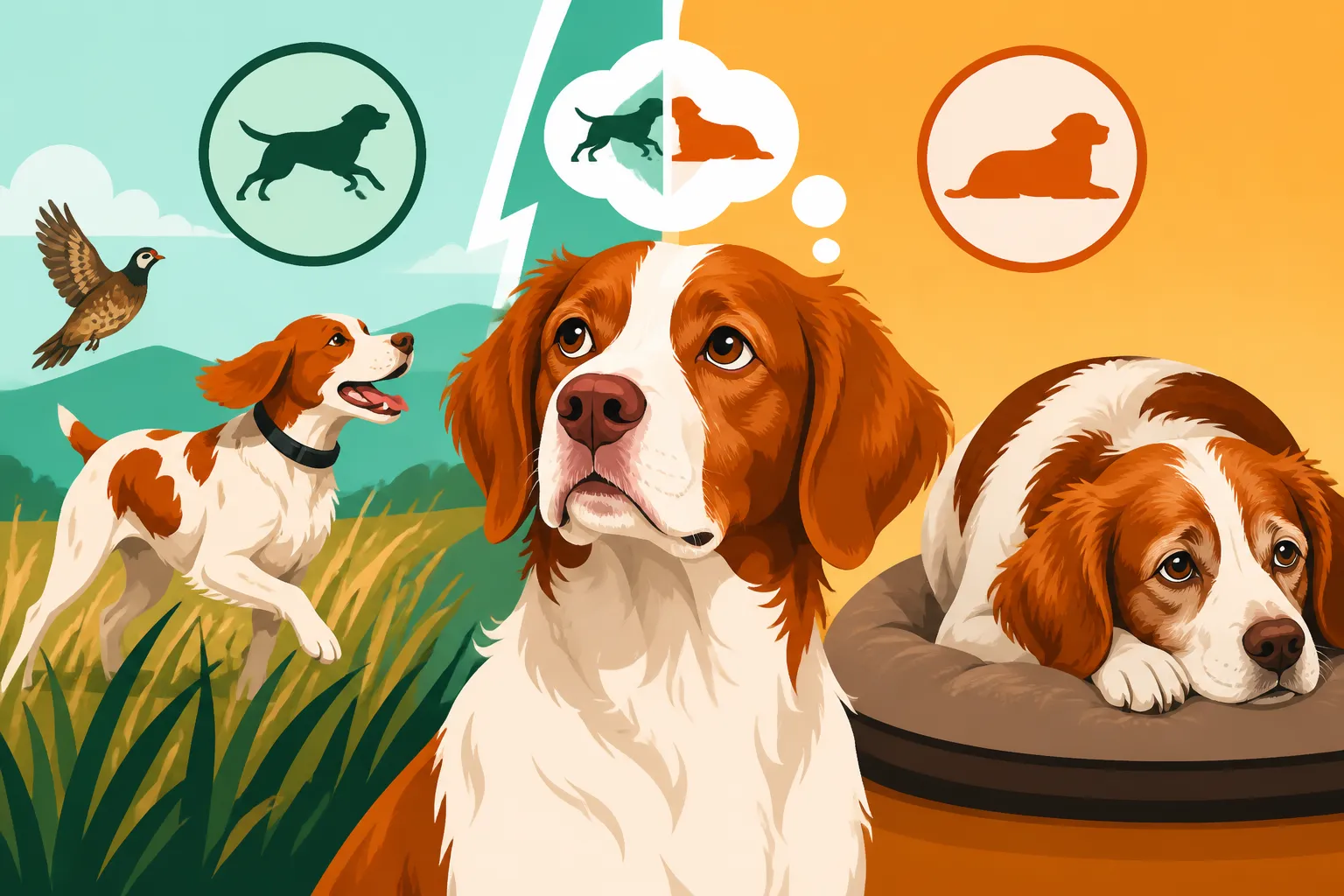
Think about it from their perspective: they hear the familiar clatter of gear, smell the gunpowder, and feel the excitement of the "work" in the air. Their instinct screams "Go!" even if their body whispers "Slow down." This intrinsic motivation means that even a senior Brittany, given the right circumstances and accommodations, often still wants to be part of the action, even if their role changes. Their joy often comes from participating, from the familiar routine, and from being by your side in the field, more than from the sheer athleticism of the younger days. It's a profound bond, and the hunt is where that bond truly shines for a Brittany.
Mental Engagement vs. Physical Capacity
One of the biggest misconceptions we have about aging dogs is that their mental sharpness declines at the same rate as their physical strength. While some cognitive changes can occur, many senior Brittanys remain remarkably keen-minded. They still have that incredible nose, that ability to decipher scent patterns, and that innate understanding of bird behavior. The challenge often lies in the disconnect between their willing spirit and their increasingly limited body.
An older Brittany might still "know" exactly where the bird is, but the burst of speed to get there might be gone. They might hold point with the same statuesque intensity, but the follow-through after the shot, or the retrieve over rough terrain, could become a significant effort. This is where we, as their human partners, need to step in. We need to respect their mental game, acknowledge their wisdom, and provide support so they can still engage their minds without overtaxing their bodies. It’s about creating opportunities for them to feel useful and fulfilled, even if they can no longer keep up with a two-year-old dynamo. Their experience can be a huge asset, even if their speed isn't what it once was.
Recognizing the Signs of a Slowing Brittany
It’s crucial to be an astute observer of your aging Brittany. They are masters at hiding pain and discomfort, especially when it comes to something they love as much as hunting. Their stoicism, while admirable, can make it difficult to know when they're truly struggling.
Subtle Changes in the Field
When you're out in the field, pay close attention to the small things. Does your Brittany still sprint to cover, or are they taking a more measured trot? Are they ranging as wide as they used to, or staying closer to you, perhaps naturally shortening their reach because the energy isn't there? You might notice they're a bit slower to pick up a bird's scent, or perhaps they break point more easily if it means having to move quickly. Even their tail wag might be less vigorous, or their recovery time after a short burst of activity noticeably longer.
Look for signs of stiffness after a rest period, like when you stop for a water break. Do they get up more slowly? Are they perhaps favoring a leg, even slightly? A good way to gauge this is to compare their behavior to previous seasons. Keeping a mental note, or even a literal journal, of their performance and recovery can help you track these subtle shifts. If you find yourself asking, "Why an Aging Brittany Slows Down Suddenly", it's time to pay closer attention and consider adjustments.
Behavioral Shifts at Home
The changes aren't just limited to the field; they often show up at home first. Is your Brittany less enthusiastic about walks, or does a long walk now result in them sleeping for the rest of the day? Do they struggle with stairs that they once bounded up effortlessly? Are they less inclined to jump on the couch or into the truck? You might also notice them sleeping more, being less interested in play, or showing some irritability if approached suddenly when resting.
Sometimes, a senior dog might become a bit more withdrawn or even grumpy, especially if they are in discomfort. They might also start to show signs of cognitive decline, such as getting disoriented in familiar places, staring blankly, or changes in their sleep patterns. Any of these changes, combined with a reluctance to engage as they once did, can be indicators that their body is no longer keeping up with their spirit. Understanding "What Changes in an Aging Brittany" can help you be more proactive.
The Importance of Vet Check-ups
This cannot be stressed enough: regular veterinary check-ups are paramount for an aging Brittany. Many of the issues that impact their ability and desire to hunt, such as arthritis, dental pain, vision loss, or even organ decline, are not immediately obvious to us. A vet can often detect these issues early, allowing for management strategies that can extend their comfort and activity levels. For instance, joint supplements, pain medication, or even dietary changes recommended by your vet can make a world of difference.
It's not just about treating problems; it's about preventative care. Discussing your Brittany’s activity level, their appetite, any changes you’ve observed, and their overall quality of life with your veterinarian is crucial. They can help you understand The Age a Brittany Is Considered Senior and what specific health screenings are appropriate for their stage of life. Investing in good veterinary care, and considering options like pet insurance from companies like Healthy Paws, can help manage the costs associated with supporting an aging dog's health, ensuring you can provide them with the best possible care for all those golden years.
Adapting Hunting Practices for Senior Brittanys
The good news is that "slowing down" doesn't have to mean "stopping altogether." With thoughtful adaptations, your senior Brittany can often continue to enjoy the fields, perhaps in a modified role, for several more seasons.
Shorter Hunts and Easier Terrain
The most straightforward adaptation is to simply shorten the duration of your hunts. Instead of a full day in tough cover, opt for an hour or two in lighter, more open terrain. Avoid steep hills, dense briars, or thick swamps that will be overly taxing. Focus on areas where birds are known to be, minimizing the amount of ground your Brittany has to cover to find them. This allows them to still use their nose and point without requiring marathon endurance.
Consider the time of day as well. Early mornings or late afternoons, when temperatures are cooler, might be better for an older dog, especially if they struggle with heat. Always carry plenty of water and offer frequent breaks. The goal is to make the experience enjoyable and successful for them, not to push them to their physical limits. A successful, shorter outing where they find a bird and hold point can be just as fulfilling for them as a long, grueling day was in their prime.
Focusing on the Joy, Not the Bag
Shift your mindset from "how many birds can we get?" to "how much joy can my dog experience today?" For an aging Brittany, the thrill of the hunt might now be more about the ritual, the smells, the companionship, and the successful point, rather than the retrieve or the size of the bag. If your dog is struggling with retrieves, for example, consider having them hold point and then you retrieve the bird. Their job might evolve into being a primary "finder" and pointer, with you handling the heavier lifting.
This change in focus can be incredibly liberating for both you and your dog. It removes the pressure and allows you to cherish every moment in the field. Watching your old friend lock up on point, even if it's for just a few minutes, is a profound experience that reminds you of their enduring spirit. This approach honors their lifetime of service and allows them to continue participating without the stress of performance. You might even find yourself enjoying the hunt more when the pressure is off.
Supporting Joint Health and Comfort
Many older Brittanys develop arthritis, a common ailment that significantly impacts their comfort and mobility. Managing joint health is critical for keeping them active. Your vet might recommend a combination of non-steroidal anti-inflammatory drugs (NSAIDs), joint supplements like glucosamine and chondroitin, or even physical therapy and cold laser treatments. Maintaining a lean body weight is also hugely important, as extra pounds put more strain on their joints. You can learn more about managing this in "The Age a Brittany Gets Arthritis".
Consider investing in supportive gear like a quality orthopedic dog bed for recovery at home, and perhaps even some dog boots or a protective vest for hunts to prevent scrapes and provide warmth. After a hunt, gentle massage can help ease stiffness. Discuss with your veterinarian whether your dog might benefit from specific pain management plans or advanced therapies. Companies like Healthy Paws can be a real lifeline here, as they can help cover the costs of ongoing treatments, medications, and therapies that keep your Brittany comfortable and mobile. It’s about proactive care that allows them to move freely and enjoy their time in the field without unnecessary discomfort.
The Emotional Aspect of Retiring a Hunting Dog
Let’s be honest, watching our dogs age is hard. Especially when their entire life has revolved around a shared passion like hunting, the thought of them no longer being able to participate can be heartbreaking.
Guilt and Love
It's completely normal to feel a mix of guilt and profound love as your Brittany enters their twilight years. You might feel guilty that you can't "fix" their aging body, or that you have to limit their favorite activity. You might worry that they’ll be unhappy or feel left out if they stay home while you go hunting. These feelings are a testament to the deep bond you share and the immense respect you have for them as a hunting partner.
Validate these emotions, but don't let them overshadow the practical decisions you need to make for your dog's well-being. Your love for them means prioritizing their comfort and quality of life above all else. Remember all the incredible memories you’ve built together in the field. Those experiences are a part of them, and a part of you, and they don't disappear just because the intensity of the hunt diminishes. Focus on making their remaining years as fulfilling and comfortable as possible, even if that means finding new rituals and joys outside of the traditional hunt.
Finding New Ways to Engage
"Retirement" for a hunting dog doesn't mean sitting around doing nothing. Their keen nose and desire to please can still be engaged in countless ways. Scent work games, where you hide treats or even training dummies around the house or yard for them to find, are fantastic for mental stimulation and a gentle physical workout. Short, leisurely walks in new, interesting places can be stimulating. Even just spending time together, brushing them, playing gentle games, or simply having them by your side as you work in the yard, can fulfill their need for companionship and purpose.
For those Brittanys who still have some energy, but can't handle a full hunt, consider taking them along for shorter, less demanding scouting trips, or just for a walk in the woods with no pressure to find birds. Let them sniff, explore, and simply be in nature. Many older Brittanys still thrive on having a "job," even if that job is now "chief companion" or "master scent detective." If you're curious about their longevity, you might want to read about The Twelve to Fourteen Years a Brittany Gets and how to make those years count.
Cherishing the Golden Years
Ultimately, the most important thing is to cherish every moment you have with your aging Brittany. Their capacity to hunt might change, but their capacity to love, to be a loyal companion, and to bring joy to your life remains undiminished. These golden years are precious, a time to give back all the love and dedication they’ve shown you. It’s about recognizing their inherent worth, beyond their hunting prowess.
Focus on providing excellent care, ensuring they are comfortable, well-fed with appropriate senior dog food, and showered with affection. Even if they no longer chase pheasants across wide-open fields, they’ll still want to be near you, feeling your hand on their head, hearing your voice, and sharing quiet moments. The hunt may have been their passion, but you are their world. And that's a connection that never fades, no matter how many gray hairs appear on their muzzle. Learn more about their continued care in Caring for an Old Brittany.
Here's a quick look at how you might adapt your hunting approach for your senior Brittany:
| Aspect of Hunt | Young Brittany (1-6 years) | Senior Brittany (10+ years) | Adaptation for Seniors |
|---|---|---|---|
| Duration of Outing | Full day, multiple hours | 1-2 hours max | Shorter, more frequent breaks |
| Terrain | Dense cover, rough, varied | Lighter cover, open fields, flat | Avoid steep hills, thick briars |
| Range | Wide-ranging, independent | Closer, checks in more frequently | Use a GPS collar to monitor proximity |
| Pace | Fast, energetic, quick bursts | Steady trot, slower acceleration | Allow dog to set the pace |
| Retrieves | Enthusiastic, often to hand | Might struggle, slower, hesitant | Owner retrieves, dog points only |
| Recovery Time | Quick bounce-back | Longer, stiffness, more rest | Immediate rest, warmth, hydration |
| Water Needs | Frequent, especially in heat | Constant access, electrolyte support | Bring extra water, portable bowls |
| Post-Hunt Care | Routine check, food, rest | Thorough check, massage, meds, warmth | Focus on comfort and recovery |
| Mental Stimulation | Hunt, training, new challenges | Scent games, short walks, companionship | Keep mind active gently |
Disclaimer
This article is for general informational purposes only and does not constitute professional advice. Laws, prices and regulations vary by location and change over time. Consult a qualified professional for guidance on your specific situation.