When a Brittany Puppy’s Eyes Should Be Checked
Bringing home a Brittany puppy is an exciting time, filled with dreams of field adventures and cozy evenings. But amidst all the puppy cuddles and training plans, it's easy to overlook one crucial aspect of their health: their eyes. Many new owners wonder when exactly their furry companion's eyes should be checked, feeling a bit lost in the sea of conflicting advice. This guide will walk you through the essential timeline for eye health checks for your Brittany puppy, from their first weeks to their first year and beyond, ensuring you're equipped to spot any potential issues early on.
The First Critical Eye Checks for Your Brittany Puppy
When you first bring your energetic Brittany puppy home, their world (and yours!) is a whirlwind of new sights and sounds. While many things demand your attention, understanding the initial eye checks they should receive is paramount. These early examinations lay the foundation for a lifetime of good vision and can catch serious issues before they become debilitating.
What Reputable Breeders Should Already Have Done
A responsible Brittany breeder isn't just focused on beautiful conformation or strong bird drive; they're deeply invested in the health of their lines. This commitment extends to eye health, especially since some conditions can be hereditary. Before a puppy even leaves for its new home, a good breeder should have taken steps to ensure their eyes are developing properly.
Often, this involves a preliminary check by their own veterinarian shortly after birth. The vet will look for obvious abnormalities like persistent pupillary membranes (leftover fetal blood vessels), entropion (inward-rolling eyelids), or ectropion (outward-rolling eyelids). While not always specific to Brittanys, these are general puppy eye issues that can appear early. More importantly, some breeders will have had the litter examined by a veterinary ophthalmologist, especially if there's any history of genetic eye disease in the pedigree. This specialized exam, often performed around 6-8 weeks of age, is crucial. It can detect conditions such as Retinal Dysplasia in a Brittany Spaniel or early signs of cataracts that might not be apparent to a general practice vet. If your breeder hasn't mentioned these checks, don't hesitate to ask. Reputable breeders will be transparent and eager to share the health clearances of the parents and any examinations performed on the puppies. They might even provide a health certificate or a report from a veterinary ophthalmologist as part of your puppy packet, giving you peace of mind that those adorable puppy dog eyes got a professional once-over.
Your Puppy's First Veterinary Visit and Eye Exam
Even if your breeder was incredibly diligent, your puppy's first visit to your own veterinarian is a non-negotiable step in their eye health journey. This appointment, usually scheduled within a few days to a week of bringing your puppy home, is your opportunity to establish a baseline for their overall health, including their eyes.
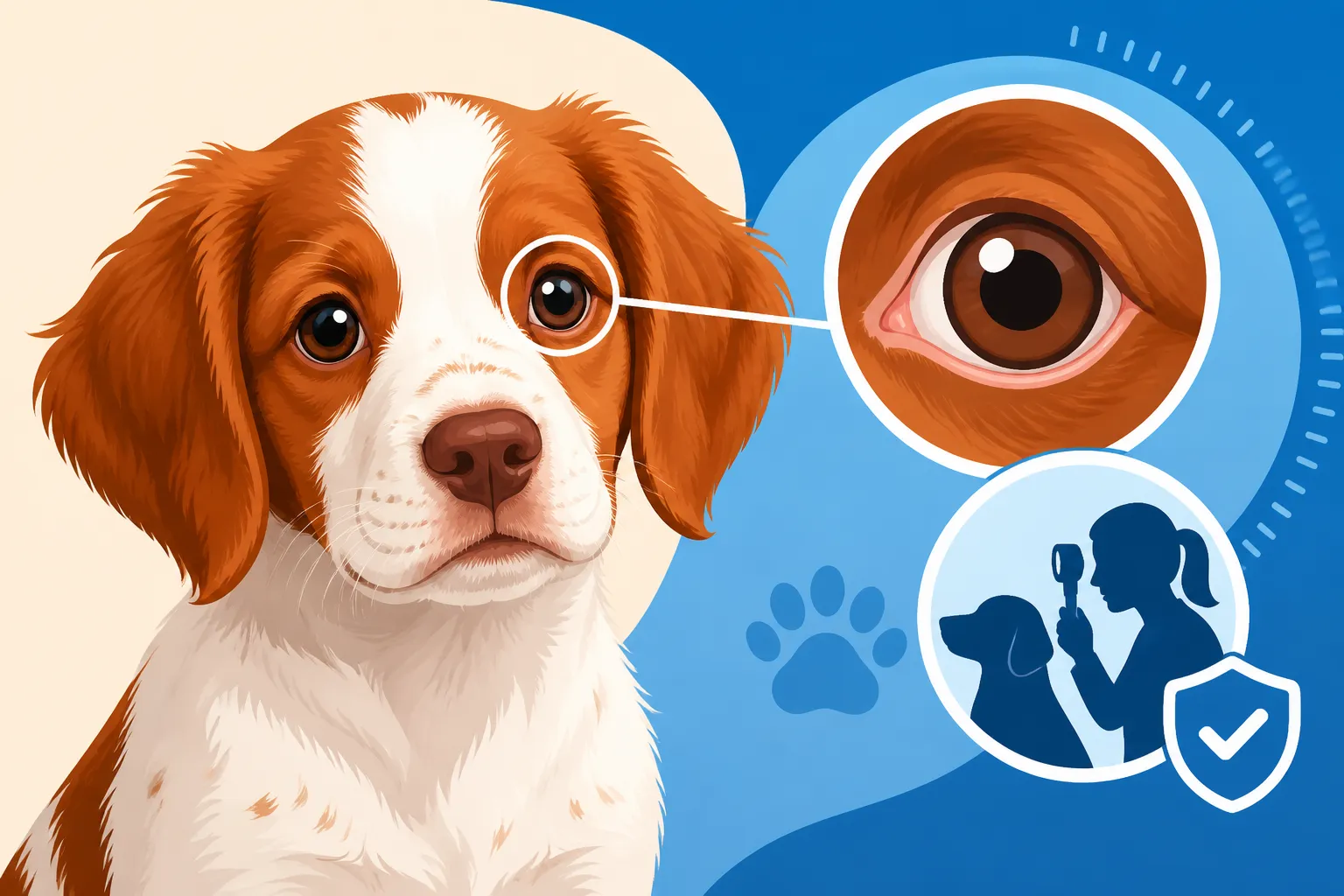
During this comprehensive check-up, your vet will perform a thorough ocular examination. They'll use an ophthalmoscope to look at the structures of the eye, checking for clarity of the lens, signs of inflammation, or any congenital defects. They’ll also assess your puppy’s vision by observing how they track objects or react to threats. It’s not just about looking into the eye; the vet will also examine the eyelids, eyelashes, tear ducts, and the conjunctiva (the pink membranes around the eye). For instance, they'll check for any signs of discharge, redness, or excessive tearing, which could indicate infection or a blocked tear duct. This is also your chance to discuss any concerns you might have noticed yourself. Maybe your puppy squints in bright light, or one eye seems to water more than the other. No concern is too small when it comes to your puppy’s vision. This initial vet visit isn't just about diagnosis; it's about education. Your vet can provide guidance on what to watch for as your puppy grows, and if they recommend further specialist examinations, that's where pet insurance providers like Healthy Paws can really step in to help manage potential costs down the line.
Understanding Eye Conditions Brittanys Can Face
While Brittanys are generally a healthy breed, like all purebreds, they can be predisposed to certain genetic conditions, and their active lifestyle can also contribute to eye issues. Knowing what to look for and when these conditions typically manifest is crucial for early intervention.
Retinal Dysplasia and Progressive Retinal Atrophy
One of the more concerning eye conditions for Brittanys is Retinal Dysplasia (RD). This is a developmental abnormality of the retina, the light-sensitive tissue at the back of the eye. In puppies, it can range from small, non-progressive folds (which might have little impact on vision) to more severe, widespread detachments that can lead to blindness. What makes this tricky is that mild forms might not be immediately obvious, which is why a specialized ophthalmologist exam, particularly around 6-8 weeks, is so important. The genetic component means that responsible breeders will screen their breeding stock to avoid passing this on.
Another, often more serious, condition is Progressive Retinal Atrophy (PRA). This is a group of degenerative diseases affecting the retina, eventually leading to blindness. Unlike RD, which is a developmental issue, PRA is progressive. Early signs can be subtle, such as night blindness, where your puppy might bump into things in dim light or be hesitant to go outside after dusk. As it progresses, day vision also deteriorates. The age of onset can vary widely, from early puppyhood to later in life, depending on the specific genetic mutation. For Brittanys, certain forms of PRA can become apparent during their first year or two. Regular check-ups, including an annual eye certification recommended by organizations like the OFA (Orthopedic Foundation for Animals), can help detect these changes. Genetic testing is available for some forms of PRA, and a good breeder will have performed these tests on the parents. If you're wondering Whether a Brittany Needs a Yearly Eye Exam, the answer is often a resounding yes, especially when considering conditions like PRA that can develop over time.
Glaucoma and Cataracts in Young Brittanys
Beyond retinal issues, Brittanys can also be susceptible to glaucoma and cataracts, even at a young age. Glaucoma is a painful condition caused by increased pressure within the eye, which damages the optic nerve. It can lead to rapid vision loss and even blindness if not treated promptly. In puppies, juvenile glaucoma can be inherited and might present with signs like a cloudy cornea, a dilated pupil that doesn't react to light, redness in the white of the eye, or obvious pain (rubbing the eye, squinting). This is an emergency situation. If you suspect Glaucoma in a Brittany Spaniel, contact your vet immediately; timely intervention can sometimes save vision.
Cataracts, on the other hand, involve an opacity or clouding of the lens of the eye, which can impair vision. While often associated with aging, juvenile cataracts can affect Brittany puppies due to genetics, trauma, or underlying metabolic diseases like diabetes. You might notice a hazy or cloudy appearance in your puppy's pupil, which normally should be clear and black. Sometimes, the cataract is small and doesn't significantly affect vision, but others can progress to full blindness. Again, specialized veterinary ophthalmologist exams are key for early detection. The clarity of the lens is one of the things a professional will assess. If your vet notes any changes during a routine How Often a Brittany Needs a Wellness Exam, they'll likely recommend a referral. Catching Cataracts in a Brittany Spaniel early allows for monitoring and, in some cases, surgical intervention if vision is severely impacted.
Table: Common Eye Conditions in Brittany Puppies and When to Watch
| Condition | Typical Onset | Common Signs to Watch For | Urgency of Vet Visit |
|---|---|---|---|
| Retinal Dysplasia (RD) | Birth-8 weeks | Squinting, bumping into objects, vision impairment (especially severe forms), often subtle or asymptomatic. | Moderate (for diagnosis) |
| Progressive Retinal Atrophy (PRA) | 6 months – 2 years (variable) | Night blindness (hesitation in dim light), dilated pupils, later day blindness, bumping into objects. | Moderate (for diagnosis) |
| Juvenile Cataracts | 6 weeks – 2 years | Cloudy or hazy appearance in pupil, vision impairment. | Moderate (for diagnosis) |
| Juvenile Glaucoma | 6 months – 3 years | Redness, squinting, pain, cloudy cornea, dilated pupil, vision loss. | Urgent/Emergency |
| Eyelid Anomalies | Birth-8 weeks | Inward/outward rolling eyelids, tearing, irritation, discharge. | Low to Moderate |
| Conjunctivitis | Any age | Redness, discharge (clear, yellow, green), swelling, squinting. | Low to Moderate |
Ongoing Vigilance: What to Look For as Your Brittany Grows
Bringing your Brittany puppy home means embarking on a journey of discovery, and part of that journey involves continually monitoring their health. Eye care isn't a one-and-done event; it requires ongoing vigilance from you, the owner, as your pup transitions from clumsy explorer to seasoned field dog.
Daily Checks and Subtle Signs of Trouble
As a dedicated Brittany owner, you're their first line of defense against health issues. Incorporating quick eye checks into your daily routine can make a huge difference. When you're having your morning coffee or winding down in the evening, take a moment to gently examine your Brittany's eyes. What should you look for? Their eyes should be clear, bright, and free of excessive discharge. The whites of their eyes (sclera) should be white, not red or yellow. Their pupils should be equal in size and react to light.
Watch for subtle changes that might indicate trouble. Is your normally fearless pup suddenly hesitant to navigate stairs or jump off the couch? Are they bumping into furniture, especially in dimly lit rooms? Do they seem to squint more often, or rub their eyes with their paws? Excessive tearing, a thick or discolored discharge, persistent redness, cloudiness, or a change in eye color are all red flags. Even minor irritation can escalate quickly for an active dog. Perhaps they got a piece of debris in their eye while enthusiastically Whether a Brittany Bumps Birds, or scratched it on a branch. Sometimes, these signs might be linked to larger systemic issues, like allergies or even pain from an injury elsewhere that causes them to guard their eyes. If you notice any of these signs, don't wait. A quick call to your vet can help determine if it's something minor you can monitor at home or if an immediate visit is necessary. Remember, pets are masters at hiding pain, so even a slight change in behavior around their eyes warrants attention. Having a good pet insurance plan like Healthy Paws can give you peace of mind, knowing that if an unexpected eye injury or illness arises, you're financially prepared for the necessary diagnostics and treatments.
When to Seek Immediate Veterinary Attention
While daily vigilance helps catch subtle changes, some signs demand immediate, emergency veterinary attention. Time can be critical in preserving your Brittany's vision and preventing severe pain. If you observe any of the following, do not hesitate:
- Sudden Blindness: Your Brittany suddenly can't see, bumping into everything, disoriented, or unwilling to move. This is a severe emergency.
- Severe Pain: Intense squinting, constant rubbing or pawing at the eye, holding the eye tightly shut, or crying out when the eye area is touched.
- Protruding Eyeball: The eyeball appears to be bulging out of its socket, which can be caused by trauma or severe swelling.
- Deep Laceration or Puncture: Any obvious cut on the eyeball or eyelid. These can quickly lead to infection or severe damage.
- Cloudy or Blue Eye with Redness and Pain: This combination can often indicate acute glaucoma, which is incredibly painful and can cause irreversible blindness within hours if not treated.
- Foreign Object Embedded in the Eye: If you can see something stuck in their eye that you can't easily flush out with sterile saline, do not try to remove it yourself, as you risk further damage.
In these situations, bypass your general vet's normal appointment scheduling and head straight to an emergency veterinary clinic or call your vet's emergency line. Quick action can make the difference between saving an eye and losing it. For less acute but still concerning signs, your regular vet should be your first call. They might recommend further diagnostics or refer you to a veterinary ophthalmologist for specialized care. Conditions like Whether a Brittany Needs a Preseason Vet Check often include a thorough eye examination to ensure they are fit for the field, highlighting the importance of professional oversight.
The Lifelong Importance of Proactive Eye Care for Your Brittany
The care you provide for your Brittany's eyes in puppyhood sets the stage for their entire life. Proactive eye care isn't just about reacting to problems; it's about prevention, early detection, and ensuring your beloved companion enjoys clear vision for as long as possible.
Regular Vet Visits and Specialist Referrals
Beyond those initial puppy checks, regular veterinary visits are non-negotiable for maintaining your Brittany's eye health throughout their The Twelve to Fourteen Years a Brittany Gets. Your vet will continue to perform eye examinations as part of their annual wellness check-ups, monitoring for any changes that might indicate developing conditions. As your Brittany gets older, they may be susceptible to age-related issues, just like humans. This includes things like nuclear sclerosis, a normal aging change that causes a hazy blue appearance in the lens but doesn't usually affect vision, as well as cataracts that develop later in life.
For certain breeds, or if your vet detects something suspicious, they may recommend specialist referrals. A board-certified veterinary ophthalmologist has advanced training and equipment to diagnose and treat complex eye conditions. They can perform advanced diagnostics like electroretinography (ERG) to assess retinal function or gonioscopy to examine the drainage angle of the eye, crucial for diagnosing certain types of glaucoma. Don't be afraid to ask for a referral if you have concerns or if your vet believes it's warranted. An eye specialist can give you the most accurate diagnosis and treatment plan, which is vital for preserving vision. The costs associated with such specialized care can be significant, reinforcing the value of having a reliable pet insurance plan from a provider like Healthy Paws. Understanding What a Brittany's Yearly Eye Certification Costs and other specialized tests can help you budget for the comprehensive care your Brittany deserves.
Impact of Good Eye Health on a Brittany's Quality of Life
For a Brittany, excellent vision isn't just a luxury; it's fundamental to their happiness and their very identity. These are dogs bred to be keen hunters, relying heavily on their eyesight to spot birds, track movement, and navigate varied terrain. Imagine a bird dog that can't clearly see the flush, or a beloved family companion that struggles to recognize faces or play fetch. Compromised vision can lead to anxiety, decreased confidence, reluctance to engage in activities they once loved, and a significant reduction in their overall quality of life.
Maintaining good eye health allows your Brittany to continue thriving in their roles, whether that's an active field partner, a competitive obedience dog, or a cherished family member who enjoys exploring the backyard. It means they can safely run and play, explore new environments, and interact fully with their world. It impacts their ability to learn and adapt, their social interactions with humans and other animals, and even their ability to avoid hazards. Proactive eye care, from puppyhood through to Caring for an Old Brittany, is one of the most profound ways you can show your love and commitment to your Brittany, ensuring they live a full, vibrant life with eyes wide open to all the adventures ahead.
Disclaimer
This article is intended for informational purposes only and does not constitute veterinary advice. Always consult with a qualified veterinarian or veterinary ophthalmologist for any health concerns or before making any decisions about your Brittany's health care.