Whether Ticking Is Allowed on a Brittany
Yes. Ticking is allowed on a Brittany: those small flecks of color in the white parts of the coat are a recognized marking, not automatically a fault. It’s easy to mistake ticking for dirt, a coat change, or a different color pattern, though. This guide explains what ticking looks like, how it differs from roan, and what it means for your dog.
What ticking looks like on a Brittany
Ticking means small flecks of color in the white coat
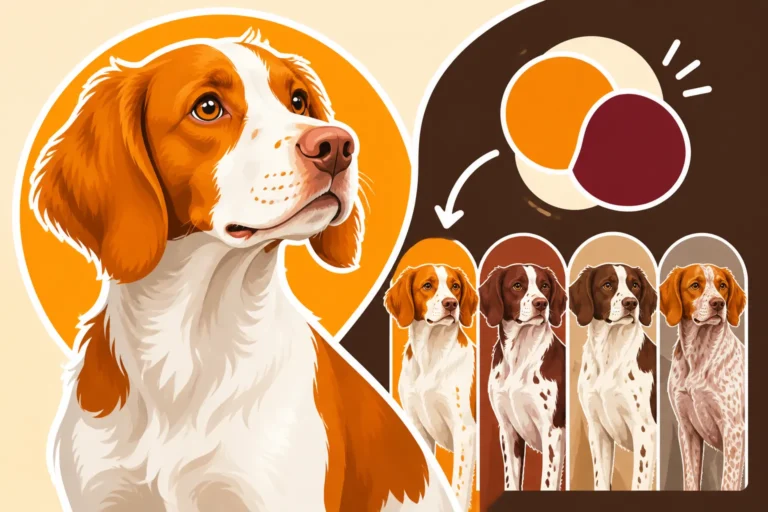
A Brittany’s coat is generally orange and white or liver and white, and the white areas may be clear or marked. Ticking describes small colored spots scattered through the white hair. The flecks may be orange or liver, depending on the dog’s base color, and can appear on places such as the muzzle, chest, legs, or body.
The amount and distribution vary. One Brittany might have just a few faint specks, while another has a noticeable sprinkling across a larger white area. Ticking doesn’t need to form a neat pattern, and it may not be equally visible everywhere. Short hair, longer feathering, lighting, and the dog’s age can all affect how easy it is to see.
Ticking is part of the coat’s appearance—not evidence that a dog has been stained or that its coat is unhealthy. If you’re trying to identify a pup’s expected coloring, remember that markings can become more apparent as the coat develops. For an overview of the breed’s color options, see Which Colors a Brittany Comes In.
Ticking is not the same as a large patch or roan
A colored patch is a larger, more clearly defined area of orange or liver. Ticking, by contrast, consists of small individual flecks within the white. Roan can look more blended: colored hairs are distributed through a white area, giving it a finely mixed or speckled appearance. In everyday conversation, people sometimes use “ticked” and “roan” loosely, which can make descriptions confusing.
A practical way to tell them apart is to look at the overall effect rather than count every colored hair. Are there distinct little spots against mostly white hair? That is commonly described as ticking. Does the area appear densely mixed, with colored and white hairs creating a more even, blended look? People may call that roan. The boundary isn’t always obvious, especially in a dog with dense markings.
Color terminology can be particularly confusing when you’re comparing puppies from the same litter. A breeder may describe one as lightly ticked and another as roan, while someone else might use slightly different wording. If the distinction matters to you, ask for a clear description of the coat and look at the dog in natural light. You can also read Whether a Roan Brittany Is Standard for a closer look at that pattern.
How ticking fits the Brittany breed standard
Ticking is an accepted coat marking
The short answer is that ticking is allowed. Brittanys can have white areas with colored flecks, and the presence of those flecks does not, by itself, make a dog ineligible for conformation competition. A dog’s overall coat pattern is considered in the context of the breed standard, rather than judged on whether its white areas are perfectly clear.
That distinction is reassuring if you’ve looked at your Brittany’s speckled legs or chest and wondered whether something is “wrong” with its coloring. Ticking is a normal coat variation. It doesn’t mean your dog is less of a Brittany, and it does not say anything by itself about the dog’s health, temperament, or ability in the field.
The breed’s familiar color combinations include orange and white and liver and white, with different patterns and degrees of marking. For a closer look at those common appearances, see What an Orange and White Brittany Looks Like and What a Liver and White Brittany Looks Like. Ticking is one detail within that broader picture.
A marking alone does not determine show quality
“Allowed” doesn’t mean that coat markings alone decide whether a dog is a strong show prospect. Conformation judging considers the dog as a whole, including structure, movement, balance, condition, and how well it fits the breed standard. Ticking isn’t a shortcut to assessing those qualities, and a heavily ticked dog isn’t automatically better or worse than one with a clearer white coat.
If you’re considering showing a Brittany, ask the breeder or a knowledgeable conformation mentor to explain how the individual dog compares with the standard. That conversation should include more than color: for example, the dog’s build and movement, and whether its overall appearance is typical of the breed. For more on another pattern that raises questions for owners, see Whether a Tricolor Brittany Is Standard.
If you’re choosing a companion or working dog rather than a show prospect, ticking is usually a cosmetic detail. It may be a feature you particularly like, but it shouldn’t take priority over fit with your home, the dog’s temperament, health information, and the breeder’s care practices.
| Coat detail | What it generally looks like | Is ticking the same thing? |
|---|---|---|
| Clear white | White hair with few or no visible colored flecks | No |
| Ticking | Small, distinct colored spots in white areas | Yes, this is ticking |
| Roan | A more blended mix of colored and white hairs | No, though the terms are sometimes used loosely |
| Colored patch | A larger, defined area of orange or liver | No |
Why ticking may look different as a Brittany grows
A puppy’s coat can change in appearance
A puppy’s markings may not look exactly the same as they do later. As the coat develops, ticking can become easier to notice, while changes in coat length and texture can also affect how the markings appear. That doesn’t mean every lightly marked puppy will become heavily ticked, or that you can predict an adult coat precisely from a quick look at a very young pup.
This can catch new owners off guard. You may bring home a puppy with a mostly white leg, then notice more colored flecks as the dog grows. Or a pattern that looked prominent in a puppy photo may seem less obvious once the adult coat is longer or viewed in different light. Those changes can be ordinary coat development, rather than a sign that the dog’s basic coloring has changed category.
If you’re looking at a litter, ask the breeder how the parents’ coats developed and whether adult relatives offer a useful comparison. Family examples may help you understand what kinds of markings occur in that line, but they still can’t guarantee the exact appearance of your puppy as an adult. The topic is explored further in Whether a Brittany's Color Changes as It Grows.
Lighting, feathering, and dirt can complicate what you see
A speckled coat can be hard to assess after a muddy walk, a romp in dry grass, or a day exploring wet cover. Dirt and plant debris may cling to the hair, while longer feathering can hide markings underneath. A quick rinse or brush-through can help you distinguish a real coat marking from something sitting on the hair.
For routine clean-up, keep grooming gentle. A comb or brush suited to your dog’s coat can help remove loose debris without tugging at feathering. If you’re shopping for basic grooming tools, Chewy is one place owners may look; choose an item appropriate for your dog’s coat and follow its use instructions. Don’t use harsh stain removers or try to scrub a colored spot out—if the fleck is part of the hair, scrubbing won’t remove it and may irritate the skin.
If what you’re seeing is new, raised, inflamed, or attached to the skin rather than simply colored hair, treat it as a skin question instead of assuming it is ticking. A vet can assess a spot that changes or causes discomfort. Ordinary coat markings should not be painful, itchy, or swollen.
What ticking says about your Brittany
Ticking does not predict hunting ability or temperament
It’s natural to look for clues in a dog’s appearance, especially when you’re choosing a puppy. But ticking doesn’t tell you whether a Brittany will point naturally, hunt close, range wide, or make a good household companion. Those qualities involve genetics, early experiences, training, and the fit between the dog and its owner—not the number of flecks in the white coat.
For a potential puppy buyer, it’s more useful to ask about the parents’ health, temperament, and working or companion life. Ask what the breeder has observed in the litter, too, while remembering that a young puppy’s adult behavior cannot be fully predicted. If you’re curious about the link between coat and field ability, see Whether Color Says Anything About a Brittany's Hunting.
A dog’s pattern can be part of what makes it visually distinctive, and there’s nothing wrong with having a favorite look. Just keep appearance in perspective. A ticked Brittany is still a Brittany, and the flecking itself is not a measure of its value as a companion or hunting partner.
Keep coat care practical
Ticking doesn’t require special grooming. Brush or comb your Brittany as needed to manage loose hair and prevent tangles, paying attention to feathering where burrs and debris can collect. After time outdoors, check the coat and skin rather than focusing only on the colored markings. A small fleck in the hair is different from a seed, scab, or skin lesion.
If you’re building a basic grooming kit, Chewy may be one option for finding everyday brushes or combs, alongside local pet shops and veterinary recommendations. Pick tools based on your dog’s coat and comfort, not on the idea that ticking needs to be removed or treated. For coat-care basics, How Often a Brittany Needs Brushing offers related guidance.
In short, ticking is an accepted Brittany marking. It can be sparse or noticeable, may look different as the coat matures, and is easy to confuse with roan or debris. If you’re unsure whether a spot is part of the coat or a change in the skin, check it closely and ask your veterinarian when there are signs of irritation or discomfort. For routine coat questions, a groomer or experienced Brittany breeder can also help you identify what you’re seeing.
Disclaimer
This article is for general informational purposes only and does not constitute professional advice. Laws, prices and regulations vary by location and change over time. Consult a qualified professional for guidance on your specific situation.