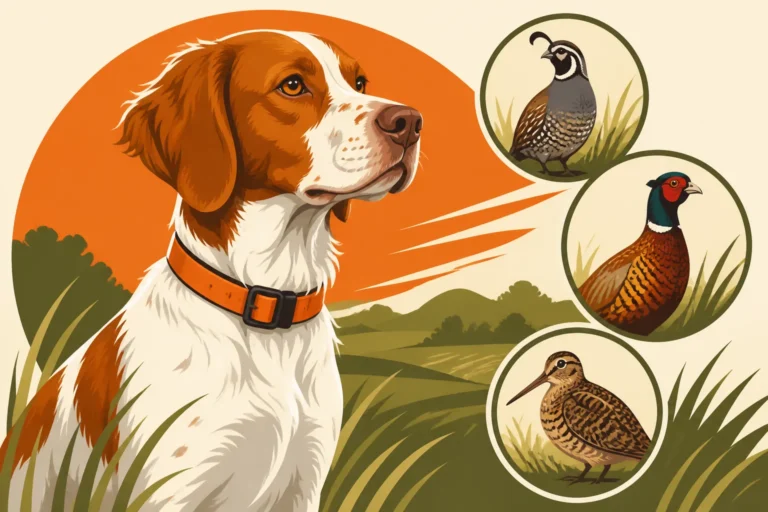
Whether a French Brittany Is a Separate Breed
Oh, the age-old question that sparks many a passionate debate at field trials and family gatherings alike: Is a French Brittany truly a separate breed from the American Brittany? It's a source of genuine confusion for many, especially when you start looking into pedigrees and kennel club registrations. You're trying to understand if you're getting a fundamentally different dog or just a variation on a cherished theme. This guide aims to clear up that very real dilemma, exploring the historical journey, physical distinctions, and cultural differences that have led to these two recognizable types.
The Historical Roots of the Brittany: One Breed, Two Paths
To truly understand the nuances between what we call a French Brittany and an American Brittany, we have to journey back in time, all the way to the picturesque fields and forests of northwestern France. What we see today as two distinct "types" actually spring from the very same wellspring.
The Shared Ancestry in Brittany, France
The story of the Brittany begins centuries ago in the French province of Brittany, a region steeped in Celtic culture and known for its rugged coastlines and rolling inland plains. Here, local poachers and gamekeepers alike sought a small, swift, biddable dog capable of hunting a variety of game birds, from partridge to woodcock, in dense cover. They needed a dog that could point with intensity, retrieve shot game, and be a cherished family companion once the hunt was over. This was not a dog bred in grand kennels for nobility, but rather a working dog developed by the common people, often overlooked by official records for generations.
These early dogs, often depicted in paintings and tapestries dating back to the 17th century, were known for their intelligence, eagerness to please, and remarkable bird sense. They were compact, energetic, and perfectly suited to a foot hunter who needed their dog to stay within gun range. There was no "French" or "American" distinction then, just the local bird dog of Brittany. Over time, through selective breeding by those who valued these traits, the breed formalized, with the first written standard emerging in the early 20th century. If you're curious about the breed's origins, you might enjoy reading Where the Brittany Comes From.
The Emergence of Different Breeding Philosophies
As the Brittany gained recognition and its reputation for being a phenomenal bird dog spread, it eventually made its way across the Atlantic to North America. This is where our story begins to diverge. The American Kennel Club (AKC) officially recognized the breed in 1934, initially as the "Brittany Spaniel," a name that reflected a common misconception about its hunting style (it points, it doesn't flush like a true spaniel). Over the decades, American breeders, often influenced by the vast open spaces of the American West and the demands of horseback field trials, began to select for certain characteristics.
The American ideal often favored a dog with a wider range, more ground speed, and a bolder, more independent hunting style, perfectly suited for covering large tracts of land quickly. Meanwhile, in France, breeders largely maintained the original standard, prioritizing a closer-working dog, often referred to as an Epagneul Breton, that remained within close proximity to a walking hunter. This divergence in breeding goals, driven by different hunting environments and cultural preferences, subtly but surely began to shape two distinct types within the same breed. It's truly fascinating how different environments can influence a breed's development, a topic explored further in American Brittany and Epagneul Breton Went Separate Ways.
French Brittany vs. American Brittany: Diving into the Standards
Now, let's get down to the nitty-gritty of what makes these two types look and act a little differently. While they share a common ancestor, the differing standards have led to some noticeable distinctions in appearance and hunting approach.
Distinguishing Physical Characteristics
When you look at a French Brittany and an American Brittany side-by-side, you might notice some subtle yet consistent differences. The French standard, championed by organizations like the Club de l'Epagneul Breton, generally describes a dog that is slightly smaller and more compact than its American counterpart. They tend to be a bit lighter in bone and often have a squarer build. For instance, an American Brittany might typically stand a bit taller and be slightly heavier. How Much Shorter a French Brittany Is delves into these size differences in more detail.
Another key differentiator often lies in coat color. While both types come in striking orange and white or liver and white patterns (roan and tricolor variations also exist), the French standard permits black in its coat color, a color explicitly disallowed by the AKC standard for American Brittanys. So, if you see a beautiful black and white Brittany, you can be pretty sure it's a French type! Their heads might also show slight variations, with the French type often having a slightly rounder skull and a more defined stop (the indentation between the eyes). Tails are also a point of interest; while both can be naturally bobtailed, the French standard has a preference for the length of the docked or natural bobtail to be quite short.
Here's a quick comparison table of typical traits:
| Characteristic | French Brittany (Epagneul Breton) | American Brittany |
|---|---|---|
| Size (Height) | Slightly smaller, more compact | Generally taller, larger framed |
| Weight | Lighter in bone | Often heavier and more robust |
| Build | Tends to be squarer, more athletic | Slightly longer than tall, powerful |
| Allowed Colors | Orange & white, liver & white, black & white, tricolor (with black or liver), roan. Black is permitted. | Orange & white, liver & white, tricolor (with liver), roan. Black is a disqualification. |
| Head Shape | Often a rounder skull, more pronounced stop | Flatter skull, less pronounced stop |
| Working Range | Closer working, ideal for foot hunters | Wider ranging, suited for large fields/horseback |
For a deeper dive into the kaleidoscope of Brittany coats, check out Which Colors a Brittany Comes In.
Temperament and Working Style Differences
Beyond the physical, the most significant distinctions often manifest in their working styles and, by extension, their general temperament in the field. The core function of both types remains the same: to be an exceptional bird dog. However, the how they go about it can differ quite a bit.
The French Brittany, bred for the walking hunter in often dense European cover, is renowned for its close-working style. These dogs are expected to quarter meticulously in front of the gun, never straying too far, always checking in with their handler. This makes them superb companions for someone who enjoys a more intimate hunting experience, where the dog is always visible and responsive. This inherent tendency to stay closer makes them highly desirable for hunters who prefer to traverse fields on foot rather than from horseback. You can learn more about this in An American Brittany Ranges Wide and a French One Stays Close. This close-working characteristic also often translates to a dog that can be a bit more focused on its handler even off-season, eager to be involved in whatever you're doing.
Conversely, the American Brittany, especially those bred for AKC field trials, has been developed to cover ground with incredible speed and range. These dogs are expected to search vast landscapes efficiently, often hunting out of sight for periods, relying on their handler's whistle and the subtle nuances of terrain to find game. This wide-ranging ability is a testament to their endurance and independent bird-finding prowess, making them popular for horseback trials or covering immense fields. While still biddable, this type might possess a slightly more independent streak in the field, driven by the instinct to find birds over a larger area. The article Whether a French Brittany Suits a Walking Hunter provides a fantastic comparison for hunters considering either type.
It's important to remember that these are generalizations based on breeding philosophies. Within each "type," you'll find a wide spectrum of individual personalities and hunting styles. However, the foundational leanings are clear and have shaped the dogs into what they are today.
Kennel Club Recognition and Registration
The path to formal recognition and how these dogs are registered is another crucial piece of the puzzle that contributes to the "separate breed" discussion. It’s not just about what they look like, but also whose books they’re on.
The French Standard and the CEB US
In France, the official breed club is the Club de l'Epagneul Breton, which holds the international standard for the breed. This club oversees breeding programs and registrations not just in France, but globally through affiliated organizations. For owners in the United States who cherish the traditional French style and standard of the Epagneul Breton, the Club de l'Epagneul Breton, United States (CEB US) serves as the official national club.
CEB US operates under the umbrella of the French parent club and the Fédération Cynologique Internationale (FCI), which is the world canine organization governing many international kennel clubs. When a French Brittany is registered with CEB US, its pedigree adheres to the FCI standard, meaning it is recognized internationally by countries that are members of the FCI. This often means a focus on maintaining the breed's original characteristics, including physical traits and hunting style as defined by the French standard. This continuity with the breed's origins is a huge point of pride for French Brittany enthusiasts. You can dive deeper into the specifics of this organization by reading What CEB US Is to Brittany Owners. This distinction in registration is a major reason why many consider them different, even if genetically they're closely related.
The AKC and the "American Brittany"
Across the pond, the American Kennel Club (AKC) recognized the breed in the 1930s. Crucially, in 1982, the AKC made a significant decision: they officially dropped the "Spaniel" from the breed's name, henceforth calling it simply "Brittany." This change was largely driven by a desire to more accurately reflect the dog's true pointing ability, distinguishing it from flushing spaniels, and to assert its identity as a unique pointing breed. This move, while seemingly minor, symbolized a growing divergence in identity and standard from its European cousins. When the AKC Dropped Spaniel From the Brittany's Name offers more insight into this change.
The AKC's standard for the Brittany (formerly Brittany Spaniel) emphasizes characteristics that align with the American hunting and showing scene. While both types are incredible bird dogs, the AKC Brittany has evolved under a distinct standard, leading to the differences in conformation and performance mentioned earlier. This means that a Brittany registered with the AKC might not always perfectly fit the FCI standard and vice versa. It’s vital for prospective owners to understand that a French Brittany, while purebred and recognized by its own international standards, is generally not eligible for AKC registration as a purebred Brittany. The AKC has its own specific lineage and registration requirements. For more on this, you might find Whether a French Brittany Is Registered by the AKC enlightening. So, while both are "Brittanys," their official paperwork and the standards they adhere to are indeed distinct, leading to a de facto separation in the canine world.
The "Separate Breed" Debate: A Closer Look
So, are they truly separate breeds? It’s a question that can ignite passionate discussions among Brittany aficionados. From a strict genetic standpoint, and looking at the common origins, the answer isn't a simple "yes" or "no."
Genetic Studies and Interbreeding
Genetically speaking, the French Brittany and the American Brittany are undeniably part of the same genetic pool. They share common ancestors and, if you trace back their pedigrees far enough, they converge in the foundational dogs of Brittany, France. While specific lines and populations have developed different tendencies over the decades due to selective breeding for different standards, this doesn't automatically make them genetically distinct breeds in the way a Labrador Retriever is distinct from a Poodle. They are more akin to different strains or types within a single breed.
Historically, and even occasionally today, there have been instances of interbreeding between what one might consider "French" and "American" lines, especially in the early days of the breed's establishment in North America. Such crossings demonstrate their inherent genetic compatibility. However, with the establishment of separate kennel club standards and distinct breeding goals, breeders generally choose to adhere to one standard or the other. Therefore, intentional interbreeding between registered French Brittanys (FCI/CEB US) and American Brittanys (AKC) is uncommon today, as it would complicate registration and adherence to either standard. This topic is explored in more detail in Whether the Two Brittany Types Are Bred Together. The goal of most serious breeders is to consistently produce dogs that meet the specific standard they are working towards, reinforcing the perceived separation.
Why the Distinction Matters to Owners and Breeders
The distinction between French and American Brittanys, while not always a full genetic separation into two distinct species, absolutely matters profoundly to owners and breeders. For breeders, adhering to one standard (FCI/CEB US or AKC) means a clear direction for their breeding program. They select breeding stock based on the physical traits, temperament, and working style defined by their chosen standard. This commitment ensures the preservation of the characteristics they value most, whether it's the close-working tenacity of the French type or the expansive range of the American.
For prospective owners, understanding these distinctions is paramount. It's not just a matter of semantics; it's about choosing a companion whose inherent traits will align with your lifestyle and expectations. If you're a walking hunter in dense cover, a French Brittany might be a more natural fit. If you're covering vast open fields, perhaps on horseback, an American Brittany might be more to your liking. The subtle differences in range, build, and even energy levels (which can be impacted by breeding for specific working styles) can make a real difference in daily life. Knowing these nuances helps you make an informed decision and find a dog that will truly thrive with you. Websites like Chewy, which provide detailed breed information alongside products, can be excellent resources for understanding the specific needs of these active dogs before you even bring one home. This deeper understanding prevents disappointment and helps create a stronger bond between dog and owner.
Practical Considerations for Prospective Owners
Given these differences, what does it mean for you, a potential Brittany owner, trying to decide which type is right? It boils down to lifestyle, hunting ambitions, and honest self-assessment.
Choosing Between a French and American Brittany
Making the choice between a French and American Brittany is a deeply personal one, and it's essential to consider your own circumstances carefully. Think about your primary motivations for getting a Brittany. Are you a passionate foot hunter who prefers a dog that stays close, meticulously working cover within shotgun range? The French Brittany's inherent closer-working style, bred for centuries for just such conditions, might be an ideal match. They often possess an intense focus on the handler and a slightly more compact build that can navigate dense brush with ease.
On the other hand, if you envision hunting vast expanses, perhaps participating in horseback field trials, or simply desire a dog with incredible speed and the ability to cover immense ground, an American Brittany might be more suited to your vision. Their wider-ranging instinct means they thrive in environments where they can stretch their legs and independently seek out game across open fields.
Beyond hunting, consider their role as a family companion. While both types are known for their affectionate and biddable nature, the energy levels and need for exercise might subtly differ. An American Brittany bred for wide-ranging field trials might require more intense, consistent exercise to remain a calm household member. A French Brittany, while still highly energetic, might be content with slightly less expansive work, provided it's consistent. The article Which Brittany Line to Buy for a House Dog offers excellent advice on how to match a Brittany's drive with your home environment. Remember, individual dogs within each type will still have their own unique personalities, but these general tendencies are a good starting point.
Finding a Reputable Breeder for Either Type
Once you've leaned towards a specific type, the next, and arguably most critical, step is finding a reputable breeder. This holds true whether you're seeking a French Brittany (Epagneul Breton) or an American Brittany. A good breeder, regardless of their chosen standard, will prioritize the health, temperament, and working ability of their dogs above all else. They will be transparent about their breeding practices, eager to answer your questions, and happy to show you their facilities and the dam (and sometimes the sire).
Look for breeders who:
- Conduct comprehensive health testing: This includes hip certifications (OFA or PennHIP), eye exams, and testing for genetic conditions like C3 deficiency. A responsible breeder will have these certificates readily available. You can learn more about important questions to ask in Which Questions to Ask a Brittany Breeder.
- Are knowledgeable about their lines: They should be able to discuss the strengths and weaknesses of their breeding dogs, their pedigrees, and what they expect from their puppies.
- Are genuinely interested in you: They'll want to ensure their puppies go to suitable homes and will ask you plenty of questions about your lifestyle.
- Provide appropriate socialization: Puppies should be raised in a stimulating environment, exposed to various sights, sounds, and experiences from an early age.
- Offer ongoing support: A good breeder will be a resource for the lifetime of your dog.
Avoid breeders who cut corners, don't perform health checks, or seem more interested in making a quick sale than in placing their puppies responsibly. Whether you choose a French or American Brittany, acquiring a healthy, well-adjusted puppy from a reputable source is the foundation for a wonderful partnership. And once you do, don't forget to stock up on all the essentials, like quality food, durable toys, and grooming supplies from trusted retailers like Chewy, because a happy Brittany is a well-equipped Brittany!
Conclusion
So, to answer the question: Is a French Brittany a separate breed? From a strict, scientific, genetic standpoint, no, they are generally considered to be the same foundational breed, the Epagneul Breton (Brittany Spaniel). Their shared history in the Brittany region of France is undeniable. However, due to differing breeding philosophies, geographical influences, and the establishment of distinct national kennel club standards (FCI/CEB US for the French type and AKC for the American type), they have evolved into two recognizable types or strains within that single breed. These types exhibit consistent differences in physical appearance, working style, and even temperament leanings.
For enthusiasts, hunters, and prospective owners, these distinctions are far more than mere technicalities. They represent choices in a hunting partner and family companion that can profoundly impact suitability for various lifestyles and environments. Understanding these nuances allows for a more informed decision, ensuring that the Brittany you welcome into your life—whether French or American in type—is the perfect fit for your unique adventure.
Disclaimer
This article is for general informational purposes only and does not constitute professional advice. Laws, prices and regulations vary by location and change over time. Consult a qualified professional for guidance on your specific situation.