Why the Brittany Kept Its Working Ability
A Brittany can look like a cheerful house dog, but its nose, pace, and instinct to search cover come from generations of practical bird work. That working ability did not survive by accident: hunting usefulness stayed central to how the breed was valued and selected. Here’s how history, breeding choices, and the Brittany’s versatile build helped keep those instincts alive—and why they still vary between individual dogs.
The Brittany was shaped by practical hunting
A useful dog mattered more than a fashionable one
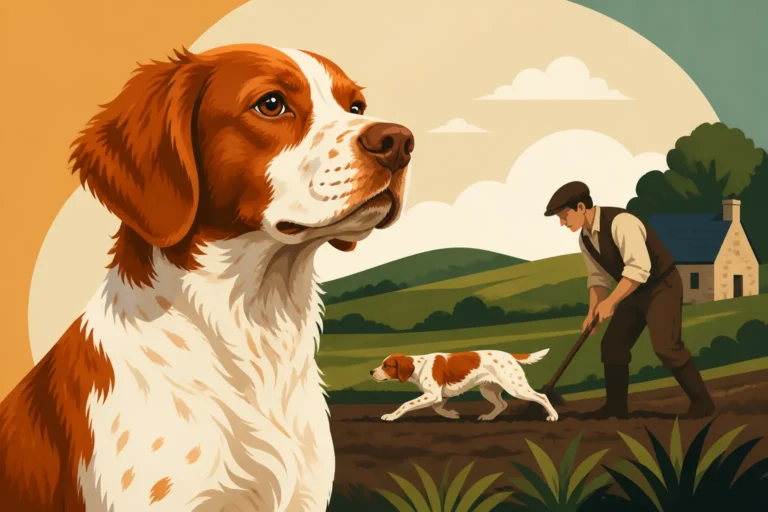
The Brittany developed in France’s Brittany region, where hunters needed a capable dog that could help find game in varied country. The breed’s background is closely tied to practical hunting rather than a role created mainly for appearance or companionship. To understand that history in more detail, see The Brittany Comes From the Northwest Corner of France and What the Brittany Was Bred to Hunt.
A dog that could locate birds, work within a hunter’s reach, and adapt to changing ground had everyday value. That kind of usefulness gave breeders and owners a reason to preserve natural hunting qualities. A dog that looked attractive but could not work effectively would not meet the same needs.
This practical tradition helps explain why working instincts remain such a recognizable part of the breed. It does not mean every Brittany today is hunted, or that every puppy will mature into an accomplished gun dog. It means the breed’s original job left a lasting mark on the traits people continued to seek.
Pointing ability became part of the breed’s identity
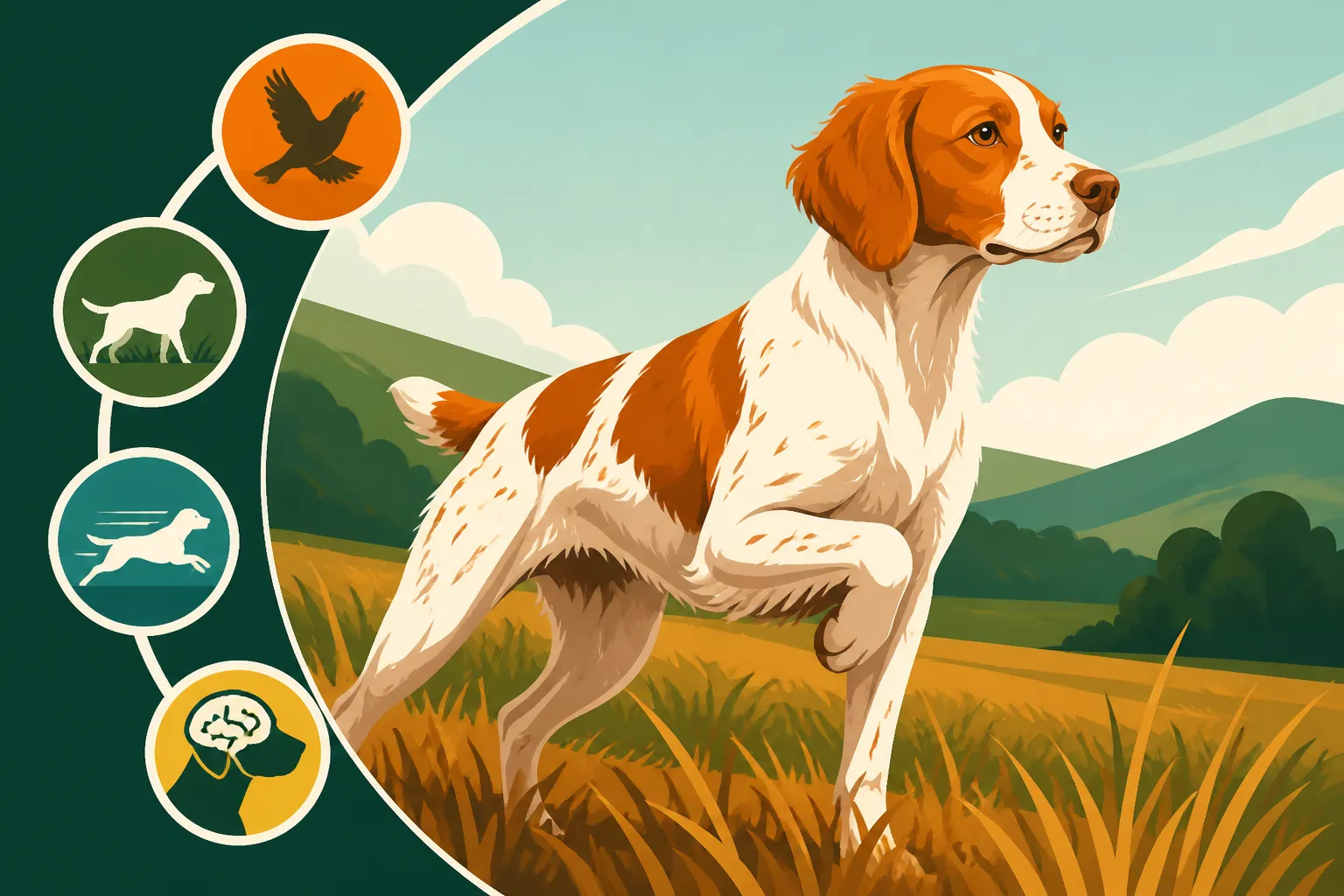
Brittanys are pointing dogs. They search for birds and may indicate their location by standing still, rather than flushing them into the air as a flushing spaniel would. Their style of work is one reason the Brittany is usually discussed among versatile pointing breeds. For a closer look at the distinction, read The Brittany Points, It Does Not Flush.
In the field, that pointing instinct can show up long before a dog has formal training. A young Brittany might freeze briefly over scent in a grassy margin, then break off to investigate a butterfly or follow another smell. That early behavior is not a finished point, but it can be a glimpse of the instincts selective breeding helped maintain.
Natural inclination still needs sensible development. A puppy may show interest in birds, but steadiness, reliable recall, safe exposure to gunfire, and cooperation with a handler are learned skills. The breed’s working history provides a foundation; it does not do the training for the owner.
A compact, versatile dog suited more than one task
The Brittany’s moderate size helped make it practical for hunters who traveled on foot and worked different types of terrain. It could cover ground while remaining manageable around the home and in the field. The breed is also associated with versatility: finding birds, pointing, and participating in other parts of a hunt rather than being valued for just one narrow role. More context is available in Whether a Brittany Is a Versatile Breed.
Versatility does not mean that every Brittany performs every task equally well. Individual dogs differ in range, pace, confidence, and retrieving interest. One may naturally work close to a walking hunter, while another may range farther and need more guidance to keep its search connected to the handler.
That combination of manageable build and broad hunting usefulness helped the breed retain a place in working homes. A dog suited to real conditions—not just a particular show ring or a single specialized task—had a stronger reason to remain in active use.
Breeders and hunters kept rewarding working traits
Selection follows what people value
A breed’s abilities persist when people keep choosing breeding dogs for those abilities. For the Brittany, hunters and breeders who valued bird sense, scenting, stamina, and cooperation had a direct reason to look for those qualities in the next generation. Over time, that ongoing selection helped keep working traits prominent.
This is different from assuming that all breeders have identical goals. Some prioritize hunting performance, some value conformation, and many care about both. The balance varies by breeder and by family line. A puppy’s pedigree can offer clues, but it cannot guarantee a particular range, level of drive, or finished performance.
For a prospective owner, the practical question is not simply whether a dog is called a Brittany. Ask what the parents do, how they behave in the field, and what the breeder means by “working ability.” A parent that has hunted regularly may tell you more about the family’s current strengths than a vague claim that the line has strong instincts. For related background, see Which Questions to Ask a Brittany Breeder.
Field work and conformation have not been entirely separate
The Brittany has a notable tradition of success in both field and conformation competition. The dual-purpose ideal gave breeders a reason to preserve a dog that could work and still conform to a recognizable breed type. Read The Brittany Holds the Dual Champion Record for more on that achievement.
That history is important, but it should not be mistaken for proof that every show-bred dog will hunt in the same way as every field-bred dog. Competition records belong to individual dogs and their handlers. They do not erase the differences that can develop between families selected for different priorities.
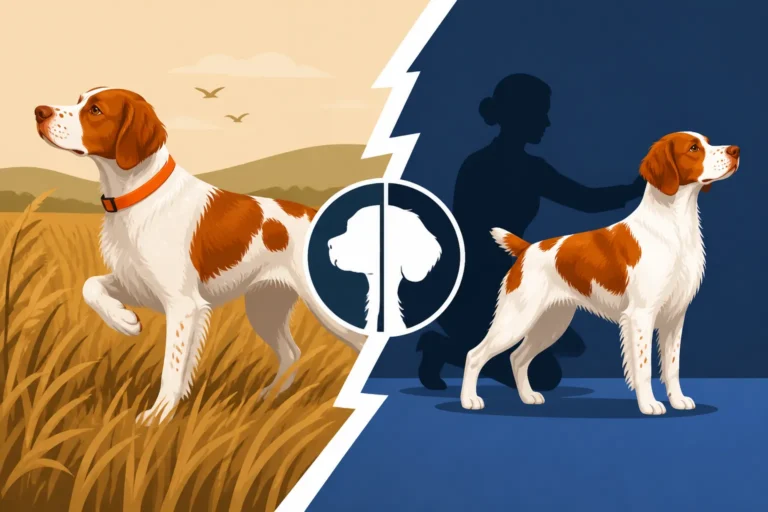
The question of whether show and field populations have become distinct is worth considering when choosing a dog. Whether Show and Field Brittanys Have Split explores that issue. For a buyer, the useful takeaway is to look beyond labels: ask what the dog’s close relatives actually do, and whether their temperament and activity level suit the life you can provide.
The working relationship reinforces the breed’s strengths
A Brittany’s working ability is not only about instinct. The dog also needs to stay engaged with a handler, respond to direction, and cope with changing conditions. Breeders who value useful hunting partners have reason to preserve dogs that combine bird interest with cooperation and adaptability.
Imagine two dogs that both show strong interest in birds. One ranges so widely that its owner struggles to keep it safe and connected; the other checks in, adjusts to cover, and works in a way the handler can manage. Both have drive, but their usefulness for a particular hunter may be very different. This is why a conversation about working ability should include behavior and handling, not just prey interest.
A well-matched dog is more likely to get regular opportunities to work. That matters because hunting experience, training, and physical conditioning help turn inherited potential into practical skill. The relationship between dog and handler is part of what keeps a working breed’s abilities relevant across generations.
The Brittany’s working ability varies across lines and individuals
French and American types reflect different preferences
Brittanys developed on both sides of the Atlantic, and different breeding traditions have shaped the dogs people encounter today. The distinctions can include preferred hunting style and range, though there is variation within each group. American Brittany and Epagneul Breton Went Separate Ways provides background on how those paths diverged.
Some hunters prefer a dog that works closer, especially when they hunt on foot in tighter cover. Others are comfortable handling a broader-ranging dog. Neither preference is automatically better. The right fit depends on where and how a person hunts, how much training they are prepared to do, and whether they can reliably keep the dog safe.
If range is central to your decision, do not treat a type label as a guarantee. Ask breeders and owners how the dogs in a particular family search, check in, and respond to handling. Which Brittany Type Suits a Foot Hunter Better offers a useful starting point for comparing those preferences.
Instinct is not the same as a finished hunting dog
A Brittany may have strong bird interest and still need extensive training before it is dependable in the field. A dog must learn, among other things, to come when called, work safely around roads and livestock, and respond to its handler. If gunfire will be part of its work, introductions need to be carefully planned so the experience is positive and age-appropriate.
There is also a difference between a dog that enjoys running through cover and one that searches with purpose. Early bird exposure can reveal interest, but a puppy’s attention may be inconsistent. A young dog that chases birds may still have potential; whether and how to shape that behavior depends on the dog and the training plan.
New owners sometimes feel disappointed when instinct does not appear as a polished performance. That is understandable, especially when a breeder has described a puppy as naturally talented. But working ability is a starting point, not a finished product. Training, maturity, opportunity, and a good match between dog and handler all matter.
A working breed still needs care between outings
Preserving a Brittany’s ability to work also means keeping the dog healthy and comfortable. Regular conditioning, access to water, paw checks, and an after-outing inspection help owners catch small problems before they interfere with field time. A burr caught in the feathering or a sore foot may seem minor at first, but discomfort can make a dog reluctant to work.
For routine upkeep, owners might keep basic grooming tools, a towel, and field-care supplies on hand. Chewy is one place owners may look for everyday grooming items; for outdoor outings, Chewy also carries general pet-care supplies such as bowls and travel gear. Availability and product suitability can vary, so choose equipment based on the dog, the terrain, and advice from a veterinarian when health concerns arise.
After a hunt, take time to check the paws, between the toes, ears, eyes, and coat. If a dog is limping, repeatedly shaking its head, unusually tired, or showing a wound, stop work and seek veterinary guidance rather than assuming it will resolve on its own. A fit, comfortable dog is better able to enjoy the activity its breed was developed to do.
| Factor | How it helped preserve working ability | What it means for an owner |
|---|---|---|
| Practical hunting origins | Hunters valued dogs that could find and point birds | Expect natural bird interest, but plan to train |
| Selection for field usefulness | Breeders had reason to retain hunting traits | Ask what close relatives actually do |
| Versatile role | The breed could contribute in more than one part of a hunt | Individual strengths and styles still vary |
| Field and conformation traditions | Some breeders pursued both working ability and breed type | Look beyond competition labels when choosing |
| Regular use and training | Working dogs had opportunities to develop their instincts | Potential needs experience, conditioning, and guidance |
What the history means when choosing a Brittany
Ask about real work, not just reputation
The Brittany’s reputation as a capable hunting dog is well earned, but reputation alone cannot tell you whether a particular dog suits your household. Ask whether the parents hunt, what kind of cover they work, how far they range, and how they behave around people and other dogs. If the breeder says the dogs are versatile, ask for specific examples.
It is also helpful to be candid about your own plans. A person who hunts a few weekends a season may need a different kind of dog from someone who trains and competes regularly. A family seeking an active companion should still understand that strong instincts may show up in everyday life through scent tracking, chasing wildlife, or a persistent desire to run.
If the dog will not be hunted, give it other appropriate outlets for exercise and mental engagement. Long walks, scent games, retrieving practice, and structured training can help, though no activity entirely changes a dog’s inherited temperament. The goal is to meet the dog’s needs while setting realistic boundaries.
Choose a match rather than chasing a label
Field-bred, show-bred, French, and American are useful terms to begin a conversation, not substitutes for assessing the individual dog. Within any broad category, dogs can vary in energy, sensitivity, sociability, and working style. Meeting adult relatives, watching how they respond to their handlers, and discussing daily routines can give a clearer picture than appearance alone.
A breeder should be comfortable explaining the strengths and limitations of a line. It is reasonable to ask what the dogs are like indoors, how much exercise they need, and what challenges owners commonly encounter. If your priority is a close-working dog, say so plainly; if you want a dog for an active family and occasional bird work, explain that too.
The Brittany kept its working ability because people continued to value a dog that could do useful work, not because every individual was destined to become a champion. That is the most helpful way to view the breed today: its history offers meaningful clues, while the specific dog, its training, and the life you provide determine how those qualities develop.
Disclaimer
This article is for general informational purposes only and does not constitute professional advice. Laws, prices and regulations vary by location and change over time. Consult a qualified professional for guidance on your specific situation.