Whether the Brittany and the Welsh Springer Share Blood
It's a common misconception, isn't it? You see two beautiful, energetic sporting dogs, both with "Spaniel" in their informal or historical name, and it’s natural to wonder if they’re cut from the same cloth. Many people, especially those new to the world of pointing and flushing breeds, look at a Brittany and a Welsh Springer Spaniel and see a lot of similarities. This guide aims to clear up that historical entanglement, diving deep into the origins, characteristics, and genetic pathways of both breeds to help you understand whether the Brittany and the Welsh Springer truly share a common ancestral bloodline.
A Tale of Two Sporting Breeds: Unpacking Their Histories
When we talk about whether two breeds "share blood," we're really digging into their origins—where they came from, who bred them, and what purpose they were developed for. Both the Brittany and the Welsh Springer Spaniel have rich histories as working gundogs, but their paths began in distinct corners of the British Isles and continental Europe.
The Brittany's French Roots
The Brittany, or as it's known in its homeland, the Epagneul Breton, hails from the northwestern region of Brittany, France. This isn't just a convenient name; the breed is deeply intertwined with the landscape and the hunting traditions of that area. For centuries, the local peasants and poachers in Brittany needed a versatile hunting dog – one that could point upland game, retrieve fallen birds, and work close enough to the hunter's gun without ranging too far. Imagine the dense hedgerows and thickets, the need for a dog that could navigate such cover and efficiently locate birds. This is the environment that shaped the Brittany. Where the Brittany Comes From will tell you more about the specific region.
The breed's development wasn't a formal affair in its earliest days. It was a natural evolution of local land spaniels and setters, likely crossbred with English sporting dogs brought over by aristocratic hunters. We're talking about dogs that were selectively bred for their hunting prowess and manageable size, rather than strict adherence to a written standard. The result was a compact, powerful, and intelligent bird dog. The official recognition and formalization of the breed really started in the early 20th century, cementing its characteristics. If you're curious about its age, How Old the Brittany Breed Is delves into that history.
The Welsh Springer Spaniel's British Heritage
Across the English Channel, in the rugged hills and valleys of Wales, another breed was taking shape: the Welsh Springer Spaniel. As its name explicitly states, this dog is unequivocally a spaniel. Spaniels, historically, were used to "spring" or "flush" game birds into nets or for the hawk, and later, for the gun. Their job was to locate game, flush it out, and then retrieve it. The Welsh Springer has a lineage that can be traced back centuries, predating many modern kennel club distinctions. They were highly valued by Welsh squires and farmers for their stamina and effectiveness in diverse terrain.
Unlike the Brittany, which evolved primarily as a pointing dog (even if its name historically contained "Spaniel" in the US before 1982), the Welsh Springer was always a flushing dog. Their physical build—sturdy, with a broad skull and a powerful body—is perfectly suited for pushing through dense cover. The rich red and white coat is a hallmark, developed to stand out in the green Welsh landscape. It’s important to remember that while the term "spaniel" has sometimes caused confusion with the Brittany, it denotes a very specific type of working style in the Welsh Springer. For a broader look at the spaniel family, you might find Whether the Brittany Is a Spaniel at All an interesting read.
Are They Cousins? Exploring Shared Ancestry and Divergent Paths
Now, for the million-dollar question: do these two wonderful breeds actually share blood? The short answer, in terms of direct, recent ancestry, is generally "no." However, the longer answer acknowledges the complex, often informal, nature of dog breeding centuries ago.
The Overlap in "Land Spaniel" Ancestry
It’s tempting to draw a direct line between the two, given their shared geographic proximity (Western Europe and the British Isles) and their common role as bird dogs. Both breeds, like many other sporting dogs, likely owe some distant genetic debt to an ancient lineage of "land spaniels" or "setting dogs" that existed across Europe for centuries. These were general-purpose hunting dogs, often without formalized breed standards, that adapted to their local environments and hunting needs. In this very broad sense, almost all modern sporting breeds could be considered distant cousins, having evolved from similar ancient hunting stock.
However, the specific "breeds" we know today as the Brittany and the Welsh Springer Spaniel developed along distinct, parallel lines. There's no clear historical record or genetic evidence to suggest intentional crossbreeding between the direct ancestors of what would become the Brittany in France and the Welsh Springer in Wales. Their evolution was largely independent, driven by the unique demands of their respective terrains and the preferences of their local hunters. Think of it less like siblings sharing the same parents, and more like distant relatives who both descended from a very ancient, common human ancestor, but whose family lines diverged millennia ago and developed separately.
Divergent Evolution and Selection
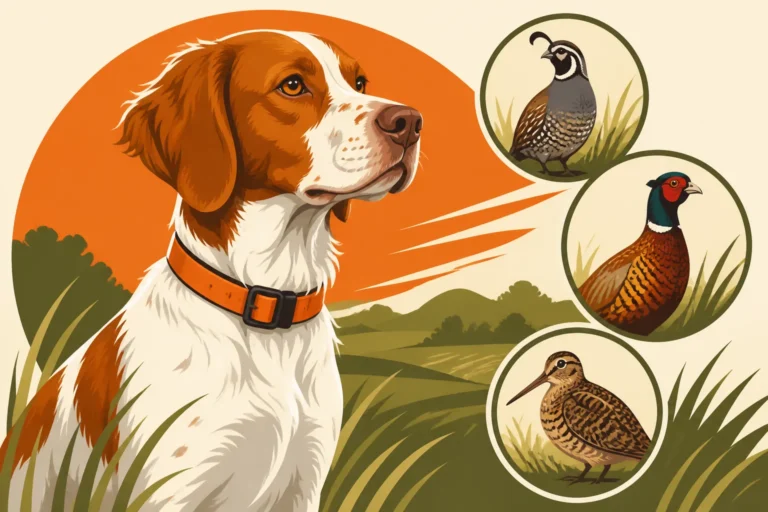
The environment and the breeders' intentions played a massive role in shaping each breed. The Brittany, as mentioned, was honed to point game. This required a dog that could locate birds, freeze in a classic pointing stance, and hold steady until the hunter arrived. This specific instinct was paramount. In contrast, the Welsh Springer was selectively bred for its flushing ability, needing to drive game from cover with enthusiasm and retrieve reliably. These different primary functions led to distinct selection pressures over generations. What the Brittany Was Bred to Hunt illustrates the pointing function.
The limited movement of dogs across borders in past centuries also contributed to their distinct development. While English sportsmen might have brought their types of setters and spaniels to France, these were more likely general gundog types rather than established "Welsh Springer Spaniels" as we understand them today. Similarly, it's highly improbable that specific Welsh Springer lines were transported to Brittany and integrated into the emerging Epagneul Breton population. Genetics studies, while often complex, have consistently shown that the Brittany and the various Springer Spaniel types maintain distinct genetic markers, supporting their separate evolutionary paths. So, while you won't find direct shared recent ancestors, you might consider them as having evolved from a very ancient, amorphous "gundog" type that was once common across Europe.
The "Spaniel" Confusion and the AKC
Adding to the confusion is the historical naming convention in the United States. For many years, the American Kennel Club (AKC) referred to the Brittany as the "Brittany Spaniel." This moniker, however, was officially dropped in 1982 to reflect the breed's primary role as a pointer, distinguishing it from true flushing spaniels like the Welsh Springer. Why the AKC Dropped Spaniel From the Brittany's Name in 1982 explains the reasoning behind this significant change. While the breed's origins might have included some spaniel-like dogs, its development diverged to emphasize pointing, which is a characteristic of setters and pointers, not traditional spaniels. This name change helped clarify its working style, further separating it conceptually from breeds like the Welsh Springer.
Beyond Bloodlines: Distinguishing the Brittany from the Welsh Springer Spaniel
Even without a direct shared bloodline, it's easy to see why someone might confuse a Brittany and a Welsh Springer. They are both medium-sized, active, liver/orange and white dogs often found in hunting fields and active homes. However, a closer look reveals clear distinctions in appearance, temperament, and working style.
Physical Differences
While both breeds are compact and built for endurance, there are subtle yet important differences in their physical characteristics.
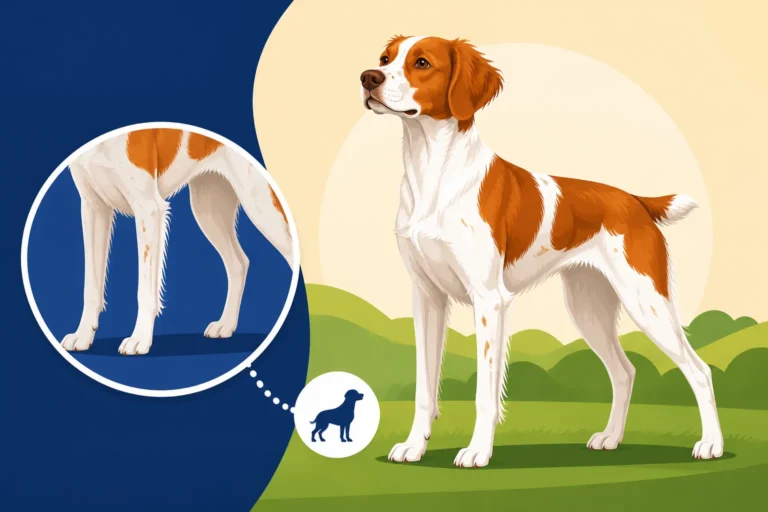
- Size and Build: Brittanys tend to be a bit more leggy and square-bodied, built for agile movement and covering ground efficiently in a pointing search. They typically stand between 17.5 to 20.5 inches at the shoulder and weigh between 30 to 40 pounds. The Welsh Springer Spaniel is generally a bit more cobby, a bit heavier-boned, and often slightly shorter, designed for pushing through dense cover and robust flushing. They usually range from 17 to 19 inches tall and weigh 35 to 55 pounds.
- Coat: Both have medium-length coats with feathering, but the texture can differ. The Brittany's coat is typically dense, flat, or slightly wavy, offering protection from the elements. The Welsh Springer's coat is soft and silky, often described as "weather-resistant," with more profuse feathering on the legs, chest, and tail. Grooming requirements for both involve regular brushing, especially if they are out in the field. You'll find plenty of appropriate brushes and shampoos on a site like Chewy.
- Color: This is often where the visual confusion begins. Both breeds predominantly feature white coats with liver (dark brown) or orange markings. For the Brittany, orange and white is perhaps the most iconic, though liver and white, tri-color (orange/liver/white or black/white/tan markings), and roan patterns are also common. The Welsh Springer, however, is exclusively red (a rich, deep mahogany) and white. You will never see a Welsh Springer with orange or liver markings; their red is a very specific hue. What Colors a Brittany Comes In will give you a full picture of the Brittany's palette.
- Tail: The Brittany is famously known for often having a naturally bobbed tail, or a tail that is docked very short where legal. Some Brittanys are born with full tails, but a short tail is a hallmark of the breed's appearance. Welsh Springers, on the other hand, always have full tails, typically carried horizontally.
Temperament and Working Style
Beyond physical appearance, the core difference lies in their inherent temperaments and their historical working roles.
- Working Instincts: This is the fundamental divergence. The Brittany is a pointer. Its instinct is to range, locate game scent, and then freeze, indicating the bird's location with its body. It holds this "point" until the hunter arrives to flush the bird. The Brittany Points, It Does Not Flush details this characteristic. The Welsh Springer is a flushing spaniel. It works closer to the hunter, systematically quartering the ground, and when it finds game, it "springs" or flushes it into the air, then retrieves it after the shot.
- Energy Levels and Drive: Both are high-energy breeds, but their application of that energy differs. Brittanys are often described as relentless in their search, covering vast amounts of ground with enthusiasm. Welsh Springers are equally energetic but tend to work more methodically and often closer. Both require significant daily exercise and mental stimulation to prevent boredom and destructive behaviors. If you're looking for durable toys or mentally stimulating puzzle feeders for either active breed, Chewy is a great resource.
- Temperament with Family: Both breeds are known for being affectionate and devoted family dogs. Brittanys are often described as sensitive and eager to please, thriving on human companionship. What a Brittany's Temperament Is Really Like explores this further. Welsh Springers are also known for being gentle, loyal, and good with children, often described as a bit more reserved with strangers than the typically outgoing Brittany. They both generally make excellent house dogs for active families.
Comparison Table: Brittany vs. Welsh Springer Spaniel
To help visualize these distinctions, here's a quick comparison:
| Feature | Brittany | Welsh Springer Spaniel |
|---|---|---|
| Primary Function | Pointing upland game | Flushing upland game, retrieving |
| Origin | Brittany, France | Wales, United Kingdom |
| Typical Size | 17.5-20.5 inches, 30-40 lbs | 17-19 inches, 35-55 lbs |
| Coat Color | Orange & white, liver & white, roan, tri-color | Red & white (deep mahogany red) |
| Tail | Often naturally bobbed or docked short | Full, carried horizontally |
| Build | More leggy, square, agile | More cobby, sturdy, powerful |
| Temperament | Eager, sensitive, outgoing | Gentle, loyal, can be more reserved |
| AKC Name | Brittany (formerly Brittany Spaniel) | Welsh Springer Spaniel |
This table highlights just how unique these two breeds are, despite their superficial similarities. While both are fantastic hunting companions and beloved family members, their histories, physical traits, and inherent working styles confirm they are distinct breeds, not direct relatives. Understanding these differences is key to appreciating the unique heritage and purpose of each. How a Brittany Differs From a Springer Spaniel might also offer additional insights into the broader spaniel category.
Caring for an Active Sporting Dog
Regardless of whether you choose a Brittany or a Welsh Springer Spaniel, you're bringing an active, intelligent, and dedicated sporting dog into your home. Both breeds require owners committed to meeting their needs for exercise, training, and mental stimulation.
Meeting Exercise Needs
These aren't dogs content with a short walk around the block. Both Brittanys and Welsh Springers thrive on vigorous activity. This might include long runs, intense games of fetch, swimming, or, ideally, regular opportunities for field work. An under-exercised sporting dog can quickly become bored, leading to destructive behaviors like excessive barking, chewing, or digging. Investing in durable outdoor toys and interactive feeders can help manage their energy levels, and you'll find a wide array of options at retailers like Chewy.
Consider how their natural instincts can be channeled. For a Brittany, this might mean practicing pointing drills or engaging in scent work. For a Welsh Springer, retrieving games or agility courses can be fantastic outlets. Consistency is key, even during the off-season, to keep them physically and mentally sharp.
Training and Socialization
Both breeds are highly intelligent and generally eager to please, making them receptive to training. However, their sensitivity means that positive reinforcement methods work best. Harsh corrections can easily shut down a Brittany, for example. Early socialization is crucial for both, exposing them to a variety of sights, sounds, people, and other dogs to help them develop into well-adjusted adults. Puppy classes can be invaluable for building a strong foundation.
Their keen noses and hunting instincts mean that a reliable recall is paramount, especially if you plan to let them off-leash in open areas. Training with a long check cord in a safe, enclosed space, gradually increasing distractions, is often recommended. A strong foundation in obedience not only makes them better companions but also safer hunting partners.
Health Considerations
While they don't share a direct bloodline, like many purebred dogs, both Brittanys and Welsh Springers have certain breed-specific health concerns to be aware of. Reputable breeders for both will conduct health screenings for conditions common in their lines.
For Brittanys, hip and elbow dysplasia, eye conditions (like progressive retinal atrophy), and a genetic immune deficiency called C3 deficiency are important considerations. What Hip Screening Did for the Brittany Spaniel and C3 Deficiency Is the Brittany's Own Genetic Disease provide more detail on these. Welsh Springers also have concerns with hip and elbow dysplasia, as well as certain eye conditions (such as glaucoma and entropion) and some forms of epilepsy. Being aware of these potential issues and working with a veterinarian who understands sporting breeds is essential for ensuring a long, healthy life for your companion.
Ultimately, while the Brittany and the Welsh Springer Spaniel are distinct breeds forged by different histories and purposes, they both represent the pinnacle of sporting dog companionship. Understanding their unique traits allows us to better appreciate them for who they are and choose the right partner for our active lifestyles.
Disclaimer
This article is for general informational purposes only and does not constitute professional advice. Laws, prices and regulations vary by location and change over time. Consult a qualified professional for guidance on your specific situation.