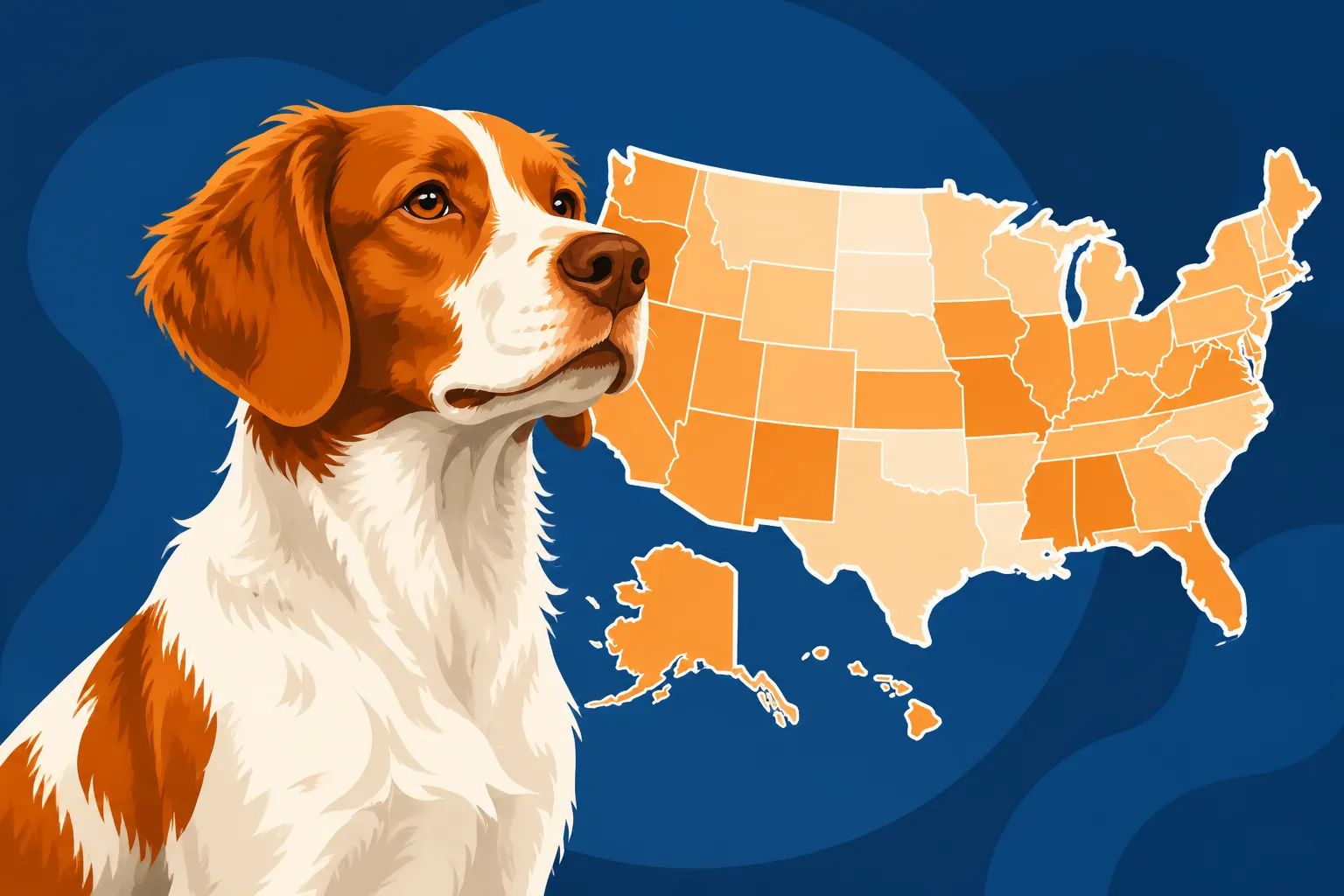
Where the Brittany Sits in America Today
It can sometimes feel like certain dog breeds dominate the public eye, while others, equally deserving of admiration, fly a little under the radar. For Brittany owners and enthusiasts, understanding where our beloved orange and white (or liver, or tri-color!) companions fit into the vast American dog landscape is often a curious question. This guide will take a deep dive into the Brittany's standing in the United States, exploring its history, recognition, unique attributes, and how it's perceived by both hunters and families today.
A Storied History: How the Brittany Arrived in America
The Brittany's journey from the hedgerows of rural France to the sprawling fields of America is a fascinating tale that speaks volumes about its enduring appeal. It wasn't an overnight sensation, but a gradual, organic appreciation for a dog that consistently delivered in the field.
From French Countryside to American Shores
The Brittany, or Epagneul Breton as it's known in its homeland, originated in the Brittany region of France as far back as the 17th century. These dogs were the quintessential poacher's companion, small enough to be unobtrusive, yet possessing an incredible nose and an inherent pointing instinct. They were bred by peasants for their exceptional bird-finding abilities, often working with nets rather than guns. It wasn't until the early 20th century that the breed truly solidified its modern form and gained formal recognition in France.
The first Brittanys began making their way to the United States in the early 1930s, brought over by sportsmen who had witnessed their prowess in Europe. These early imports weren't just pretty faces; they were dogs of substance, chosen for their proven hunting abilities. Imagine the excitement of those first American hunters, seeing these agile, intelligent dogs work a field, their tails (or lack thereof!) bobbing with intensity. There was a palpable desire among these early adopters to bring the best of the European gun dog tradition to American soil, and the Brittany fit the bill perfectly. They were seen as a highly effective, yet manageable, bird dog, perfectly suited for the diverse game birds found across the continent. You can learn more about this pivotal time by reading When the Brittany Reached America.
Early Recognition and the AKC's Embrace
The arrival of the Brittany in the U.S. quickly led to a push for formal recognition by the American Kennel Club (AKC). Enthusiasts understood that official registration would not only legitimize the breed but also provide a framework for maintaining breed standards and tracking bloodlines. In 1934, the AKC officially recognized the Brittany, marking a significant milestone for the breed in America. This recognition was crucial, as it opened the doors for Brittanys to compete in AKC dog shows and field trials, further cementing their place in the American sporting dog world.
The early years saw a dedicated group of breeders and owners working tirelessly to establish the breed. They imported quality stock, carefully planned breedings, and showcased their dogs in various competitions, highlighting both their beauty and their working capabilities. This dual emphasis on form and function would become a defining characteristic of the Brittany in America, setting it apart from some other breeds where the show ring and the field often diverged significantly. The commitment of these pioneers laid the groundwork for the breed's continued success and popularity. To understand the timeline better, check out When the AKC Recognized the Brittany.
The Name Game: Why "Spaniel" Disappeared
One of the most talked-about changes in the Brittany's American history is the dropping of "Spaniel" from its official name. This wasn't just a linguistic tweak; it reflected a deeper understanding of the breed's true nature and how it operated in the field.
The Great Brittany Name Debate
For many years, the breed was known as the "Brittany Spaniel" in America, reflecting its historical connection to spaniel-type dogs and its European designation. However, as the breed gained traction and its unique hunting style became more apparent to American sportsmen, a realization began to dawn: the Brittany didn't hunt like a typical spaniel at all. Spaniels traditionally flush game, driving birds out of cover. The Brittany, by contrast, is a pointing breed, exhibiting that classic, frozen stance when it scents game, holding steady until the hunter arrives. This fundamental difference in working style led to a growing sentiment among breed enthusiasts that the "Spaniel" suffix was misleading.
Imagine explaining to a new hunter that their "spaniel" actually points birds, not flushes them. It caused confusion and misrepresented the breed's primary purpose. The American Brittany Club, the national parent club for the breed, championed the change, arguing that dropping "Spaniel" would accurately reflect the Brittany's identity as a pointing dog. This was a movement driven by a desire for accuracy and a clear understanding of the breed's role in the field. This change happened specifically in 1982, as detailed in When the AKC Dropped Spaniel From the Brittany's Name.
The Impact of the Name Change on Identity
In 1982, the AKC officially agreed, and the breed's name was shortened to simply "Brittany." This change, while seemingly minor, had a profound impact on how the breed was perceived. It solidified its place among the pointing breeds like the German Shorthaired Pointer and the English Setter, rather than alongside flushing spaniels such as the English Springer or Cocker Spaniel. This clarified its primary function for the general public and, perhaps more importantly, for prospective owners looking for a specific type of hunting companion.
For those already devoted to the breed, it was an affirmation of what they already knew: the Brittany was a unique, versatile pointing dog, deserving of a name that accurately described its abilities. While some traditionalists might occasionally still refer to them as "Brittany Spaniels," the official name change helped to define and elevate the breed's status as a top-tier pointing dog in the American sporting world. This was more than just semantics; it was about honoring the breed's true nature. You can delve into the reasons behind this decision further by reading Why the AKC Changed the Brittany's Name.
Dual Threat: The Brittany's Unmatched Versatility
One of the most remarkable aspects of the Brittany in America is its unparalleled success in both conformation (dog shows) and performance (field trials). This "dual threat" ability is rare in the dog world and speaks volumes about the breed's genetic integrity and the dedication of its breeders.
A Legacy of Bench and Field Excellence
The Brittany holds a unique and celebrated position in the AKC record books: it has produced more Dual Champions (dogs that have earned both an AKC Conformation Champion title and an AKC Field Champion title) than all other sporting breeds combined. This is an astounding achievement, highlighting the breed's ability to excel in two vastly different arenas. On one hand, a Brittany must possess the physical beauty, structure, and gait required by the breed standard to win in the show ring. On the other hand, it must demonstrate exceptional bird sense, stamina, trainability, and style to earn points and wins in competitive field trials.
This dual emphasis has been a cornerstone of the American Brittany breeding philosophy. Breeders have conscientiously strived to produce dogs that are not only aesthetically pleasing but also possess the innate drive and intelligence to be superb hunting partners. This commitment has meant that, unlike some breeds where show lines and field lines have diverged dramatically, many American Brittanys retain strong working instincts alongside their conformational good looks. It’s truly a testament to the breed's versatility and the dedication of its proponents. Learn more about this incredible record in How Many Dual Champions the Brittany Has.
Maintaining the Breed's Working Ethic
This continuous pursuit of the Dual Champion ideal ensures that the Brittany's working ability is never sacrificed for superficial beauty. While not every Brittany owner aims for a Dual Championship, the underlying breeding philosophy benefits all owners. It means that even a Brittany acquired primarily as a family companion is likely to retain strong natural instincts for birds, a sharp intelligence, and the athleticism that makes them such enjoyable dogs.
For hunters, this is invaluable. They know that a well-bred Brittany comes from a lineage where working ability is paramount. For families, it means a dog that is eager to learn, active, and responsive. Maintaining this balance requires careful selection by breeders, who must evaluate potential breeding stock not just on titles, but on real-world performance, health, and temperament. This dedication to versatility is a key factor in the Brittany's enduring appeal in America, ensuring it remains a true "bird dog" in every sense of the word. For insight into why they excel in both, read Why the Brittany Wins Both Rings.
Popularity & Perception: Where the Brittany Stands with the Public
So, how does the Brittany fare in the broader American dog landscape? While perhaps not a household name like the Labrador Retriever or Golden Retriever, the Brittany maintains a steady, respectable presence, particularly within the sporting dog community.
Tracking the Brittany's Standing in AKC Registrations
The AKC publishes annual breed popularity rankings based on registration numbers. The Brittany typically hovers in the top 30-40 breeds, a consistent and healthy showing that speaks to its niche but loyal following. While it doesn't often crack the top ten, this steady popularity means the breed isn't suffering from extreme fads that can sometimes lead to irresponsible breeding. Instead, its numbers reflect a consistent demand from individuals and families who appreciate its specific qualities: its manageable size, trainability, outgoing personality, and of course, its prowess in the field.
This consistent ranking suggests a stable breeding community focused on quality rather than mass production. Many Brittany owners are repeat owners, drawn back to the breed after experiencing their first one. They know what they're getting: a dog that needs exercise and mental stimulation, but rewards its owner with an unmatched eagerness to please and an affectionate nature. This kind of steady, rather than explosive, popularity often indicates a healthier breed overall, supported by dedicated clubs and breeders.
Is the Brittany Still Primarily a Hunter's Dog?
While the Brittany is undeniably a formidable hunting dog, its perception in America has broadened over the years. Yes, a significant portion of Brittanys are still purchased by active hunters who value their natural pointing ability and boundless energy in the field. These owners are often deeply involved in gun dog training, field trials, and hunting season. They seek out lines known for their bird drive and intelligence.
However, the Brittany has also carved out a significant space as an exceptional family companion, even for those who never pick up a shotgun. Its manageable size, affectionate nature, and generally good disposition with children and other pets make it a wonderful addition to active households. Families who enjoy hiking, running, or other outdoor activities find the Brittany to be an enthusiastic partner. The key, however, is providing enough mental and physical exercise. An under-exercised Brittany will find ways to entertain itself, often to the detriment of your furniture or landscaping! They need to burn off that energy, whether it's chasing birds or chasing a frisbee in the park. How Much Exercise a Brittany Needs Off Season is a great resource for this.
American Brittany vs. French Brittany: A Tale of Two Types
Within America, there’s a nuance that can sometimes confuse new enthusiasts: the distinction between the "American Brittany" and the "French Brittany," often referred to by its original name, Epagneul Breton. While genetically they share a common ancestor, years of selective breeding in different countries have led to subtle, yet distinct, differences.
Evolving Paths: American Brittany vs. Epagneul Breton
The divergence began once the Brittany was established in America. American breeders, often focused on vast open spaces and horseback hunting, selectively bred for a dog with greater range and speed, resulting in a slightly larger, leggier dog. This emphasis created what we now recognize as the American Brittany: a powerful, far-ranging hunter, typically orange and white or liver and white, celebrated for its ground speed and independence.
Meanwhile, in France, breeders maintained the traditional characteristics of the Epagneul Breton, favoring a slightly smaller, more compact dog with a closer working range, suited for foot hunting in dense cover. The French standard also permits a wider array of colors, including black, which is not accepted in the American Brittany standard. While an American Brittany cannot be black, the French Brittany can. This difference in breeding goals has created two distinct "types" within the same overarching breed, each excelling in its particular style of hunting. For a deeper dive, check out How a French Brittany Differs From an American One.
How Registration and Hunter Preferences Diverge
In the United States, an American Brittany is registered with the AKC. If you purchase a puppy from an AKC-registered American Brittany breeder, your dog will typically fit the characteristics described above. These dogs are ideal for hunters covering large tracts of land, often with ATV or horseback support, where a wide-ranging dog can cover more ground efficiently. Whether an American Brittany Suits Horseback Trials explores this further.
The French Brittany (Epagneul Breton), while genetically a Brittany, is typically registered with the Club de l'Epagneul Breton (CEB) in France and its American affiliate, the CEB-US. These dogs are often imported or bred from imported lines in the U.S. They appeal to foot hunters who prefer a dog that works closer, quartering more tightly within sight, making them excellent companions for walking through brush or smaller coverts. Some American hunters appreciate the closer working style for specific hunting conditions or personal preference, seeking out these French lines. Understanding Whether a French Brittany Suits an American Hunter can help make a decision. Both types are highly capable bird dogs, but their nuances cater to different hunting styles and preferences.
| Feature | American Brittany | French Brittany (Epagneul Breton) |
|---|---|---|
| Size/Build | Tends to be slightly larger, leggier, more athletic | Slightly smaller, more compact, stockier |
| Working Range | Wider-ranging, covers more ground | Closer working, quarters tightly |
| Primary Hunting | Suited for open fields, horseback, large areas | Suited for foot hunting, dense cover, smaller areas |
| AKC Color Standard | Orange & white, liver & white, roan, tri-color allowed (orange/liver/white with black points). Black is a disqualification. | Orange & white, liver & white, roan, and black & white. Tri-color (black/orange/white) also allowed. Black is accepted. |
| Registration | American Kennel Club (AKC) | Club de l'Epagneul Breton (CEB) / CEB-US |
| Temperament | Energetic, eager, can be more independent in field | Energetic, keen, often described as intense |
Living with a Brittany: More Than Just a Hunting Companion
Beyond the fields and show rings, the Brittany's true charm often lies in its ability to integrate seamlessly into family life, provided its needs are met. This breed is known for its joyful, affectionate, and intelligent nature.
The Brittany's Adaptable Temperament for Family Life
Brittanys are renowned for their wonderful temperaments, making them excellent family dogs. They are generally good-natured, patient, and playful with children, often forming strong bonds with every family member. Their size, falling into the medium category, is also a plus; they're not so large as to be intimidating to small kids, yet substantial enough to handle boisterous play. What a Brittany's Temperament Is Really Like gives a great overview of their typical disposition. Many owners describe them as "velcro dogs" because they love to be close to their people, often following them from room to room, eager to be part of the action.
They're highly intelligent and eager to please, which translates into a dog that is relatively easy to train, even for novice owners. This biddability makes them amenable to household rules and basic obedience, provided you use positive reinforcement and keep training sessions engaging. They thrive on companionship and do not do well being isolated for long periods. A Brittany wants to be where the family is, whether it's curled up on the couch after a long walk or playing fetch in the yard. This social nature means they often get along well with other pets too, though their strong prey drive means careful introductions are always a good idea, especially with smaller, non-canine animals. If you're looking for dog food, or toys for this active breed, brands like Chewy offer a wide selection that caters to their needs.
Meeting the Brittany's Insatiable Need for Exercise
Here's the non-negotiable truth about owning a Brittany: they are athletes. Bred for stamina and speed in the field, they possess an incredible amount of energy that needs to be channeled appropriately. A Brittany thrives on vigorous exercise, and without it, they can become bored, destructive, and anxious. This isn't a breed content with a leisurely stroll around the block; they need to run, sniff, explore, and engage their minds.
Daily vigorous exercise, such as long runs, hikes, or intense sessions of fetch, is crucial. If they are primarily a family pet, consider dog sports like agility, flyball, or scent work, which not only burn physical energy but also provide mental stimulation. A Brittany with an unmet exercise quota might start digging up the yard, chewing furniture, or developing nuisance barking. For those who hunt, the season provides ample opportunity, but off-season conditioning is just as important. Think of them as high-performance machines; they need regular tune-ups and fuel to run smoothly. Chewy, for example, has a great range of durable toys and high-energy dog foods perfect for keeping a Brittany fit and happy. It's a commitment, but one that rewards you with a happy, well-adjusted companion who is truly a joy to live with.
The Future of the Breed: Challenges and Continued Dedication
The Brittany's position in America is strong, but like any responsible breed community, there's an ongoing commitment to ensuring its health, temperament, and working ability for generations to come.
Dedicated Breeders and Health Initiatives
Responsible Brittany breeders in America are the backbone of the breed's continued success. They are dedicated to health testing their breeding stock, adhering to the breed standard, and prioritizing temperament and working ability. Organizations like the American Brittany Club actively promote health screenings for conditions such as hip and elbow dysplasia, eye diseases, and certain genetic conditions like C3 Deficiency. These proactive measures help to ensure that future generations of Brittanys are as healthy and robust as possible.
The ethical breeder is meticulous, carefully researching pedigrees, evaluating potential mates, and providing excellent care for their puppies. They are passionate about preserving the integrity of the breed and are transparent with potential buyers about health clearances and the expectations for their puppies. This dedication often means long waitlists for puppies, but it’s a small price to pay for a healthy, well-adjusted companion that embodies the best qualities of the Brittany breed.
Ensuring the Brittany's Legacy for Generations to Come
The future of the Brittany in America relies on a continued balance between its roles as a cherished family member and a top-tier sporting dog. Education is key, ensuring that prospective owners understand the significant commitment required to own such an active and intelligent breed. The breed's versatility ensures its appeal to a broad audience, from serious bird hunters to active families seeking an adventurous companion.
Support for Brittany rescues and participation in breed clubs also plays a vital role. These organizations work tirelessly to place Brittanys in loving homes, educate the public, and advocate for responsible dog ownership. By celebrating its rich history, embracing its unique qualities, and fostering responsible stewardship, the Brittany will undoubtedly maintain its special place in the hearts and homes of Americans for many years to come. Whether you're seeking a champion in the field or a loving co-pilot on your daily adventures, the Brittany offers an unparalleled blend of athleticism, intelligence, and affection, cementing its status as one of America's most beloved and versatile sporting breeds. Finding the right gear, from training collars to comfortable beds, is easy through retailers like Chewy, which cater to every stage of a Brittany's life.
Disclaimer
This article is for general informational purposes only and does not constitute professional advice. Laws, prices and regulations vary by location and change over time. Consult a qualified professional for guidance on your specific situation.