What a Brittany Needs to Earn a Junior Hunter Title
Many Brittany owners dream of seeing their energetic, intelligent companion excel in the field, proudly earning an AKC title. However, the path to a Junior Hunter title can feel like navigating a maze of specific requirements and nuanced training techniques, leaving even experienced owners wondering where to start or if their dog truly has what it takes. This comprehensive guide is here to demystify the process, detailing precisely what your Brittany needs to master, from foundational obedience to confident bird work and gun familiarity, to successfully achieve that first exciting hunting title.
Understanding the Junior Hunter Title
Embarking on the journey to earn an AKC Junior Hunter title with your Brittany is a significant step, a clear demonstration that your dog possesses both inherent hunting instincts and the foundational training to apply them in a controlled field environment. It’s more than just chasing birds; it's about showcasing a partnership built on trust and understanding.
What the AKC Junior Hunter Title Signifies
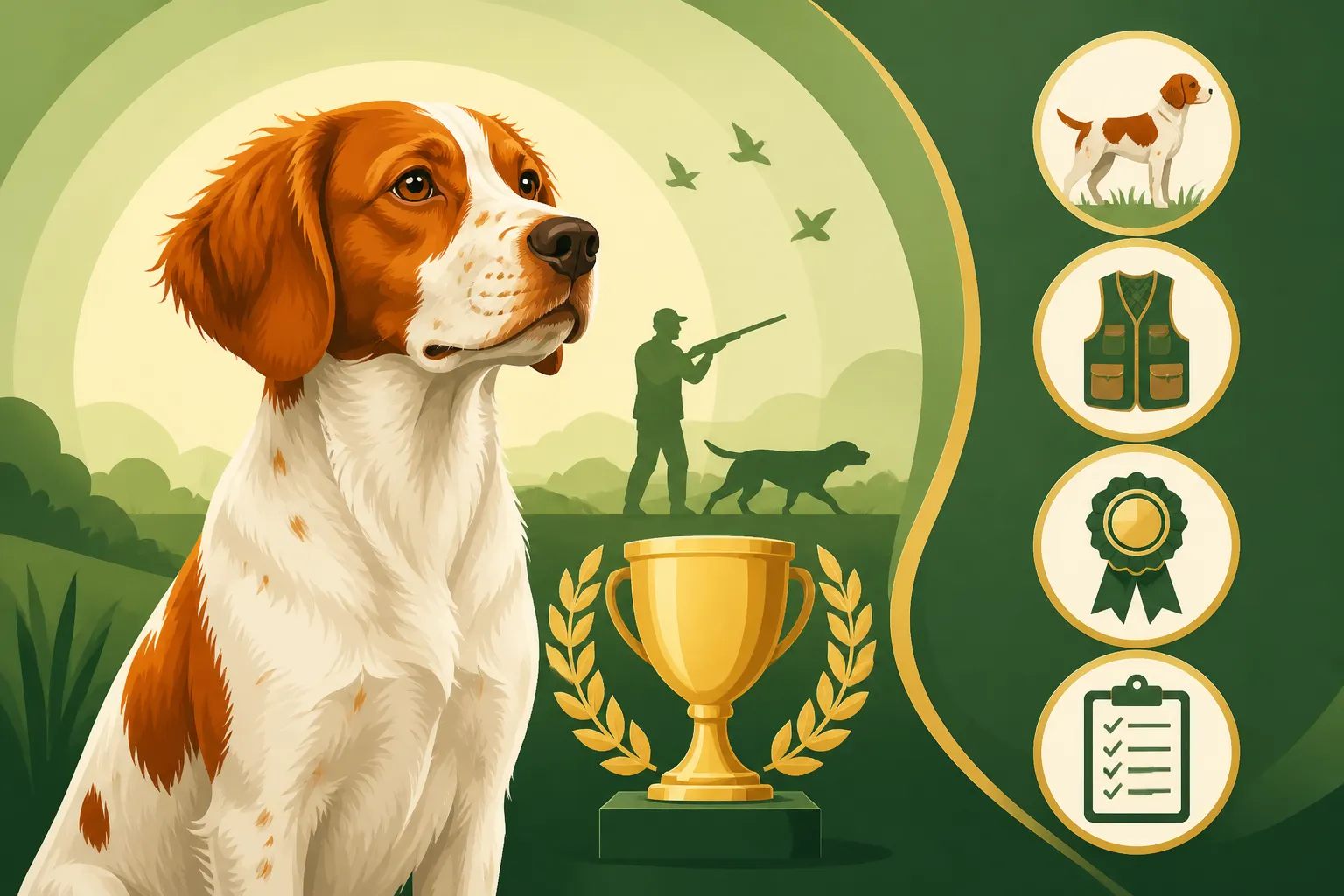
The Junior Hunter (JH) title is the entry-level designation in the American Kennel Club's hunt test program for pointing breeds. It's designed to evaluate a young dog's natural abilities and basic training in the field, proving that your Brittany can find and point game birds reliably. Think of it as a solid foundation, not the finished product. It's not about flawless retrieves to hand or absolute steadfastness to wing and shot, though those are certainly admirable traits. Instead, the focus is on a dog that exhibits an appropriate range, uses its nose effectively to locate birds, points with conviction, and is responsive to its handler's basic commands in a hunting scenario.
To earn this title, your Brittany needs to pass four separate Junior Hunter tests under different judges. Each test requires demonstrating specific behaviors, and a pass signifies that your dog has met the minimum standards for that day. It's a stepping stone, preparing both you and your dog for the more advanced Senior and Master Hunter titles, where greater steadiness, retrieve work, and honoring other dogs' points become mandatory. For now, the JH title is a celebration of a young Brittany’s raw talent and burgeoning partnership with its owner.
The Core Behaviors Expected in a Junior Hunter Test
When you step onto the line for a Junior Hunter test, the judges will be observing several key behaviors that speak to your Brittany’s natural talent and your basic training efforts. Understanding these expectations is crucial for your preparation.
First and foremost, your Brittany needs to demonstrate searching and ranging abilities. This means hunting with purpose, covering the ground efficiently and effectively for the cover presented. While an American Brittany is known for ranging wider, and a French Brittany often works closer, the key is that your dog hunts productively for birds, not just aimlessly wanders. A good range is one that covers the territory systematically, using the wind to its advantage, showing intelligence in its quest for game. You don't want a dog that's constantly underfoot, nor one that's out of sight and gone for good.
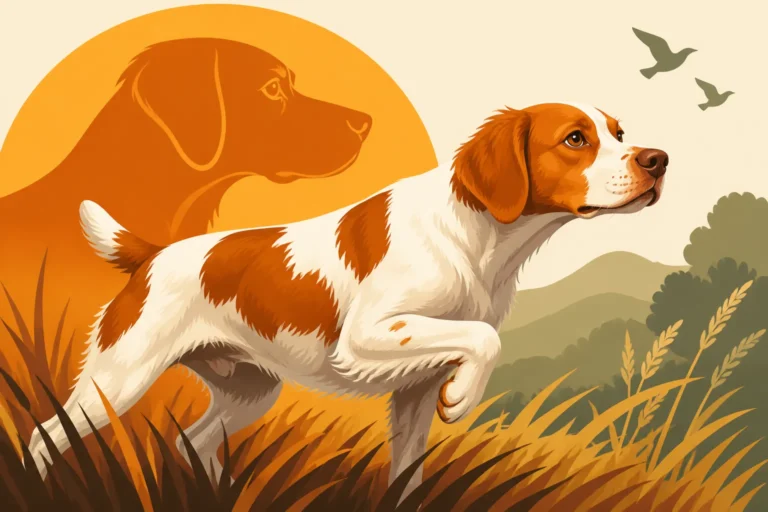
Once a bird is located, your Brittany must execute a clear, decisive point. This is the hallmark of a pointing breed. The dog needs to freeze, locking onto the bird's scent cone, and hold that point long enough for you, the handler, to walk up to it and flush the bird. Judges are looking for intensity and certainty in the point, a clear signal that the bird is there. Remember, The Brittany Points, It Does Not Flush naturally, so this instinct should be evident.
After you arrive at the point, your dog will be expected to remain steady, allowing you to flush the bird. While full steadiness to wing and shot (remaining frozen until commanded to move) isn't required for Junior Hunter, your Brittany should not break point or chase the bird once it flies. After the bird is flushed and a shot is fired, your dog must exhibit gun sensibility. This means being completely unaffected by the sound of the shotgun. There should be no cowering, flinching, or attempting to flee. The shot should be a natural part of the hunting sequence, not a source of fear.
While retrieving is not a mandatory pass/fail requirement for the Junior Hunter title, a natural retrieve from your Brittany is always a bonus. If your dog retrieves the shot bird, it demonstrates a high degree of biddability and natural talent, which judges appreciate. Similarly, honoring another dog's point (stopping when a bracemate points) is not required at the JH level, but it shows excellent manners and potential for higher titles. Lastly, and perhaps most importantly, is handler control. Your Brittany needs to respond to your basic commands, especially a reliable recall. You need to be able to stop your dog, guide it, and bring it back to you when needed. This is fundamental for safety and for showing that your dog is truly working with you.
Essential Skills Your Brittany Needs
Building the foundation for a Junior Hunter title involves more than just exposing your Brittany to birds. It requires dedicated training to hone specific skills, ensuring your dog is both a natural hunter and a responsive partner.
Steadiness and Control: Whoa and Recall
These two commands, "whoa" and "recall," are the bedrock upon which all successful bird dog training is built. Without them, you have a dog that may find birds, but you'll have little control over its actions in the field.
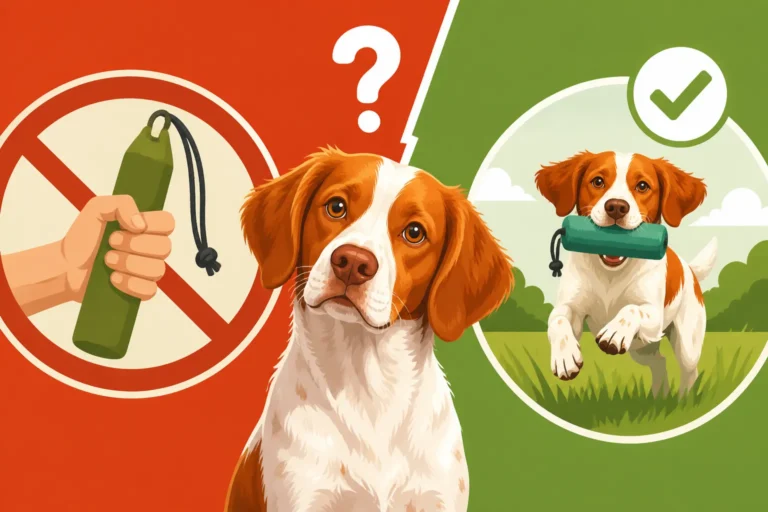
Whoa is arguably the most critical command for a pointing dog. It means "stop, stand still, and stay there," regardless of distractions. For a Brittany with a strong prey drive, teaching this command takes patience and consistency. Many trainers start with a "whoa post" or "whoa table," where the dog learns to stand still for increasing periods. From there, you progress to a "walking whoa," where the dog stops on command while moving. The ultimate goal is to have your Brittany whoa instantly when it scents a bird, allowing you time to approach and flush. This command helps develop Teaching a Brittany Whoa and ensures your dog is steady on point. Without a solid whoa, a Brittany might creep on birds, or even worse, bump them before you can get there, ruining the opportunity. Consistent practice in varied environments is key to cementing this vital command.
Equally important is a rock-solid recall, often taught as "here" or "come." A Brittany's bird drive is immense, and in the heat of the moment, the scent of game can override everything else. Your recall must be immediate and reliable, even when birds are present or other exciting distractions are happening. Start teaching recall in a low-distraction environment, using a long check cord to gently reinforce the command if your dog hesitates. Always make coming back to you a positive experience, with enthusiastic praise and perhaps a high-value treat. As your Brittany progresses, gradually introduce more distractions and practice in open fields. A reliable How Reliable a Brittany's Recall Is is not just about passing a test; it's about your dog's safety, preventing it from ranging too far or running into danger. Tools like a long training leash, easily found on Amazon, are indispensable in these early stages. Many online programs, such as those offered by BAXTER & Bella, dedicate significant time to teaching reliable recall, understanding its importance for dogs of all purposes, especially working breeds.
Developing Natural Bird Instincts
Your Brittany was bred to find and point birds, and while much of this is instinctual, you can certainly guide and develop these natural talents to maximize their potential for a hunt test.
The most crucial step is proper exposure to birds. Start early, but always in a controlled manner. Live birds like pigeons or quail are ideal. Begin by letting your Brittany encounter a bird in a controlled pen or a large open field on a long line. The goal is to ignite their prey drive and allow them to discover the joy of scenting and pointing. How a Brittany Finds Its First Bird is fascinating to watch unfold. You want to encourage their natural curiosity and desire to hunt, but never let them catch or eat the birds, as this can lead to hard-mouthed retrieves or breaking point to chase. Pigeons are often a good starting bird because they're relatively inexpensive, can be used repeatedly, and typically fly away quickly, preventing the dog from catching them.
As your Brittany gains experience, you'll work on pointing development. When your dog naturally points, praise them quietly but enthusiastically. Use a long check cord to prevent them from bumping birds. If they start to creep, gently apply tension to the check cord and reinforce the "whoa" command. The aim is to build their confidence in their point and encourage them to hold it steady. While "quartering" – hunting in a systematic pattern back and forth across a field – isn't explicitly judged at the Junior Hunter level, encouraging your Brittany to hunt efficiently and cover ground helps them find more birds and showcases their natural hunting intelligence. Allowing your dog to use its nose and learn from its experiences in the field is paramount. Provide opportunities for it to explore, learn wind currents, and develop its own bird-finding strategies. Remember, Brittanys are intelligent and How Biddable a Brittany Is means they are eager to please, so positive reinforcement goes a long way.
Gun Introduction and Steadiness to Shot
For a bird dog, being comfortable with the sound of a gun is non-negotiable. However, this is also one of the areas where mistakes can be most damaging, potentially leading to gun shyness, which is incredibly difficult to overcome.
The process of gun desensitization must be gradual and positive. Never introduce a gun blast near a young or untrained dog. Start incredibly far away, with low-caliber sounds, such as a starter pistol or even just a clap. The key is to associate the sound with something positive. For instance, have someone fire a blank pistol far in the distance while you are playing with your Brittany or feeding it treats. The dog should be so engrossed in the positive activity that it barely registers the sound. Introducing a Gun to a Brittany That Spooks Easily explains the delicate nature of this introduction.
Slowly, over weeks or even months, decrease the distance and increase the caliber of the sound. Move from blanks to a .22 caliber, then to a 20-gauge, and finally a 12-gauge shotgun. Always ensure the dog is having a positive experience when the sound occurs. Some trainers recommend introducing gunshots during retrieve training, where the dog is focused on the excitement of the retrieve, and the shot becomes background noise. How to Introduce a Gun to a Brittany outlines a safe and effective progression. The shot should be fired after the bird is flushed and flying away, never at the dog or while it's fixated on the bird on the ground. For the Junior Hunter test, your Brittany needs to be completely unaffected by the sound of the gun after the flush. It should continue to hunt, retrieve (if it does so naturally), or remain steady without any signs of fear, flinching, or breaking away. This is crucial for passing the test and for creating a safe, confident hunting companion.
Preparing for the Test Day
Test day can be nerve-wracking, but with thorough preparation, you can ensure both you and your Brittany are ready to shine. It's about more than just skills; it's about readiness for the unique environment of a hunt test.
Training Progression and Proofing
Building up to a hunt test requires a thoughtful training progression, gradually increasing the complexity and challenges your Brittany faces. You can't just go from the backyard to the trial grounds and expect success.
Begin with gradual increases in every aspect of your training. If you start with single birds in an open field, next move to multiple birds, then to areas with more cover. Extend the duration of your training sessions and the distance your Brittany works away from you, always ensuring they remain responsive. This builds stamina and confidence. Next, vary your training environments. Your Brittany needs to perform regardless of the terrain, weather, or distractions. Practice in dense woods, open grasslands, and fields with varying types of cover. Train on windy days, calm days, and even in light rain. This "proofing" ensures that your dog's commands and instincts are solid, not just dependent on a familiar setting.
Crucially, incorporate simulated test runs into your routine. Set up mock hunt test scenarios, perhaps with a training partner acting as a judge or another handler with their dog as a bracemate. Practice walking your course, having birds planted, and executing the flush and shot. This helps both you and your Brittany get comfortable with the rhythm and demands of a test. It's an excellent way to identify any weak spots in your training before the actual test. For your Brittany to be comfortable and confident, it needs to have experienced these situations multiple times in a non-stressful way. A good quality blank pistol and training dummies for simulated retrieves are often available for reasonable prices on Amazon, allowing you to practice safely and effectively.
Understanding the Test Environment
Hunt tests are structured events, and knowing what to expect on the day can greatly reduce stress for both you and your Brittany.
One of the unique aspects of an AKC hunt test is the bracemate. Your dog will run alongside another dog and handler. Your Brittany needs to focus on its own job and not interfere with the bracemate's work. While honoring a point isn't required at the Junior Hunter level, your dog should still be well-behaved around other dogs in the field. This highlights the importance of socialization and solid handler control. The judges are there to evaluate your dog against the AKC standard for the Junior Hunter title. Familiarize yourself with the specific criteria they'll be looking for by reading the AKC hunt test rules. They are evaluating natural ability, control, and response to game, not perfect obedience.
Pay attention to the order of running and plan accordingly. Arrive early enough to allow your Brittany to relieve itself and settle down before it's time to run. Some dogs benefit from a brief warm-up walk, while others need quiet time. Observe the field conditions – the type of cover, the wind direction, and where birds are likely to be planted. This can help you guide your dog more effectively during your run. Understanding these elements contributes to a smoother, more successful test day.
Handler Responsibilities
As the handler, your role on test day is critical. You are your Brittany's guide, motivator, and advocate.
Your primary responsibility is control and communication. Your commands should be clear, concise, and consistent. Avoid excessive or frantic handling, as this can confuse your dog and signal a lack of confidence to the judges. Trust your Brittany's instincts, but be ready to step in with a quiet command if needed. You will have a gunner assigned to your brace who will follow you and fire a shotgun after your dog has pointed and you've flushed the bird. You'll need to communicate clearly with your gunner when it's appropriate for them to shoot.
Etiquette is also important. Be respectful to the judges, field marshals, and fellow competitors. Maintain good sportsmanship throughout the event. Remember, these tests are run by volunteers who dedicate their time to the sport. Finally, ensure all your paperwork is in order well in advance. This includes your dog's AKC registration, your entry forms, and understanding any specific club requirements. Don't let a clerical error derail your hard work. Keep in mind that What an AKC Hunt Test Entry Costs a Brittany Owner is just one part of the overall expense, so having everything prepared ensures your investment isn't wasted.
Common Challenges and Troubleshooting
The path to a Junior Hunter title is rarely straight. You'll likely encounter challenges, but understanding how to troubleshoot them can keep you both moving forward.
Dealing with Gun Shyness
Gun shyness is a serious problem for a hunting dog, and unfortunately, it can be easily created if gun introduction is mishandled.
Early signs of gun shyness might include your Brittany flinching, cowering, turning its head away, attempting to run and hide after a shot, or even developing an aversion to the gun itself. If you see these signs, stop all gun work immediately. Retraining a gun-shy dog requires immense patience and an extremely gradual approach. You'll need to go back to basics, starting with very quiet sounds at a great distance, ensuring every single exposure is positive. Pair the sound with high-value treats, exciting play, or anything else your dog absolutely loves, away from the hunting context. You are trying to re-wire their brain to associate the sound with good things. Never force a gun-shy dog into a situation it fears.
Sometimes, gun shyness is too ingrained for an owner to fix alone, and seeking help from a professional gun dog trainer experienced in rehabilitating gun-shy dogs is the best course of action. It's important to accept that some dogs may never fully overcome deep-seated gun shyness, and in those cases, it's about prioritizing their well-being. A dog that is fearful of gunshots can still be a wonderful companion, even if its hunting career doesn't progress as planned.
Improving Range and Independence
Brittanys are natural hunters, but sometimes their range—how far they hunt from you—might not be ideal for a hunt test, or they might struggle with independence in finding birds.
For the close hunter, a Brittany that tends to stick too close to your heels, you need to encourage them to venture out. Use directional commands (e.g., "go on," "hunt 'em up") and body language to send them into cover. Walk along the edge of cover, encouraging them to enter and explore. A long check cord can be useful to guide them into wider casts. Praise them enthusiastically when they do range out and find birds independently. Conversely, for the wide hunter, a Brittany that ranges too far or doesn't check in frequently enough, the focus is on control. A rock-solid recall is absolutely vital here. Use your whistle to call them in or change direction, making sure they understand that responding to your calls means more opportunities to find birds. An E-collar, when used responsibly and only after foundational training is established, can be a tool to reinforce commands at a distance, but it is never a substitute for thorough, positive training. You want your Brittany to work with you, not just for itself. It's worth noting that How Far an American Brittany Ranges can naturally be quite wide, so you need to work within your individual dog's predispositions.
Maintaining Enthusiasm and Preventing Burnout
Training for a hunt title can be rigorous, and it's easy for both you and your Brittany to get bogged down if it becomes too much of a chore. Keeping the process fun and positive is key to long-term success.
Always keep training fun. Your Brittany should associate training sessions with enjoyable experiences. Use lots of praise, play, and treats. End sessions on a high note, even if it's just a successful retrieve or a quick game of fetch. If you find yourself getting frustrated, take a break. Your dog will pick up on your stress, and it can sour their attitude towards training. Vary your routines to keep things interesting. Don't do the exact same drills every single time. Introduce new scenarios, new birds, or new locations to maintain their curiosity and engagement. A Brittany thrives on mental stimulation, and variety helps prevent boredom.
Crucially, ensure you provide rest days. Physical and mental exertion takes its toll. Allow your Brittany time to relax, be a regular house dog, and simply enjoy being a dog. Over-training can lead to physical injuries, mental fatigue, or a loss of drive and enthusiasm for hunting. Celebrate every small victory, every step forward, and remember the bond you're building with your amazing Brittany through this shared passion.
| Requirement Area | Junior Hunter Expectations | Key Training Focus |
|---|---|---|
| Hunting/Ranging | Hunts purposefully, covers appropriate ground, uses nose effectively. | Encourage independence, systematic quartering, using wind to advantage. |
| Pointing | Locates game bird, points clearly and with conviction, holds for handler to approach. | Controlled bird exposure, positive reinforcement for natural points, use of check cord for steadiness. |
| Flushing | Allows handler to approach point and flush bird; dog should not chase after flush. | Solid "whoa" command, preventing breaking point, gradual desensitization to bird movement. |
| Gun Sensitivity | Unaffected by gunshot after the bird is flushed. | Gradual, positive gun introduction from a distance, associating shots with positive experiences. |
| Handler Control | Responds to basic commands (e.g., "here," "whoa," directional commands) in the field. | Impeccable recall, reliable "whoa" under distraction, clear communication. |
| Retrieving | Optional for JH, but a natural retrieve is a plus. | Encourage natural retrieve, ensure soft mouth, avoid allowing dog to eat birds. |
| Honoring | Optional for JH, dog does not need to honor a bracemate's point. | Not required for JH, but good manners around other dogs are always beneficial. |
Earning a Junior Hunter title with your Brittany is a testament to their natural abilities and your dedication as a trainer. It's a journey filled with rewarding moments and, yes, a few challenges. But with patience, consistency, and a deep understanding of what the title entails, you'll be well on your way to celebrating that first significant achievement in the field with your beloved Brittany.
Disclaimer
This article is for general informational purposes only and does not constitute professional advice. Laws, prices and regulations vary by location and change over time. Consult a qualified professional for guidance on your specific situation.