Teaching a Brittany to Honor a Point
One of the most rewarding sights for any bird dog owner is a brace of Brittanys working in perfect harmony, one locked on point, the other gracefully backing without a command. But let's be honest, getting a young, excitable Brittany to honor another dog's point can feel like trying to teach a squirrel to sit still in a bird feeder. It's frustrating when your eager hunter busts a covey that its brace mate painstakingly located and pointed. This guide is all about demystifying the process, offering clear, step-by-step instructions and practical tips to teach your Brittany to honor a point reliably, transforming those chaotic moments into beautiful, synchronized bird work.
Understanding the "Honor" Concept in Brittanys
Before we dive into the nuts and bolts of training, it's crucial to understand what "honoring a point" truly means for your Brittany and why it's such an important skill. It's more than just standing still; it's about respecting another dog's work, understanding the game, and displaying the discipline that separates a good hunting dog from a great one. For Brittanys, known for their boundless energy and intense bird drive, this particular skill can sometimes feel counter-intuitive to their natural instincts.
Why Honoring is Crucial for Brace Work and Field Trials
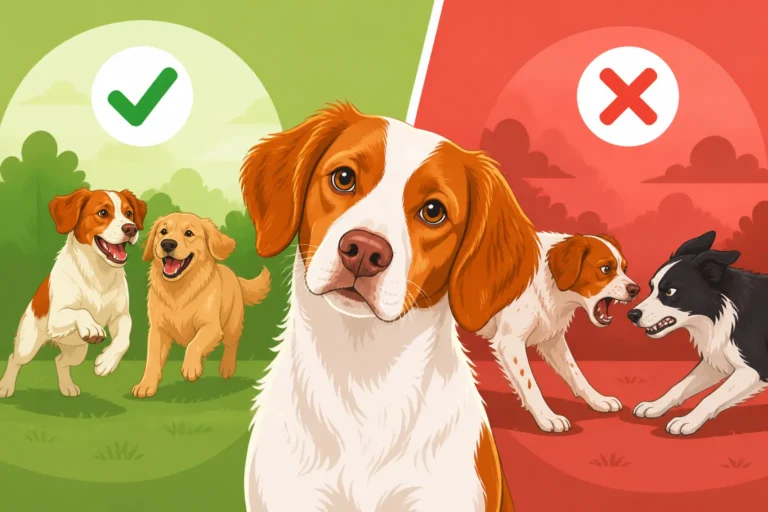
Imagine you're out in the field with two dogs, a common scenario for many upland hunters and absolutely essential for anyone contemplating field trials. One Brittany, let's call her "Daisy," gets a whiff of scent and locks up, tail high, eyes intense, frozen in a picture-perfect point. Her brace mate, "Rusty," spots Daisy and, instead of charging in to steal the bird or flush it prematurely, he stops, acknowledging Daisy's work by also pointing, albeit at Daisy, not the bird itself. That's an honor, or a "back." Without this cooperation, the moment is ruined. Rusty would run past Daisy, scattering the birds, leaving you and Daisy frustrated, and potentially teaching Daisy that her points are meaningless.
In field trials, honoring is a fundamental requirement. Judges are looking for dogs that work as a team, demonstrating control, discipline, and bird sense. A dog that continually breaks point or fails to honor another dog's find will not place, regardless of how beautifully it points its own birds. It speaks to the overall temperament and trainability of the dog, showcasing its ability to defer to its partner and understand the intricate dance of the hunt. This cooperation not only respects the game but also creates a safer, more efficient hunt, allowing the handler to approach the pointed birds without the chaos of a flush.
Natural Instinct vs. Trained Discipline
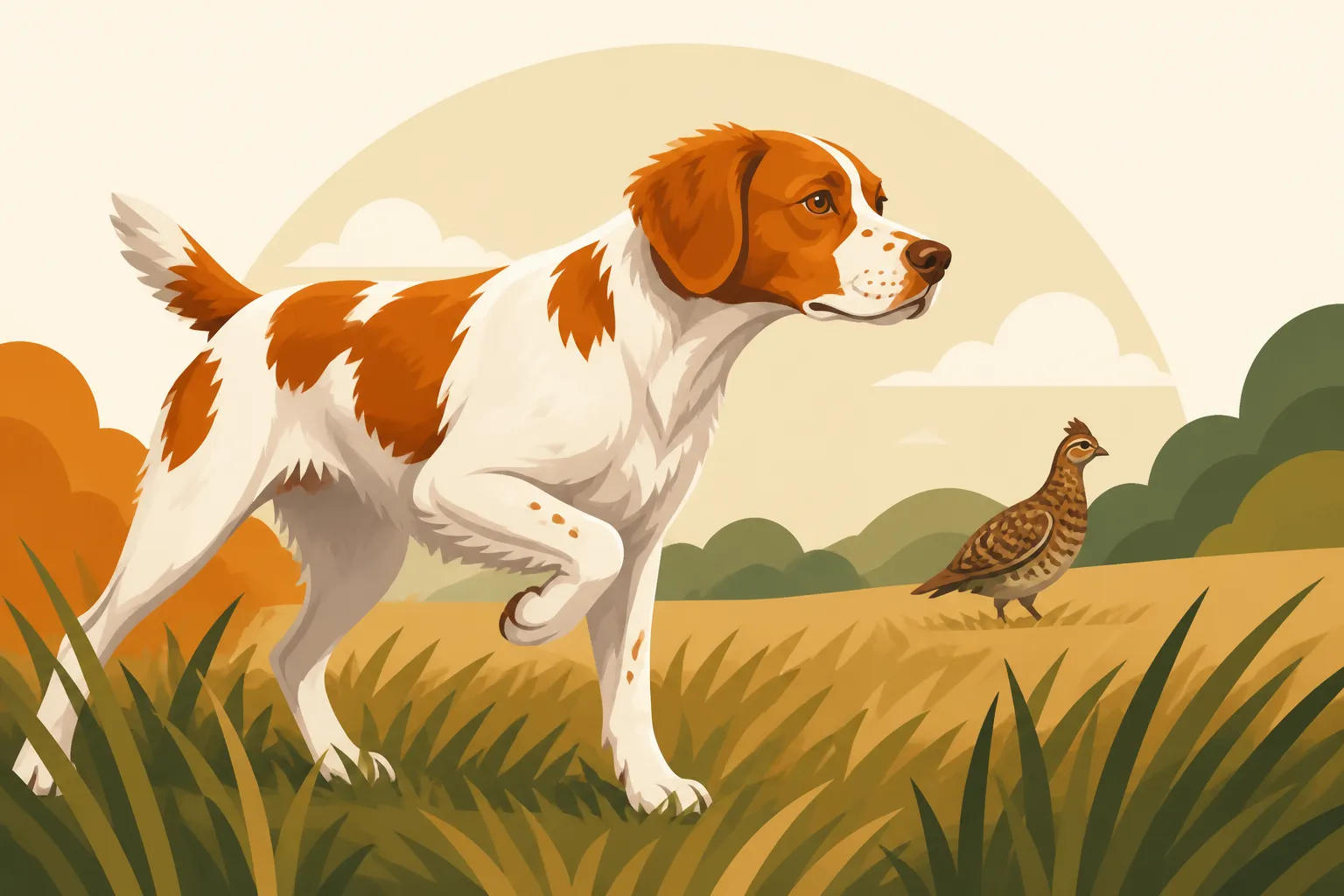
Brittanys are born with an incredible prey drive and an instinct to point. When they hit scent, their bodies naturally tell them to freeze. This is their core purpose, and it's something we nurture and refine. However, the instinct to honor another dog's point is not always inherent. Some Brittanys, especially those from strong, biddable lines, might naturally show a "back" or honor another dog's point without much intervention. They observe the other dog's body language and understand that a bird is there. This is a gift, and it makes the training process much smoother.
More often, though, a Brittany's natural exuberance and desire to get to the bird will override any nascent honoring instinct. Their thought process is often, "Bird! My bird! I need to get to it!" This is where trained discipline comes in. We must teach them that stopping when another dog points is as important as stopping when they point. It requires teaching them self-control and respect for another dog's work. It's about channeling that intense bird drive into a cooperative, controlled behavior.
Keep in mind that Brittanys are often described as a "soft" breed. The Brittany Is the Softest of the Pointing Breeds This means they respond best to positive reinforcement and gentle corrections rather than harsh methods. Yelling or overly physical corrections can make a soft Brittany shut down, becoming timid or resistant to training. Therefore, patience and a clear, consistent approach are paramount when teaching them a nuanced skill like honoring.
Laying the Foundation: Prerequisite Skills for Honoring
Before you even think about putting two Brittanys in the field and asking one to honor the other, you need to ensure your dog has a rock-solid foundation in basic obedience and field commands. Trying to teach honoring without these prerequisites is like trying to build a house without a foundation – it’s destined to crumble.
Solid Whoa: The Non-Negotiable Command
The "Whoa" command is, without a doubt, the single most critical skill for a Brittany learning to honor a point. If your dog doesn't understand and respect "Whoa" implicitly, you'll be fighting an uphill battle. "Whoa" means stop, right now, wherever you are, and stay there until released. It's the command that allows you to control your dog's impulse to break point and ensures they remain steady when a bird is flushed or shot.
Teaching a Brittany Whoa begins long before you even introduce them to birds or other dogs. You start in a low-distraction environment, like your backyard.
- Yard Work with a Check Cord: Start by walking your Brittany on a long check cord, perhaps 15-20 feet long. As you walk, casually say "Whoa" and immediately apply gentle, upward pressure on the check cord while simultaneously putting your hand under their belly to stop forward motion. Keep them frozen for a few seconds, then praise and release them with a "Okay" or "Break" command. Repeat this many times. The goal is for the dog to associate the word "Whoa" with stopping and holding still. You can find sturdy check cords on platforms like Amazon, often bundled with other basic training gear.
- Elevated Stand Work: Once your Brittany understands "Whoa" on the ground, move to an elevated stand or platform. This teaches them to remain still and balanced in one spot, which builds muscle memory for holding position. Place your dog on the stand, give the "Whoa" command, and gently guide them to stand still. You can use their favorite treat or toy as a reward for holding the position. Gradually increase the duration they must hold "Whoa" on the stand.
- Transitioning to Birds: Now, introduce birds into the equation. Start with controlled bird exposure, such as a bird launcher or a dizzied pigeon. When your Brittany points the bird, move to their side and, if they try to creep, issue a firm "Whoa," using the check cord to prevent forward movement. Remember, the check cord is not for jerking; it's for guidance and gentle pressure. The idea is to instill in them that "Whoa" applies even when a bird is directly in front of their nose. A truly solid "Whoa" is the bedrock of all advanced bird dog training, including honoring. Teaching a Brittany Whoa has more on this critical skill.
Reliable Recall: Ensuring Control When It Matters
Even with a strong "Whoa," there will be times when you need your Brittany to disengage from a situation and come back to you. A reliable "Here" or "Come" command is essential for safety, control, and managing brace work. If your Brittany is focused on another dog's point but you decide to move, you need to be able to call them away effectively.
- Practice in Various Environments: Begin recall training in a quiet area, gradually increasing distractions. Start with a long line, allowing your Brittany to explore, then call them back with enthusiasm and reward heavily when they respond.
- Use of Long Lines: Long lines (20-30 feet) are invaluable tools for recall. They give your dog a sense of freedom while allowing you to enforce the command if they ignore you. Practice calling them when they are distracted by smells or sights. The goal is for "Here" to mean, "Drop everything and come to me."
- Positive Reinforcement: Make coming to you the most wonderful thing in their world. Use high-value treats, exciting toys, and enthusiastic praise. A Brittany that views recall as a rewarding experience will be much more likely to obey, even in exciting situations. How Reliable a Brittany's Recall Is delves deeper into perfecting this command.
Exposure to Other Dogs: Building Social Skills and Observation
Before you put your Brittany in a working brace situation, they need to be comfortable and accustomed to being around other dogs. If they're overly playful, aggressive, or timid around other canines, these issues need to be addressed first.
- Controlled Introductions: Introduce your Brittany to calm, well-behaved dogs in a controlled environment. Focus on positive interactions.
- Observing Other Dogs: Let your Brittany observe other dogs working, even from a distance. They can learn a lot by watching an experienced dog hunt and point. This observational learning can sometimes kickstart their understanding of the overall dynamics of the field.
The Step-by-Step Process of Teaching the Honor
Once your Brittany has a rock-solid "Whoa" and reliable recall, you're ready to start the specific training for honoring. This process needs to be methodical, patient, and consistent. Remember, we're building a new layer of discipline on top of their natural prey drive.
Starting with a "Statue Dog" (or Trained, Steady Dog)
The most effective way to begin teaching the honor is by using what's often called a "statue dog" – either a very steady, experienced hunting dog that you can trust to hold a point indefinitely or, even better for initial stages, a trained helper who can stand with a dizzied or chukared bird and hold their own dog on a strong point. The key is predictability and control.
- Initial Setup: Have your "statue dog" (or helper dog) on a staunch point over a bird. Position your young Brittany on a long check cord, about 10-15 yards behind and to the side of the pointing dog. The goal is for your Brittany to clearly see the pointing dog.
- Approaching the Point: Slowly walk your young Brittany towards the pointing dog. As soon as your Brittany sees the other dog on point and starts to show interest (ears up, tail perhaps wagging, body tensing), immediately give your "Whoa" command. You want them to stop before they get too close to the pointing dog and before their instinct to rush in takes over.
- Physical Guidance and Reinforcement: If your Brittany tries to move forward or gets too excited, use the check cord with a gentle, upward tug to reinforce the "Whoa." You might also place a hand on their flank or chest to physically block their forward motion. The moment they stop and stand still, offer calm praise. Do not release the birds or shoot over them at this stage. The focus is solely on holding the honor.
- Gradual Reduction of Physical Intervention: As your Brittany starts to understand, slowly reduce your physical guidance. Try giving only the "Whoa" command. If they hold, great! If they try to move, immediately correct with the check cord and physical block, then restart. Consistency is absolutely key here. Repeat this drill many times, changing the angle of approach, the distance, and the cover.
Introducing the "Live" Brace Partner
Once your Brittany consistently honors the "statue dog" in controlled settings, you can introduce a live, steady brace partner. This dog should be a calm, experienced hunter who will hold their point reliably, ignoring your young Brittany's potential antics.
- Controlled Environment: Start in an open field with limited distractions. Have your experienced dog on point over a bird. Bring your young Brittany in on a check cord or, if you're comfortable and your dog has some e-collar conditioning, with an e-collar set to a very low stimulation level.
- Maintaining Control: As your young Brittany approaches the pointing dog, give your "Whoa" command. Be ready to use the check cord for immediate correction if they try to break. If using an e-collar, a mild stimulation can be used as a "tap" or reminder simultaneously with the "Whoa" command if they start to move. The goal is for the e-collar to become a long-distance check cord, not a punishment. Platforms like Amazon offer a wide range of reliable e-collars suitable for training.
- Reading Body Language: Pay close attention to your Brittany's body language. Are their muscles tensing? Are their eyes darting towards the bird instead of the pointing dog? These are signs they might be about to break. Anticipate these moves and give the "Whoa" command a split second before they act.
- Consistency and Repetition: This stage requires immense patience. You might have to reset and repeat approaches multiple times in a single session. Don't get frustrated. Celebrate every successful hold, even if it's brief. Gradually increase the duration your Brittany must honor the point. Once they consistently honor, you can then move in, flush the bird, and shoot, having them remain "Whoa" until released, or even better, steady to wing and shot.
Scenario Training
Real-world hunting situations are rarely as controlled as your training grounds. You need to expose your Brittany to various scenarios to ensure their honor command holds up.
- Varied Cover Types: Practice in dense cover, tall grass, open fields, and woodlands. The distractions and visibility changes will test their understanding.
- Different Bird Scenarios: Train with different types of birds (quail, chukar, pheasant) that behave differently. Some birds run more, some sit tighter. This will challenge your Brittany's steadiness.
- Introducing Distractions: Gradually introduce distractions like other hunters, noises, or even other dogs walking by in the distance. The honor needs to be solid regardless of what's happening around them.
Role of the E-Collar
For many bird dog trainers, the e-collar (electronic collar) becomes an invaluable tool for refining and reinforcing commands like "Whoa" and "honor." However, it's crucial to understand that an e-collar is a communication device, not a punishment tool. It should only be introduced after your Brittany understands the command on a check cord and knows what is expected of them. Whether a Brittany Needs an E Collar at All offers a deeper discussion on this topic.
When using an e-collar for honoring:
- Find the "Working Level": Start at the lowest possible stimulation level and gradually increase it until your dog just barely perceives it (a head twitch, ear flick). This is their "working level." You want to use the least amount of stimulation necessary.
- Timing is Everything: The e-collar stimulation should be applied simultaneously with your "Whoa" command, or a split-second before your dog breaks point, never after they've already moved. This helps them associate the stimulation with the incorrect action or the need to stop.
- Positive Association: Always follow a successful hold or a correct response with praise. Your Brittany should understand that stopping on command, whether verbal or reinforced by the e-collar, leads to positive outcomes.
- Gradual Off-Leash Work: Once your Brittany is consistently honoring with the e-collar in controlled scenarios, you can begin to work them off-leash, using the e-collar as your remote check cord to reinforce commands from a distance.
Common Challenges and Troubleshooting Honoring
Even with the best intentions and consistent training, you're likely to encounter a few bumps in the road. Brittanys are intelligent, but they're also exuberant and driven. Troubleshooting these common issues is part of the journey.
Breaking Point or Creeping
This is perhaps the most common frustration: your Brittany sees the other dog on point, starts to honor, and then… creeps forward, maybe even busting the bird. Why a Brittany Creeps on Point goes into more detail, but here's the summary: their prey drive overrides their discipline.
- Go Back to Basics: If your Brittany is consistently breaking or creeping, it means their "Whoa" isn't solid enough under distraction. Go back to yard work and check cord drills with increasingly tempting birds. Reinforce the "Whoa" command rigorously.
- Check Cord Correction: When working on an honor, if they start to creep, a quick, firm (but not harsh) pop on the check cord combined with a sharp "Whoa!" can often reset them. Make sure the correction is immediate.
- E-Collar Reminder: If using an e-collar, a well-timed, low-level stimulation can act as that physical reminder. It's a "blip" that says, "Hey, I told you 'Whoa,' listen up!"
Lack of Interest
Sometimes, a young Brittany might just seem uninterested in another dog's point. They might wander off, sniff around, or simply not register the significance of what the other dog is doing. This usually points to one of two things:
- Insufficient Bird Drive: Your Brittany might not be obsessed enough with birds yet. Go back to building intense bird drive through controlled introductions to dizzied pigeons, launchers, and positive experiences with finding and pointing birds on their own. How a Brittany Finds Its First Bird is a great resource for sparking that initial bird passion.
- Lack of Understanding: They might not yet connect the pointing dog with the presence of a bird. In this case, ensure your "statue dog" sessions are very clear: dog points, you bring your Brittany, they stop, and then the bird is produced or flushed (by the lead dog). This helps them understand the cause and effect.
Pressure Sensitivity
As noted earlier, Brittanys are often considered a "soft" breed. This means they can be particularly sensitive to harsh corrections or overwhelming pressure. If your Brittany shuts down, becomes timid, or refuses to engage in training after a correction, you're likely being too hard on them. What a Brittany Does When It Is Corrected Too Hard offers insights into managing this.
- Gentle Corrections: Opt for the softest correction that gets the desired response. A verbal "Whoa!" with a gentle tug on the check cord might be enough.
- Positive Reinforcement Focus: Overwhelm them with praise and positive reinforcement for every successful honor, no matter how brief. Make training a fun, rewarding experience.
- Structured, Positive Programs: For owners who prefer a very gentle approach or who have a particularly sensitive Brittany, online programs like BAXTER & Bella offer structured, positive reinforcement-based training that can be adapted for field work, emphasizing clear communication and reward over punitive measures. These resources can help build confidence in both handler and dog.
Maintaining Consistency
Like any complex skill, honoring a point requires consistent practice. It's not a "one and done" lesson.
- Regular Practice: Schedule regular training sessions, even short ones, throughout the year. Don't just pull out the "honor" drills during hunting season.
- Off-Season Drills: During the off-season, continue reinforcing "Whoa" and conducting "statue dog" drills with planted birds. This keeps the skill sharp. How to Keep a Brittany Fit in Summer also emphasizes year-round conditioning, which includes mental sharpness through training.
- Varied Partners: If possible, expose your Brittany to honoring different dogs. This teaches them to honor the behavior of pointing, not just a specific brace mate.
When to Seek Professional Help
There's absolutely no shame in seeking guidance from a professional gun dog trainer. Sometimes, an experienced eye can spot subtle issues or offer techniques you hadn't considered. If you're consistently running into a wall, or if your Brittany is becoming resistant or gun shy, a professional can be invaluable. They have the experience, the specialized equipment, and often, a string of well-trained brace mates to help your Brittany learn in a consistent environment.
Comparing Honor Training Methods
When teaching a Brittany to honor, different approaches can be more or less effective depending on the dog's personality, prior training, and your resources. Here's a brief comparison of common methods.
| Method | Description | Pros | Cons |
|---|---|---|---|
| "Statue Dog" Method | Using a very steady, experienced pointing dog (or a helper holding a dog on point) over a planted bird while bringing the young Brittany on a check cord to honor. The pointing dog stays absolutely still. | Highly controlled; predictability helps young dog learn; builds confidence. | Requires a reliable "statue dog" or patient helper; may not fully replicate real-world distractions. |
| Live Brace Partner | Working with an actual experienced hunting dog that points birds naturally, then bringing the young Brittany (on check cord/e-collar) to honor that live point. | More realistic; dog learns to read live body language; good transition from controlled to real-world. | Requires a very steady, reliable brace mate; less control over the pointing dog's behavior (e.g., if it tries to flush). |
| Flank/Body Pressure | Physically placing a hand on the young Brittany's flank or chest to stop forward motion while giving the "Whoa" command as they approach the point. Often used in conjunction with check cord. | Immediate, clear physical cue; good for tactile learners; reinforces "Whoa" with body awareness. | Can be seen as too forceful by sensitive Brittanys; less effective at a distance. |
| E-Collar Reinforcement | Using an e-collar at a low stimulation level to reinforce the "Whoa" command and prevent breaking when approaching or holding an honor. Applied simultaneously with verbal command or just before an anticipated break. | Effective for long-distance reinforcement; precise timing possible; allows for off-leash control. | Requires careful conditioning and proper technique; can be misused if not understood; not suitable for all dogs initially. |
Teaching your Brittany to honor a point is a journey, not a sprint. It takes dedication, consistent effort, and a deep understanding of your dog's unique personality. But the payoff is immense: a beautifully working brace, a safer and more enjoyable hunt, and the immense satisfaction of seeing your well-trained Brittany perform its duties with precision and grace. Keep those training sessions positive, be patient, and celebrate every small victory. You'll soon have a Brittany that not only finds birds but also proudly respects the finds of its companions, truly embodying the spirit of a versatile gun dog.
Disclaimer
This article is for general informational purposes only and does not constitute professional advice. Laws, prices and regulations vary by location and change over time. Consult a qualified professional for guidance on your specific situation.