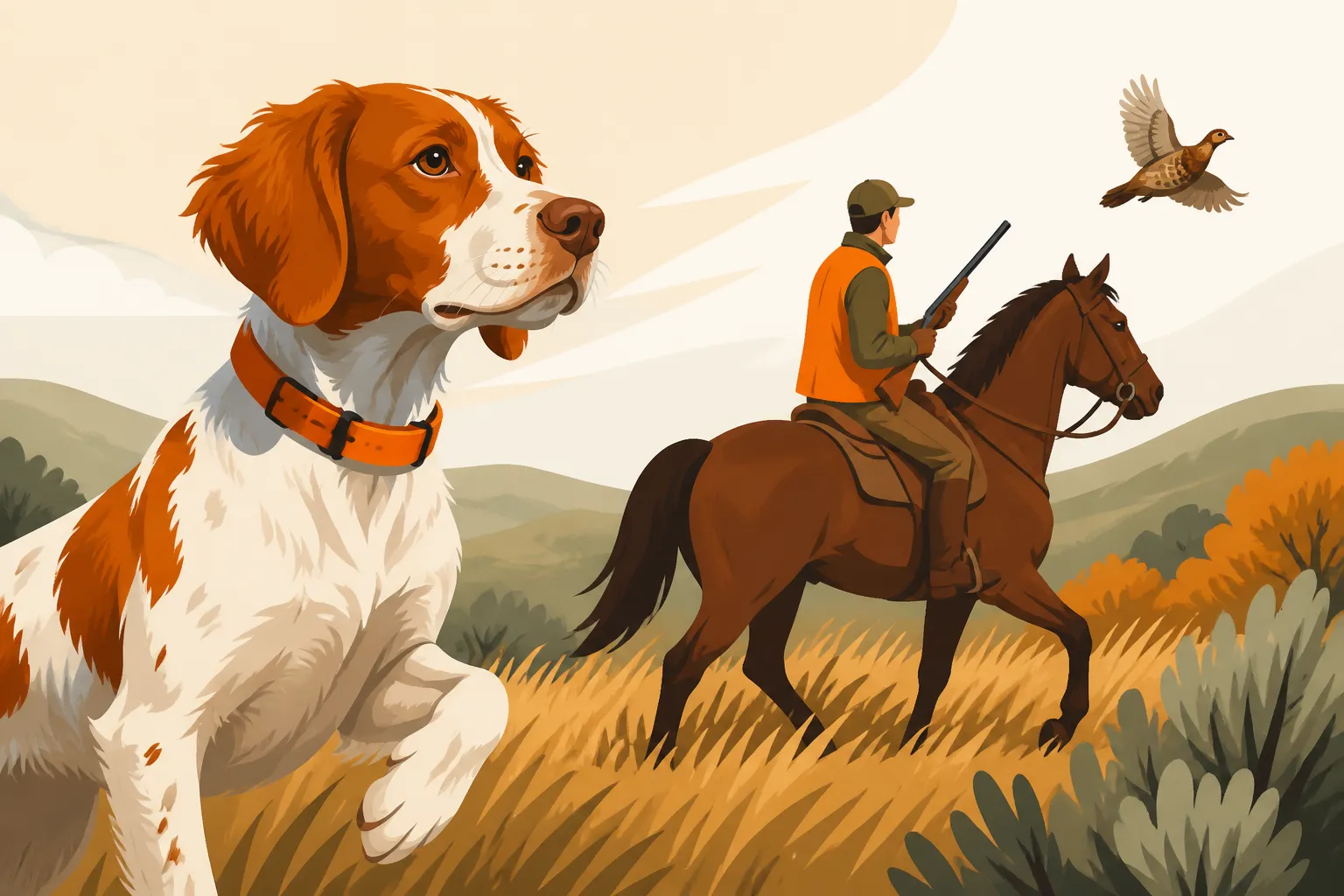
Whether a Brittany Can Be Hunted From Horseback
For many bird hunters, the thought of covering vast expanses of prime hunting land on horseback, with a loyal pointing dog working ahead, conjures images of classic field trials and a bygone era. It's a romantic notion, but if you own a Brittany Spaniel, you might wonder if this spirited, often wide-ranging breed is truly suited for such an endeavor. This guide dives deep into whether a Brittany can realistically be hunted from horseback, exploring the unique considerations, training adaptations, and equipment you'll need to make this dream a reality – or decide if it's best left to the realm of imagination.
Understanding the Brittany's Natural Hunting Style
Before we even consider saddling up, it’s crucial to understand what makes a Brittany tick in the field. These dogs are purpose-bred bird dogs, bursting with energy and an instinct to find game. Their natural inclinations dictate much of how they'll perform, whether you're on foot or mounted.
The Brittany's Energetic Field Coverage
Brittanys are known for their incredible athleticism and stamina. They aren't content to sniff around your boots; they want to get out there and find birds. An American Brittany, in particular, is often celebrated for its ability to cover ground with speed and enthusiasm. They are often described as big-running dogs, eager to cast out and explore the furthest reaches of a field. This inherent drive to range wide is a double-edged sword when you're thinking about hunting from horseback. On one hand, it means they'll efficiently cover a lot of territory, which is exactly what you want when you're trying to locate birds over large acreages. On the other hand, a dog that gets too far out of sight or hearing can become a real challenge to control from atop a horse. You need to consider How Far an American Brittany Ranges and understand that a horse might struggle to keep up with their rapid zig-zagging.
Their high energy levels mean they can maintain a strong pace for hours, making them excellent partners for long days in varied terrain. While a French Brittany typically hunts How Close a French Brittany Hunts compared to its American counterpart, even they possess a keen desire to work independently and efficiently. This tireless work ethic is a huge asset for any hunter, but it also means that simply getting on a horse won't magically make your Brittany stay closer or easier to manage without specific training.
The Brittany's Independence and Bird Drive
Brittanys are natural-born bird dogs. They possess an incredibly strong prey drive and an innate ability to point game birds. This instinct is what makes them such beloved hunting companions. When a Brittany gets a whiff of bird scent, their focus becomes singular: locate, point, and hold. This intense bird drive means they are not easily distracted from their mission. Whether a Brittany Points Naturally is rarely a question; it's practically hardwired into them. This intense focus, while admirable, can sometimes override other commands, especially if they are far away and deeply immersed in their work.
Their independence in the field means they are perfectly capable of making decisions about how to best work a cover without constant micro-management. This self-sufficiency is a hallmark of a good pointing dog. However, when hunting from horseback, you need to be able to guide that independence, perhaps to redirect them to a specific patch of cover or to bring them in if they've ranged too far. This requires an even stronger foundation of obedience and a reliable communication system that transcends distance and the inherent noise of a horse moving through brush. You'll need to cultivate a dog that's not just hunting for itself, but one that's truly Teaching a Brittany to Hunt for the Gun.
The Challenges of Hunting a Brittany from Horseback
Hunting with any dog from horseback introduces a unique set of challenges, and the Brittany’s particular traits can amplify some of these. It's not simply about having a dog and a horse; it's about integrating two separate, often fast-moving, entities into a cohesive hunting unit.
Maintaining Control and Communication
One of the biggest hurdles when hunting from horseback is maintaining clear and consistent control over your dog. When you're on foot, your physical presence, subtle body language, and immediate vocal commands are usually enough to direct your Brittany. From horseback, you're elevated, further away, and the sounds of your horse's hooves and breathing can muffle your voice. This makes reliable communication paramount.
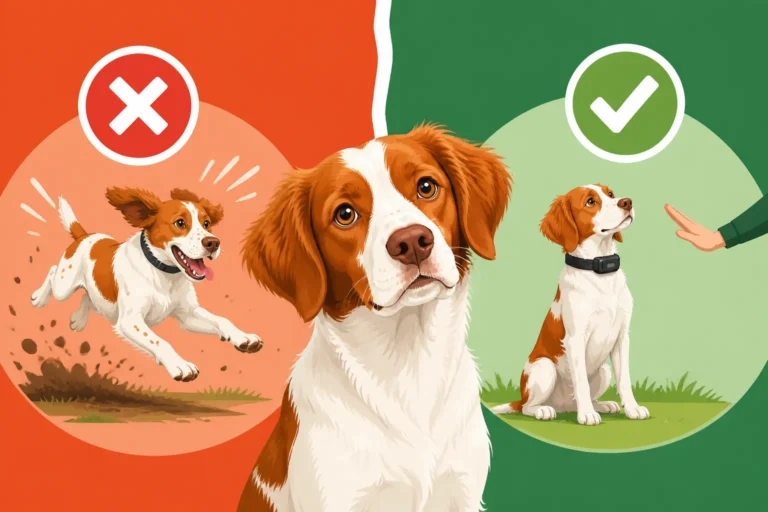
A Brittany, while eager to please, can easily get caught up in the thrill of the hunt. If they range far, as American Brittanys are wont to do, your voice might not carry, and your whistle commands might be lost to the wind or dense cover. This is where the importance of a solid recall cannot be overstated. How Reliable a Brittany's Recall Is will be tested repeatedly in this scenario. You can't simply jump off your horse and run after a dog that's decided to pursue a bird over the next ridge. This is why many horseback hunters rely heavily on electronic collars. An e-collar, when used properly and humanely, can provide a direct line of communication, delivering a consistent correction or reminder even at a distance. If you're considering this, you'll need to research Whether a Brittany Needs an E Collar and how to introduce it correctly. The key is to teach your dog that the e-collar is an extension of your voice, not a punitive tool, and to use it for reinforcing commands, especially for a consistent recall.
Matching Pace and Covering Ground Effectively
Brittanys are fast. Horses are also fast, but their gait and maneuverability in dense cover differ significantly from a dog's. A Brittany can dart through thickets, navigate fallen logs, and change direction on a dime in a way a horse simply cannot. If your Brittany is a particularly wide runner, you might find yourself constantly trying to catch up or losing sight of them as they zig-zag through fields and woods. This can be frustrating for both you and the dog. You want your dog to cover ground, but you need to be able to follow and support their points.
Conversely, if the cover is very open, your Brittany might feel the urge to stretch their legs and get so far ahead that you can't observe their work or get to a point quickly enough. This mismatch in pace and agility can lead to inefficiencies in the hunt and even safety concerns. Imagine your Brittany locking up on point in dense cover a quarter-mile away while your horse struggles to get through a bog or over a tricky fence line. You might miss the flush, or worse, struggle to get to your dog if they've encountered a dangerous situation. Learning How to Bring a Wide Running Brittany In becomes an even more critical skill from horseback.
Safety Considerations for Dog and Rider
Safety is always a top concern when hunting, and adding a horse to the equation multiplies the potential risks for both your dog and yourself.
Firstly, there's the obvious danger of your dog getting underfoot. A fast-moving Brittany might dart close to the horse's legs, especially when quartering or retrieving. An accidental kick or stomp from a large animal can cause severe injury to a smaller dog. Both your horse and your dog need to be accustomed to working in close proximity to each other without fear or aggression.
Secondly, the terrain itself presents challenges. Horses can stumble in uneven ground, get spooked by unexpected obstacles or sudden bird flushes. A horse that shies violently or bolts could throw the rider, potentially injuring both. Your dog also faces increased risks, from stepping in holes unseen from your elevated position to encountering barbed wire fences or other hazards that a horse might easily step over but a dog could get tangled in.
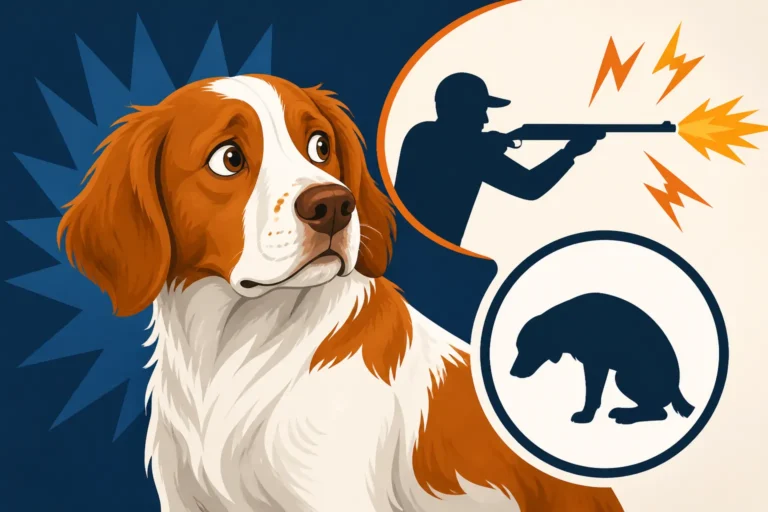
Finally, consider the gun. Introducing a gun to a dog should always be done carefully and incrementally to avoid creating a gun shy Brittany. When hunting from horseback, the gun is higher, and the sound might carry differently, potentially startling a horse if it's not accustomed to gunshots nearby. A horse that is not fully desensitized to gunfire could react unpredictably, creating a dangerous situation for everyone involved.
Training and Equipment for Horseback Hunting
Successfully hunting a Brittany from horseback isn't about simply combining two trained animals; it's about integrating them through specialized training and the right gear. It's a significant commitment, but the rewards can be immense.
Specific Training Adaptations
The foundation of any good hunting dog is solid obedience, but horseback hunting demands an even higher level of precision and reliability. Your Brittany needs to respond to commands instantly, even when out of sight or when you're occupied with managing your horse.
- Advanced Remote Obedience: Commands like "whoa," "heel," "come," and "over" must be rock-solid and enforceable from a distance. This often means extensive work with an e-collar, not for punishment, but for consistent reinforcement. Your dog needs to understand that a gentle stim from the collar means "pay attention" or "perform the command," even if your voice is faint. Mastery of Teaching a Brittany Whoa is non-negotiable, as you need them to stop instantly on point or to avoid a hazard.
- Steadiness Training: It's absolutely crucial that your Brittany is steady to wing, shot, and fall. When hunting from horseback, you might not be able to dismount quickly enough to prevent a dog from breaking point and chasing a bird, or worse, running after a crippled bird into dangerous territory. Teaching a Brittany Steady to Wing and Teaching a Brittany Steady to Shot to perfection means your dog will hold its position until you give the release command, allowing you to control the situation from your mount.
- Exposure to Horses: Your Brittany must be completely comfortable around horses. Start by simply exposing your dog to horses in a calm, controlled environment. Let them sniff, get used to the sounds and smells, and understand that horses are not a threat. Gradually increase interaction, perhaps walking your dog beside a calm, stationary horse, then a moving horse, building up to having your dog work birds while you are mounted. This ensures the dog doesn't get spooked or distracted by the horse's presence.
- Hand Signals and Whistle Commands: Since vocal commands can be challenging, perfect your hand signals and whistle commands. These can cut through wind and distance more effectively than your voice alone. Consistent, clear signals are essential for directing your dog through cover and maintaining control.
Essential Gear for Horseback Hunters
The right equipment can make all the difference in safety and effectiveness when hunting from horseback. These tools help bridge the communication gap and keep tabs on your valuable hunting partner.
- GPS Tracking Collars: These are, arguably, the most vital piece of equipment for horseback hunting with a wide-ranging dog like a Brittany. Losing sight of your dog is almost inevitable over vast expanses, and a GPS collar allows you to know their exact location at all times. Systems like those found on Amazon or specific sporting dog retailers often provide real-time tracking, allowing you to see if your dog is on point, moving, or perhaps exploring a little too far. It's truly a game-changer and makes the question of Whether a GPS Collar Is Worth It on a Brittany an emphatic yes for this type of hunting. You can expect What a GPS Collar Costs a Brittany Owner to be a significant investment, but it's one that can save you immense worry and potential loss.
- E-collars: As mentioned, an e-collar is critical for remote communication and reinforcement. Choose a model with good range and multiple stimulation levels to ensure you can communicate effectively and appropriately. Which E Collar Suits a Brittany will depend on factors like range needed and desired features.
- Bells or Beeper Collars: While not a substitute for GPS, a bell or beeper collar allows you to hear your dog working, especially in heavier cover. A bell gives you a constant audio cue of movement, while a beeper collar can be set to emit a tone when the dog is still (on point) or moving. This helps you keep track of their general location.
- High-Visibility Vests: Your Brittany should wear a brightly colored, durable vest, especially if hunting in areas with other hunters. Orange or blaze yellow vests make your dog much easier to spot from a distance, whether you're mounted or dismounted.
Choosing the Right Brittany for Horseback
While almost any Brittany can be trained for horseback hunting with enough dedication, certain characteristics might make some individuals more naturally suited than others.
- Lineage Matters: If you specifically intend to hunt from horseback, consider the dog's breeding. Whether an American Brittany Suits Horseback Trials is a relevant question because American field trial lines are often bred for expansive range and speed, which aligns well with covering large areas from horseback. However, these dogs might require more rigorous control training. French Brittanys, or Epagneul Bretons, typically have a closer working range, which might be easier for a less experienced horseback handler, though they might not cover ground as quickly.
- Temperament: Look for a Brittany with a confident, biddable, and intelligent temperament. A timid or easily stressed dog will struggle with the unique pressures of horseback hunting, which include the horse's presence, the distance from the handler, and potentially louder gun reports. A dog that is overly stubborn or independent will also present significant challenges.
- Physical Conditioning: Both horse and dog need to be in peak physical condition. A Brittany hunting from horseback will cover many miles and needs the stamina to do so efficiently and safely. How to Keep a Brittany Fit in Summer and off-season is crucial for preventing injuries and ensuring they can perform strongly all day.
Benefits and Best Practices for the Horseback Hunter
Despite the challenges, hunting a Brittany from horseback offers a truly unique and rewarding experience that combines classic hunting traditions with modern efficiency.
The Advantages of Hunting from Horseback
The allure of horseback hunting isn't just about nostalgia; it offers tangible benefits for the serious bird hunter.
- Cover More Ground: This is perhaps the most significant advantage. On horseback, you can traverse vast stretches of territory much faster and with less physical exertion than on foot. This allows you to hunt larger areas, access more remote coverts, and follow wide-ranging dogs like the American Brittany more effectively. You can hunt all day without wearing yourself out, allowing you to maximize your time in the field and cover prime habitat.
- Enhanced Visibility: Being elevated on horseback provides a better vantage point. You can see over tall grass and brush, giving you a clearer view of your dog working, spotting a point from a distance, or observing bird flushes. This improved visibility helps you direct your dog more accurately and react quickly to game.
- Easier Navigation of Difficult Terrain: Horses can navigate certain types of terrain more easily than a human on foot. Rocky ground, shallow streams, muddy patches, or long distances over uneven fields can be less taxing on a horse than on a hunter. This allows you to access areas that might otherwise be too challenging or tiring to reach, opening up new hunting opportunities.
- Reduced Physical Strain: Long days of walking through heavy cover can be exhausting. Hunting from horseback significantly reduces the physical toll on the hunter, allowing you to stay fresher, more alert, and enjoy the hunt more thoroughly. This is especially beneficial for multi-day hunts or for hunters who might have physical limitations that make extensive walking difficult.
Tips for a Successful Horseback Hunt
Achieving a harmonious and effective partnership with your Brittany and your horse requires careful planning, consistent training, and adherence to best practices.
- Start Slow and Be Patient: Don't expect to jump on a horse with your Brittany and immediately have a perfect hunt. Begin with short, controlled training sessions, gradually introducing the horse, the saddle, and eventually, the full hunting scenario. Build confidence in both animals incrementally. Consistency is key, and never rush the process, especially when it comes to gun introduction around the horse and dog.
- Choose the Right Horse: Your horse needs to be calm, steady, and accustomed to gunshots and dogs working around its feet. A spooky or unreliable horse will negate all your dog training efforts and create a dangerous situation. Your horse should also be comfortable with working in varied terrain and capable of handling long hours in the field.
- Scout Your Area: Familiarize yourself with the hunting grounds before your hunt. Know the terrain, potential hazards, fence lines, and ideal coverts. This allows you to plan your routes and avoid unexpected difficulties for your horse or dog.
- Work with a Partner: Having another person on horseback or even on foot can be incredibly helpful. They can assist with managing the dog, observing its work, or providing an extra set of eyes for safety. This is particularly useful in the early stages of training.
- Prioritize Conditioning: Both your Brittany and your horse need to be well-conditioned for the demands of the hunt. This isn't just about physical stamina; it's about mental endurance too. A tired dog or horse is more prone to mistakes or injuries. Make sure to schedule regular exercise and allow for adequate rest, especially during a long season. Consider the impact of weather conditions, as Whether a Brittany Overheats on an Early Season Hunt can be a real concern.
- Regular Equipment Checks: Before every hunt, check all your gear – saddles, bridles, stirrups, e-collars, GPS units, and even your dog's vest. Ensure everything is in good working order and fits properly to prevent discomfort or equipment failure in the field.
| Aspect | Foot Hunting a Brittany | Horseback Hunting a Brittany |
|---|---|---|
| Ground Covered | Limited by human stamina, typically smaller areas. | Vast expanses possible, covering more ground efficiently. |
| Handler Energy | High physical exertion, tiring over long distances. | Significantly reduced physical strain on the hunter. |
| Dog Range Suitability | Easier to manage closer-working dogs, challenging for wide-runners. | Excellent for wide-running Brittanys, requires more remote control. |
| Visibility of Dog | Ground-level view, can lose sight in dense cover. | Elevated view, better visibility over tall vegetation. |
| Communication | Direct vocal/physical cues, immediate reinforcement. | Primarily remote (e-collar, whistle), voice muffled. |
| Training Focus | Standard obedience, solid recall, steady to wing/shot. | Advanced remote obedience, steadiness, horse desensitization. |
| Essential Gear | Whistle, check cord, vest. | GPS collar, e-collar, whistle, high-vis vest, reliable horse tack. |
| Safety Concerns | Terrain hazards, dog injuries. | Dog underfoot, horse spooking, gun safety, terrain for horse/rider. |
Hunting a Brittany from horseback is absolutely possible, and for many, it's the pinnacle of the upland hunting experience. It demands a higher level of commitment to training, a significant investment in specialized gear, and a deep understanding of both your dog and your horse. But for those willing to put in the work, the sight of your Brittany locked on point ahead of your trusted mount, with miles of open country stretching before you, is a memory that lasts a lifetime.
Disclaimer
This article is for general informational purposes only and does not constitute professional advice. Laws, prices and regulations vary by location and change over time. Consult a qualified professional for guidance on your specific situation.