Whether Range Can Be Trained Into a Brittany
It's a common dilemma, isn't it? You love your Brittany, but sometimes their natural hunting range just doesn't quite match what you envision or need for your specific hunting grounds or style. Whether you wish your dog would work a little wider to cover more ground, or conversely, stay a bit closer in dense cover, the question often arises: can you truly train a Brittany to adjust its inherent range? This guide is all about exploring the reality of modifying your Brittany's hunting range through thoughtful training, offering realistic expectations and actionable advice.
Understanding Your Brittany's Natural Tendencies
Let's face it, Brittanys are born with an innate drive and a predisposition for a certain hunting style. This isn't just a quirk; it's a deeply ingrained part of their heritage, shaped by generations of selective breeding. Trying to fight against it without understanding these foundations is like trying to paddle upstream without a paddle – frustrating and often fruitless.
The American Brittany's Wide Horizon
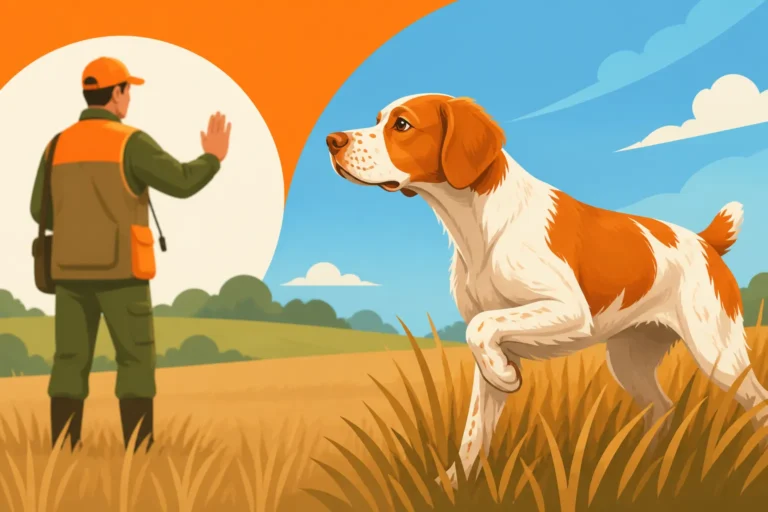
If you own an American Brittany, you've likely witnessed their incredible ground-covering ability firsthand. These dogs were often bred for the vast expanses of the American West, where hunters might be on horseback or simply need a dog to scour immense tracts of land for upland birds. Their heritage is steeped in finding distant birds and holding point until the hunter arrives. This means their natural inclination is to run big, to cast out with purpose and cover as much territory as possible.
Imagine an open prairie hunt in Kansas or North Dakota; your American Brittany is likely to range out 100, 200, even 300 yards or more, checking in periodically, but always pushing forward. This is not a fault; it’s what they were bred to do. If you're a foot hunter in smaller, tighter cover, this can feel like a challenge. You might find yourself constantly calling, whistling, or using a bell or beeper collar just to keep tabs on them. While this wide-ranging style is a hallmark of the breed and highly prized in field trials, it can be a mismatch for a walking hunter who prefers to keep their dog in sight more often. How Far an American Brittany Ranges explores this in more detail.
The French Brittany's Close Quarters
On the flip side, the Epagneul Breton, commonly known as the French Brittany in North America, often exhibits a distinctly different style. Bred for the smaller fields and denser woods of their native Brittany region in France, these dogs were designed to work more methodically and closer to the gun. The European hunting tradition, often involving walking hunters and varied terrain, favored a dog that would diligently cover an area within a more confined radius.
Picture a hunt through thick briar patches or dense woodlots in Pennsylvania or Michigan. A French Brittany in this scenario would likely work within 50 to 100 yards, systematically quartering the ground in front of you. They're still incredibly driven and possess that characteristic Brittany enthusiasm, but their casts are generally shorter, their check-ins more frequent, and they're less likely to disappear over the next ridge without a thought. This closer-working style is exactly what many foot hunters desire, providing a constant connection with their dog and less worry about them getting lost or out of range. If you happen to have a French Brittany and yearn for them to stretch out more, you might feel like you're fighting their very nature. How Close a French Brittany Hunts delves into the nuances of this style.
Assessing Your Brittany's Current Range and Potential
Before you even think about "training range into" or "out of" your Brittany, you need to honestly assess where they're at and what's truly possible. Understanding their innate tendencies and the various factors that influence their current range will set you up for success, or at least help you manage your expectations.
Factors Influencing Natural Range
A Brittany's range isn't just about their lineage; it's a complex interplay of genetics, individual personality, and the environment they've been trained in. Some American Brittanys might naturally work a bit closer than average, just as some French Brittanys might have a stronger urge to cast out further.
Consider these factors:
- Genetics and Breeding: As discussed, this is paramount. A pup from a line of wide-ranging field trial champions will have a strong genetic blueprint to run big. Conversely, a dog from closer-working lines will be predisposed to stay near. While training can fine-tune this, it rarely overrides it entirely.
- Individual Temperament: Even within the same litter, puppies can have different personalities. Some are bolder and more independent, more inclined to explore further afield. Others are more handler-focused and naturally prefer to stay closer. What a Brittany's Temperament Is Really Like covers these individual differences.
- Early Exposure and Training: How your dog was introduced to the field and what was reinforced early on plays a huge role. If they were consistently allowed to run wide without much recall pressure, that behavior became ingrained. If they were always hunted in small areas with tight control, their range will naturally be limited.
- Cover and Terrain: A dog will instinctively adjust its range to the cover. In dense woods or thick CRP, even a wide-ranging dog will naturally work closer because they can't see or hear you, and game movement is more restricted. In open fields, they'll expand.
- Your Hunting Style: Your own habits influence your dog. If you tend to walk slowly and methodically, your dog might learn to adjust to your pace. If you're constantly rushing ahead, they might follow suit or range even wider to try and find birds before you.
Realistic Expectations for Training
This is where the rubber meets the road. Can you train range into a Brittany? Yes, to a degree, you can influence and refine their range. But you generally cannot fundamentally change their ingrained genetic blueprint. Think of it less like reprogramming a computer and more like shaping a growing tree. You can prune it, guide its branches, and encourage growth in certain directions, but you can't make an oak tree into a pine.
Here's what's realistic:
- Refining, Not Reinventing: You can teach a wide-ranging dog to check in more frequently, or to honor a boundary you set. You can encourage a close-working dog to extend its casts a bit further, especially if they have some natural boldness.
- Consistency is Key: Any modification to range requires relentless consistency in training. This isn't a "one-and-done" deal; it's an ongoing conversation you have with your dog every time you're in the field.
- Tools Are Aids, Not Solutions: E-collars, check cords, and GPS trackers are fantastic aids for managing and communicating, but they won't magically instill a different range if the foundation isn't there.
- It Takes Time: Like any advanced gun dog skill, modifying range can take months, even years, of dedicated effort. Don't expect overnight miracles.
- Some Dogs Are More Adaptable: Just like people, some dogs are more amenable to adjusting their natural inclinations than others.
| Factor | American Brittany (Typical) | French Brittany (Typical) | Trainability/Modifiability |
|---|---|---|---|
| Natural Range | Wide (100-300+ yards), covers vast ground | Close (50-100 yards), methodical quartering | Can be influenced, but core tendency remains strong. |
| Motivation | Driven by finding distant birds, independent exploration | Driven by finding birds for handler, close teamwork | Training can channel drive, but not fundamentally alter its source. |
| Best Terrain | Open prairies, large fields | Dense cover, smaller woodlots, varied terrain | Dogs will adapt range to terrain, but prefer natural fit. |
| Check-ins | Less frequent, often a quick glance or momentary pause | More frequent, often returning to handler's general area | Can be trained to increase frequency in wide dogs, or decrease in close. |
| Patience Req. | High (to keep them closer or bring them back) | Moderate (to encourage wider casts) | Significant patience and consistency needed for all range modifications. |
Strategies for Extending a Brittany's Range (If Too Close)
So, you have a Brittany who loves to stay right under your nose, but you wish they'd stretch out a bit more to cover that open field. While you can't force a naturally close worker to suddenly become a field trial champion, you can certainly encourage them to broaden their horizons.
Gradual Exposure and Encouragement
The key here is building confidence and rewarding independence, without losing connection. You don't want your dog to feel abandoned if they venture out.
- Start Small, Think Big: Begin by hunting slightly larger fields than your dog is used to. Don't immediately throw them into a sprawling prairie. Choose areas where they can still see you easily, but where the cover encourages them to make wider arcs.
- Positive Reinforcement for Wider Casts: When your dog makes a slightly wider cast, even if it's just 20 yards further than their norm, mark it with praise. "Good dog!" or a cheerful whistle can communicate that this behavior is desired. Resist the urge to constantly call them back if they're still within a reasonable, safe distance.
- Strategic Plantings/Birds: Use planted birds or training pigeons. Place them further out than your dog typically ranges. Let your dog work naturally, and if they start to get "birdy" further out, allow them to investigate. The reward of finding a bird further away will encourage them to explore that distance again. You can use bird launchers to send birds further, enticing them to push out. How to Start a Brittany on Pigeons is a good resource for this.
- "Whoa" for Exploration, Not Arrest: Teach a solid "whoa" command, but use it strategically. Instead of using it to stop them from ranging wide, use it to give them a moment to assess a scent from a distance without feeling pressured to return. Teaching a Brittany Whoa is a crucial skill for this.
- Patience and Quiet Communication: Many close-working dogs are highly sensitive. Loud commands or constant whistling can make them feel like they're doing something wrong when they venture out, causing them to shrink their range even further. Try a subtle whistle or hand signal to encourage movement forward, rather than verbal commands that might feel like corrections. An online training program like BAXTER & Bella can help you establish clear, quiet communication signals from a young age, which becomes invaluable in the field.
Using Tools and Terrain to Your Advantage
Certain tools and thoughtful use of the environment can help extend your Brittany's reach.
- The Check Cord: For dogs that are too close and hesitant to leave your side, a long check cord (20-30 feet, even 50 feet) can be surprisingly helpful. Allow them to work the end of the cord, giving them a sense of independence while you still maintain control. Gradually, they'll learn that the distance is safe and acceptable. You can find robust check cords easily on Amazon.
- Beeper Collars or GPS: While often used for wide-ranging dogs, a beeper collar can also serve to reassure a dog that you're still there, even if they can't see you. The periodic "beep" can give them confidence to extend, knowing you're always within audible range. For more advanced tracking, a GPS collar lets you monitor their exact location, giving you peace of mind as they work a bit further out. Whether a Beeper Collar Changes a Brittany's Range explains how these tools interact with a dog's natural tendencies.
- Hunting Partners: If you hunt with another, wider-ranging dog, your Brittany might naturally learn to extend its own range by following the lead of its partner. Just ensure the other dog isn't too dominant or fast, which could intimidate your Brittany.
- Varying Terrain: Gradually introduce your Brittany to terrain that encourages wider casts. Start with open fields with short cover, then move to slightly taller grass, and finally, more challenging, but still open, cover. The dog's natural hunting instinct will eventually push them to explore.
Strategies for Shortening a Brittany's Range (If Too Wide)
Now, let's flip the coin. Many Brittany owners face the opposite challenge: a dog that's enthusiastic, yes, but almost too enthusiastic, vanishing over the horizon before you've even cleared the first hedgerow. Training a wide-ranging Brittany to work closer to the gun requires a strong foundation of obedience and consistent, clear communication.
Consistent Recall and Check-ins
The cornerstone of controlling a wide-ranging dog is a rock-solid recall. Without it, you're constantly yelling into the wind, hoping for the best.
- Ironclad Recall, Every Single Time: This cannot be stressed enough. Before you even think about shortening range in the field, your dog must respond immediately and reliably to your recall command in all environments, from your living room to the local park. Practice daily, multiple times a day, in increasingly distracting environments. Use high-value treats and enthusiastic praise. How Reliable a Brittany's Recall Is is a must-read if this is a weak spot for your dog.
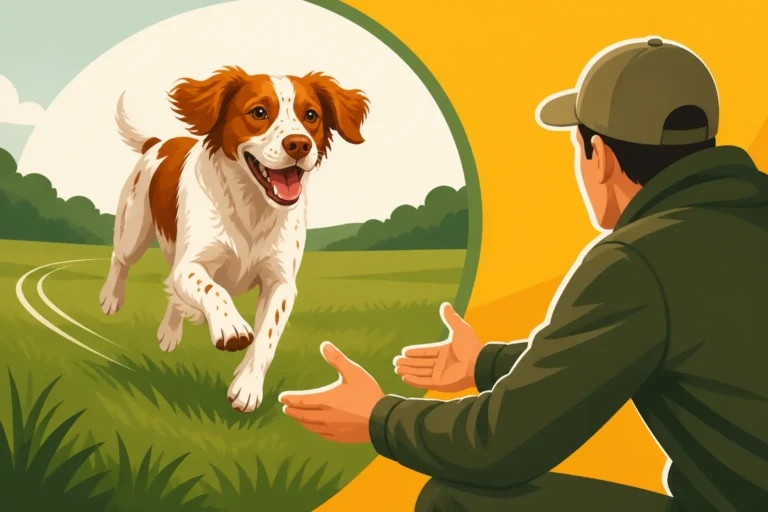
- Mandatory Check-ins: Institute a "check-in" command or signal. This isn't a full recall; it's simply a command for them to briefly acknowledge your presence and direction before continuing their hunt. A short, sharp whistle or a quick "Hey!" can work. Reward them when they look back and continue working in a more appropriate direction. This teaches them to hunt for the gun, rather than just for themselves.
- The Check Cord is Your Best Friend: For dogs just learning to manage their range, a 30-50 foot check cord is invaluable. Allow them to drag it while hunting. When they start to range too far, step on the cord or gently guide them back with it. This provides a physical boundary and teaches them the limits you expect without harsh corrections. Many different lengths and materials of check cords are available on Amazon.
- Controlled Exposure to Wide-Open Spaces: Don't start range training in a massive open field if your dog's instinct is to bolt. Begin in smaller, more enclosed areas where they physically can't get too far away. Gradually increase the size of the hunting area as they prove they can maintain an appropriate range.
Leveraging Technology and Positive Reinforcement
Modern tools can be incredibly helpful in managing and modifying a Brittany's range, especially when combined with consistent training.
- E-Collar for Communication (Not Punishment): An e-collar (electronic collar) can be a highly effective tool for communicating with your wide-ranging Brittany, but only if used correctly and humanely. It's not a punishment device, but an extension of your arm, allowing you to deliver low-level stimulation or a vibration to get your dog's attention for a recall or to remind them of their boundaries. You should introduce it gradually and always pair the stimulation with a known command and positive reinforcement. Never introduce an e-collar as the first means of teaching range control. Many reliable e-collar brands can be found on Amazon. Whether a Brittany Needs an E Collar delves deeper into its proper use.
- GPS Tracking Collars: While not a training tool for shortening range directly, a GPS collar provides immense peace of mind. Knowing exactly where your wide-ranging dog is, even if they've pushed a bit too far, allows you to relax slightly and give them a bit more rope, rather than constantly panicking and calling them back. This subtle shift in your anxiety can actually lead to better training outcomes, as you're less likely to over-correct.
- Terrain Manipulation: Actively seek out terrain that naturally encourages closer work. Hunting dense cover, thick woods, or areas with clear boundaries (like fences or roads) will naturally restrict your dog's range. This helps them build the habit of working closer before you attempt to apply it to more open areas.
- Work with a Pro: If you're consistently struggling, consider consulting a professional gun dog trainer. They have years of experience with Brittany range issues and can provide personalized strategies and hands-on guidance. Sometimes, an outside perspective and a fresh set of eyes can make all the difference. What a Professional Gun Dog Trainer Charges for a Brittany is a useful resource if you're considering this path.
Remember, training range into or out of a Brittany is a long-term commitment. Celebrate small victories, remain patient, and always prioritize your bond with your dog over rigid adherence to a specific range. Your Brittany's willingness to work with you is far more valuable than any arbitrary distance.
Disclaimer
This article is for general informational purposes only and does not constitute professional advice. Laws, prices and regulations vary by location and change over time. Consult a qualified professional for guidance on your specific situation.