How Reliable a Brittany’s Recall Is
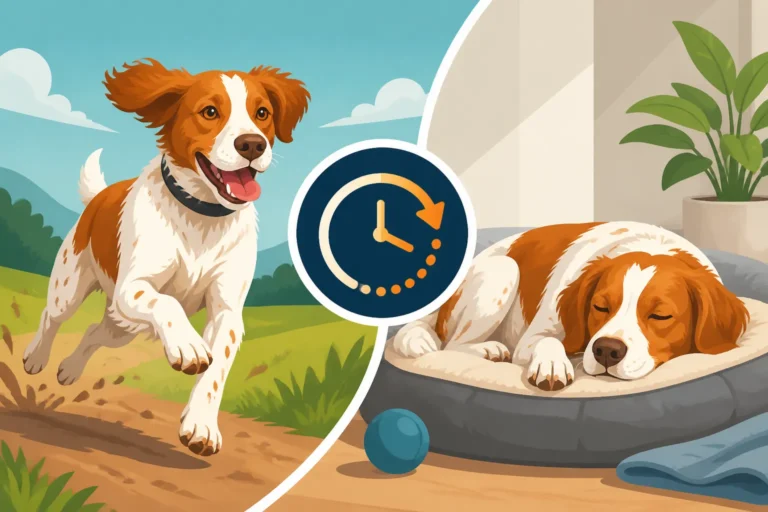
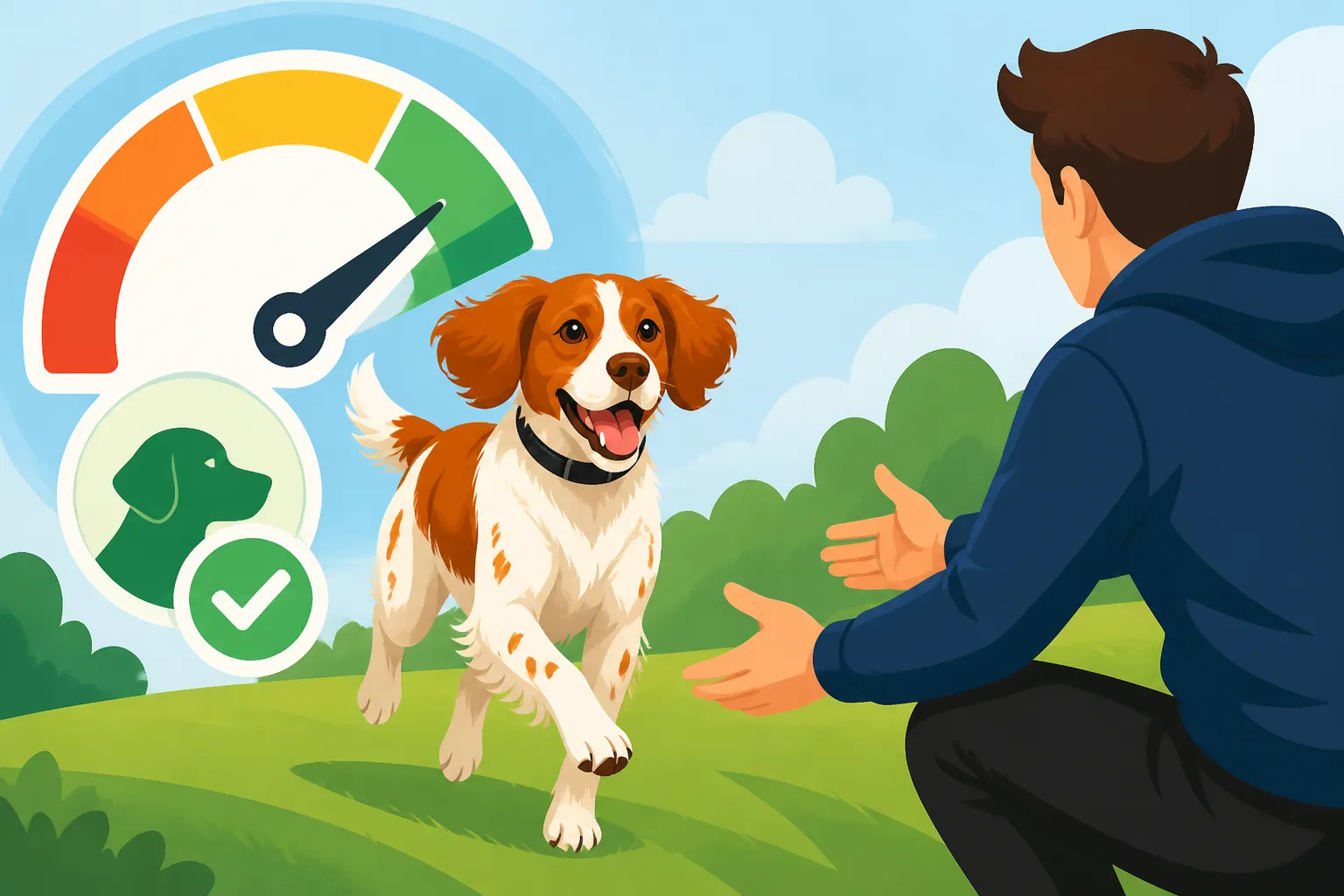
Oh, the Brittany recall! If you've ever watched your orange and white dynamo disappear over the horizon, nose to the ground, utterly deaf to your increasingly frantic calls, you know the unique frustration. It’s a common challenge for Brittany owners, particularly those who cherish their dog’s freedom in the great outdoors. This guide is here to walk you through why recall can be such a tightrope walk with our beloved bird dogs and, more importantly, how to build a reliable, life-saving recall that brings your Brittany bounding back to you, every single time.
Understanding the Brittany's Instincts and Recall Challenges
Let's be honest, our Brittanys are magnificent creatures, bred for a purpose that often puts them at odds with our desire for perfect obedience: hunting. Their instincts are powerful, ancient, and deeply ingrained, making recall training a nuanced dance rather than a simple command.
The Brittany's Inherent Drive to Hunt
Brittanys possess an incredibly strong prey drive. It's what makes them such exceptional bird dogs, capable of covering vast amounts of ground with their noses glued to the scent of game. This intense focus means that when a Brittany catches a scent or sees a bird flush, their entire world narrows to that singular pursuit. Everything else, including your voice, can simply fade into the background. It's not defiance; it's instinct overriding learned behavior, especially if that learned behavior hasn't been absolutely cemented.
Imagine being utterly engrossed in a thrilling novel or a complex puzzle; a faint call from another room might not even register until someone raises their voice. For a Brittany, the scent of a pheasant or the sight of a rabbit is a hundred times more captivating than any human-made distraction. This is why a simple "come" in the face of such a powerful draw can feel like asking them to ignore their very nature. Understanding this deep-seated drive is the first step in approaching recall training with empathy and realistic expectations.
Other breeds might be more handler-focused by design, always looking back for direction. But a Brittany, while wanting to please, also has a job to do, and sometimes, they believe they know how to do it best. Their drive to hunt is a double-edged sword: it makes them brilliant companions in the field, but it also necessitates a meticulous approach to recall training that acknowledges this powerful motivation.
The Independent Nature of a Bird Dog
While Brittanys are known for their biddability and desire to work with their handler, they also possess a distinct streak of independence, especially when engrossed in scent work. They are problem solvers in the field, air-scenting and ground-scenting to locate game. This means they are often making decisions and following their nose, which can lead them further and further away from you, sometimes out of sight. They aren't trying to escape; they're simply doing what they were bred to do.
This independent spirit, combined with their incredible athleticism and speed, means they can cover a surprising amount of ground in very little time. One minute they're quartering beautifully, the next they've picked up a hot trail and are off on an adventure of their own. This "selective hearing" often isn't malice, but rather their brain being completely consumed by the task at hand – a task they find incredibly rewarding. It's vital to recognize that this independence is a breed characteristic, not a flaw, and plan your training accordingly.
For a Brittany, the chase, the discovery, and the point are the ultimate rewards. Interrupting that with a call to "come" can feel like cutting short their greatest joy. Our job as owners is to make returning to us even more rewarding than whatever fleeting excitement they've found. This is where consistent, positive training comes into play, ensuring that the bond and the reward from you always outweigh the allure of the wild.
Why "Come" Can Be So Difficult to Enforce
The core difficulty in enforcing "come" with a Brittany often boils down to a conflict of motivators. On one side, you have the primal pull of a bird, a rabbit, or an intriguing scent—an instinctual, self-rewarding experience. On the other, you have your voice, which, if not consistently paired with something overwhelmingly positive, can simply be too weak a signal in a high-distraction environment. Many owners inadvertently train their dogs that "come" either means the fun is over, or that the command isn't actually mandatory until repeated multiple times, slowly eroding its effectiveness.
Consider how often we call our dogs only when it's time to go home, or when they've done something "wrong." If "come" consistently predicts the end of a good time, or a scolding, why would a smart dog eager to hunt rush back? This creates a negative association that significantly undermines the command's reliability. Instead of being an exciting invitation, "come" becomes a buzzkill, and the Brittany, being clever, learns to avoid it.
Furthermore, lack of consistent reinforcement from owners can be a huge hurdle. We often call, and when the dog eventually meanders back, we forget to celebrate. The Brittany needs to know that returning to you is the single best decision they can make at that moment. Without that clear, overwhelming reward, the internal debate between the bird and the handler is easily won by the bird.
Building a Rock-Solid Foundation: Early Recall Training
The journey to a reliable recall starts long before your Brittany ever sees a field. It begins in puppyhood, in low-distraction environments, and it's built on a foundation of positive reinforcement and consistent expectations.
Starting Early with Puppy Recall
The absolute best time to start recall training is the moment your Brittany puppy comes home. Begin indoors, in a quiet, familiar space where there are no competing distractions. Make "come" the most exciting word your puppy hears. Get down on their level, use an enthusiastic, high-pitched voice, and clap your hands or tap the floor to get their attention. When they take even one step towards you, shower them with praise, a fantastic treat (think tiny pieces of cheese or cooked chicken), and lots of playful attention. The goal is to make coming to you the most fun and rewarding game in the world.
These early sessions should be short, lasting only a minute or two, but frequent throughout the day. Never call your puppy for something unpleasant. For instance, if it's time for a nail trim or a vet visit, simply go get them without using your recall command. You want "come" to always predict something wonderful. This initial conditioning builds a powerfully positive association with the command, teaching your young Brittany that responding to your call is always a good idea. Remember, a Brittany puppy's brain is a sponge, and these early experiences set the stage for their future responsiveness. Don't forget that Whether a Brittany Puppy Should Be Socialized Heavily also ties into building confidence and responsiveness in various environments.
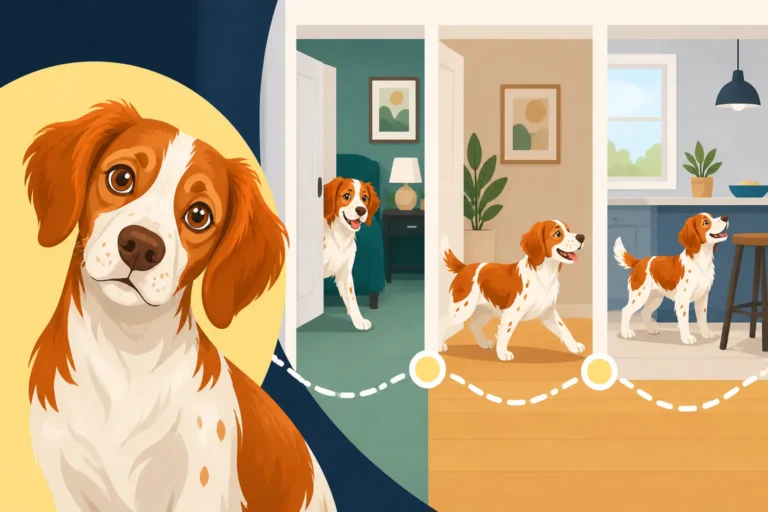
As your puppy grows, gradually introduce more space. Move from room to room, calling them to follow. Hide and call, making it a game of "find me" that ends with joyous praise and treats. The more positive repetitions you can build in these early, easy stages, the stronger the foundation will be when distractions inevitably increase. It’s all about creating an unshakeable belief in your Brittany that you are the source of all good things, and coming to you is always the fastest way to get them.
The "Come" Command as a Celebration, Not a Punishment
This point cannot be stressed enough: your recall command must always be associated with a positive, celebratory experience. If "come" means the end of playtime, being put in their kennel, or a trip to the vet, your smart Brittany will quickly learn to hesitate, or worse, ignore you. Think of "come" as an invitation to something fantastic, not a demand to cease and desist.
To reinforce this, occasionally call your Brittany to you in the middle of a fun activity, give them a super high-value treat, lots of enthusiastic praise, then immediately release them back to play. This teaches them that "come" doesn't always mean the fun is over; sometimes, it's just a quick pit stop for a bonus reward. This variable reinforcement keeps them guessing and eager to respond, wondering what amazing thing will happen next.
Furthermore, never scold or punish your Brittany if they take a long time to come back, or if they initially ignore you. If they finally make their way to you, even grudgingly, you must still celebrate their return. Any negative reaction from you upon their arrival will only reinforce their reluctance to come back next time. Patience and unwavering positivity are your best friends in recall training, especially given How Sensitive a Brittany Is to Correction. Their trust and willingness to respond are far more valuable than a moment of expressing your frustration.
Mastering Recall in Low-Distraction Environments
Once your Brittany is reliably coming to you in the house, it's time to slowly and carefully introduce distractions. This progression is crucial and often where owners go wrong by moving too quickly. Start in a fenced yard, where you have control over the environment. Practice short bursts of recall, always ending on a positive note. Then, move to a very quiet park or open field, but always use a long line or check cord at this stage.
A check cord, typically 20-50 feet long, is an invaluable tool for extending your control without the dog actually being off-leash. Let your Brittany explore on the long line, giving them a sense of freedom, but keeping you connected. Periodically, call them back, reel them in gently if they hesitate (don't yank!), and reward them generously. This teaches them the expectation of recall even when they're distracted by interesting smells or sights, without the risk of them making a successful run for it. What a Fifty Foot Check Cord Costs a Brittany Owner might surprise you, but it's an investment in safety.
The key here is to set your Brittany up for success. Don't call them when they are deeply engrossed in something; wait for a momentary lull in their focus. Gradually increase the level of distraction: a squirrel running past, a distant dog, a new person. Always be ready with your highest-value treats and your most enthusiastic praise. The more successful repetitions you can build in these controlled, low-to-medium distraction settings, the more ingrained the habit of returning to you will become, even when the temptations grow stronger.
Advanced Recall: Proofing and High-Distraction Environments
Once your Brittany has a solid understanding of recall in less stimulating areas, it's time to really proof that command against the powerful distractions they'll encounter in real-world scenarios, especially in the field. This is where the rubber meets the road for a bird dog.
Gradual Introduction of Higher Distractions
This stage requires immense patience and strategic planning. You're moving from a quiet park to environments that might mimic hunting scenarios: fields with exciting scents, other dogs playing, or even the distant sound of gunfire if you plan to hunt. The mistake many owners make is going from zero to sixty too fast. Instead, think of it as a gradual incline. Start by introducing one mild distraction at a time, keeping your Brittany on a long line. Maybe another person quietly walks by, or a different dog is visible at a distance. Call your Brittany back when they notice the distraction but haven't fully committed to it yet.
Always aim for success. If your Brittany is too engrossed, don't call them. Wait for a moment when their focus is slightly less intense, or use a sound to interrupt their focus before giving the "come" command. As they respond reliably to these minor distractions, slowly increase the intensity and number of competing stimuli. This might mean practicing near a training field where birds are being worked (but not your birds initially) or in a park during a busier time.
The long line remains your best friend here. It provides a safety net and allows you to enforce the command with a gentle tug if needed, preventing your Brittany from self-rewarding by ignoring you. Each successful recall in the face of increasing temptation builds your dog's understanding and reinforces the idea that you are the most important part of their environment, even when exciting things are happening elsewhere.
The Role of the Check Cord in the Field
For a Brittany, especially a hunting dog, a check cord isn't just a training aid; it's an indispensable safety tool and a critical part of teaching reliable recall in vast, open spaces. Imagine your Brittany working How Far an American Brittany Ranges—hundreds of yards away, hot on a scent trail. A voice command alone is often futile. A 30 to 50-foot check cord allows your dog to range and explore, feeling the freedom they crave, while still providing you with a physical connection and the ability to intervene.
The check cord isn't for yanking your dog back to you punitively. Instead, it's a gentle reminder and a way to physically prevent them from practicing the undesirable behavior of ignoring you. When you give the "come" command and your Brittany hesitates or turns away, a gentle, consistent pressure on the check cord reinforces the verbal command. As they respond to the pressure and move towards you, release the pressure immediately, praise, and reward lavishly. This teaches them that pressure means "come," and coming to you releases that pressure and brings good things.
Using the check cord consistently in varied field environments helps generalize the recall command. It teaches your Brittany that "come" applies regardless of the exciting smells or sights they encounter. It's a proactive measure that prevents them from developing the habit of running off and self-rewarding, which is the fastest way to ruin a recall. Many trainers swear by the check cord as the bridge between controlled obedience and off-leash reliability.
Developing an Emergency Recall Word
Even with the best training, there are moments when you need an absolutely foolproof recall, an emergency button for critical situations. This is where an "emergency recall" comes in. This isn't your everyday "come." This is a unique, one-time-use, high-stakes command reserved only for situations where your dog's safety is at risk, such as running towards a busy road, a dangerous animal, or disappearing into thick, unfamiliar cover.
Choose a word or phrase that you rarely use, something distinct and sharp, like "HERE!" or "FRONT!" or a series of rapid whistles. This command is never to be diluted by casual use. When training it, make it the most unbelievably rewarding experience imaginable. Use the absolute highest-value treats your Brittany has ever encountered—think steak, chicken liver, or a favorite squeaky toy they only get for this command. Practice it in very controlled environments initially, then sparingly in mild distractions.
The key is that this command carries such immense weight and reward that it cuts through any distraction, no matter how powerful. Because it's used so rarely, and the reward is so spectacular, your Brittany will associate it with an immediate, overwhelming incentive to return. If you ever have to use your emergency recall in a real-life situation, and your dog responds, the reward upon their return must be truly epic. This helps maintain the command's pristine status and ensures it remains your ultimate safety net.
Tools and Techniques to Support a Brittany's Recall
While consistency and positive reinforcement are the bedrock of recall training, certain tools and techniques can significantly enhance your efforts, especially with a high-drive breed like the Brittany. These aren't shortcuts, but rather aids to communication and safety.
Utilizing E-Collars for Long-Range Recall
The term "e-collar" can conjure negative images, but when used correctly and humanely, it's a sophisticated communication tool, not a punishment device. For a wide-ranging Brittany in the field, where verbal commands can be lost to wind, distance, or prey drive, an e-collar can provide consistent, clear, and immediate feedback. It allows you to maintain communication over distances that would be impossible with voice alone. Whether a Brittany Needs an E Collar is a question many hunting dog owners grapple with.
Proper e-collar training involves carefully conditioning your Brittany to associate a low-level stimulation (often described as a "tap" or vibration, rather than a "shock") with a known command, like "come." The dog learns that the stimulation is a cue to perform the command, and responding correctly turns off the sensation. This should always be taught under the guidance of a professional trainer experienced with positive e-collar conditioning for gun dogs. Never introduce an e-collar without understanding its proper use, as misuse can create fear and aversion.
You can find a variety of reliable e-collars on Amazon, but remember that the equipment is only as good as the training behind it. When conditioned properly, the e-collar can become an extension of your voice, offering a subtle yet undeniable cue for your Brittany to break off a chase or turn back towards you, even when they're far out in the field. This can be a game-changer for safety and control, allowing your Brittany to enjoy more freedom while you maintain peace of mind.
Whistles and Hand Signals as Recall Aids
Beyond verbal commands and e-collars, whistles and hand signals offer powerful supplementary tools for recall, especially in environments where your voice might not carry or could be misinterpreted. A whistle produces a consistent sound that cuts through wind and distance far better than a human voice, and it doesn't carry the emotional inflection that your voice might, making it a clear, unambiguous signal.
Training with a whistle involves pairing a specific whistle command (e.g., a series of short toots) with your verbal "come" and rewarding generously. Start in low-distraction environments, just like with verbal recall, and gradually increase the distance and distractions. Your Brittany will learn to associate that distinct whistle sound with the immediate need to return for a reward. This can be particularly effective when your dog is out of sight, as the sound is more directional and penetrating than yelling.
Hand signals are another excellent layer of communication. You can teach a consistent hand gesture (like patting your leg or a sweeping arm motion) to mean "come." Dogs are highly visual creatures, and these signals can be invaluable when your dog is close enough to see you but too far to hear your voice clearly, or in noisy environments. Consistency across all commands—verbal, whistle, and hand signal—will only strengthen your Brittany's overall responsiveness.
The Power of High-Value Rewards and Variable Reinforcement
For a Brittany, especially one with a strong prey drive, the reward for returning must be truly enticing. What constitutes a "high-value" reward will vary from dog to dog, but generally, it's something they absolutely adore. This could be tiny pieces of real meat (like hot dogs, cooked chicken, or liver), cheese, a favorite squeaky toy, or even a vigorous game of tug. The key is that it's something they value above all else, especially above whatever distraction is pulling them away.
In the early stages of training, and whenever you're proofing recall in new or challenging environments, use these high-value rewards every single time your Brittany comes when called. This creates a strong, positive association. As their reliability improves, you can transition to a variable reinforcement schedule. This means you don't reward every time, but you still reward frequently and unpredictably. Sometimes it's a huge jackpot (multiple treats, lots of praise, a quick game), other times it's just a single treat and praise.
Variable reinforcement keeps your Brittany guessing and eager to respond, much like how slot machines keep people playing. They never know when the big payout is coming, so they keep trying. This method helps prevent your Brittany from becoming dependent on a treat every single time and strengthens the behavior because they're always hoping for that amazing reward. The ultimate goal is for the act of returning to you and the bond you share to become a powerful reward in itself.
Common Recall Mistakes and How to Avoid Them
Even with the best intentions, it's easy to fall into common traps that undermine your Brittany's recall. Recognizing these pitfalls is the first step toward correcting them and building a truly reliable response.
Inconsistent Training and Expecting Too Much, Too Soon
One of the most detrimental mistakes in recall training is inconsistency. If you only practice "come" occasionally, or if you sometimes enforce it and other times let it slide, your Brittany will quickly learn that it's an optional command. Dogs thrive on predictability and clear expectations. If your recall is sometimes ignored without consequence, the value of the command diminishes rapidly. Every single time you call your Brittany and they don't come, they've just practiced ignoring you, making it harder next time.
Equally damaging is expecting too much, too soon. Owners often move from a distraction-free home environment straight to an open field with squirrels, other dogs, and enticing smells, then get frustrated when their Brittany fails. This isn't setting your dog up for success; it's setting them up to fail. Training must be a gradual process, systematically introducing distractions and only progressing when your Brittany is consistently reliable at the current level.
Patience is paramount. A Brittany's high prey drive means they need more repetitions and more proofing than many other breeds. Rushing the process will only lead to frustration for both of you. Stick to short, frequent training sessions, always ending on a positive note. Remember that How Long a Brittany's Training Session Should Be is not about duration, but quality and consistency. If you find yourself getting frustrated, it's time to take a step back to an easier environment where success is guaranteed, or end the session.
Calling Your Brittany for Unpleasant Experiences
This mistake, though seemingly minor, can quickly erode your Brittany's willingness to respond to recall. If the only times you call your dog are to end a fun outing, put them in their crate, or take them for a dreaded bath or vet visit, they will inevitably form a negative association with the "come" command. Why would they rush back to you if it always means the good times are over or something unpleasant is about to happen?
Instead, make "come" a predictor of good things. Call your Brittany, reward them lavishly, and then let them go back to what they were doing. Do this frequently throughout the day, randomly, so they never quite know if "come" means the fun is over or if it's just a quick, rewarding pit stop. When it is time to end an activity or do something they might not enjoy, simply walk over to them and calmly retrieve them without using your recall command.
This intentional avoidance of pairing "come" with negative experiences preserves the command's positive emotional charge. It ensures that when you say "come," your Brittany associates it with treats, praise, affection, or the opportunity for more play, rather than dread or the end of their freedom. This small shift in approach can make a monumental difference in the reliability of your recall.
Over-reliance on One Method or Tool
While tools like check cords and e-collars are incredibly useful, an over-reliance on any single method can limit your Brittany's overall responsiveness and your ability to adapt to different situations. For instance, if your Brittany only comes when they hear the e-collar tone, what happens if the battery dies or you forget it? Or if they only respond to treats, what if you run out in the field?
A truly reliable recall for a Brittany involves a multifaceted approach. It means integrating verbal commands, whistle signals, hand gestures, high-value rewards, and, if appropriate, an e-collar, into a cohesive training system. Each tool should reinforce the others, creating layers of communication that your dog understands. This ensures that even if one method is unavailable or ineffective in a specific situation, you have other options your Brittany has been trained to respond to.
The goal isn't just for your Brittany to come back, but for them to come back willingly and eagerly regardless of the cues used. This means consistently pairing all cues with positive reinforcement and regularly practicing in varied environments. By developing a comprehensive training strategy, you empower your Brittany with a deep understanding of what "come" means, ensuring they are responsive to you in almost any circumstance.
Maintaining a Reliable Recall Throughout Your Brittany's Life
Recall isn't a one-and-done training exercise; it's a lifelong commitment. Just like any skill, it requires regular practice and maintenance to remain sharp, especially for an intelligent and driven breed like the Brittany.
Continuing Education and Refreshers
Even the most impeccably trained Brittany can get a little rusty if recall isn't practiced regularly. Think of it like a muscle: if you don't use it, it weakens. For a high-energy, high-drive dog that thrives on stimulation and exploration, those instincts are always simmering beneath the surface, ready to take over if the recall command isn't consistently reinforced. This means continuing education isn't just for puppies; it's for adult and senior dogs too.
Integrate short, fun recall refreshers into your daily routine. Call your Brittany from across the house for no reason other than a quick treat and praise. When you're out in a safe, fenced area, practice a few recalls during playtime, always releasing them back to their activity afterward. These mini-sessions keep the positive association strong and prevent the command from becoming stale. As your Brittany enters The Age a Brittany Is Considered Senior, you might find their speed or enthusiasm changes, but the command still needs to be reinforced, perhaps with slightly different motivators or in gentler environments.
Life circumstances also change. Perhaps you move to a new area with different wildlife, or your dog spends time with a sitter. Regular refreshers ensure that no matter the situation, your Brittany's default response to "come" is to turn and return to you. It's an investment in their safety and your peace of mind, proving that a reliable recall is a dynamic, evolving skill.
Recognizing and Adapting to Environmental Factors
A truly reliable recall also involves your ability as the handler to understand and adapt to various environmental factors. The same recall that works perfectly on a calm, scent-free day might struggle when the wind is blowing scent across a field teeming with birds. Factors like weather, the density of cover, the type of game scent present, and the general level of distraction all play a significant role in your Brittany's responsiveness.
Learn to "read" your Brittany. Are they highly stimulated by a particular scent? Is their body language indicating they're about to lock onto something? Knowing these cues allows you to be proactive. In challenging environments, it might mean keeping your Brittany on a longer line, using your e-collar proactively as a reminder cue before they're fully committed to a chase, or simply choosing a less distracting area for off-leash exercise until your training is bulletproof in high-stimulus settings.
Adaptability means understanding your dog's limits and your own. There will be days, or specific locations, where the risk of an ignored recall is too high. On those days, a long line is not a failure; it's a smart, responsible management tool. The more you observe your Brittany and the environment, the better equipped you'll be to make decisions that ensure both their safety and the consistent success of your recall efforts.
Seeking Professional Guidance When Needed
Sometimes, despite your best efforts, recall challenges persist. This is where the invaluable expertise of a professional gun dog trainer or a certified behaviorist comes into play. They can offer a fresh perspective, identify subtle issues in your technique, and introduce advanced strategies tailored to your Brittany's specific needs and your lifestyle. They might recommend specific drills, help you properly introduce tools like e-collars, or work through deeply ingrained habits.
A professional trainer can provide structured lessons that systematically increase distractions and proof the recall in real-world scenarios, often in environments specifically designed for gun dog training. They can observe your interactions with your Brittany and pinpoint areas for improvement, both in your handling and your dog's response. Programs like those offered by BAXTER & Bella provide comprehensive, step-by-step online training guides and support that can be a lifesaver for busy owners looking for structured help.
Remember, seeking help is a sign of a responsible owner, not a failure. Investing in professional guidance can dramatically improve your Brittany's recall, enhance your bond, and ultimately allow your dog to enjoy more safe, off-leash freedom. What a Professional Gun Dog Trainer Charges for a Brittany can vary, but the peace of mind and the joy of a truly reliable recall are often priceless.
Disclaimer
This article is for general informational purposes only and does not constitute professional advice. Laws, prices and regulations vary by location and change over time. Consult a qualified professional for guidance on your specific situation.