How Sensitive a Brittany Is to Correction
One of the most common frustrations Brittany owners face when starting out with their spirited companion is figuring out the "right" way to correct unwanted behaviors. Many of us have come from a background with more dominant breeds, or perhaps no dogs at all, and assume that a firm hand is the only path to a well-behaved dog. However, with a Brittany, this approach can quickly lead to a confused, shut-down, or even fearful dog. This guide will delve into the unique sensitivity of the Brittany Spaniel, explaining why harsh corrections are detrimental, and offering empathetic, effective methods to train your beloved bird dog.
The Brittany's Unique Temperament and Sensitivity
Brittanys are renowned for their intelligence, eagerness to please, and boundless energy, but they also possess a distinct sensitivity that sets them apart from many other hunting breeds. Understanding this inherent trait is crucial for successful training and building a lasting bond.
Their Innate Desire to Please
Ask any Brittany owner, and they'll likely tell you their dog lives to make them happy. This isn't just a cute saying; it's a fundamental aspect of their personality. Brittanys thrive on positive interaction and praise. They are hard-wired to work with you, not just for you. When you're trying to teach a command, or even just working on manners around the house, your Brittany is constantly looking to you for approval. This strong desire to please means they are incredibly receptive to positive reinforcement, sometimes to a degree that surprises new owners. A simple "good dog!" or a gentle scratch behind the ears can be more motivating than any stern reprimand. Because they are so tuned into your emotional state and eager to do the right thing, harsh corrections can be truly heartbreaking for them, often causing them to withdraw or become anxious rather than understanding what you want. This is a breed that genuinely wants to do well for you. To learn more about their general disposition, check out What a Brittany's Temperament Is Really Like.
Brittanys and Human Emotions
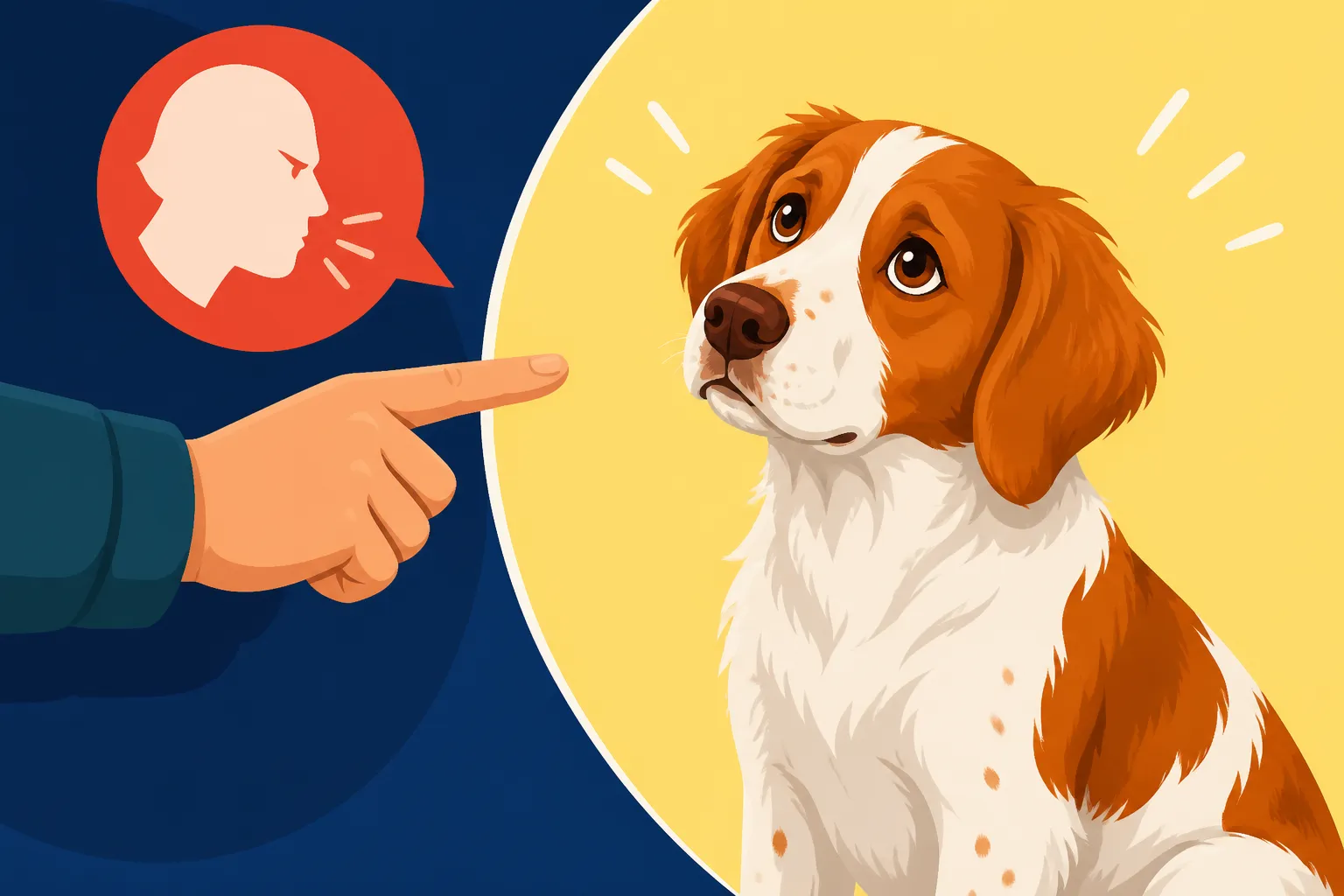
It’s almost spooky how well Brittanys seem to read our emotions, isn't it? They pick up on subtle cues—a shift in your tone, the tension in your shoulders, even a frustrated sigh. This incredible attunement means that even a slightly raised voice or an impatient gesture can register as a significant reprimand to them. They don't just react to the correction itself; they react to the feeling behind it. If you're stressed or angry, your Brittany will feel that keenly. This makes them wonderfully empathetic companions, but it also places a greater responsibility on us, as owners, to maintain calm and patience during training. A moment of frustration from you might set your Brittany back days, as they process not just the correction, but the perceived disappointment from their favorite human.
Why They Are Called "Soft"
You'll often hear Brittanys described as "soft" dogs in the hunting world, and this term perfectly encapsulates their sensitive nature. It doesn't mean they're weak or incapable; it means they don't respond well to heavy-handed training methods. A "soft" dog needs gentle guidance, positive reinforcement, and consistent, fair expectations. They fold under pressure, much like a delicate fabric. Unlike some more robust breeds that might shrug off a sharp leash correction or a loud verbal reprimand, a Brittany will internalize it. This can manifest as shyness, a refusal to perform, or a general wariness around their handler. Understanding Why a Brittany Is Called Soft is fundamental to appreciating their unique needs and tailoring your training approach accordingly. They are not trying to be difficult; they are simply reacting to stimuli in a way that their sensitive personality dictates.
The Detrimental Impact of Harsh Corrections
Given their sensitive nature, it's probably no surprise that harsh corrections can have profound and lasting negative effects on a Brittany. Many traditional training methods that rely on intimidation or pain simply do not work for this breed and often create more problems than they solve.
Physical and Psychological Fallout
When you use harsh methods like yelling, jerking on a leash, or physically punishing your Brittany, the immediate goal might be to stop an unwanted behavior. However, the long-term consequences are far more damaging. Physically, you risk injury, especially to their delicate necks and throats if using certain types of collars incorrectly. Psychologically, the damage can be even deeper. A Brittany subjected to harsh corrections can develop anxiety, fear, and a generalized mistrust of humans. They might become timid, constantly cowering or trying to escape, or they might become reactive, lashing out in fear. Instead of learning what to do, they learn to be afraid of you and the training environment. Imagine a child learning math, but every time they make a mistake, they're shouted at. They won't learn math; they'll learn to fear the classroom and the teacher. The same applies to your Brittany. You might even observe them shutting down completely, refusing to engage, which is a common sign of emotional distress. To understand how they process these negative experiences, read about What a Brittany Does When It Is Corrected Too Hard.
Developing Gun Shyness or Fear
For a hunting breed like the Brittany, developing gun shyness is one of the most tragic outcomes of improper handling. A Brittany's natural bird drive is immense, but their sensitive hearing and temperament mean that loud noises, especially if introduced incorrectly or associated with fear, can be terrifying. If a puppy experiences a loud noise, such as a gun shot, while already stressed, punished, or in an unfamiliar environment, it can imprint a negative association that is incredibly difficult, if not impossible, to overcome. They may refuse to hunt, tremble at the sound of fireworks, or even become generally noise-phobic. This is a prime example of how a harsh approach—or even just a careless one—can destroy a dog's natural instincts and potential. It's vital to remember that a dog that is consistently corrected harshly can develop a general fear of new experiences, including the very sounds they need to embrace in the field. Be aware of Signs a Brittany Is Becoming Gun Shy and avoid situations that could lead to this.
Breaking Down Trust
Perhaps the most heartbreaking consequence of harsh corrections is the erosion of trust. Your Brittany sees you as their leader, their protector, and their most valued companion. When you introduce fear or pain into that relationship, you betray that trust. A dog that doesn't trust its handler will be reluctant to work with them, explore new environments, or respond reliably to commands. They might start avoiding eye contact, refusing to come when called, or trying to escape rather than engage. Building trust takes time and consistency, but it can be shattered in moments of harshness. Once that trust is broken, it's an uphill battle to rebuild it, sometimes taking months or even years of dedicated positive work. A Brittany remembers negative experiences deeply; How Long a Brittany Remembers a Bad Session is often longer than we realize. This breed is also known for its ability to hold a grudge, or at least remember perceived injustices. Can a Brittany forgive a mistake? Explore Whether a Brittany Forgives a Mistake to understand the depth of their emotional memory.
Effective, Positive Reinforcement Techniques for Brittanys
So, if harsh corrections are out, what's in? For a Brittany, the answer lies firmly in positive reinforcement, clear communication, and consistent, patient guidance. These methods leverage their natural desire to please and build a confident, happy working relationship.
The Power of Praise and Rewards
Brittanys absolutely light up with praise. A cheerful "Yes!" or "Good boy!" delivered with enthusiasm, along with a high-value treat, is often all the motivation they need. Positive reinforcement focuses on rewarding desired behaviors, making it more likely your Brittany will repeat them. Instead of waiting for them to do something wrong and then punishing them, you actively seek out opportunities to reward them for doing something right.
For example, if your Brittany puppy jumps on you when you come home, don't yell or push them away. Instead, ignore the jumping. The moment all four paws are on the floor, even for a second, calmly say "Good dog!" and offer a treat. Repeat this consistently, and your Brittany will quickly understand that politeness earns rewards, while jumping gets no attention. High-value treats, such as small pieces of cooked chicken or cheese, can work wonders, especially in the early stages of learning. Don't underestimate the power of a favorite toy either; a quick game of tug or fetch can be a fantastic reward for a job well done.
Consistent, Clear Communication
One of the biggest hurdles in dog training isn't the dog, but our own inconsistency. Brittanys thrive on predictability and clear signals. They can't read our minds, so we need to be precise with our commands and expectations. Use consistent verbal cues ("sit," "stay," "come") and clear hand signals every single time. Avoid confusing them with multiple words for the same action or giving a command repeatedly without allowing them time to process.
If you're teaching "whoa," for instance, every time you use the command, it should mean exactly the same thing: freeze in place. Don't use "whoa" to mean "slow down" one minute and "stop" the next. Everyone in the household needs to be on the same page. If one person allows counter-surfing and another punishes it, your Brittany will be confused and stressed. Consider online training programs like those offered by BAXTER & Bella, which emphasize consistent communication and positive methods, helping families establish a unified training approach. This consistency helps build a strong foundation of understanding, making your Brittany a much more Biddable a Brittany Is.
Redirection and Management
Instead of constantly correcting, a more effective strategy for Brittanys is redirection and management. This involves preventing unwanted behaviors from happening in the first place, or steering your dog towards an appropriate alternative.
- Prevention: If your puppy chews on furniture, don't just wait for it to happen. Provide plenty of appropriate chew toys. If they still go for the furniture, interrupt them with a cheerful sound, then immediately offer a chew toy and praise them when they take it.
- Management: This involves controlling the environment. If your Brittany countersurfs, don't leave tempting food on the counter. If they pull on the leash during walks, use a front-clip harness or a head halter that makes pulling less rewarding, rather than constantly yanking on their neck.
- Redirection: If your Brittany is barking excessively at the mail carrier, instead of yelling at them, call them to you, ask for a sit, and reward them for focusing on you instead of the window. This teaches them an alternative, positive behavior. This proactive approach avoids many scenarios where harsh corrections might otherwise be considered.
Tools and Aids for Gentle Correction
While the emphasis is on positive reinforcement, certain tools and aids can be incredibly helpful in guiding your Brittany without resorting to harshness. The key is knowing how to use them correctly and understanding their purpose.
Long Lines and Leashes
A good quality leash is your primary communication tool when out and about, and it's essential for safety and control. For a sensitive Brittany, a lightweight, comfortable leash is ideal. Avoid thin, harsh leashes that dig into your hands or create sharp pressure on your dog's neck. For more freedom in a controlled environment, a long line (15-30 feet) is invaluable. It allows your Brittany to explore and practice recall from a distance, without you losing control.
Imagine you're at a park, practicing recall. Your Brittany gets distracted by a squirrel. Instead of yelling or getting frustrated, you can gently apply pressure to the long line, reel them in a bit, and then reward them lavishly when they turn back to you. This teaches them to respond to gentle pressure and to check in with you, rather than seeing the leash as a punishment. It's about guiding, not forcing. When using a long line, always ensure it's attached to a harness, not just a collar, to prevent neck injuries if they hit the end of the line quickly. For outdoor adventures, having a reliable leash and a long line is crucial. You can find many durable options on Amazon that can stand up to the rigors of field work.
Whistles and Hand Signals
Brittanys are incredibly responsive to whistles and hand signals, especially in the field where verbal commands might be lost in the wind or over distance. A whistle provides a consistent, unmistakable sound that cuts through distractions. Hand signals add a visual cue, which can be particularly useful if your dog is far away or if they start to lose their hearing as they age.
Training with a whistle and hand signals from a young age can be very effective. For example, a single pip on the whistle could mean "come," while a sustained whistle could mean "whoa." A raised hand might signal "stop," and a sweep of the arm could mean "go find." The beauty of these tools is their neutrality; they don't carry the emotional baggage that a frustrated human voice might. They are simply clear, consistent signals that your Brittany learns to associate with specific actions and, hopefully, positive outcomes. Building this kind of non-verbal communication strengthens your bond and makes your Brittany a much more polished and responsive working dog.
Training Collars and Their Proper Use
When people talk about "correction," often the first thing that comes to mind are various types of training collars. For a sensitive Brittany, choosing the right collar and using it correctly is paramount. Choke chains and prong collars, if used improperly, can cause significant physical and psychological damage to a Brittany, particularly given their soft nature. These tools can quickly escalate from a "correction" to punishment, causing fear and shut-down.
However, certain training collars, when used judiciously and correctly, can be valuable aids in communication, not punishment. A flat buckle collar is standard for identification and everyday walks. For leash manners, a front-clip harness can be excellent as it redirects pulling without putting pressure on the neck. Head halters (like a Halti or Gentle Leader) also offer good control by guiding the dog's head, which often directs the body.
The use of e-collars (electronic collars) is a contentious topic, but for a working Brittany, they can be a highly effective tool if introduced and used correctly. The key is to think of an e-collar as an extension of your arm, delivering a mild, consistent tap (often referred to as a "stim") rather than a shock. It's used for communication and reinforcement of known commands, not punishment. It should never be used for the first introduction of a command, nor should it ever be used to scare or hurt your dog. The Brittany should already understand the command verbally, and the e-collar stim should be at the lowest possible level the dog perceives, acting as a reminder or an attention-getter. Properly introduced, a Brittany should show no fear of the e-collar. It's crucial to seek guidance from a professional trainer experienced with sensitive hunting breeds before attempting to use an e-collar. To learn more about this tool, consider Whether a Brittany Needs an E Collar.
Here's a quick comparison of some common training aids:
| Training Aid | Purpose | Brittany Suitability | Key Considerations |
|---|---|---|---|
| Flat Buckle Collar | Everyday wear, ID, light leash guidance | High | Safest, but offers minimal control for strong pullers. |
| Front-Clip Harness | Leash pulling, general walks | High | Discourages pulling by redirecting the dog's momentum. |
| Head Halter | Strong pullers, impulse control | High | Gentle control over the head, requires positive introduction. |
| Long Line | Off-leash practice, recall training | High | Allows freedom with safety, best used with a harness. |
| Whistle | Consistent recall, "whoa" in the field | High | Clear, neutral signal, cuts through distractions. |
| E-collar | Off-leash obedience, long-distance commands | Moderate (Expert Use) | Must be introduced positively at low levels by a professional. |
| Choke Chain/Prong | Traditional correction (often misused) | Low | High risk of physical injury and psychological damage for Brittanys. |
When to Seek Professional Guidance
Even with the best intentions and a commitment to positive methods, you might encounter challenges that feel beyond your ability to handle. That's perfectly normal, and it's a sign of a responsible owner to know when to call in the cavalry.
Recognizing Stubborn or Fearful Behaviors
Sometimes, what appears as "stubbornness" in a Brittany is actually a manifestation of fear, confusion, or even an underlying health issue. A Brittany that suddenly refuses to perform a known command, or exhibits new behaviors like hiding, growling, or excessive barking, might be signaling distress. For instance, if your typically outgoing Brittany starts to shy away from strangers or becomes withdrawn after a particular incident, it could be a sign of a deeper fear response rather than defiance. Similarly, if your dog seems to forget commands they once knew, it could be due to stress, a change in environment, or even something medical. If you notice a persistent pattern of behavior that worries you, or if your attempts at positive reinforcement aren't yielding results, it's time to seek expert help.
Finding a Brittany-Experienced Trainer
The key to professional help is finding the right professional. Not all dog trainers are created equal, and not all training philosophies suit a Brittany. Look for a trainer who emphasizes positive reinforcement, force-free methods, and has specific experience with sporting breeds or, even better, Brittanys themselves. A trainer who understands the "soft" nature of the breed will know how to motivate without intimidating and will prioritize building confidence and trust.
Don't be afraid to interview trainers. Ask about their methods, their philosophy, and their experience with sensitive dogs. Ask for references. A good trainer will be transparent and happy to discuss their approach. A trainer who immediately suggests harsh corrections or advises "dominance" methods is likely not the right fit for your Brittany. Reputable organizations like the Association of Professional Dog Trainers (APDT) or the Certification Council for Professional Dog Trainers (CCPDT) can be good starting points for finding qualified individuals. Many online programs, such as BAXTER & Bella, also offer virtual consultations or comprehensive curricula that can guide you.
Addressing Specific Behavioral Challenges
While this guide focuses on general correction sensitivity, some behavioral challenges warrant specialized intervention. These might include:
- Aggression: Any form of aggression, whether towards people or other animals, needs immediate professional attention from a certified veterinary behaviorist or a highly experienced trainer.
- Severe Anxiety: Separation anxiety, generalized anxiety, or noise phobias can be debilitating for your Brittany and require a tailored behavior modification plan, possibly in conjunction with veterinary support.
- Field-Specific Issues: If your Brittany is having persistent issues in the field—like gun shyness, refusing to retrieve, or chronic breaking point—a professional gun dog trainer specializing in positive methods can be invaluable. How to Introduce a Gun to a Brittany should always be done with extreme care.
- Rehabilitation of a Rescue: If you've adopted a rescue Brittany with an unknown past, they might come with existing fears or trauma. A compassionate trainer can help you slowly build their confidence and address any underlying issues.
Remember, seeking professional help isn't a sign of failure; it's a commitment to your Brittany's well-being and a proactive step towards a harmonious relationship.
Building a Strong Bond Through Trust
At the heart of all successful Brittany training, and indeed all successful dog ownership, is the bond you share. It's what motivates them, what keeps them connected to you in the field, and what makes them such a joy to live with.
Patience is a Virtue
Training a Brittany, especially if you're working on complex field skills or reshaping unwanted behaviors, is not a race. It's a marathon. There will be days when your Brittany seems to "get it" instantly, and other days when it feels like they've forgotten everything you've ever taught them. On those frustrating days, remember their sensitivity and your role as their patient guide. Losing your temper or resorting to harshness will only set you back further. Instead, take a deep breath, end the session on a positive note (even if it's just for a simple "sit"), and try again later or the next day. Patience allows your Brittany to learn at their own pace, process information without fear, and ultimately, become a more confident and reliable companion. Remember that How Long a Brittany's Training Session Should Be is usually quite short, especially for puppies, to keep it positive and engaging.
Making Training Fun
Brittanys are bright, energetic, and playful dogs. Training should tap into this enthusiasm. Incorporate games, vary your rewards, and keep sessions short, positive, and engaging. If training feels like a chore to you, it will feel like one to your dog.
Think of training as a series of mini-adventures. Use toys in your training, play hide-and-seek to practice recall, or incorporate obedience commands into your daily walks. For a bird dog, the ultimate reward is often the opportunity to work birds, so integrating that into higher-level training is key. If your Brittany is having fun, they'll be far more receptive to learning and much less likely to "misbehave" out of boredom or frustration. A happy, engaged Brittany is a trainable Brittany.
The Long-Term Rewards of Gentle Handling
Choosing gentle, positive methods for your Brittany isn't just about avoiding negative consequences; it's about unlocking their full potential and fostering a truly incredible partnership. A Brittany trained with trust and respect is a dog that is confident, eager to please, and devoted. They will work harder for you because they want to, not because they fear punishment.
In the field, this translates to a dog that hunts with joy and enthusiasm, trusting your guidance and happily delivering birds to hand. At home, it means a loyal, well-adjusted companion who is comfortable in their skin and a joy to have around children and other pets. The investment in gentle handling pays dividends over the entire The Twelve to Fourteen Years a Brittany Gets on average, creating a bond built on mutual respect and affection. It cultivates a relationship where your Brittany can Whether a Brittany Reads Your Mood and respond to you not just because you command it, but because they are tuned into your every nuanced communication, a true testament to the power of a gentle hand.
Disclaimer
This article is for general informational purposes only and does not constitute professional advice. Laws, prices and regulations vary by location and change over time. Consult a qualified professional for guidance on your specific situation.