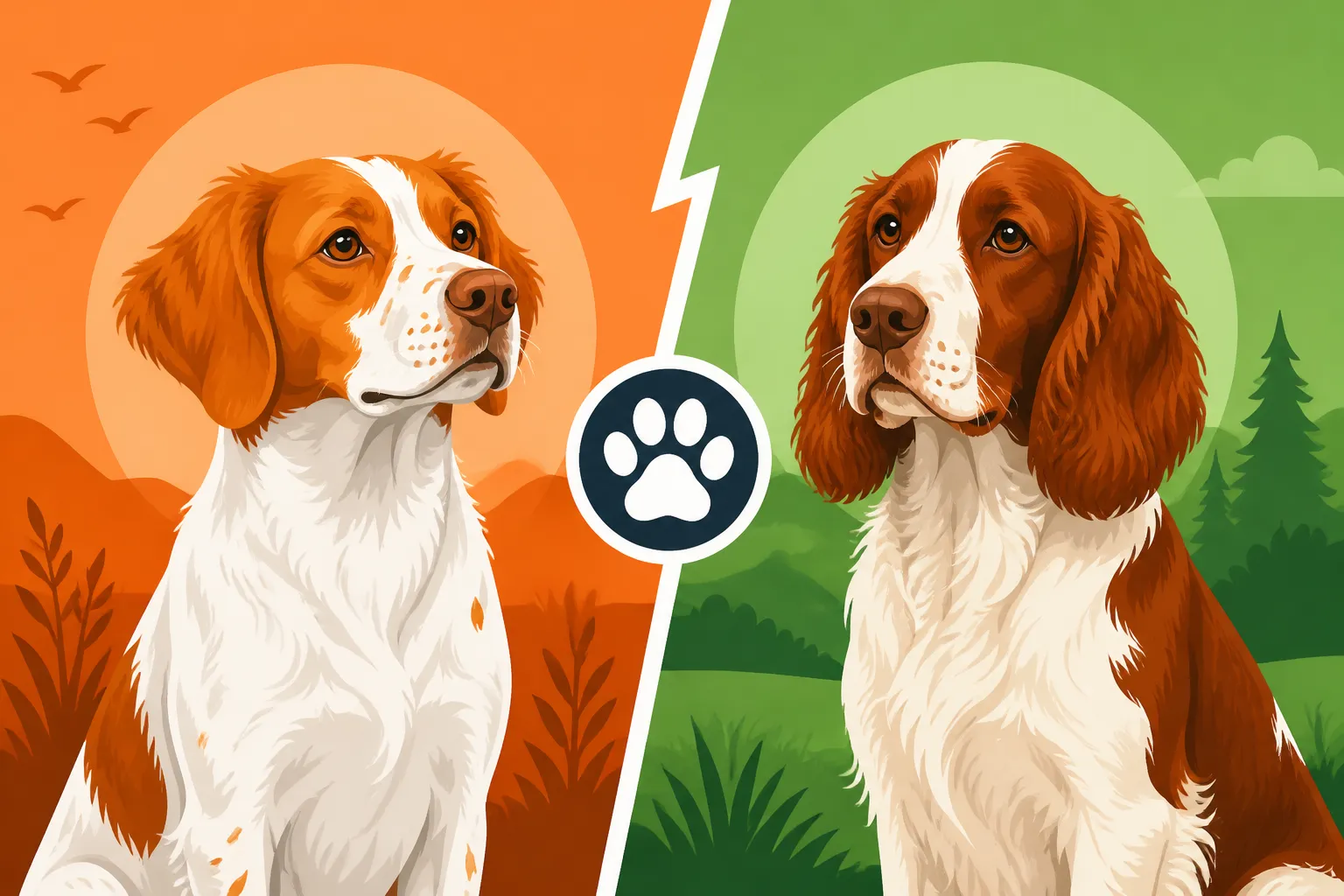
How a Brittany Differs From a Welsh Springer Spaniel
A Brittany and a Welsh Springer Spaniel can look like close cousins at first glance: both are medium-sized sporting dogs with expressive faces and plenty of energy. But their work in the field is different. This guide explains how their hunting styles, exercise needs, coats, temperaments, and everyday care compare, so you can picture which breed better fits your home and plans.
The main difference is how each dog hunts
Both breeds were developed to work with people in the field, but they do not do the same job in the same way. A Brittany is a pointing dog: it searches for game and indicates where birds are by pointing. A Welsh Springer Spaniel is a flushing spaniel: it works closer to the handler, finds game, and flushes it into the air.
That difference matters even if you never plan to hunt. It can influence how a dog moves on walks, what training comes naturally, and how much freedom it may need to use its nose and explore.
The Brittany points and covers ground
Brittanys were bred as versatile bird dogs. They search for game, use the wind, and point when they locate a bird. Their range varies by dog and breeding, but many are energetic, purposeful hunters who like to move ahead of their handler and investigate a broad area.
That does not mean every Brittany will race out of sight. Training, experience, temperament, and the landscape all affect how far an individual dog works. A Brittany raised for close foot hunting may behave differently from one bred for a wider-ranging style. If you are trying to imagine the breed in the field, The Brittany Points, It Does Not Flush explains the basic distinction, while How Far an American Brittany Ranges looks at variation in working range.
The same instinct can appear on an ordinary walk. A Brittany may pause to work a scent trail, sweep through a patch of grass, or become intensely interested in a bird moving at the edge of a trail. A reliable recall and thoughtful leash habits are important, particularly in unfenced areas. A lively dog that is following scent may not automatically choose to stay close just because you want it to.
The Welsh Springer flushes and stays closer
The Welsh Springer Spaniel was developed to find and flush game for a hunter. Rather than pointing and holding a bird’s location, it typically works within a closer relationship to the handler, locating cover and driving birds into flight. It can also retrieve, though retrieving ability, enthusiasm, and polish vary from dog to dog.
In everyday life, “closer-working” does not mean a Welsh Springer needs little exercise or never follows a scent. It is still a sporting dog with energy, curiosity, and hunting instincts. You may see it nose through brush, watch birds, or become excited by wildlife. The distinction is about the traditional way the breeds search and handle game, not a guarantee that one dog will always be easy to manage.
If you are comparing the breeds for hunting, think about the experience you want. Someone who enjoys watching a pointing dog search and establish point may be drawn to a Brittany. Someone who wants a spaniel that searches cover in partnership with the handler may prefer a Welsh Springer. For a broader look at how the Brittany works with game, see What the Brittany Was Bred to Hunt.
Appearance and grooming are different in useful ways
Both dogs are athletic, medium-sized sporting breeds, and their size ranges can overlap. Their coats and coloring, however, usually make them easy to tell apart. A Brittany often has orange and white or liver and white coloring, with a relatively practical coat. The Welsh Springer has a distinctive red-and-white coat with more visible feathering.
These are not just cosmetic differences. Coat texture, furnishings, and the amount of time spent in brush can change how much grooming a dog needs after a walk or outing.
Size and build can overlap
A Brittany is generally a compact, agile dog built to cover ground. A Welsh Springer is also athletic, but its outline and coat may give it a somewhat different look. Breed standards and individual dogs vary, and you should not rely on color or appearance alone to predict stamina, friendliness, or hunting drive.
If you are choosing a puppy, meet the parents where possible and ask about the lines behind the litter. A breeder’s description of the dogs’ size, energy, working style, and temperament can help you picture the adult dog more reliably than a quick glance at a puppy. The guide What a Brittany Weighs and How Tall It Stands offers a closer look at Brittany proportions, while How a Brittany Differs From a Springer Spaniel provides context for comparing sporting breeds with similar names.
Their coats ask for different kinds of upkeep
A Brittany’s coat is usually short to medium in length, with some feathering. It is not completely maintenance-free: burrs, grass seeds, and debris can collect in feathered areas, especially after time in rough cover. Regular brushing and a hands-on check after outings can help you spot tangles, cuts, ticks, and plant material before they become a bigger nuisance. A Brittany's Coat Is Low Maintenance Until It Hits Cover covers that routine in more detail.
The Welsh Springer’s long, silky feathering tends to need more frequent attention, particularly around the ears, legs, chest, and underside. After a muddy walk, you may need to work out knots and remove debris rather than simply brush the coat once it has dried. Both breeds need basic care such as nail trimming and ear checks; neither should be treated as a dog whose sporting background makes regular grooming optional.
A sensible grooming kit can include a brush suited to the coat, a comb for feathering, towels, and a safe way to check feet and ears after outdoor activity. If you buy supplies through Chewy or another retailer, match the brush and grooming products to your dog’s actual coat rather than choosing them just because a product is labeled for sporting dogs. For more on Brittany coat care, How Often a Brittany Needs Brushing explains what a manageable routine can look like.
| Feature | Brittany | Welsh Springer Spaniel |
|---|---|---|
| Traditional field role | Points game and searches for birds | Finds and flushes game, often working closer to the handler |
| Typical working style | Can range broadly, depending on the dog and its training | Usually works in closer partnership with the handler |
| Common coat colors | Often orange and white or liver and white | Red and white |
| Coat care | Shorter coat with some feathering; check for burrs and field debris | More feathering that can require regular brushing and detangling |
| Exercise outlook | Needs substantial activity and mental engagement | Also an active sporting dog that needs regular exercise |
| Best fit depends on | Interest in pointing, range, and bird-dog training | Interest in a flushing spaniel and close teamwork |
Temperament and everyday life depend on more than breed labels
People often ask which breed is “easier.” That question is understandable, especially when you are weighing a dog’s needs against work, children, other pets, and the size of your yard. But neither breed is automatically low effort. A dog’s upbringing and individual personality matter, and both breeds need regular activity, training, and company.
Exercise needs are real in both breeds
A Brittany is typically an energetic sporting dog. A short walk around the block may meet the needs of some dogs on a quiet day, but it is rarely a complete long-term plan for an active Brittany. Many benefit from a mix of walks, play, training, and opportunities to use their nose. If their day has too little activity or mental engagement, they may invent their own entertainment—sometimes by chewing, barking, or roaming the house in search of something to do.
A Welsh Springer also needs purposeful daily activity. Its closer working style does not make it a sedentary companion. A combination of walks, training games, retrieving, and scent-based activities can help meet its needs. The right routine depends on age, health, fitness, and the individual dog, so build up activity gradually rather than expecting a young or out-of-condition dog to handle long, strenuous outings immediately.
For either breed, exercise is not simply a matter of tiring the dog out. Training and shared activities help make daily life more predictable and satisfying. Consider whether you enjoy that kind of involvement before choosing a sporting breed. If you are looking at a Brittany specifically, How Much Exercise a Brittany Needs Off Season can help you think beyond hunting season.
Family fit, training, and prey drive need an honest look
Both breeds can be affectionate companions, but they are still sporting dogs with instincts that may shape home life. Birds, squirrels, rabbits, and other small animals can attract a dog’s attention. Early, patient training and careful management matter, particularly around pets that may be seen as chase targets. Breed tendencies are not a promise about how an individual dog will behave.
Children and dogs also need supervision and respectful boundaries. A lively dog can accidentally knock over a small child during enthusiastic play, while a child may unintentionally bother a dog that is resting or eating. Teach children how to approach and handle a dog gently, and give the dog a quiet place to retreat. Ask breeders or rescue organizations about the specific dog’s comfort around children rather than assuming that a sporting breed will be a natural fit for every household.
Training should be consistent and rewarding. Brittanys are often sensitive to harsh handling, and a heavy-handed approach can undermine trust or make lessons confusing. Welsh Springers also benefit from clear, patient instruction. For a closer look at the Brittany’s style, The Brittany Is the Softest of the Pointing Breeds discusses why training approach matters. When comparing puppies, ask what the parents are like indoors as well as outdoors; a dog’s field ability alone will not tell you how it settles at home.
Choosing between a Brittany and a Welsh Springer Spaniel
The better fit depends on the life you can offer, not on which breed sounds more impressive. Think about the dog’s likely working style, your appetite for training, the time you can devote to exercise, and how much coat care feels reasonable. If you are considering a puppy, talk with people who live with the breed and, where possible, spend time around adult dogs rather than judging only by photographs or puppy behavior.
Match the breed to the activities you enjoy
A Brittany may be a strong match if you are interested in pointing-dog work, bird hunting, field training, or energetic outdoor activities. You should be comfortable developing recall and managing a dog that may want to search ahead. Even without hunting, you will need to offer regular exercise and outlets for scenting and problem-solving.
A Welsh Springer may suit someone drawn to a flushing spaniel that works more closely with its handler. It still needs activity and training, and its coat may ask for more attention after outdoor adventures. Its traditional role and appearance are different from the Brittany’s, but it is not automatically the easier option for a busy household.
If neither dog will hunt, consider what you would actually do together week after week. Would you enjoy scent games, retrieving, hiking, training classes, or structured field activities? Be realistic about weather, travel, and busy stretches at work. A dog’s needs do not pause because the days get shorter or your schedule becomes crowded.
Ask practical questions before you commit
When speaking with a breeder or rescue, ask how the dog behaves when it is not working. Does it settle indoors after exercise? How does it respond to other dogs, visitors, and unfamiliar environments? What kinds of activity do the adult dogs in the family receive? For a breeder, ask about health screening and whether you can meet the dam or other adult relatives. The general guide Which Questions to Ask a Brittany Breeder can help you prepare.
Budget for ordinary care as well as unexpected needs. Food, grooming supplies, training, preventive veterinary care, and equipment all add up over a dog’s life. If you use Chewy to compare food or grooming supplies, check the product’s suitability with your veterinarian or groomer when your dog has a health concern, sensitive skin, or a specialized diet. A retailer can help you find supplies, but it cannot replace advice tailored to your dog.
For a Brittany that will spend time in cover, plan for routine checks after outings: inspect the paws, coat, ears, and skin, and remove debris carefully. A Welsh Springer’s feathering may need extra detangling after the same walk. In either case, keep basic grooming supplies where you can reach them after a muddy outing. Chewy can be one place to look for everyday items such as brushes, combs, and towels, but the important part is choosing tools that suit the dog in front of you.
Finally, do not choose based on the assumption that a dog will adapt to a lifestyle that leaves its needs unmet. An active sporting breed can thrive in many kinds of homes when its people plan for movement, training, companionship, and care. The right match is the dog whose natural tendencies you can understand and support—not simply the one with the coat or name you like best.
Disclaimer
This article is for general informational purposes only and does not constitute professional advice. Laws, prices and regulations vary by location and change over time. Consult a qualified professional for guidance on your specific situation.