Whether the Name Change Helped the Brittany
The name “Brittany Spaniel” still turns up in conversations, search results, and even dog listings, despite the American Kennel Club shortening the breed’s name to Brittany. That can leave owners wondering whether anything meaningful changed. This guide explains why the name was changed, what it clarified, and why the older name never disappeared completely.
Why the Brittany’s name changed
The old name suggested the wrong kind of dog
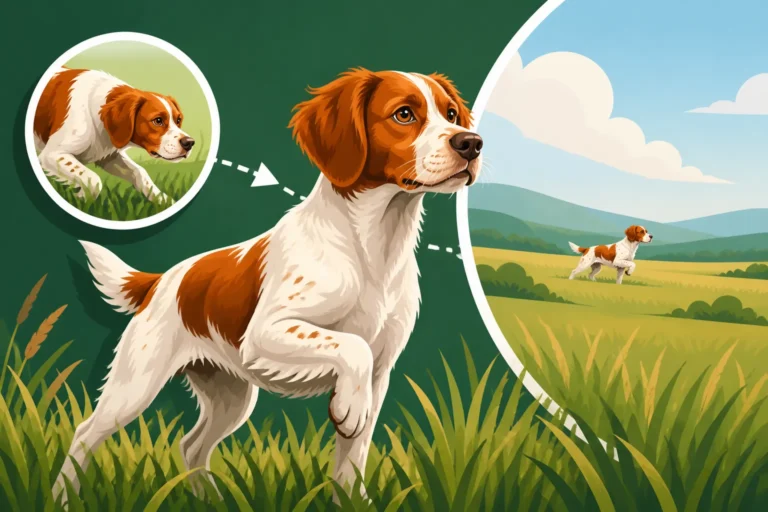
For many people, “spaniel” brings to mind a flushing dog: one that searches close to its handler and pushes birds into the air. The Brittany can retrieve and work through cover, but its defining job is different. It is a pointing dog, bred to locate game and indicate its position, often holding steady while the hunter approaches.
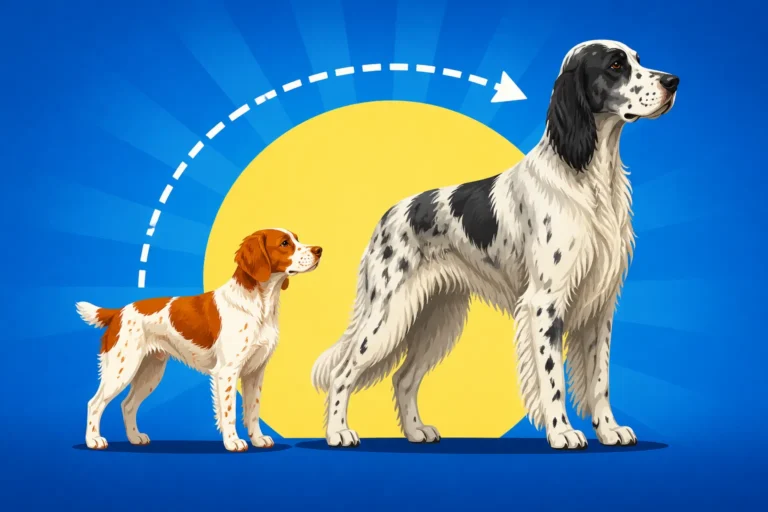
That distinction matters in everyday conversations. Someone who hears “Brittany Spaniel” may picture a dog that flushes birds like a Springer Spaniel. A hunter who hears “Brittany” may instead think of a compact pointing breed that can hunt within walking distance of a person. Neither name tells the whole story on its own, but the shorter one avoids some of the confusion created by the word “spaniel.”
The breed’s name and its working style are closely connected. The Brittany is commonly grouped among pointing breeds, and its characteristic work is to find game and point rather than simply flush it. If you are sorting out the difference, The Brittany Points, It Does Not Flush gives a fuller look at that essential distinction. The breed’s broader history in France also helps explain how it came to be associated with the region of Brittany, as described in The Brittany Comes From the Northwest Corner of France.
The change made the official American name more precise
The American Kennel Club dropped “Spaniel” from the breed’s name in 1982. The change reflected a practical classification issue: the Brittany was recognized and handled as a pointing dog, and the old name could make its role sound closer to that of a flushing spaniel than it really was.
That did not mean the breed suddenly changed in 1982. Brittanys did not become different dogs, and breeders did not have to alter their goals overnight. The decision was about what to call the breed in the American registry, not about changing its ancestry, hunting instincts, or temperament.
For an owner, the distinction is similar to using a more accurate label on a familiar tool. The label can help a person understand what the tool is designed to do, but it does not change how the tool works. The name “Brittany” was a cleaner fit for the breed’s identity as a versatile pointing dog, while “Brittany Spaniel” remained recognizable to many people who had used the older term for years.
What the name change helped clarify
It reduced confusion about the breed’s hunting role
The clearest benefit was a more accurate first impression. A person who hears “Brittany” is less likely to assume that the dog is simply a spaniel-type flusher. That matters to prospective owners choosing a dog for hunting, sport, or home life. A pointing breed may need different training, opportunities, and expectations than someone imagines when they hear “spaniel.”
Consider a new hunter browsing breed information. If every description calls the dog a spaniel, the hunter may expect a dog that routinely drives birds up from cover. Learning that the Brittany points gives a better starting point for understanding bird work, training, and field behavior. It can also prevent mismatched expectations, such as assuming that a dog will naturally stay close or hunt in exactly the same manner as another breed.
The name alone cannot teach a person how the breed hunts, of course. “Brittany” is not a complete description of range, training needs, or individual temperament. But removing “Spaniel” made the official name less likely to steer people toward the wrong comparison. For a broader look at how its hunting style fits into the breed’s reputation, see The Brittany Is the Smallest of the Versatile Pointing Breeds.
It gave the breed a clearer identity in the pointing-dog world
A shorter name also made it easier to discuss the Brittany alongside other pointing breeds without having to explain why it was called a spaniel. That may sound like a small administrative benefit, but breed names shape how people categorize dogs, look for training information, and understand working traditions.
The Brittany has long had a foot in more than one world. It can be a hunting dog and a companion, and the breed is known for accomplishments in both field and conformation settings. Calling it simply the Brittany helped present it as a distinct breed rather than as a variation on a familiar spaniel category. Its record in both kinds of competition is part of the story explored in The Brittany Holds the Dual Champion Record.
The change also helped separate the breed’s official American identity from casual assumptions based on the word “spaniel.” That does not mean every Brittany owner is a hunter, or that every Brittany behaves identically in the field. It means the name better points toward the breed’s classification and purpose, leaving the details to a proper description of the dog.
What the name change did not change
It did not erase the older name
Even after the official American name became “Brittany,” many people continued saying “Brittany Spaniel.” That persistence is easy to understand. The older phrase had been used for generations, and familiar names are sticky. Owners may use it because it is what their family called the breed, because they want to distinguish the dog from other breeds named Brittany, or simply because the phrase feels natural.
The older name also remains common in ordinary conversation and online searches. A person trying to identify a dog may type “Brittany Spaniel” because that is the wording they have heard. A breeder or rescue may encounter both terms from people asking about the same breed. As a result, the old name can remain useful in casual communication even though “Brittany” is the official American name.
This overlap is not unique to the Brittany. Breed names can vary between countries, registries, and everyday speech. If you are trying to understand why the AKC’s terminology differs from what people commonly say, Why the AKC Dropped Spaniel From the Brittany's Name in 1982 covers the name change directly, while Whether People Still Say Brittany Spaniel focuses on how the older wording continues to be used.
It did not create one universal name worldwide
The name change applied to the American Kennel Club’s naming convention. It did not impose a single name on every kennel club, breed organization, or country. In France, the breed is known as the Épagneul Breton, a name that preserves the word associated with spaniel in French. The English-language name used in one registry therefore does not necessarily match the name used elsewhere.
This can be confusing if you are comparing breed histories or looking at information from different countries. One source may say Brittany, another Brittany Spaniel, and another Épagneul Breton. Those names can refer to the same breed, even though their wording and context differ. The differences are worth noticing, but they do not automatically mean that the sources are discussing separate dogs.
The broader relationship between American and French naming and breeding traditions is part of the story in American Brittany and Epagneul Breton Went Separate Ways and How a French Brittany Differs From an American One. Those distinctions involve more than a label alone, so it is best not to treat the name change as proof that every Brittany worldwide followed the same path.
Did dropping “Spaniel” help the Brittany
The answer depends on what “help” means
If the goal was to make the official American name better match the breed’s classification as a pointing dog, then yes: “Brittany” is more precise and less likely to suggest a flushing spaniel. It gives breed clubs, registries, hunters, and prospective owners a cleaner way to refer to the dog without having to explain the apparent mismatch between the name and the dog’s working style.
If the goal was to make the old name disappear, the change was less successful. Many people still say “Brittany Spaniel,” and the phrase remains understandable in ordinary conversation. A name change can update an official record more quickly than it can update family habits, casual speech, or older printed material.
The answer also depends on whether you mean public recognition. A name can clarify what kind of dog a breed is without making the breed more famous or changing how many people own one. The name change helped communicate a point about the Brittany; it was not a publicity campaign, a change in breed standard, or a transformation of the dog itself.
| Question | What the name change did | What it did not do |
|---|---|---|
| Did it make the American name more accurate? | Yes. “Brittany” avoids suggesting the dog is primarily a flushing spaniel. | It did not explain every aspect of the breed’s work or temperament. |
| Did it change the dog? | No. The breed’s traits did not change because of the wording. | It did not alter ancestry, training needs, or hunting ability. |
| Did people stop using “Brittany Spaniel”? | No. The older name remains familiar in casual use. | It did not make the old phrase incomprehensible or automatically incorrect in conversation. |
| Did every country adopt “Brittany”? | No. Names vary among countries and organizations. | It did not establish one worldwide naming rule. |
How to use the names without getting tangled up
In an American context, “Brittany” is the concise official name recognized by the AKC. If you are talking with a person who knows the breed as a Brittany Spaniel, there is usually no need to correct them sharply; you can simply use “Brittany” yourself or clarify that both terms are being used for the same breed.
When searching for information, it can be practical to try both terms. Older material and casual discussions may use “Brittany Spaniel,” while current American breed references may use “Brittany.” If a source uses the French name, Épagneul Breton, that can also be relevant, especially when reading about the breed’s roots or European history.
Most importantly, do not use the name alone to decide what an individual dog will be like. A Brittany’s hunting range, confidence, energy, and household behavior vary with the dog and its background. If you are choosing a puppy or learning how the breed fits your life, look beyond the label to the parents, the breeder’s goals, health information, and the dog’s actual temperament. The name change helped make one part of the breed’s identity clearer, but learning about the dog still takes more than recognizing its name.
Disclaimer
This article is for general informational purposes only and does not constitute professional advice. Laws, prices and regulations vary by location and change over time. Consult a qualified professional for guidance on your specific situation.