Whether the Kennel Club Calls It a Brittany
If you are searching breed lists and cannot find “Brittany Spaniel,” the name is probably the reason: kennel organizations do not all use the same label. The United Kingdom’s Kennel Club calls the breed the Brittany, while other organizations and everyday conversations may use different names. This guide explains what those names mean and how to avoid confusion when researching the breed.
Does the Kennel Club call the breed a Brittany
The UK Kennel Club uses Brittany
Yes. The UK Kennel Club lists the breed as the Brittany, rather than Brittany Spaniel. You may also encounter Epagneul Breton, the French name commonly used internationally. These names point to the same breed, not to separate breeds recognized under different UK Kennel Club registrations.
That difference can trip people up when comparing breed standards, registration information, or breeder pages. A search for “Brittany Spaniel” may bring up useful results, but a search for “Brittany” or “Epagneul Breton” can reveal UK or European material that uses another official label. If you are looking at a particular dog, check the organization and registration details rather than relying on the name alone.
The UK name fits the breed’s history and working identity. The dog originated in Brittany, in northwestern France, and was developed as a hunting dog that points game. The history behind the name is explored in The Brittany Comes From the Northwest Corner of France and What Epagneul Breton Means.
“Brittany Spaniel” remains a familiar name
Although the UK Kennel Club uses Brittany, people still say Brittany Spaniel, especially in North America. The longer name has been used in breed books, conversations, online searches, and older records. So if someone says “Brittany Spaniel,” they are usually referring to the same breed rather than a distinct spaniel breed.
There is a historical wrinkle in the United States: the American Kennel Club dropped “Spaniel” from the breed’s official name in 1982. The change reflected the dog’s pointing role, which differs from the work people commonly associate with flushing spaniels. The reasoning and timeline are covered in Why the AKC Dropped Spaniel From the Brittany's Name in 1982 and Whether People Still Say Brittany Spaniel.
In practical terms, both labels can be useful when you search, but the right one depends on what you are trying to find. For UK Kennel Club materials, start with Brittany. For broader historical or American information, try Brittany Spaniel as well. For French and international material, add Epagneul Breton.
Why names differ between kennel organizations
Breed names are not always universal
A kennel organization establishes and maintains its own registration system and breed standards. It may choose a name that reflects local convention, historical usage, or the terminology used by an international organization. As a result, one breed can appear under different names in different countries without those names indicating a separate breed.
For the Brittany, the most useful names to recognize are:
| Name you may see | Where it is commonly used | What it generally refers to |
|---|---|---|
| Brittany | UK Kennel Club and common English usage | The Brittany breed |
| Brittany Spaniel | Everyday and historical usage, especially in North America | The same breed, often using its older or familiar English name |
| Epagneul Breton | French and international usage | The breed’s French name |
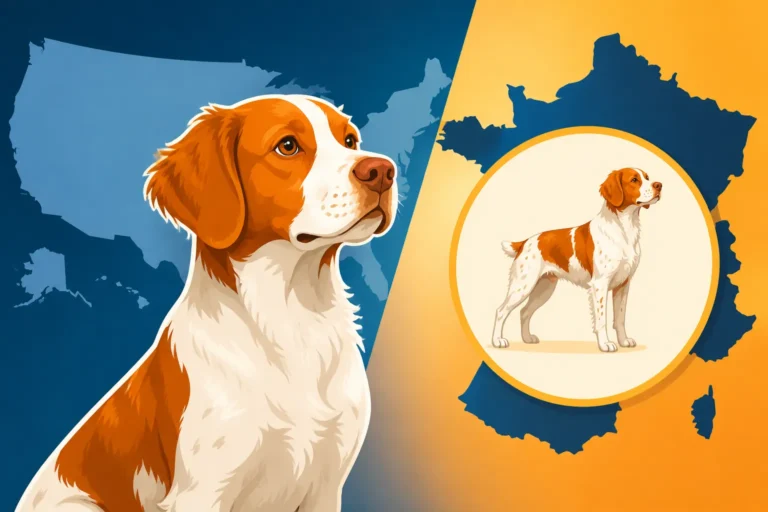
These labels are helpful search terms, but they do not answer every question about a dog’s background. If you are checking a registration, confirm which organization issued it and what name appears on its paperwork. If you are comparing dogs described as American or French Brittanys, look beyond the label to the breeder’s lines, the dog’s registration, and the type of work it was bred for. American Brittany and Epagneul Breton Went Separate Ways explains why those terms can carry extra meaning in some contexts.
The word “spaniel” can confuse people
The word spaniel often makes people expect a dog that flushes birds from cover. Brittanys are pointing dogs: they locate game and indicate its position, giving the hunter an opportunity to approach. That is why official naming choices may emphasize Brittany rather than Brittany Spaniel.
Still, the older name has not vanished, and it is understandable that newcomers use it. A person might hear “Brittany Spaniel” from a family member, see it in an older book, and then find an official listing that says simply “Brittany.” The difference is about naming convention, not proof that one source is describing a different dog.
If you are trying to understand the breed’s job, focus on its pointing ability rather than the word “spaniel.” The Brittany Points, It Does Not Flush goes into that distinction. It is also worth remembering that individual dogs vary: breed history describes the intended work, while training, experience, and the dog’s temperament shape what a particular Brittany does in the field.
How to search for the breed without missing useful information
Use several names when researching
A good search strategy is to try the UK Kennel Club name first, then broaden the search with the other common labels. For example, search “Brittany Kennel Club” for UK registration and breed-standard material, “Brittany Spaniel” for North American or historical references, and “Epagneul Breton” for French and international sources.
When sources seem to disagree, compare what they are actually describing. Is the page about registration, conformation, hunting ability, or breed history? Does it identify the kennel organization? Does it distinguish between the breed’s general identity and a particular regional type? These details usually explain why the wording differs.
A name search is only a starting point if you are choosing a puppy. Ask the breeder which registry applies, what health information is available, and what the parents are like in the home and in the field. For a useful checklist, see Which Questions to Ask a Brittany Breeder. A label alone cannot tell you whether a dog’s energy, hunting range, or temperament will suit your household.
Check retailer and everyday listings carefully
Retail and general pet-care websites may use familiar search labels rather than the exact name used by a kennel organization. If you are looking for care information or supplies, searching both “Brittany” and “Brittany Spaniel” can help surface more results. On Chewy, for instance, product descriptions or breed-related search results may use a familiar everyday term rather than the UK Kennel Club’s formal label.
That does not make a product specific to the breed, and it does not make a retailer listing an authoritative source for registration or breed standards. Use Chewy or another retailer to browse practical items, then check the product details for fit and suitability. For breed facts, return to kennel organizations, breed clubs, and experienced veterinary or training professionals.
If you are shopping for an item that depends on a dog’s individual size or activity, such as a harness, crate, or field gear, use the dog’s measurements and needs rather than relying on a breed tag. Chewy’s search wording can help you locate relevant categories, but the product specifications matter more than whether the listing says Brittany or Brittany Spaniel. The same principle applies across retailers, including when Chewy uses a broad breed label on a general product page.
What the name means for owners and prospective buyers
Registration matters more than the casual label
If a breeder, rescue, or seller describes a dog as a Brittany Spaniel, that wording alone does not confirm registration or ancestry. Ask for the organization and paperwork associated with the dog. Registration systems differ, and the name printed on a document may reflect the terminology of that particular registry.
A clear, responsible answer should explain the dog’s background without treating the name as a trick or a guarantee. If someone claims that “Brittany Spaniel” and “Brittany” are entirely different breeds, ask what registry or breed standard they mean. If someone claims a dog’s label proves its hunting ability or temperament, ask for more concrete information about the dog and its parents.
Health information is another part of evaluating a breeder. The breed’s name does not tell you which screening has been completed or what results mean. What a Brittany Spaniel Breeder Should Have Tested offers a broader look at health testing to discuss when researching a litter.
The simplest way to remember the names
For UK Kennel Club searches, use Brittany. For American discussions and older English-language references, include Brittany Spaniel. For French or international material, try Epagneul Breton. In ordinary use, these names generally refer to the same breed, though a specific dog’s registration and background should always be checked directly.
This naming variation is easier to navigate once you know what each term is doing. “Brittany” is the UK Kennel Club name; “Brittany Spaniel” remains a familiar alternative; and “Epagneul Breton” is the French name. Keeping all three in mind makes it less likely that you will miss a useful standard, history page, breeder resource, or care discussion simply because it uses a different label.
Disclaimer
This article is for general informational purposes only and does not constitute professional advice. Laws, prices and regulations vary by location and change over time. Consult a qualified professional for guidance on your specific situation.