Which Brittany Type Suits a Foot Hunter Better
A foot hunter often wants a dog that hunts within comfortable gun range, checks in naturally, and works cover without disappearing over the next ridge. The tricky part is that “American” and “French” Brittany describe broad types, not guarantees about an individual dog. This guide explains the usual differences, what matters on foot, and how to choose for your terrain and hunting style.
What American and French Brittany Usually Mean
The names describe different breeding traditions
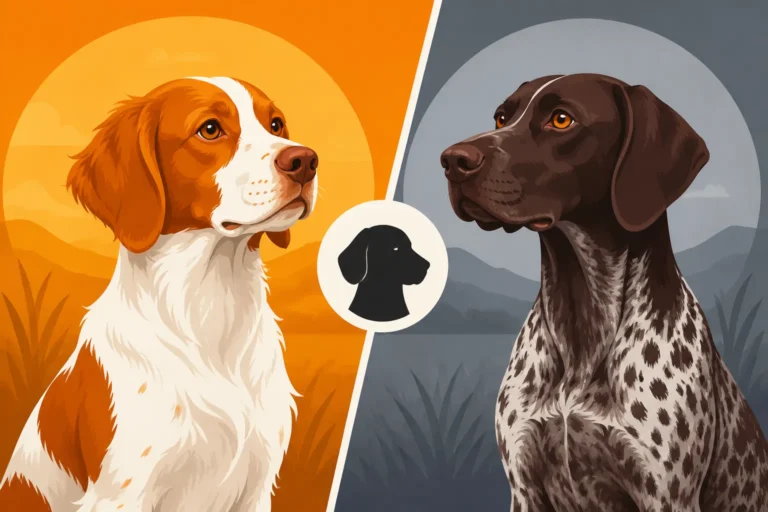
In the United States, “American Brittany” commonly refers to dogs developed in American breeding programs, while “French Brittany” usually refers to the Epagneul Breton type associated with France and European breeding. They share a common breed history, but selection preferences have not always been identical. American breeding has often emphasized ground speed and a broader search, especially in field-trial settings; French lines are often described as closer-working and more compact.
Those are tendencies, not rules. There are American Brittanys that naturally hunt at a manageable distance, and French Brittanys that range farther than their owner expects. A dog’s parents, individual temperament, early experiences, training, age, and the cover you hunt can all influence the range you see. It is risky to choose by label alone and assume the dog will automatically work exactly as you want.
For a fuller comparison of the two traditions, see How a French Brittany Differs From an American One. It helps to think of “American” and “French” as clues about likely style rather than promises about a finished hunting dog.
Breed type is only one part of the decision
A foot hunter’s experience depends on more than how far a dog can run. You may be walking through thick grouse cover, crossing open prairie, hunting pheasants along field edges, or moving through mixed woodland. A dog that seems wide in open country may naturally tighten up in dense cover. The same dog may also work differently when hunting alone than when following another dog.
The individual dog’s confidence and maturity matter, too. A young dog may range in an uneven pattern while learning how to use wind and locate birds. A naturally bold, independent dog might need more deliberate handling to stay connected, while a sensitive dog may need calm, consistent guidance to develop confidence without being pressured into a tight pattern.
When comparing puppies or started dogs, ask what the parents and close relatives do in the kind of country you hunt. If possible, watch dogs from the line work on foot rather than relying only on a breeder’s description. For more on how breeding choices relate to hunting style, Which Brittany Line to Buy for Wild Birds offers useful context.
Which Type Tends to Suit a Foot Hunter Better
Why many walking hunters consider a French Brittany
A French Brittany may appeal to a hunter who wants a closer-working, more compact dog and expects to hunt mostly on foot. The commonly described French style can be convenient when you need to keep contact in brush, hunt smaller parcels, or move through terrain where a very wide search would make it difficult to follow the dog. Many walking hunters value a dog that checks in often and works at a pace they can comfortably match.
That preference should still be tested against the actual dog. “Close-working” does not mean a dog will stay beside you, and no label removes the need for recall, range management, or bird-dog training. A French-line dog may open up in spacious country, follow scent with enthusiasm, or become more independent as its experience grows. Ask how the dog behaves when it is excited by birds, not only during a casual walk.
If you hunt on foot and want a closer pattern, Whether a French Brittany Suits a Walking Hunter explores that fit more specifically. Think about your own pace and the size of the areas you hunt: a close dog can be pleasant to handle, but a dog that is too cautious or too dependent on you may not search the ground effectively.
When an American Brittany can be a strong match
An American Brittany can suit a foot hunter very well, particularly if the hunter enjoys covering ground, hunts larger parcels, and is comfortable handling a dog with a broader search. Many American Brittanys are capable of working at useful distances while still responding to training and handling. A wider-ranging dog can find more ground in open country, which may be an advantage when birds are scattered or the terrain is expansive.
The trade-off is that a dog bred or inclined to range broadly may require more attention to keep it connected in your hunting setup. A wide search is not automatically a problem, but it can become frustrating if you lose sight of the dog, cannot read its position, or find that it is working beyond the distance where you can safely approach a point. The typical range associated with a line is worth discussing, but it cannot tell you exactly how a particular dog will behave. See How Far an American Brittany Ranges for more on why distance varies.
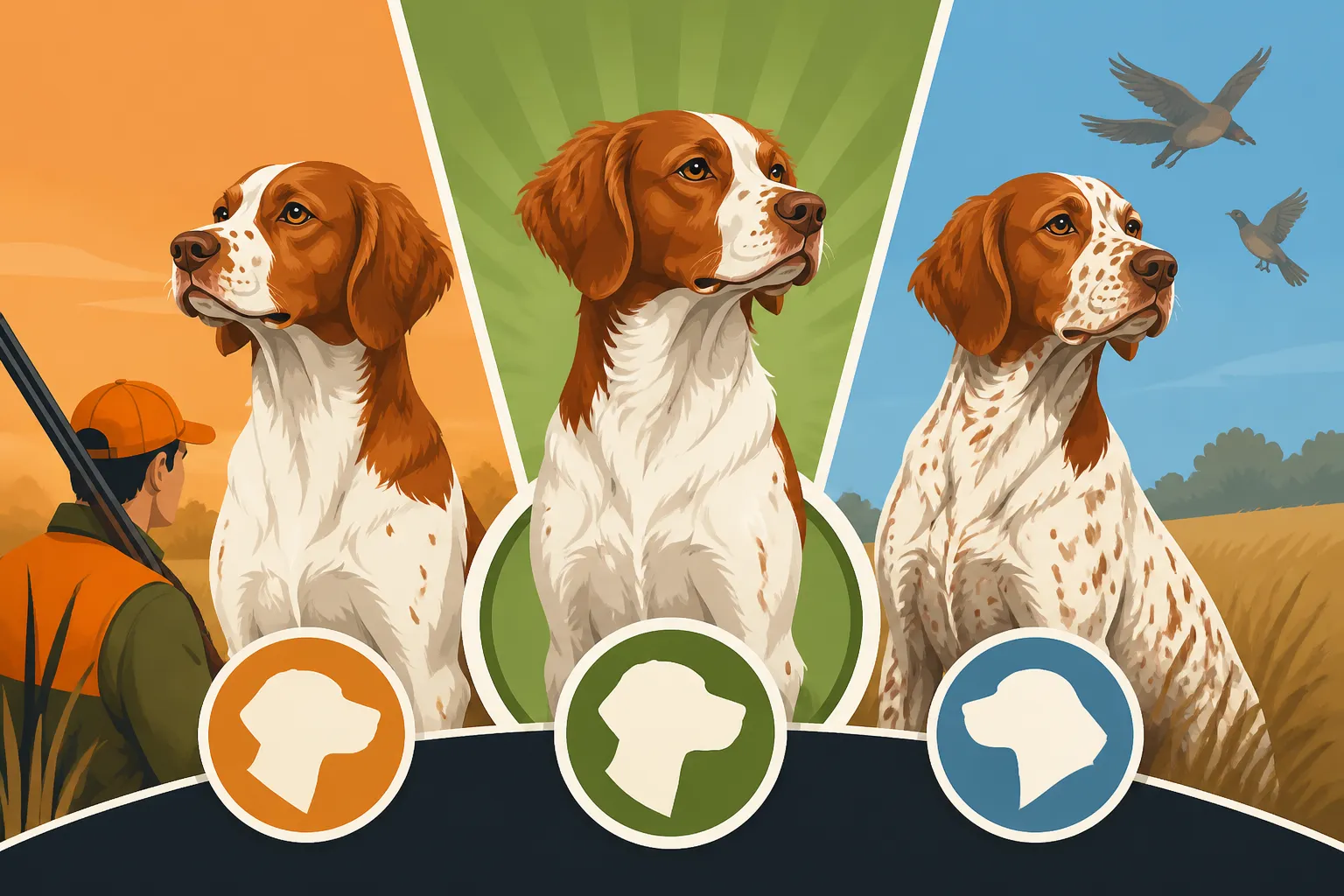
Rather than asking, “Which type is better?” ask, “How much ground do I want my dog to cover, and how will I keep track of it?” A hunter who enjoys steady walking in open country may be happy with a broader-running American dog. Someone who hunts tight cover and wants a dog nearby may prefer the tendencies often associated with French lines—or an American Brittany from closer-working parents.
| Your hunting situation | A tendency that may fit | What to check before choosing |
|---|---|---|
| Dense cover and smaller areas | A closer-working style, often associated with French lines | Does the individual dog still search confidently and use the wind? |
| Open country with room to walk | A broader search, sometimes associated with American lines | Can you track the dog and handle it at a distance? |
| Mixed terrain and changing parcels | A balanced, adaptable hunting style | How does the dog adjust its range in different cover? |
| First bird dog or limited handling experience | A responsive dog with a manageable search | Does it check in, come when called, and accept calm guidance? |
| Hunting with a partner or another dog | A dog comfortable working in company | Does it stay focused without crowding or ranging away? |
How Terrain, Training, and Handling Shape Range
The ground you hunt can change the picture
A Brittany’s range is not a fixed number. Thick brush, steep slopes, wind direction, bird scent, and the pace of the hunter can all affect how far the dog moves from its person. In tangled cover, a dog may work close because it must navigate obstacles and keep scent contact. In open fields, the same dog may naturally stretch out to search more ground.
The hunter’s movement matters as well. If you walk slowly and pause often, a dog may have more chances to check back. If you move quickly across broad country, it may range ahead to keep searching. A dog that looks close while following a familiar route may behave differently when the wind carries scent across an open field. That is why it is helpful to observe a dog in more than one setting before deciding that its range is ideal.
Many dogs can learn to adjust their search to terrain and cover, but the amount of adjustment varies. Whether a Brittany Adjusts Its Range to Cover is relevant if your season includes both tight woodland and more open ground. When you shop for routine field supplies or dog-care essentials through a retailer such as Chewy, remember that equipment supports good handling; it does not replace choosing a dog whose natural style suits your hunts.
Training can improve connection without changing temperament
Training helps establish communication: the dog learns to respond to its name, come when called, check in, and work within boundaries that make sense for your hunting conditions. A reliable recall is especially valuable for a foot hunter who moves between cover types or hunts in areas where roads, property lines, or other hazards require quick control.
A dog that ranges farther than you prefer may often be taught to work closer through consistent handling and rewarding the behavior you want. That does not mean every broad-ranging dog can be turned into a naturally close worker. Genetics and temperament play a role, and repeatedly correcting a sensitive dog harshly can damage confidence rather than create a useful hunting pattern. Whether Range Can Be Trained Into a Brittany and How to Shorten a Brittany's Range cover these questions from different angles.
Choose equipment and practice routines that support safe, clear communication. A check cord can help with early recall work in suitable conditions, while a whistle or tracking equipment may help you communicate or locate a dog depending on how and where you hunt. If you’re replenishing ordinary supplies such as a leash, food, or basic care items through Chewy, keep specialist training gear and fit requirements in mind: a piece of equipment should suit the dog and your plan, not simply be convenient to order.
How to Choose the Right Brittany for Your Hunting Style
Ask about the actual dog and its relatives
Whether you are talking with a breeder or evaluating a started dog, ask concrete questions about range and behavior. “Is this dog close?” can mean different things to different people. Ask how far the dog tends to work in open country, whether it checks back without being called, and what it does when it finds scent. Ask whether the parents are hunted on foot and whether their working style suits the kind of cover you expect to hunt.
If you can watch the dog work, pay attention to more than distance. Does it search with purpose? Does it use the wind? Does it stay mentally connected to the handler? Does it show confidence in new cover? For a puppy, you will not be able to see a finished hunting pattern, so learning about the parents and relatives is particularly useful. For a started dog, ask to see it work under conditions that resemble your own hunting.
Be candid about your experience. A first-time bird dog owner who hunts a small parcel may have different needs from an experienced handler who walks large tracts of open country. A good match is not simply the dog with the most impressive range or the tightest pattern; it is a dog whose drive, responsiveness, and search style you can manage safely and enjoyably.
Match the dog to your practical limits
Before choosing, picture a typical day. How many hours will you walk? Is the cover so dense that you need frequent visual contact? Will you hunt with a partner who can help watch a dog? Are you comfortable using a tracking collar where appropriate? Do you want a dog for wild birds, planted birds, or a mix? The more clearly you answer these questions, the easier it becomes to decide whether a closer or broader-working tendency fits.
Consider your comfort with training, too. Every Brittany needs basic obedience and bird-dog education, but a dog with a stronger independent streak may ask more of your handling skills. That does not make the dog unsuitable. It simply means you should be prepared to build recall, connection, and range control gradually instead of expecting those habits to appear on their own.
For routine food and care needs, some owners use Chewy as one of several places to source everyday supplies. Those purchases are separate from the choice of hunting type: the most important fit comes from the dog’s temperament, the work you plan to do, and the time you can devote to training. If you are uncertain, talk with people who hunt the same terrain and can describe how their dogs behave in the field.
A French Brittany is often worth considering if you prioritize a compact, closer-working style for walking hunts. An American Brittany may be a better fit if you want a broader search and have the terrain and handling plan to support it. But the most reliable choice is an individual dog whose natural range, confidence, and responsiveness match the way you hunt—not simply the label attached to its line.
Disclaimer
This article is for general informational purposes only and does not constitute professional advice. Laws, prices and regulations vary by location and change over time. Consult a qualified professional for guidance on your specific situation.