Whether the Brittany Poached Under a Net
It’s a question that often sparks curiosity among Brittany enthusiasts: was this beloved, energetic bird dog originally bred by poachers, perhaps even to hunt game under a net? The idea conjures images of clandestine operations under the cloak of night, a far cry from the vibrant, high-spirited Brittanys we know today. This guide will dive deep into the historical context and innate abilities of the Brittany to unpack this intriguing aspect of its origins, separating myth from the fascinating reality of its development.
Understanding the Brittany's Origins and Early Purpose
To truly understand if the Brittany might have been a "poacher's dog," we have to travel back in time to the rural landscapes of Brittany, a region in northwest France. Life for the common folk here, especially before the widespread availability of firearms for all, was vastly different from the aristocratic hunting parties that often featured larger, more specialized breeds.
The Brittany's Humble Beginnings in Rural France
Imagine the small farms and villages dotted across the French countryside centuries ago. For peasants and villagers, hunting wasn't just a sport; it was a matter of putting food on the table. They needed a dog that was not only adept at finding game but also inconspicuous, efficient, and easy to feed. Big, flashy, wide-ranging dogs were a luxury, and often restricted to the gentry. The average person couldn't afford to feed such a dog, nor could they afford to lose game that bolted far from reach.
This is where a dog like the early Brittany type would have shone. They were of moderate size, quick, intelligent, and possessed an incredible nose. Crucially, they were often described as biddable and keen to work alongside their human companions. This close working relationship was essential. If a dog ranging too far found game, it might flush it out of bounds or into the hands of someone else. A dog that worked close, checked in frequently, and understood its owner's subtle cues was invaluable for subsistence hunting. It’s no wonder their loyalty and intelligence have been a hallmark of the breed throughout its history. This need for a practical, versatile hunter meant that the dogs developed in this region were inherently suited for a variety of tasks, often with discretion in mind. What the Peasants of Brittany Used the Dog For was primarily survival, not sport.
The Evolution of Hunting Practices in Brittany
The hunting landscape in Europe, especially before the 18th and 19th centuries, was stratified. Large estates had gamekeepers and strict rules, and commoners often faced severe penalties for poaching. Traditional hunting methods for small game like partridge, quail, and rabbit in rural areas involved nets, snares, and sometimes simple traps, long before sporting guns became widely accessible or affordable to the masses. Even after firearms became more common, they were expensive, and ammunition wasn't cheap.
The dogs used by the working class had to adapt to these conditions. They couldn't be dogs that barked incessantly or caused a commotion. They needed to be able to locate game stealthily, hold it, and allow the hunter to approach without alarming the quarry. This often meant a dog that could "point" – freeze upon scenting game, indicating its location. The Brittany's natural pointing ability, which we celebrate today, was a highly practical trait back then. It allowed a hunter to move into position, whether to throw a net, set a snare, or eventually, take a shot with a primitive firearm. The development of the breed was intrinsically linked to these practical, often necessary, hunting styles, setting the stage for its reputation as a close-working, efficient partner.
The "Net Poaching" Myth vs. Reality
The phrase "poaching under a net" might sound a bit like something out of a medieval tale, but it describes a very real, and once common, method of hunting. The question isn't so much if people hunted with nets, but whether the Brittany was specifically developed for this practice, and if it qualifies as "poaching."
What "Poaching Under a Net" Actually Entailed
Let's clarify what hunting with a net involved. It wasn't about catching big game; it was for birds like partridge, quail, and sometimes rabbits. The technique typically involved stretching a large, fine-mesh net across an area where game birds were known to feed or roost. The hunter, often accompanied by a dog, would then attempt to drive the birds into the net.
This is where the dog's role was paramount. A good dog would:
- Locate the game: Using its superior nose to find birds hidden in cover.
- Point or "set": Freeze, indicating the exact location of the birds. This allowed the hunter to position the net discreetly or to prepare to flush the birds.
- Flush on command: Once the net was set, the dog would be commanded to flush the birds towards or into the net.
- Retrieve: After the birds were tangled, the dog might help retrieve them.
Now, regarding the "poaching" aspect: In many historical contexts, hunting rights were reserved for landowners or nobility. Any hunting by commoners, regardless of method, on land they didn't own, or without specific permission, was considered poaching. So, if a peasant used a net (or any other means) to catch game on a lord's land, it was indeed poaching. The small size and quiet nature of the Brittany would have been highly advantageous for such discreet operations, minimizing the risk of detection.
Why the Brittany Was Suited for Discreet Hunting
The traits that make the Brittany such an appealing companion and hunting dog today are precisely what would have made it a superb partner for discreet, efficient hunting, whether legally sanctioned or not. What Epagneul Breton Means literally translates to "Brittany Spaniel" or "Brittany Pointer," emphasizing its regional origin and original function.
- Size: Brittanys are medium-sized dogs, not massive hounds that would draw attention. They are easy to conceal and transport without attracting undue notice.
- Quiet Nature: Unlike some breeds known for their vocality, Brittanys are generally not excessive barkers. A quiet dog is a must when you're trying to be discreet.
- Natural Pointing Ability: This is key. The ability to "freeze" and indicate game allowed the hunter to approach quietly and position a net. A dog that charges in and flushes indiscriminately would be counterproductive. The very foundation of the breed is built on this innate pointing instinct.
- Biddability and Close Work: Brittanys are highly intelligent and eager to please their owners. They thrive on working with a person. This close partnership is crucial for methods like netting, where precise control and understanding of commands are essential. They weren't designed to range miles away but to hunt efficiently within the hunter's effective reach. This characteristic is why we often discuss How Far an American Brittany Ranges versus a French Brittany, but even American lines retain a strong desire to work with their handler.
- Excellent Nose: Their keen sense of smell meant they could locate birds even in dense cover, ensuring a higher success rate for the hunter.
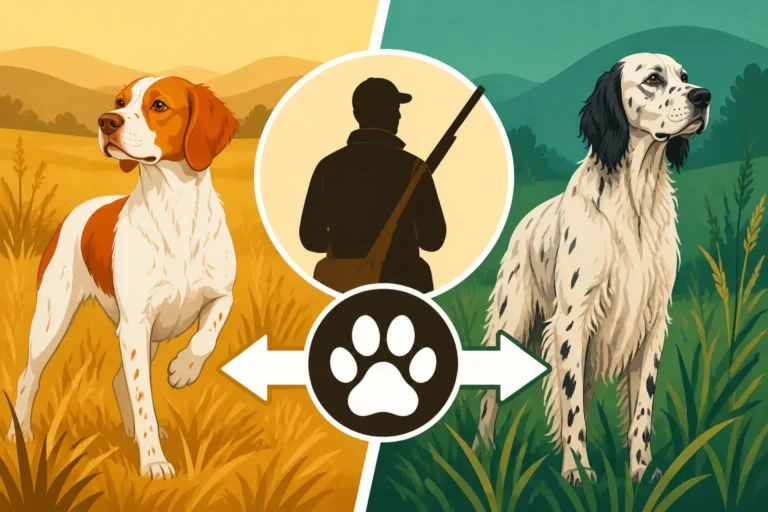
So, while the breed might not have been exclusively bred for "net poaching," its inherent qualities made it perfectly suited for the clandestine and efficient hunting methods often employed by those without formal hunting rights. The suggestion Whether the Brittany Was Bred to Hunt Without a Gun strongly aligns with this historical context, as nets were a viable alternative to costly or inaccessible firearms.
The Brittany's Reputation and the Rise of Firearms
As society evolved, so did hunting practices. The transition from subsistence hunting to sport hunting, and the increasing availability of firearms, changed the role of hunting dogs.
From Necessity to Sporting Companion
Over time, particularly from the 19th century onwards, firearms became more common and affordable. This dramatically shifted the dynamic of hunting. Instead of needing to capture birds in a net, hunters could now shoot them on the flush. This meant a new emphasis on a dog that could find game, hold a steady point, and then allow the hunter to shoot over it. The retrieve, always important, gained even more prominence.
The Brittany, with its existing strong pointing instinct and biddability, adapted beautifully to this new era of shotgun hunting. Its close-working nature, though perhaps initially valuable for discreet net hunting, also made it an ideal companion for the walking hunter who didn't want their dog ranging out of sight. It was a dog that found and held birds, making it a joy to hunt over. This transition solidified its place as a valued sporting companion, moving beyond mere necessity.
The Role of Early Breeders and Standards
The late 19th and early 20th centuries saw the formalization of many dog breeds, including the Brittany. As breed clubs were formed and standards written, the focus shifted from purely utilitarian traits to a combination of functional ability and conformation. When the French Brittany Club Was Founded in 1907 marked a significant step in defining and preserving the breed. The early standards, while recognizing the diverse origins, emphasized its pointing ability, its unique bobtail or docked tail, and its compact, energetic build.
The emphasis was firmly on its abilities as a gun dog – a dog that worked with the hunter and the gun. While the history of nets and discretion might have informed its natural traits, the official recognition cemented its role as a versatile pointing dog for sport. Breeders carefully selected for the keen nose, biddability, and exceptional pointing instinct that had always been part of the Brittany's makeup, ensuring these qualities were passed down through generations.
Modern Brittanys: A Legacy of Versatility
Today's Brittany Spaniel is a far cry from the shadowy figure of a "poacher's dog," yet the qualities that might have led to that reputation are still very much alive and appreciated in the breed.
The Enduring Traits of a Poacher's Dog
Even without the net, many of the traits that would have made the Brittany ideal for discreet, efficient hunting are celebrated in the modern breed.
- Close-Working Style: While American Brittanys are known to range wider, especially in field trials, many still exhibit a strong desire to stay connected to their hunter. French Brittanys, or Epagneul Bretons, are particularly renowned for their close-working style, often hunting within shotgun range. This "foot hunter's dog" quality is a direct echo of a time when the hunter needed their dog to stay close for successful netting or simply to keep game within reach. You can learn more about this in An American Brittany Ranges Wide and a French One Stays Close.
- Natural Retrieve: Brittanys are generally natural retrievers, happily bringing game back to hand. This was just as valuable for collecting birds from a net as it is for retrieving shot birds today.
- Biddability and Intelligence: Their strong desire to please makes them highly trainable, a trait invaluable for any hunting method requiring precise commands and a keen understanding between dog and handler.
- Keen Nose: The Brittany's scenting ability remains outstanding, making them excellent at finding upland birds, even in dense cover.
These inherent characteristics are not just historical curiosities; they are what make the Brittany such a joy to hunt with and live with. They connect the modern Brittany directly to its resourceful ancestors, regardless of how the game was ultimately secured.
Versatility Beyond the Field
It's fascinating how the core characteristics that might have served a "poacher" centuries ago translate into such a well-rounded companion today. The Brittany's intelligence, biddability, and eagerness to please, combined with their moderate size and cheerful disposition, make them fantastic family pets. The Brittany Is the Pointing Breed You Can Live With is not just a slogan; it's a testament to these enduring qualities.
Their boundless energy means they excel in various canine sports, from agility and obedience to scent work. Their natural retrieving instincts often make them stars in dock diving. Even as purely companion animals, their desire for interaction and training means they thrive in an active home. This breed is truly an all-rounder, adaptable and eager to participate in whatever their human family is doing. If you're considering one, you'll find they're often recommended as Whether a Brittany Suits a First Time Owner, precisely because of these trainable and companionable traits.
To sum up the journey of the Brittany's role:
| Feature | Early Brittany (Pre-Firearms) | Modern Brittany (Sport Hunting) |
|---|---|---|
| Primary Goal | Subsistence hunting, often discreetly | Sport hunting, companionship |
| Hunting Method | Nets, snares, primitive tools | Shotguns, formal field trials |
| Key Traits | Close worker, quiet, keen nose, biddable | Strong point, biddable, energetic, retrieve |
| "Poaching" | Possible, due to legal restrictions | Not applicable to breed's purpose |
| Value to Owner | Food provider, efficient partner | Sporting companion, family member |
While the romantic notion of a dedicated "net poacher's dog" adds a certain mystique, the truth is more nuanced. The Brittany's ancestral traits were indeed perfectly suited for discreet and efficient hunting methods, which, in certain historical contexts, would have been considered poaching. What truly endures is the Brittany's incredible versatility, intelligence, and unwavering partnership with its human, whether that's in a clandestine forest, an open field, or the comfort of a family home. The breed's ability to seamlessly transition from the practical necessities of the past to the cherished companionship and sporting excellence of today is a testament to its remarkable qualities. This enduring spirit is why many Brittany owners wouldn't trade their energetic, intelligent partners for anything, knowing they carry a rich history of adaptability and connection. Even today, you might find wonderful products for your Brittany, from performance dog food to training gear, readily available at places like Chewy, enabling them to excel in all their modern endeavors, harkening back to their need for efficiency and performance.
Disclaimer
This article is for general informational purposes only and does not constitute professional advice. Laws, prices and regulations vary by location and change over time. Consult a qualified professional for guidance on your specific situation.