Whether a Brittany Puppy Needs Large Breed Food
It's a common dilemma when you bring home a new Brittany puppy: you want to give them the absolute best start in life, and that includes their nutrition. But then you see all these different bags of puppy food, especially those labeled "large breed," and you start to wonder. Your Brittany is certainly active and will grow quickly, but are they considered a "large breed" in the nutritional sense? This guide will cut through the confusion and help you understand whether a large breed puppy food is the right choice for your energetic Brittany.
Understanding Your Brittany Puppy's Unique Growth
When we talk about dog food, the term "large breed" isn't just about how tall a dog stands, but rather their projected adult weight and, critically, their rate of growth. Brittanys are certainly not tiny, but they're not giant breeds either, which is where the main difference lies.
What "Large Breed" Truly Means in Dog Food
The term "large breed puppy food" is specifically formulated for puppies that are expected to weigh 50-70 pounds or more as adults. Think of breeds like German Shepherds, Labradors, Golden Retrievers, Great Danes, or Mastiffs. These dogs have a much longer and more intense growth period than smaller or even medium-sized breeds. Their bones and joints need very careful management during this rapid development phase to prevent orthopedic problems down the line. The primary goal of large breed puppy food is to slow down that rapid growth slightly, ensuring that their skeletal system develops properly without undue stress. This means these foods often have a lower caloric density and precisely controlled levels of key minerals like calcium and phosphorus.
The Brittany's Growth Trajectory: Fast, But Not Giant
A Brittany typically weighs between 30 and 40 pounds as an adult, standing around 17.5 to 20.5 inches tall at the shoulder. While they are certainly energetic and grow at a good clip, they don't reach the massive adult weights that truly define "large breed" dogs in the nutritional world. A Brittany puppy will usually hit most of its adult height and weight by 10-12 months, though they'll continue to fill out and mature physically for a bit longer.
Consider a six-month-old Brittany puppy, full of beans and ready to explore. They're growing visibly, putting on muscle and lengthening their legs, but their growth plates aren't bearing the immense stress that a rapidly growing Great Dane puppy's would. This distinction is crucial because the dietary needs for preventing orthopedic issues in a 100-pound dog are vastly different from those of a 40-pound dog, even if both are growing quickly. You can get a general idea of their adult size by looking at What an Adult Brittany Should Weigh. Knowing their typical adult weight helps frame the conversation around what kind of food is appropriate for their developing body.
Why Large Breed Puppy Formulas Are Different
The specialized formulations for large breed puppy foods aren't just a marketing gimmick; they're based on sound veterinary science aimed at supporting healthy skeletal development in dogs prone to specific issues.
Controlled Calories and Fat for Slower Growth
One of the biggest differences you'll find in large breed puppy foods is their caloric density. They are typically designed with slightly fewer calories and lower fat content per serving compared to regular puppy foods. Why? Because too many calories can lead to excessively rapid growth in large breed puppies. Imagine a skyscraper being built too fast – the foundation and support beams might not have time to set properly, leading to structural weaknesses. It's similar with puppies; if they grow too quickly, their bones, joints, and cartilage can struggle to keep up, increasing the risk of developmental orthopedic diseases like hip dysplasia or elbow dysplasia.
For a Brittany, while they are active, they don't usually experience the same level of growth acceleration that warrants such significant caloric restriction. A standard puppy food might be perfectly adequate in terms of energy for your Brittany's boundless energy without overdoing it. However, if your Brittany puppy is looking a bit too plump or growing at an alarming rate, it might be worth discussing with your vet if a slightly lower-calorie option, even if not explicitly "large breed," is advisable. Remember, the goal for any puppy is a lean, steady growth curve. A topic like Why a Brittany Puppy Should Grow Slowly elaborates on the importance of controlled growth.
The Critical Calcium and Phosphorus Balance for Skeletal Development
Beyond calories, the precise balance of calcium and phosphorus is perhaps the most critical difference in large breed puppy foods. These minerals are essential for bone development, but too much calcium, especially, can be detrimental to large and giant breed puppies. Excessive calcium can interfere with bone remodeling and cartilage development, exacerbating issues like osteochondritis dissecans (OCD) or contributing to hip dysplasia. Large breed puppy foods aim for a slightly lower calcium content and a very specific calcium-to-phosphorus ratio (often around 1.1:1 to 1.5:1) to prevent these problems.
For a Brittany, while joint health is important (and Brittanys can be susceptible to conditions like hip dysplasia, as discussed in How Common Hip Dysplasia Is in Brittany Spaniels), their calcium requirements are generally well met by a high-quality, non-large-breed puppy food designed for "all breeds" or "medium breeds." The extreme caution around calcium levels found in large breed formulas might not be strictly necessary, and in some cases, could even lead to deficiencies if not carefully monitored, though this is rare with commercial foods. It's less about the sheer amount of calcium and more about ensuring the ratio is correct and not excessive for their specific growth rate. Always check the guaranteed analysis on the food bag for these crucial numbers.
Is "Large Breed" Food the Right Fit for a Brittany Puppy?
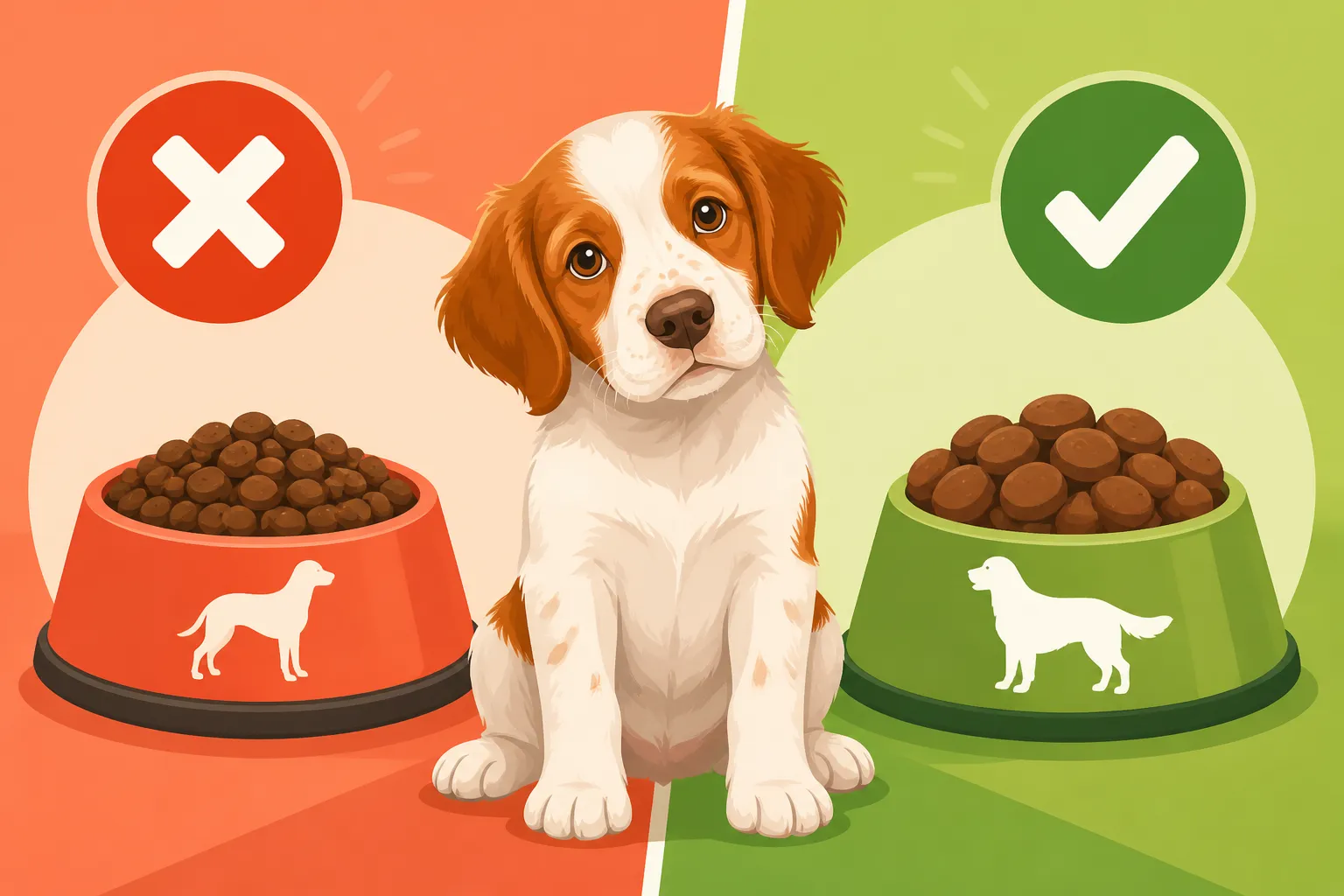
Given the distinctions, the direct answer for most Brittany puppies is: probably not specifically a "large breed" formula. However, there are nuances and individual considerations that might lead a vet or breeder to recommend a food that shares some characteristics with large breed formulas.
Assessing Your Brittany's Individual Needs and Risks
Every puppy is an individual, and while general breed guidelines are helpful, your Brittany's specific genetic background and observed growth pattern play a role. If your puppy comes from a lineage with a strong history of hip or elbow dysplasia, even if their expected adult weight is standard for the breed, your veterinarian might lean towards a food that supports more cautious bone development. This doesn't necessarily mean a "large breed" bag, but rather a food that emphasizes controlled growth and appropriate mineral balance. Similarly, if your puppy seems to be growing exceptionally fast or gaining weight rapidly, a vet might suggest slowing down their caloric intake.
It's also worth noting that the American Brittany Club and reputable breeders prioritize health screenings, particularly for hips. Understanding What Hip Screening Did for the Brittany Spaniel can give you context on why bone and joint health is a continuous consideration throughout your dog's life, starting with proper puppy nutrition. If you're wondering about your puppy's physical activity and its impact on their developing joints, you might be interested in Whether a Brittany Puppy Should Run on Hard Ground.
Consulting Your Veterinarian and Breeder for Personalized Advice
The absolute best resources for making an informed decision about your Brittany puppy's food are your veterinarian and your puppy's breeder.
Your breeder has invaluable insight into the specific lines and the growth patterns of their puppies. They've raised many litters and understand the breed's nutritional needs throughout their different growth stages. They can tell you what food they've had success with and why. Questions like Which Questions to Ask a Brittany Breeder often include discussions about diet.
Your veterinarian can assess your individual puppy, monitoring their weight, body condition score, and overall growth curve. They can spot if your puppy is growing too fast or too slow and recommend a diet tailored to their needs. They can also advise on any specific concerns related to your puppy's health history or genetic predispositions. Don't hesitate to bring the food bags you're considering to your vet for their expert opinion.
Here's a quick comparison of general puppy food types:
| Feature | All-Breed/Medium Breed Puppy Food | Large Breed Puppy Food |
|---|---|---|
| Target Adult Weight | Up to 50-70 lbs (Brittanys fit here) | 50-70 lbs and up |
| Caloric Density | Generally higher to support rapid growth | Slightly lower to promote slower, controlled growth |
| Protein Content | Higher to support muscle development | Similar to higher, but balanced for controlled growth |
| Fat Content | Moderate to higher for energy | Slightly lower |
| Calcium Levels | Adequate for normal bone development | Carefully controlled, often slightly lower |
| Phosphorus Levels | Balanced with calcium | Carefully controlled for specific ratio |
| Calcium:Phosphorus Ratio | Within healthy range (e.g., 1.2:1 to 1.8:1) | Tightly controlled (e.g., 1.1:1 to 1.5:1) |
| Benefit for Brittanys | Good for active, medium-sized puppies with typical growth | Potentially beneficial if growing too fast or high orthopedic risk, but check with vet |
Navigating Puppy Food Choices for Optimal Brittany Health
Choosing the right food for your Brittany puppy is about more than just picking a bag. It's about understanding the ingredients, monitoring your puppy's progress, and making informed decisions for their long-term health.
Decoding Nutritional Labels: What to Look For
When you're staring at the rows of dog food bags at your local pet store or browsing online at retailers like Chewy or Amazon, it can feel overwhelming. Don't just look at the front of the bag; turn it over and read the ingredient list and the guaranteed analysis.
Look for:
- AAFCO Statement: Ensure the food states it meets the nutritional levels established by the AAFCO (Association of American Feed Control Officials) for "growth" or "all life stages." This is a crucial indicator of nutritional completeness.
- High-Quality Protein Source: The first ingredient should be a named meat protein (e.g., "chicken meal," "lamb," "beef"). Avoid generic terms like "meat by-products" as the primary protein source.
- Healthy Fats: Look for sources like chicken fat, fish oil (for Omega-3s like DHA, important for brain and eye development), or flaxseed.
- Complex Carbohydrates: Ingredients like brown rice, oats, barley, or sweet potatoes provide sustained energy.
- Avoid Excessive Fillers: While some grains are fine, avoid foods where corn or wheat are the dominant ingredients, especially if they are high on the list.
- Calcium and Phosphorus Levels: Pay attention to these. For a Brittany puppy, aim for calcium around 1.0-1.5% and a calcium-to-phosphorus ratio between 1.2:1 and 1.4:1. Anything significantly higher might be too much.
Remember, what a Brittany puppy eats now sets the stage for their future health and vitality. This also directly impacts when a Brittany puppy moves to adult food, which is another important nutritional transition.
Monitoring Your Puppy's Condition and Adjusting as Needed
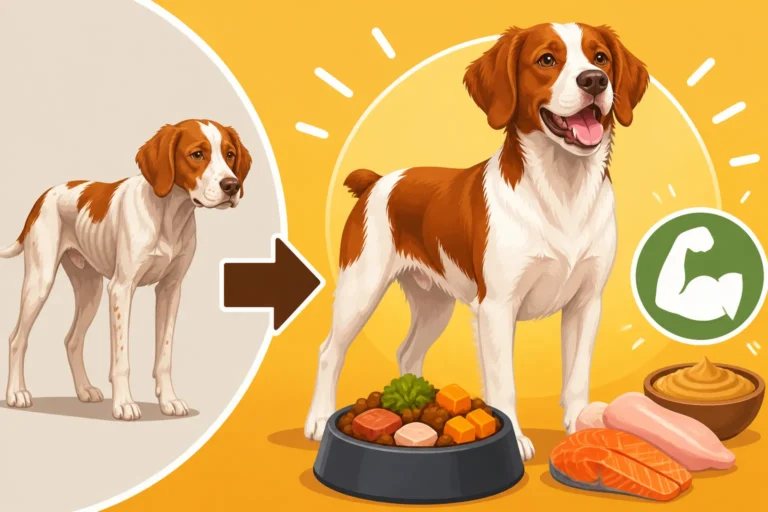
Once you've chosen a food, your job isn't over. Continual monitoring of your Brittany puppy's body condition is key. You should be able to easily feel their ribs without seeing them prominently, and they should have a discernible waist when viewed from above. If your puppy looks too thin, you might need to increase their food intake slightly (or check with your vet for any underlying issues). If they look round or you can't feel their ribs without pressing, they might be getting too much food, or the caloric density of their current food is too high.
Beyond their physical appearance, observe their energy levels, coat quality, and stool consistency. A healthy puppy will be energetic (like a typical Brittany!), have a shiny coat, and produce firm, well-formed stools. Any significant changes in these areas warrant a call to your vet. You're aiming for a strong, lean, and moderately growing puppy who will mature into a healthy adult, ready for all the adventures in their The Twelve to Fourteen Years a Brittany Gets. For example, some owners choose fresh dog food brands like Ollie for their perceived benefits in digestion and coat health, though these also require careful portioning. If you're concerned about long-term joint support, while not usually needed in puppyhood, you might research Whether a Brittany Needs Joint Supplements for later stages. A routine like What a Brittany's Yearly Bloodwork Should Cover will also help monitor their overall health as they age.
Ultimately, while a "large breed" puppy food might not be the default choice for your Brittany, understanding why these foods exist empowers you to make the best decision for your unique companion. It's about fostering moderate, steady growth, rather than rapid bulk, ensuring your Brittany's joints and bones develop optimally for a lifetime of happy hunting and companionship.
Disclaimer
This article is for general informational purposes only and does not constitute professional advice. Laws, prices and regulations vary by location and change over time. Consult a qualified professional for guidance on your specific situation.