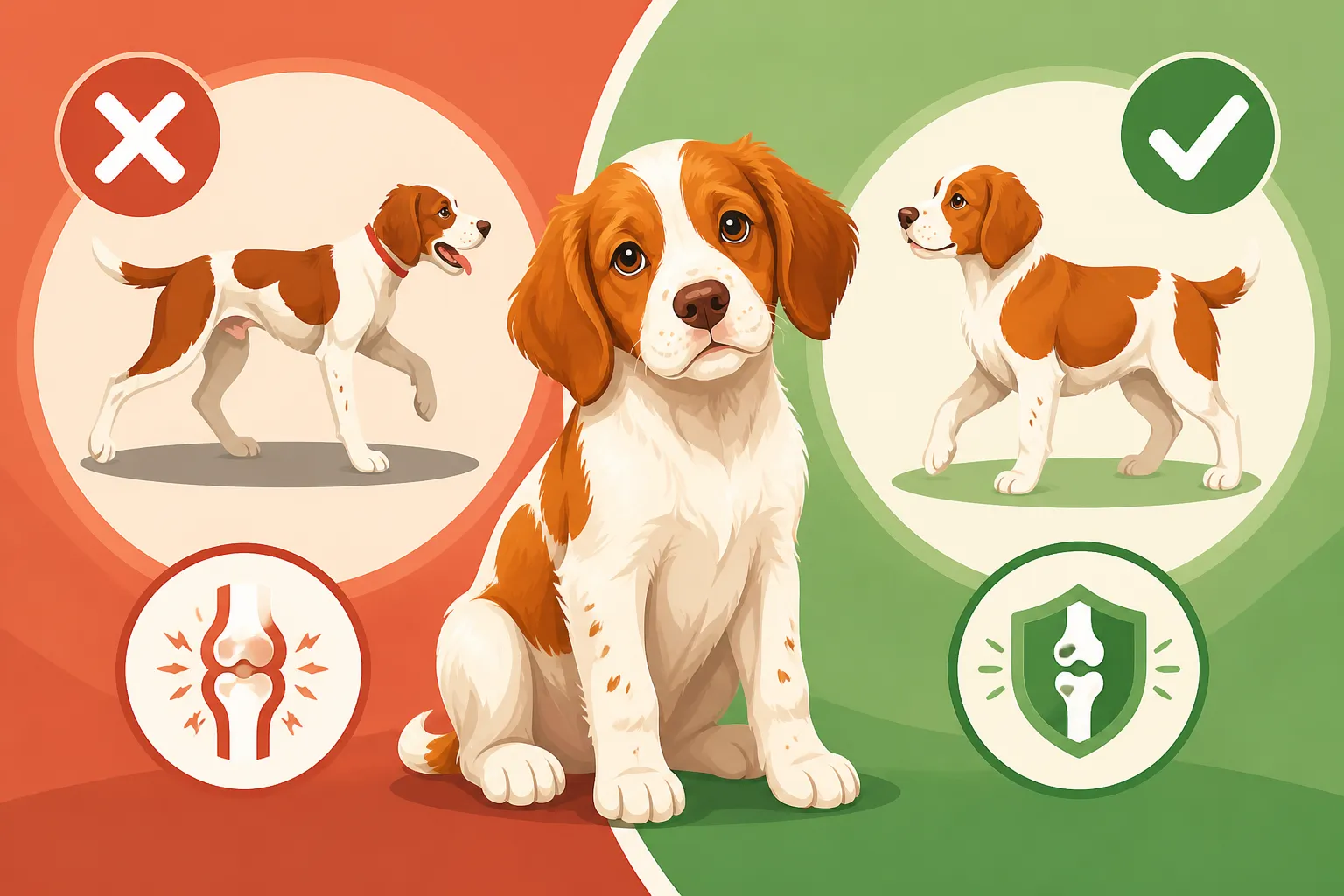
Why a Brittany Puppy Should Grow Slowly
It's incredibly exciting to watch a Brittany puppy grow from a tiny, energetic fluffball into a confident, capable bird dog. However, many new owners, eager to see their pup thrive, might inadvertently push for rapid growth, unaware of the long-term health risks this can pose. This guide will delve into why a slow, steady growth rate is absolutely crucial for your Brittany's skeletal development and overall well-being, helping you foster a healthy future for your beloved companion.
The Critical Role of Slow Growth for Brittany Bone and Joint Development
When you look at a Brittany puppy, it's hard to imagine that those gangly legs and soft joints are still very much under construction. Unlike adult dogs whose bones are fully formed and solid, puppies, especially those of active breeds like Brittanys, have "growth plates" at the ends of their long bones. These are areas of cartilage that are constantly producing new bone cells, allowing the bones to lengthen and the puppy to grow taller. These growth plates are incredibly vulnerable.
Understanding Growth Plates and Their Vulnerability
Imagine a stack of soft, wet clay bricks that are gradually hardening into solid rock. That's a bit like what's happening with your puppy's growth plates. They remain open and soft until a certain age, typically around 12 to 18 months for a Brittany, when they finally "close" or ossify, meaning the cartilage is replaced entirely by solid bone. Until that point, any excessive stress, impact, or rapid weight gain can damage these delicate areas. A damaged growth plate can lead to irregular bone growth, deformities, and a predisposition to debilitating joint issues later in life.
For a Brittany, which is bred for athleticism and endurance in the field, proper joint formation is paramount. Their entire working life depends on strong, healthy hips, elbows, and shoulders. Rushing their growth, whether through overfeeding or inappropriate exercise, puts immense pressure on these vulnerable plates. It's like building a skyscraper too fast with wet concrete – the foundation won't hold. This early stress can significantly contribute to conditions like hip dysplasia, a common concern in many breeds. Learning When a Brittany's Hips Can Be Screened Early can be crucial in catching potential issues.
The Link Between Rapid Growth and Orthopedic Issues
The science is quite clear on this: rapid growth, particularly in the first six months of a puppy's life, significantly increases the risk of developing orthopedic diseases. When a puppy gains weight too quickly, their skeletal system, which is still primarily cartilage, struggles to keep up with the increased load. This mismatch can lead to improper formation of joints and bones.
Think about it this way: if your Brittany puppy packs on too many pounds too fast, their developing joints are carrying more weight than they're structurally ready for. This can cause the cartilage within the growth plates to separate, fragment, or become misaligned. The consequences can be serious, ranging from painful elbow and hip dysplasia to osteochondrosis dissecans (OCD), a condition where cartilage detaches from the bone, causing pain and lameness. These aren't just minor inconveniences; they can lead to chronic pain, expensive surgeries, and a significantly reduced quality of life for your active companion. We want our Brittanys to enjoy The Twelve to Fourteen Years a Brittany Gets with as much comfort as possible.
Nourishing for Longevity: Feeding for Steady Growth
One of the biggest levers we have in controlling a Brittany puppy's growth rate is their diet. It's natural to want to feed your puppy well, but there's a fine line between providing adequate nutrition and overfeeding, especially with formulations not designed for the specific needs of growing large-breed dogs.
The Dangers of Overfeeding and High-Calorie Diets
It might seem counterintuitive, but giving your Brittany puppy too much food, or food that's too rich in calories and certain nutrients, can be detrimental. Many commercial puppy foods are formulated to be very calorie-dense, often because they're catering to the needs of smaller breeds or those with faster metabolisms. However, for a Brittany, this can be a recipe for disaster if not carefully managed.
Overfeeding leads directly to excessive weight gain. As we discussed, extra weight puts undue stress on developing joints and growth plates. Moreover, some high-calorie diets can also contain disproportionately high levels of calcium and phosphorus. While these minerals are essential for bone development, too much of a good thing can disrupt the delicate balance required for proper bone mineralization. This imbalance can actually impair the normal maturation of cartilage and bone, ironically leading to weaker, more susceptible structures. Instead of growing stronger, bones can become more fragile or prone to deformities. It's a tricky balance, and understanding What a Brittany Puppy Eats is foundational.
Choosing the Right Food: Large Breed Puppy Formulas
So, what's a responsible Brittany owner to do? The key lies in selecting a high-quality puppy food specifically formulated for large breeds. These formulas are designed with a slightly lower calorie density and carefully balanced levels of calcium, phosphorus, and other essential nutrients to promote a slower, more controlled growth rate. They aim to support healthy development without pushing the puppy to grow too quickly.
When you're browsing options, whether it's on Chewy, Amazon, or at your local pet supply store, look for labels that explicitly state "large breed puppy formula." These foods often have a slightly lower protein and fat content than regular puppy foods, and critically, their mineral ratios (especially calcium) are fine-tuned to prevent skeletal problems. Always follow the feeding guidelines on the bag, but remember they are just guidelines. Your individual puppy's metabolism, activity level, and growth rate might mean you need to feed slightly more or less to maintain an ideal lean body condition. Regularly assessing your puppy's weight and body condition is far more important than strictly adhering to a feeding chart. Don't be afraid to adjust. For those considering fresh food options, companies like Ollie can also be a good resource for understanding portion control and balanced nutrition tailored to your dog's size and age.
| Growth Stage | Recommended Feeding Strategy | Nutritional Focus | Potential Risks of Incorrect Feeding |
|---|---|---|---|
| 8 weeks – 6 months | Large breed puppy formula, multiple small meals | Balanced calcium/phosphorus, moderate calories | Too rapid growth, joint stress, nutrient imbalances |
| 6 months – 12 months | Continue large breed puppy formula, 2-3 meals | Continued balanced minerals, lean muscle support | Overweight, continued joint strain |
| 12 months – 18 months | Transition to large breed adult formula | Maintain lean body weight, joint support | Over-supplementation, adult obesity |
| After 18 months | Large breed adult formula | Maintenance calories, joint health | Excessive weight gain, accelerating arthritis |
Note: This table provides general guidance. Always consult your veterinarian for specific recommendations tailored to your Brittany.
Mindful Movement: Exercising for Healthy Development
Just like nutrition, exercise plays a pivotal role in a Brittany puppy's development. While it's tempting to let your high-energy pup run wild, especially given their natural athleticism and bird drive, restraint is key during their critical growth period.
Avoiding High-Impact and Repetitive Activities
During the period when growth plates are open, certain types of exercise can be incredibly damaging. High-impact activities such as jumping off furniture, leaping out of a truck bed, or prolonged, intense running on hard surfaces (like pavement or concrete) should be avoided. Repetitive motions, such as long-distance jogging or agility training that involves tight turns and jumps, also put excessive strain on developing joints. Even too much vigorous play with larger, heavier adult dogs can result in accidental injury to a puppy's delicate structure.
Think of those growth plates as hinges that haven't fully solidified. Repeated forceful twisting, jarring impacts, or constant pressure can cause microtrauma or even full fractures that might not be immediately apparent. The damage can accumulate over time, leading to chronic problems that surface once the dog is older and has stopped growing. It's a tough pill to swallow when you have a puppy bursting with energy, but preventing injury now will pay dividends in a long, healthy hunting career later. Remember, Whether a Brittany Puppy Should Run on Hard Ground is a common question, and the answer is generally "no" for sustained periods.
Encouraging Appropriate Play and Conditioning
So, how should a Brittany puppy exercise? The focus should be on controlled, low-impact activities that encourage natural movement and build muscle tone without stressing joints. Short, frequent walks on soft, varied terrain like grass, dirt trails, or even through light cover are ideal. These surfaces provide better shock absorption and challenge different muscle groups. Free play in a safely enclosed yard is excellent, allowing your pup to explore and move at their own pace, with natural breaks.
Supervised play with other puppies or calm, adult dogs of similar size can help with socialization and energy release. Swimming is another fantastic low-impact exercise that builds muscle without joint strain, though ensure it's in a safe environment and that your puppy isn't overly chilled afterward. How to Keep a Brittany Fit in Summer often involves looking at swimming as a good option. Mental stimulation through training sessions, puzzle toys, and scent games is also vital and uses energy without physical stress. These activities not only contribute to physical health but also help shape a well-adjusted and well-mannered Brittany. Consistency in these appropriate activities, rather than intensity, is the goal until their growth plates have fully closed, which typically happens around When a Brittany Reaches Full Weight.
Monitoring Your Brittany's Growth Journey
It's all well and good to talk about slow growth, but how do you actually know if your Brittany puppy is on the right track? Monitoring their physical development and overall health is an ongoing process that involves keen observation and regular veterinary check-ups.
Recognizing Signs of Too Rapid Growth
While there's no exact blueprint for every individual Brittany, certain signs can indicate your puppy might be growing too quickly. The most obvious is excessive weight gain. Your puppy should always look lean, with a visible "tuck-up" (the indentation between their rib cage and hindquarters) and easily palpable ribs without being bony. If your puppy starts to look plump, or you can't easily feel their ribs, it's a red flag.
Other, more subtle signs can include lameness, stiffness, or an awkward gait, especially after periods of activity. They might be reluctant to play, jump, or climb stairs, or seem unusually tired. While some of these can be normal puppy quirks, persistent issues warrant attention. Some rapidly growing puppies might also develop uneven growth, where one limb appears longer than another, or their joints seem disproportionately large for their slender bones. Keep an eye on their general energy levels and how they recover after play. If something feels off, trust your instincts.
Regular Vet Check-ups and Breeder Communication
Your veterinarian is your best partner in ensuring your Brittany puppy is growing appropriately. Regular check-ups are not just for vaccinations; they're crucial opportunities for your vet to assess your puppy's weight, body condition score, and overall musculoskeletal development. They can palpate joints, observe gait, and offer personalized feeding and exercise recommendations. Don't hesitate to ask them about your puppy's growth rate specifically. They might suggest adjustments to food quantity or type based on their examination.
Equally important is maintaining open communication with your Brittany's breeder. A reputable breeder will have extensive knowledge of their lines and can offer valuable insights into typical growth patterns and potential concerns. They should have already performed health screenings on the parents, such as hip and elbow certifications, which can give you an idea of the genetic predispositions of your puppy. What a Brittany Spaniel Breeder Should Have Tested provides excellent guidance on this. A good breeder will be a resource for years to come and wants to see their puppies thrive. They can offer practical advice gleaned from years of experience.
Disclaimer
This article is for general informational purposes only and does not constitute professional advice. Laws, prices and regulations vary by location and change over time. Consult a qualified professional for guidance on your specific situation.