Whether a Brittany’s Armpits Collect Foxtails
Oh, the dreaded foxtail! Any Brittany owner who spends time in the field knows the sheer panic that can set in when you realize those insidious little barbed seeds might have found their way into your beloved dog's coat. And believe me, if there's one spot they absolutely love to hide, it's often the soft, protected, and surprisingly overlooked armpit area. This guide is going to dive deep into why your Brittany's armpits are such a magnet for these nasty hitchhikers, what dangers they pose, and most importantly, how to keep your dog safe and sound from their painful invasions.
Understanding the Brittany's Coat and Foxtail Vulnerability
Brittanys are glorious dogs, built for the field, with a coat that's generally easy to care for, but it has specific characteristics that can, unfortunately, make them foxtail magnets in certain areas. It's a cruel irony that the very features that make them beautiful and functional can also be their downfall when it comes to plant awns.
Why the Armpits Are a Common Trap
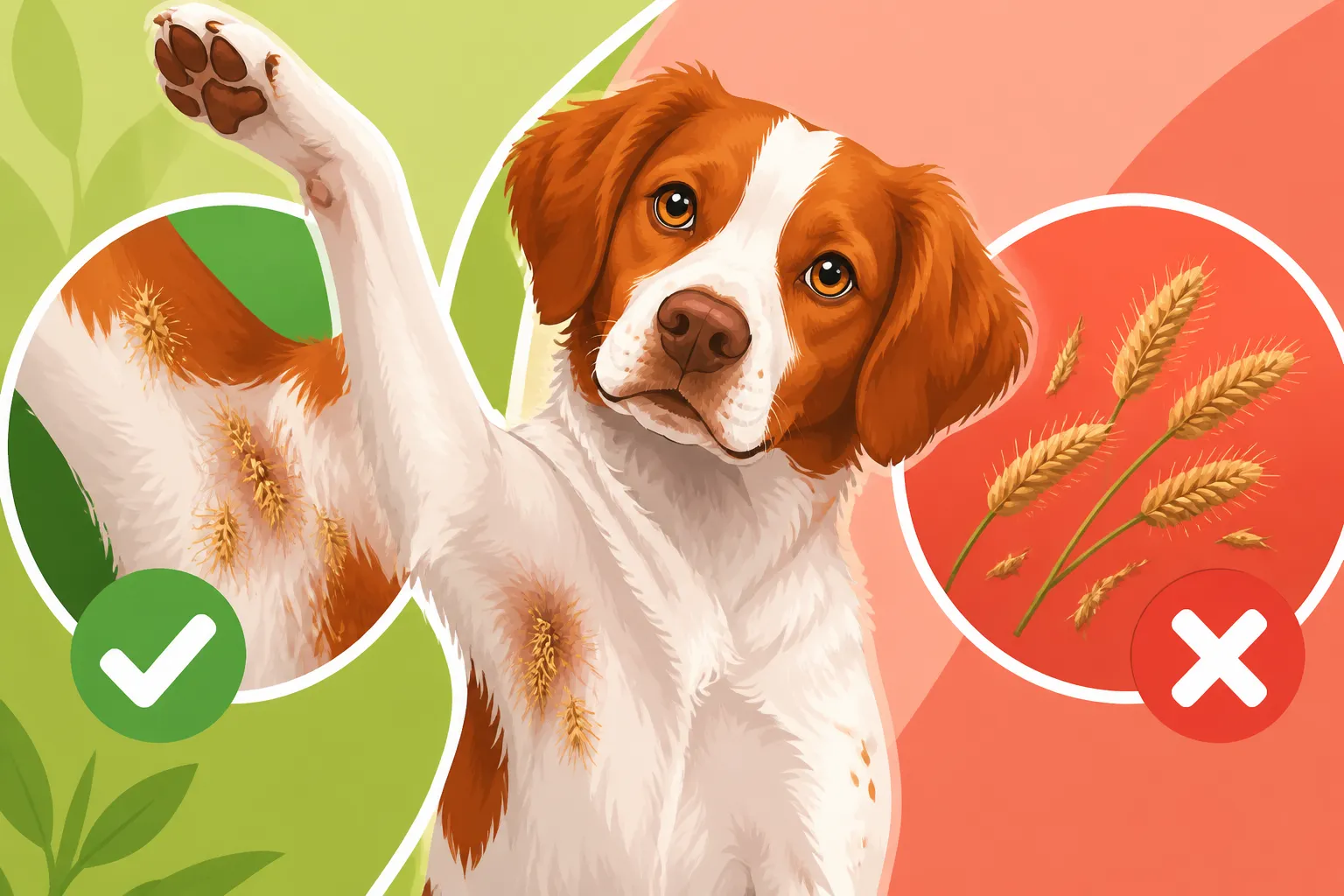
Think about how your Brittany moves: running, quartering through tall grass, plunging into brush. Their legs are constantly in motion, and the armpits – that soft, vulnerable skin where the front leg joins the body – are constantly rubbing against dense cover. This area often has slightly longer, softer hair than the body, and it's a natural collection point. As your dog pushes through vegetation, foxtails and other burrs can get swept up from the ground or caught on the legs, then friction and motion work them upwards and inwards. It’s like a little pocket just waiting to catch debris. Once a foxtail gets into that soft armpit skin, it's a prime spot for it to start its journey into the skin.
The Nature of the Brittany's Feathering
While Brittanys don't have the heavy, flowing feathering of, say, an English Setter, they do have feathering on their legs, belly, and, yes, around their armpits. This feathering, which you can read more about in Where a Brittany's Feathering Grows, is a little longer and finer than the body coat. It acts like a net, catching everything from burrs to grass seeds to, you guessed it, foxtails. The armpit area specifically tends to have a denser concentration of this softer hair, which, combined with the constant movement of the leg, creates the perfect storm for foxtails to latch on and then burrow. The density provides camouflage for the foxtail, making it incredibly easy to miss during a quick pat-down.
How Foxtails "Travel" on a Dog's Body
Foxtails are cunning little botanical devils. They have a one-way design: barbed seeds that are incredibly efficient at moving forward, but not backward. Once they latch onto fur, movement and friction act like a pump, pushing them deeper into the coat or, worse, into the skin. From the armpit, a foxtail can migrate in several directions:
- Deeper into the armpit: Causing localized abscesses and pain.
- Up the leg or onto the chest: Potentially moving towards the throat or even the spine.
- Into the body cavity: In rare, extreme cases, they can even penetrate muscle tissue and organs, leading to very serious internal infections.
This migration is what makes them so dangerous. A tiny seed caught in the fur can quickly become a significant medical emergency if it's allowed to burrow.
The Dangers of Hidden Foxtails in Armpits
Discovering a foxtail embedded in your Brittany's armpit isn't just a minor nuisance; it can lead to serious health issues if not addressed promptly and correctly. Their unique structure makes them particularly insidious.
Early Signs and Symptoms
Because foxtails have those one-way barbs, once they're in, they don't easily come out. Your Brittany might initially show very subtle signs, which can be easily missed after a long, exciting day in the field.
- Excessive Licking or Chewing: This is often the first clue. If your dog is constantly licking, nibbling, or chewing at their armpit, especially after a hunt, pay close attention. It means something is irritating them.
- Swelling or Redness: Carefully part the fur and look for any localized swelling, redness, or a small pustule. It might feel like a hard lump under the skin.
- Pain or Sensitivity: Your dog might flinch or yelp when you touch the area. They might also hold the leg slightly awkwardly or be reluctant to put full weight on it, though this is less common with just an armpit foxtail unless it's deep.
- Lethargy or Fever: If the infection has progressed, your dog might become generally unwell, show a lack of appetite, or develop a fever. This indicates a more serious situation.
Remember, Brittanys are tough dogs, and they often try to hide pain, especially when they think they might be missing out on field time. So, a thorough inspection is critical.
Potential Complications and Vet Visits
If a foxtail isn't removed, the consequences can range from uncomfortable to life-threatening.
- Abscess Formation: This is the most common complication. The body tries to wall off the foreign invader, leading to a painful, pus-filled pocket under the skin. These often require veterinary drainage and antibiotics.
- Deep Tissue Infection: The foxtail can continue to migrate, causing infection as it travels through muscle and connective tissue. This can be incredibly painful and difficult to treat, often requiring surgery to locate and remove the migrating seed.
- Internal Organ Damage: In extremely rare but horrifying cases, a foxtail can travel significant distances, even reaching internal organs like the lungs or abdominal cavity. This is a severe emergency requiring extensive surgery.
- Chronic Lameness: If a foxtail causes significant inflammation or damage to nerves or tendons in the armpit or shoulder, it can lead to long-term lameness or discomfort for your dog.
The potential cost of treating these complications can be substantial. A simple removal might be a minor vet bill, but surgery for a migrating foxtail can quickly escalate. It’s a good idea to know What a Brittany's Field Injuries Cost in a Season to anticipate these possibilities.
The Sneaky Nature of Foxtail Migration
What makes foxtails so uniquely dangerous is their ability to migrate. They don't just sit still. Once they puncture the skin, those backward-pointing barbs, combined with muscle movement, effectively "walk" the seed deeper into the body. This is why a foxtail that was just visible yesterday can be completely gone today, having disappeared beneath the skin. They can travel shockingly far from their entry point, making them incredibly difficult for a vet to locate, sometimes requiring imaging like X-rays or ultrasound, and even exploratory surgery. This insidious migration capability is precisely why early detection and removal are absolutely paramount.
Prevention and Daily Checks for Armpit Foxtails
The best defense against foxtails is a good offense: diligent prevention and meticulous post-hunt routines. It’s all about staying one step ahead of those pesky seeds.
Post-Hunt Inspection Routine
After every outing, especially if you've been in tall, dry grass or fields known for foxtails, a thorough inspection of your Brittany is non-negotiable. This isn't a quick pat on the head; it's a head-to-tail examination that focuses on high-risk areas like the armpits.
- The Full Body Scan: Start at the head and work your way back. Pay close attention to ears (inside and out, as you might learn in How Grass Seeds Get Into a Brittany's Ear), eyes, nose, mouth, between the toes (How to Check a Brittany Between the Toes offers great advice for feet), and, of course, the armpits.
- Armpit Focus: Gently lift each front leg and visually inspect the entire armpit area. Part the hair with your fingers, feeling for any bumps, redness, or signs of a puncture. Use your fingertips to carefully feel the skin, checking for any rough, prickly bits that might be a hidden foxtail. Don't be afraid to get right in there.
- Brush Out: A good brushing with a firm bristle or slicker brush, especially around the feathering and armpits, can dislodge foxtails before they have a chance to burrow. You can find brushes suitable for Brittanys on Amazon or Chewy. This is also a good time to get out any burrs, as covered in How to Get Burrs Out of a Brittany's Coat.
This routine should ideally be done within an hour of returning from the field, as mentioned in What a Brittany Needs Within an Hour of a Hunt, before the foxtails have too much time to work their way in.
Grooming Tips for the Armpit Area
Strategic grooming can significantly reduce the risk of foxtail entanglement in the armpits.
- Trimming Feathering: While you don't want to shave your Brittany, a slight trim of the longer feathering around the armpits and belly can be beneficial, especially during foxtail season. Use blunt-nosed scissors or clippers to carefully shorten the hair, making it less likely to collect seeds and easier for you to inspect the skin underneath. This isn't about altering the breed standard, but about practical field care.
- Regular Brushing: Even outside of hunting season, regular brushing helps keep the coat free of tangles and allows you to become familiar with your dog's normal skin texture. This makes it easier to spot any anomalies quickly. How Often a Brittany Needs Brushing can give you more insights.
- Bathing and Rinsing: A good rinse or bath after a particularly heavy foxtail exposure can help dislodge any loose seeds before they become a problem. Just make sure to dry the area thoroughly afterward to prevent skin irritation.
Protective Gear and Environmental Management
Sometimes, an ounce of prevention is worth a pound of cure, especially in dense foxtail country.
- Protective Vests: A close-fitting hunting vest or chest protector can cover the armpit area, providing a physical barrier against foxtails. While not foolproof, it can significantly reduce exposure. Ensure the vest fits well and doesn't chafe.
- Boots for Feet: While boots primarily protect the pads, some higher-cut versions can offer a bit of protection around the lower leg and indirectly reduce the number of foxtails migrating upward from the feet. For more on this, check out Whether a Brittany Needs Boots in the Field.
- Avoid Known Foxtail Areas: This might sound obvious, but if you know a particular field or trail is thick with mature foxtails, try to find an alternative route, especially later in the season when the seeds are dry and prone to breaking off. If you must go through such areas, do so quickly and follow up with an immediate, thorough inspection.
- Land Management: If you own land, consider mowing or treating areas prone to foxtails to reduce their population.
What to Do If You Find a Foxtail in Your Brittany's Armpit
Despite your best efforts, sometimes a determined foxtail still manages to latch on. Knowing how to react is crucial for your Brittany's health and comfort.
Safe Home Removal Techniques (and when not to try)
If you spot a foxtail that is clearly visible and hasn't yet penetrated the skin, you might be able to remove it yourself.
- Assess the Situation: First, ensure your dog is calm and cooperative. If they are in pain or very agitated, attempting removal yourself might cause more distress or injury.
- Gather Your Tools: You'll need good lighting, a pair of tweezers or small hemostats (forceps), and possibly a magnifying glass.
- Gentle Extraction: Carefully grasp the foxtail as close to the skin as possible with the tweezers. Pull it straight out with a steady, firm motion. Avoid twisting or pulling at an angle, as this can break the foxtail, leaving barbs behind.
- Inspect and Clean: After removal, thoroughly inspect the area to ensure no parts of the foxtail remain. Clean the skin with a mild antiseptic solution (like diluted povidone-iodine or chlorhexidine) and apply a pet-safe antibiotic ointment.
- DO NOT attempt home removal if:
- The foxtail has already burrowed beneath the skin, even slightly.
- The area is swollen, red, or showing signs of infection (pus, warmth).
- Your dog is in significant pain or resisting examination.
- You are unsure if you can remove the entire foxtail.
In any of these scenarios, it's always best to seek professional veterinary help. Trying to dig out an embedded foxtail at home can push it deeper, break it, or cause more trauma and infection.
When to Seek Veterinary Assistance
Err on the side of caution when it comes to foxtails. If you have any doubts, or if the foxtail is already embedded, a vet visit is absolutely necessary.
- Embedded Foxtail: If you can no longer see the foxtail or if it has clearly punctured the skin, your veterinarian will likely need to sedate your dog, make a small incision, and carefully remove it. They have specialized tools and expertise to ensure complete removal.
- Signs of Infection: If you see pus, significant swelling, or your dog is running a fever, the foxtail has likely caused an infection, and antibiotics will be needed alongside removal.
- Migrating Foxtail: If you suspect a foxtail has been present for a while and is causing lameness, coughing (if it migrated to the lungs), or other systemic signs, your vet will need to perform diagnostics like X-rays or ultrasound to locate it. This can be a complex and costly procedure, as you might find when researching What Removing a Foxtail From a Brittany's Ear Costs, which applies similarly to other embedded locations.
- Ongoing Irritation: Even if you removed what you thought was the entire foxtail, if your dog continues to lick, chew, or show discomfort in the area, it's a sign that a piece might have been left behind. Get it checked out.
Your vet will be able to perform a proper examination, which might involve shaving the area for better visibility, and determine the best course of action.
Post-Removal Care and Monitoring
Whether you remove it at home or the vet does, post-removal care is important.
- Keep It Clean: Continue to clean the wound site as instructed by your vet or as you did with the initial antiseptic.
- Prevent Licking: Your Brittany will naturally want to lick the wound, but this can introduce bacteria and delay healing. An Elizabethan collar (cone of shame) might be necessary for a few days. You can pick one up easily from Chewy or Amazon.
- Monitor for Complications: Keep a close eye on the area for any signs of returning swelling, redness, discharge, or if your dog continues to show pain. If any of these occur, contact your vet immediately. Follow through with any prescribed antibiotics.
- Review Prevention: Use this experience as a learning opportunity. Re-evaluate your post-hunt routine and grooming practices to minimize the chances of a repeat incident.
Foxtails are an undeniable nuisance for hunting dog owners, but with vigilance, proper grooming, and prompt action, you can protect your Brittany from their painful consequences. Stay diligent, friends, and enjoy those field adventures safely!
Disclaimer
This article is for general informational purposes only and does not constitute professional advice. Laws, prices and regulations vary by location and change over time. Consult a qualified professional for guidance on your specific situation.