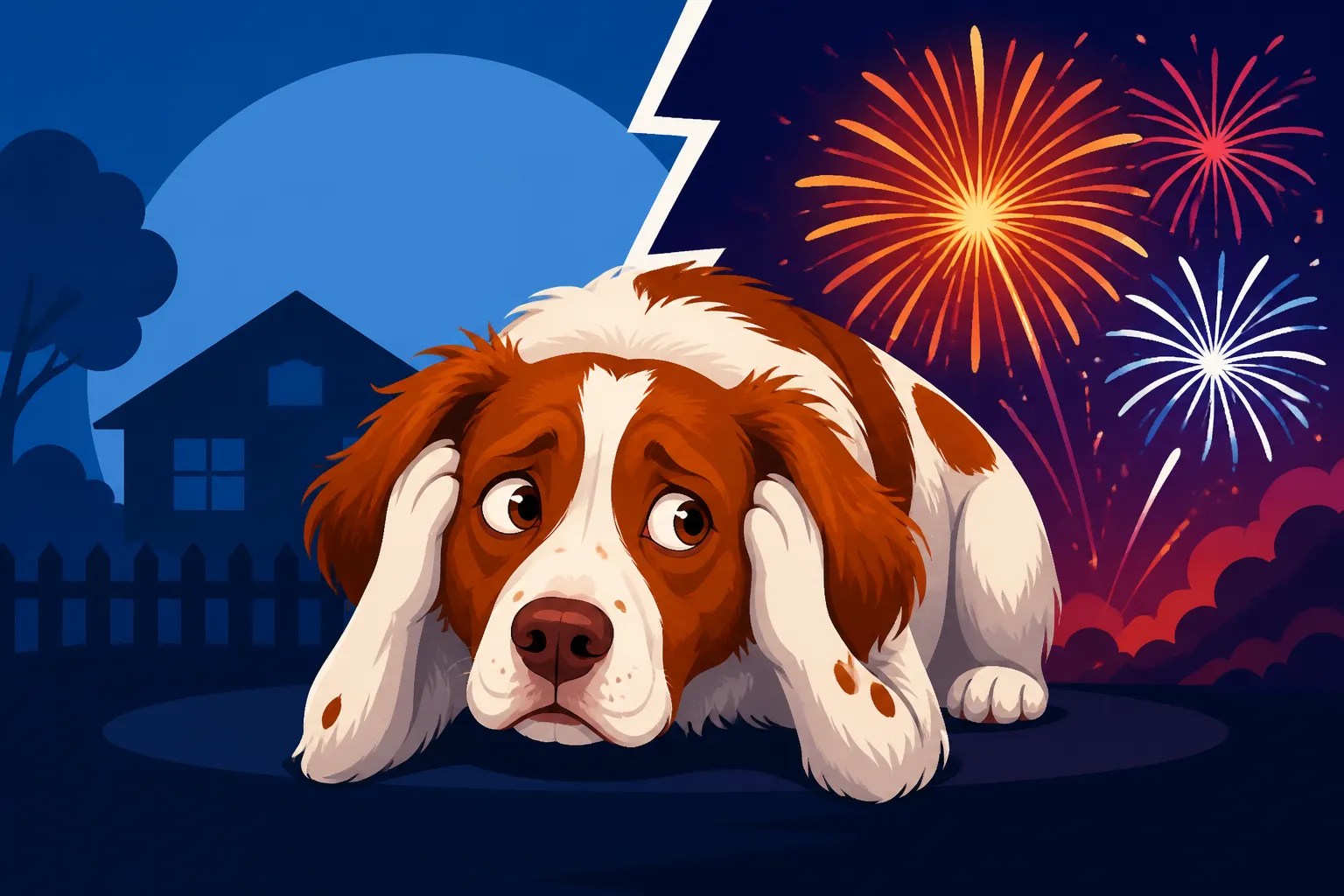
Whether Fireworks Make a Brittany Gun Shy
If you're a Brittany owner, especially one who hunts or dreams of hitting the field, few things are as heartbreaking or frustrating as a gun-shy dog. The sudden, booming explosions and bright flashes of fireworks, particularly around holidays like the Fourth of July or New Year's Eve, often leave us wondering if they could undo all our careful training and nurturing, permanently damaging our sensitive companions. This guide will delve into whether fireworks can indeed make a Brittany gun shy, the underlying reasons for their reactions, and what you can do to protect your beloved bird dog.
Understanding Gun Shyness in Brittanys and the Role of Loud Noises
Brittanys are known for their enthusiastic, intelligent, and often sensitive nature. They are bred to work in close cooperation with hunters, which includes being comfortable around the loud report of a shotgun. So, when unexpected, intense noises like fireworks come into play, it's natural to worry about the impact on their finely tuned instincts and learned behaviors.
What "Gun Shyness" Really Means for a Brittany
True gun shyness isn't just a dog being startled by a loud noise; it's a profound, often debilitating fear response to gunshots that prevents a bird dog from performing its natural duties. It exists on a spectrum. At one end, you might see a Brittany flinch or look uncomfortable, but quickly recover. In the middle, a dog might actively try to avoid the sound, cowering, shaking, or attempting to flee when a gun goes off. At the extreme end, a truly gun-shy Brittany will enter a state of panic, bolting, becoming inconsolable, or shutting down completely.
For a hunting breed like a Brittany, this isn't just a behavioral quirk; it can mean the end of their hunting career. Imagine spending countless hours on obedience, conditioning, and bird work, only for a sudden fear to render your dog unable to function in the field. It’s incredibly frustrating for owners who've invested so much, and utterly terrifying for the dog experiencing such intense fear. Brittanys are intelligent, and a traumatic experience can etch itself deeply into their memory, sometimes making it difficult, though not impossible, to overcome. You can often see the early indicators, as discussed in Signs a Brittany Is Becoming Gun Shy.
How Brittanys Perceive Loud, Unexpected Sounds
Brittanys, like all dogs, possess a far more acute sense of hearing than humans. They can detect a wider range of frequencies and hear sounds from much greater distances. This heightened auditory perception means that a sound that might be merely loud to us can be absolutely deafening and overwhelming to them.
Fireworks present a particularly distressing combination of stimuli: sudden, concussive bangs, high-pitched whistles, crackling, and often bright, erratic flashes of light. These are unpredictable and come from unknown directions, offering no context or warning. For a dog, especially one that hasn't been properly desensitized or has a naturally more anxious temperament, these sounds are not just unpleasant; they can be perceived as direct threats. Their instincts scream "danger!" and the fight-or-flight response kicks in. The fear response is a powerful, primal survival mechanism, and when it’s triggered repeatedly by something as intense as fireworks, it can lead to lasting associations that generalize to other similar sounds, including gunshots.
Why Fireworks Can Be a Major Trigger
The way a sound is introduced and experienced fundamentally shapes a dog's reaction to it. Fireworks, by their very nature, are almost perfectly designed to create a negative association for sensitive dogs, contrasting sharply with the careful methods used to introduce a gun to a sporting dog.
The Unpredictability and Intensity of Fireworks
Think about a typical fireworks display. It starts, often without warning, with a series of loud, sharp reports that echo and vibrate through the air. These are followed by bursts of light, whistles, and more explosions. The pattern is chaotic, the volume immense, and the experience overwhelming. There's no gradual build-up, no opportunity for the dog to process the sound at a lower intensity, and certainly no positive reinforcement associated with the experience.
For a Brittany, whose ears are always scanning for the whir of a bird's wings or the distant sound of its handler, this barrage of intense, unpredictable noise is terrifying. Unlike a bird flushing or a training dummy hitting the ground – events that are exciting and purposeful in the field – fireworks have no positive context. They just happen, often right outside your quiet home, violating your dog's sense of security. It’s not just the noise; it’s the entire sensory overload that can create a deeply traumatic experience, embedding a fear response that's hard to shake.
The Difference Between Fireworks and a Controlled Gun Introduction
This is where the critical distinction lies for a hunting Brittany. A proper gun introduction for a sporting dog is a carefully orchestrated process, designed to create positive associations with the sound of gunfire from the very first moment. This usually begins with a very low-volume sound, like a starter pistol or a .22 blank, fired at a significant distance from the puppy. The sound is always paired with something wonderful, like a favorite toy, delicious treats, or the release of a bird to chase. The volume and proximity are increased incrementally, over many sessions, ensuring the dog always perceives the sound as a signal for something good. How to Introduce a Gun to a Brittany outlines this process in detail.
| Feature | Controlled Gun Introduction | Fireworks Exposure |
|---|---|---|
| Volume/Intensity | Starts very low, gradually increases | Starts high, often intense and variable |
| Predictability | Planned, controlled by handler | Unpredictable, sporadic, often from unknown sources |
| Association | Paired with positive experiences (food, retrieve, birds, praise) | Paired with fear, anxiety, lack of control |
| Environment | Safe, familiar training grounds | Potentially anywhere, often near home/familiar places |
| Handler's Role | Calm, reassuring, guiding | Often helpless, stressed by dog's reaction |
| Outcome Goal | Confidence, excitement, focus on task | Avoidance, panic, generalized fear |
Fireworks are the exact opposite. They are usually loud from the start, completely unpredictable, and offer no positive association whatsoever. There's no handler control over the sound, and the dog has no positive outlet for its energy or focus. This stark contrast is why fireworks can be so detrimental, easily overriding any positive early gun introductions or even creating gun shyness in a dog that was previously unfazed by controlled gunshots. It's a prime example of Why a Brittany Is Easy to Ruin With a Gun if the introduction is handled incorrectly or trauma occurs.
Preventing and Managing Fear of Fireworks (and Gun Shyness)
Understanding the potential damage is the first step; now, let's talk about what you can do to protect your Brittany, whether they're a puppy or an adult.
Proactive Steps for Brittany Puppies
The best defense is a good offense, especially with sensitive breeds like Brittanys. Early, positive socialization is absolutely key. This means exposing your Brittany puppy to a wide variety of sights and sounds in a controlled and positive manner. Think about everyday household noises, traffic sounds from a distance, and even very quiet, distant sounds of nature. The goal is to build confidence and help them learn that loud or unusual sounds aren't always a threat. Whether a Brittany Puppy Should Be Socialized Heavily delves into the importance of this foundational work.
Critically, avoid exposing young puppies to fireworks at all costs. Their brains are rapidly developing, and a single traumatic event can leave a lasting imprint. This also applies to any uncontrolled loud noises. If you know fireworks are likely, plan ahead:
- Create a Safe Haven: Set up a secure, comfortable space for your puppy in an interior room, away from windows. This could be their crate, covered with a blanket, with some soft bedding and their favorite chew toys.
- Mask the Noise: Use white noise machines, calming canine music, or simply turn on the TV or radio to a comfortable volume to help drown out the distant bangs. You can find many options for white noise machines or specialized calming music playlists on platforms like Amazon.
- Positive Association: During predicted periods of fireworks, engage your puppy in calm, rewarding activities in their safe space. Offer high-value treats, puzzle toys, or a gentle cuddle session. The goal is to associate this time with safety and comfort, not fear.
Remember, the goal is not to eliminate all loud noises from their life but to introduce them in a way that builds resilience and positive associations. The Age a Brittany Should Hear Its First Shot emphasizes the careful timing and method for gun introduction, which fireworks completely disregard.
Managing an Adult Brittany During Fireworks
Even if your adult Brittany has shown no signs of gun shyness, fireworks can still be incredibly stressful. If you know fireworks are coming, the preparation is similar to that for a puppy, but with an emphasis on mitigating existing anxieties.
- Secure Their Environment: Just like with puppies, create a safe, interior room. Ensure all windows are closed, curtains are drawn, and the room is secure so they cannot bolt if truly panicked. Many Brittanys, when frightened, will try to escape, so double-checking gates, fences, and making sure they are microchipped and wearing identification is crucial.
- Sound Masking: White noise, classical music, or even a fan can help muffle the sound of fireworks. Some owners use specific "thunder shirts" or calming wraps, which provide gentle, constant pressure and can have a calming effect on some dogs.
- Distraction and Engagement: Offer long-lasting chew toys, Kongs stuffed with frozen treats, or interactive puzzle toys. The act of licking, chewing, or problem-solving can be incredibly soothing for a stressed dog. If your Brittany is very high-energy, a vigorous exercise session earlier in the day, before the fireworks begin, might help them settle down. This is where knowing How Much Exercise a Brittany Needs Off Season can help you plan.
- Your Demeanor Matters: While it's natural to want to comfort a scared dog, avoid excessive coddling or pity, as this can inadvertently reinforce their fearful behavior. Instead, remain calm and reassuring. Act normally, offering gentle pets and praise if they seek comfort, but avoid making a big fuss over their anxiety. This shows them that you are not worried, and there is no real danger.
- Veterinary Consultation: If your Brittany experiences severe anxiety, pacing, panting, destructive behavior, or extreme panic, talk to your veterinarian. They might suggest temporary anti-anxiety medications or supplements to help your dog through particularly stressful events like fireworks displays.
Addressing Existing Gun Shyness
If your Brittany has developed gun shyness, whether from fireworks or another traumatic event, it's a challenging situation that requires immense patience and often professional help. It is certainly not a quick fix.
- Consult a Professional: A certified professional dog trainer or a veterinary behaviorist experienced in working with gun-shy dogs is invaluable. They can assess the severity of the shyness and create a tailored desensitization and counter-conditioning program. Programs like those offered by BAXTER & Bella can provide a structured approach to building confidence and positive associations with various stimuli, which can be adapted to addressing sound sensitivity.
- Desensitization and Counter-Conditioning: This involves gradually exposing your dog to the fearful stimulus (in this case, gun-like sounds) at such a low intensity that it doesn't trigger a fear response. This might start with a recording of gunshots played almost imperceptibly, paired with high-value treats or play. Over many sessions, the volume is increased ever so slightly, always ensuring the dog remains relaxed and happy. The goal is to change their emotional response from fear to indifference or even pleasure.
- Never Force or Punish: Forcing a gun-shy dog into a situation that frightens them will only worsen the problem. Punishment for fear-based reactions is also counterproductive and can destroy trust. Remember, their fear is a genuine emotional response, not an act of defiance.
- Time and Consistency: Rebuilding a gun-shy Brittany's confidence takes a significant amount of time and consistent effort. There will be setbacks, but patience is absolutely crucial. For more insights on this long process, refer to How to Rebuild a Gun Shy Brittany and Whether a Gun Shy Brittany Can Be Fixed.
Long-Term Impact on Hunting Dogs
The repercussions of gun shyness can extend far beyond a few nights of fireworks, affecting a Brittany's entire way of life and the bond with its owner.
The Risk to a Working Brittany's Career
For a Brittany bred and destined for the field, gun shyness is a profound tragedy. These dogs possess incredible bird drive and instinct, but if the sound of the gun triggers panic, they simply cannot do the job they were born to do. A dog that cowers, runs away, or shuts down at the sound of a shot is not only ineffective in the field but also a danger to itself and potentially others.
The heartbreak for an owner is immense. You've invested time, money, and emotional energy into raising and training a potential hunting partner, only to have a single, uncontrolled event like fireworks potentially derail it all. The financial investment in a well-bred Brittany, their food, vet care, and specialized training can be substantial. To see all that potential wasted due to fear is genuinely devastating.
Behavioral Implications Beyond the Field
The impact of severe sound sensitivity doesn't stop at hunting. A dog traumatized by fireworks may develop a generalized anxiety towards all loud noises. This could manifest as fear of thunderstorms, garbage trucks, construction noises, or even a dropped pan in the kitchen. For a Brittany, known for its deep attachment to its family, this can severely impact its quality of life and integration into a typical home environment.
A thunderstorm phobia, for example, can make summer months a recurring nightmare for both dog and owner, causing the dog to pace, pant, hide, or become destructive. You can find more information on this specific issue in Whether a Thunderstorm Phobic Brittany Will Hunt. This pervasive anxiety can make daily life a struggle, reducing the joy and companionship your Brittany offers. It's a reminder that a dog's emotional well-being is paramount, and protecting them from unnecessary trauma, like the uncontrolled chaos of fireworks, is a crucial part of responsible ownership.
Ultimately, preventing gun shyness and managing noise sensitivities in your Brittany requires foresight, understanding, and consistent effort. While fireworks can indeed be a significant trigger, with careful planning and proactive measures, you can help your loyal companion navigate these challenging times and preserve their natural confidence and joy.
Disclaimer
This article is for general informational purposes only and does not constitute professional advice. Laws, prices and regulations vary by location and change over time. Consult a qualified professional for guidance on your specific situation.