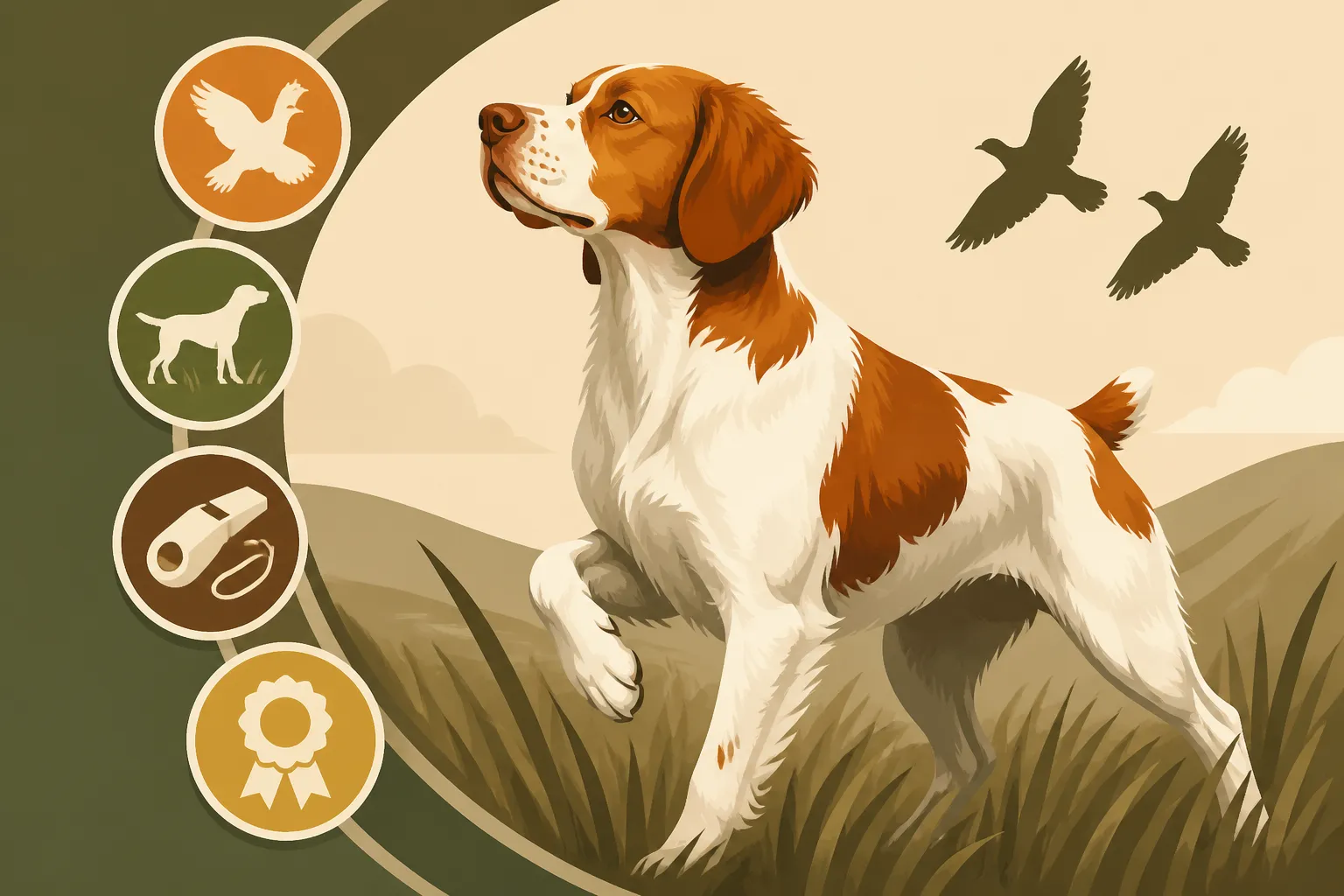
What a Brittany Needs to Earn a Master Hunter Title
Many Brittany owners feel an immense pride in their dog's natural hunting abilities, but guiding that raw talent to the pinnacle of achievement, the Master Hunter title, can seem like an overwhelming journey filled with complex rules and expectations. It's a goal that demands a deep partnership and years of dedicated training. This guide aims to demystify the Master Hunter requirements, breaking down exactly what it takes for your remarkable Brittany to earn this esteemed designation, turning your hunting companion into a true field master.
What the Master Hunter Title Truly Represents
The Master Hunter (MH) title isn't just another ribbon to hang on the wall; it is the highest level of achievement awarded in the AKC's hunt test program for pointing breeds, and our beloved Brittanys have an incredible record in this regard. It represents a dog that consistently performs at an advanced, "finished" level in the field, demonstrating exceptional bird sense, unwavering control, and intelligent problem-solving under various hunting conditions. When you see "MH" appended to a Brittany's name, it speaks volumes about the dog's innate abilities, its handler's dedication, and the breed's enduring legacy as a versatile bird dog. It’s a testament to countless hours spent in the field, refining natural instincts into a polished, consistent performance that mirrors real-world hunting scenarios.
Achieving this title proves that your Brittany possesses the mental fortitude, physical conditioning, and advanced training necessary to be a reliable and effective hunting partner. It's about more than just finding birds; it's about finding them with style, holding a staunch point, executing precise retrieves, and working cooperatively with a handler and often another dog. This level of accomplishment is a true celebration of the bond between dog and handler, showcasing a harmony of instinct and disciplined training.
Elevating Beyond Junior and Senior Hunter
To truly appreciate the significance of the Master Hunter title, it's helpful to understand the progression through the AKC hunt test levels. The journey typically begins with the Junior Hunter (JH) title, which focuses on demonstrating a dog's natural hunting instincts. At this stage, a Brittany needs to find and point birds enthusiastically, show reasonable steadiness, and generally follow the rules of the test. It's the foundation, proving the dog has the raw ingredients to be a bird dog.
The next step is the Senior Hunter (SH) title, which significantly raises the bar. Here, your Brittany must display consistent steadiness to wing and shot (meaning it doesn't move when the bird flushes and the gun fires), execute retrieves to hand on land and from water, and honor another dog's point from a reasonable distance. This level hones basic manners and solidifies the dog's role as a working partner. If you're wondering what it takes for that next step, What a Brittany Needs to Earn a Senior Hunter Title offers a great overview.
The Master Hunter title then takes all these previously established skills and demands absolute perfection and consistency under more complex and challenging circumstances. It requires a dog to perform multiple marked retrieves (remembering where several birds fell), blind retrieves (finding birds the dog didn't see fall, guided solely by the handler), and honor another dog's point at closer proximity and for longer durations. The test environment mimics actual hunting situations far more closely, including varied cover, terrains, and scenting conditions. It's where instincts meet advanced training, culminating in a truly "finished" gun dog.
The Significance for the Breed and Owners
For Brittany owners, earning a Master Hunter title is often the culmination of years of hard work, dedication, and a deep, trusting relationship with their dog. It's an incredibly rewarding experience that not only validates their efforts but also strengthens the unique partnership they share with their Brittany. Beyond the personal triumph, Master Hunter Brittanys play a crucial role in the preservation and advancement of the breed. They serve as exemplars of the breed standard, showcasing the Brittany's intelligence, athleticism, and unyielding bird drive. Breeders often look to Master Hunter lines to ensure these valuable traits are passed down to future generations, reinforcing the breed's reputation as a top-tier versatile pointing dog.
These titled dogs often inspire others in the hunting community, demonstrating what is possible with consistent training and a fantastic canine partner. While the focus is clearly on hunting skills, the discipline and focus gained through this training can also translate to other areas, demonstrating the Brittany's overall versatility. For instance, a dog with such high focus and biddability might also excel in activities like Whether a Brittany Can Do Agility, showcasing their athletic and mental prowess beyond the field.
The Rigors of the Master Hunter Test Structure
The Master Hunter test series is meticulously designed to push a Brittany to its highest potential, simulating challenging, realistic hunting scenarios. These tests demand precision, consistency, and an unshakeable bond between dog and handler. Judges at this level are looking for a complete and confident performance, where every aspect of the dog's work, from its bird-finding ability to its retrieves, demonstrates a high degree of training and innate talent. Unlike the lower levels, there's very little room for error; the standards are exceptionally high.
A typical Master Hunter test involves multiple "series," usually encompassing both land and water work. Dogs are typically run in braces, meaning two dogs work simultaneously, which inherently introduces the critical element of honoring. The retrieve segment is always present and often involves complex scenarios like multiple marked falls (where the dog must remember the location of several birds) or "blind" retrieves (where the dog is guided by the handler to a bird it didn't see fall). Each series is a layered challenge, requiring both instinct and refined training.
Land Series Expectations
In the land series, a Master Hunter Brittany is expected to quarter or range efficiently and intelligently, covering the field effectively while utilizing the wind to its advantage. The dog must demonstrate a keen understanding of cover and bird habits. While an American Brittany might naturally range wider than a French Brittany, they still need to hunt for the gun, staying within a reasonable distance to ensure a productive hunt. If your Brittany tends to open up too much, How to Shorten a Brittany's Range might be a useful article to review, as consistent control is paramount. Upon scenting a bird, the Brittany must establish a staunch, intense point, holding steadfastly until the handler arrives, the bird is flushed, and the shot is fired. This includes being steady to wing and shot – absolutely no movement until explicitly commanded to retrieve.
After the shot, the dog must remain perfectly steady, waiting for the "fetch" command. Once sent, it should quickly and efficiently locate the fallen bird, pick it up gently but firmly, and deliver it promptly to hand. This series often involves multiple birds, requiring the Brittany to mark their falls accurately and retrieve them in the correct sequence if instructed. Furthermore, honoring another dog's point is a critical component. This means if the brace mate points a bird, your Brittany must stop, remain still, and respect the other dog's find, without moving or interfering, often from a relatively close distance.
Consider a practical example: Your Brittany, "Gunner," is working a field of tall prairie grass. He suddenly slams into a staunch point, nose to the wind, tail stiff. As you approach, a pheasant explodes from the cover. The shot rings out, and Gunner remains frozen, eyes fixed on the spot where the bird fell. After a moment, you give the command, "Fetch!" Gunner moves swiftly, locates the bird, and brings it back to you, delivering it gently to your outstretched hand. This precise, controlled enthusiasm is the hallmark of a Master Hunter.
Water Series Demands
The water series adds another dimension of challenge, testing your Brittany's willingness, enthusiasm, and proficiency in retrieving birds from water. While Brittanys generally love water, specific training is required to meet the Master Hunter standards. The dog must enter the water without hesitation, swim strongly and purposefully, and retrieve fallen birds, often from significant distances or through challenging water cover like cattails or submerged obstacles. Just as on land, the retrieve must be clean and delivered promptly to hand. Steadiness on shore is also critical; the dog must remain composed as birds are thrown and shot over water, waiting patiently for the command to retrieve.
A common Master Hunter water test might involve a "blind retrieve." In this scenario, the dog does not see the bird fall into the water but is guided by the handler using a series of whistles and hand signals to its location. This demands immense trust, precise communication, and a dog that is highly responsive to commands, even when its nose might be telling it something different. Multiple marked water retrieves, where the dog must remember the fall of two or three birds, are also common. Physical conditioning is particularly important for cold water retrieves, so year-round care and fitness, like those discussed in How to Keep a Brittany Fit in Summer, are crucial for success in this series.
Table: Key Differences in AKC Hunt Test Requirements (Pointing Breeds)
| Skill Category | Junior Hunter (JH) | Senior Hunter (SH) | Master Hunter (MH) |
|---|---|---|---|
| Bird Finding | Adequate, enthusiastic | Consistent, effective | Exemplary, intelligent, thorough |
| Pointing | Pointing birds with reasonable staunchness | Staunch point to wing and shot | Staunch, intense, confident point to wing and shot; "steady to fall" often implied |
| Retrieving | Optional (usually encourages natural retrieve) | Required; land & single water retrieves to hand | Required; multiple marked & blind retrieves, difficult cover, to hand |
| Steadiness | Reasonable control, minimal breaking | Steady to wing & shot | Impeccable steadiness to wing & shot, no creeping, often steady to fall |
| Honoring | Not required | Required; honors from reasonable distance | Required; honors closely and perfectly, often backing a brace mate's retrieve |
| Handler Control | Basic responsiveness | Good responsiveness | Excellent responsiveness to subtle commands, independent problem-solving |
| Number of Qualifiers | 4 | 4 | 5 |
Note: This table provides a general overview; specific test conditions and rules can vary slightly by organization and event.
Training Your Brittany for Master Hunter Excellence
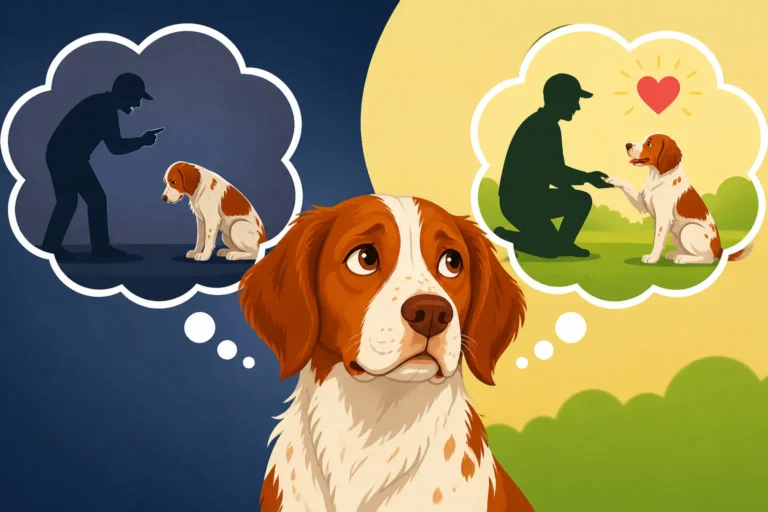
Embarking on the journey to a Master Hunter title requires a significant commitment to advanced training. It’s a process of taking your Brittany’s inherent intelligence and bird drive and meticulously refining it into a consistently high-performing machine. This isn't about brute force or harsh corrections; Brittanys are notoriously sensitive, as discussed in Why a Brittany Is Called Soft, so positive reinforcement and clear, consistent communication are paramount. You’ll be building upon all the foundational skills learned at the Junior and Senior Hunter levels, adding layers of complexity, precision, and independent problem-solving. This means countless hours in the field, exposing your dog to various scenarios, and constantly sharpening both your dog's skills and your handling abilities.
This extensive training period can span multiple seasons, as detailed in How Many Seasons Before a Brittany Is Finished. It requires patience, a keen eye for detail, and the ability to troubleshoot and adapt your methods. For some, seeking guidance from an experienced professional trainer is invaluable, helping to navigate the nuances of advanced field work. Whether Sending a Brittany Away to Train Is Worth It is a personal decision, but for many, expert input provides the edge needed to earn that coveted MH title.
Advanced Steadiness and Honoring Drills
At the Master Hunter level, "whoa" is more than just a command; it's an ingrained state of mind. Your Brittany must exhibit absolute, unyielding steadiness to wing, shot, and ideally, to fall. This means the dog must remain motionless from the moment a bird flushes until it receives your explicit command to retrieve. To achieve this, you'll need to develop highly controlled drills. Start with live birds, like pigeons or quail, on a check cord or stake-out chain, working in progressively more distracting environments. Introduce gunshots, starting at a distance and gradually moving closer, always ensuring your dog remains calm and steady. Advanced drills might involve multiple birds flushing, some shot, some not, demanding the dog's focus remains on the fallen bird and your command.
Honoring is another non-negotiable skill that needs to be polished to perfection. Your Brittany must be able to confidently "back" or honor another dog's point, remaining steady and respectful of their brace mate's find. This requires consistent practice with another trained dog. Begin with both dogs on leads, ensuring they understand the concept of remaining still when the other dog points. Gradually increase the realism, allowing them to work off-lead, and refining the distance at which your Brittany honors. Maintaining positive experiences in these drills is crucial, as How Long a Brittany Remembers a Bad Session means negative encounters can set back training significantly. The general principles of focus and impulse control, which can be found in resources like those from BAXTER & Bella, even if not strictly gun dog specific, are highly relevant here.
Mastering Difficult Retrieves and Blinds
Master Hunter retrieves extend far beyond simply picking up a bird your dog saw fall. Your Brittany needs to master multiple-marked retrieves, accurately remembering the fall locations of two or even three birds shot in quick succession across varied terrain. This demands exceptional marking ability and canine memory. Practice this by throwing multiple bumpers or dead birds, gradually increasing the distance, adding slight changes in terrain or cover, and varying the order of retrieves. Incorporate situations where a retrieve might require navigating obstacles or dense cover, preparing your dog for real hunting conditions.
Blind retrieves are often the most challenging aspect of Master Hunter training. In these scenarios, your dog has not seen the bird fall and must rely entirely on your precise handling commands – whistle signals and hand gestures – to navigate to the hidden bird. This demands an incredibly strong handler-dog bond and absolute trust. Start with short, easy blinds in open fields, clearly marking the fall for your dog initially, then gradually increasing distance, introducing heavier cover, and making the blinds truly "unseen." Using tools available on platforms like Amazon, such as training dummies or specialized whistles, can greatly aid in these drills. A high-quality e-collar, used judiciously and correctly, can be an invaluable tool for reinforcing directional commands at a distance, as discussed in Whether a Brittany Needs an E Collar, ensuring your dog stays on the correct line to the bird. The ultimate goal is a Brittany that responds instinctively and flawlessly to your guidance, even when its nose is pulling it elsewhere.
Navigating Common Hurdles to the Master Hunter Title
The journey to a Master Hunter title is a marathon, not a sprint, and it's almost guaranteed to include its fair share of challenges and setbacks. Even the most talented Brittanys and dedicated handlers encounter plateaus or specific difficulties that require extra patience and a flexible training approach. It’s crucial to recognize that these hurdles are normal; they are opportunities for growth and refinement, not reasons to give up. The key lies in identifying the root cause of the problem and implementing targeted training solutions, always remembering the sensitive nature of the Brittany.
Maintaining your Brittany’s enthusiasm and zest for training throughout this rigorous process is paramount. Brittanys thrive on positive interaction and mental stimulation. Avoid overly long, repetitive, or frustrating sessions. As a rule of thumb, How Long a Brittany's Training Session Should Be suggests keeping sessions short and engaging, always ending on a positive note to keep their spirits high and their drive sharp.
Overcoming Steadiness and Honoring Issues
One of the most frequent hurdles encountered on the Master Hunter path is perfecting steadiness and honoring. A Brittany that "creeps" on point, bumps birds, or breaks before being sent for the retrieve will consistently fail to qualify. Often, this stems from insufficient proofing in highly stimulating environments. To address this, go back to basics. Use a long check cord or even a stake to physically prevent movement during intense flush-and-shot scenarios. Gradually increase the distractions—more birds, louder gunfire, closer birds—while maintaining physical control until your dog's self-control is ingrained. Remember, you're not trying to stifle their natural drive, but to channel it into disciplined action.
For honoring, some Brittanys struggle with the concept of waiting patiently while another dog works. They might try to steal a retrieve or become too excited. This often requires training alongside other dogs, specifically working on their ability to remain stationary and quiet when the brace mate is pointing or retrieving. Start with a structured setup, where both dogs are on lead, and slowly introduce more freedom as your Brittany demonstrates understanding and self-control. It’s about teaching them patience and respect for another dog’s work. Your Brittany’s ability to read your mood, as well as the situation, can play a big role here, so clear and calm communication from you is key.
Addressing Marking and Handling Deficiencies
Another significant challenge can be a Brittany's ability to consistently mark multiple bird falls or to execute blind retrieves with precision. For marking issues, the problem often lies in the dog's focus or memory. Conduct drills where you throw multiple bumpers or dead birds in quick succession, ensuring your Brittany watches each fall intently. Gradually increase the distance and difficulty of these marks. Varying the terrain and cover where the marks fall will also build confidence and experience.
Blind retrieves, requiring the dog to find a bird it didn't see fall, depend heavily on the handler's ability to "handle" the dog with precision. If your Brittany is struggling with blinds, it might be due to unclear signals from you or a lack of trust in your commands. Go back to basics with directional training in an open field. Use strong, clear whistle commands and hand signals (e.g., "sit," "back," "over") to guide your dog. Start with very short, easy blinds and gradually increase the distance and complexity. Reinforce every correct response with high praise and a reward. A strong, reliable recall is foundational to successful handling at a distance, so ensure your Brittany's How Reliable a Brittany's Recall Is is impeccable. If your dog frequently loses focus or connection with you in the field, practicing with an e-collar, used humanely and correctly, can help reinforce your commands over distance, bringing them back to your control and maintaining that crucial partnership.
Disclaimer
This article is for general informational purposes only and does not constitute professional advice. Laws, prices and regulations vary by location and change over time. Consult a qualified professional for guidance on your specific situation.