The Age a Brittany Puppy First Points
Oh, the sheer excitement of bringing home a Brittany puppy! You've watched all the videos, read all the books, and now you're just brimming with anticipation, wondering when your little bundle of energy will lock up on its first bird. It's a question many new Brittany owners obsess over, eager to see that inherent pointing instinct kick in. This guide is all about setting realistic expectations, understanding the subtle signs, and celebrating the unique journey of your young Brittany as it discovers its natural talent.
The Instinctive Spark: When Pointing Begins to Emerge
Brittanys are, at their core, pointing dogs. It's deeply ingrained in their genetic makeup, a heritage passed down through generations of skilled bird dogs. Unlike some breeds that might require extensive force-breaking or highly structured training to develop a point, a Brittany often has this instinct bubbling just beneath the surface, waiting for the right moment and stimulus to truly shine. However, the exact age at which this "spark" becomes a clear, discernible point can vary wildly from one puppy to the next. There's no single magic number, and trying to force it too early can often do more harm than good.
Glimpses of the Future: Early Puppy Behavior
You might be surprised to learn that some puppies show rudimentary pointing behavior incredibly early. We're talking 8, 10, or 12 weeks old! It might not be the statuesque, locked-up point you see in a finished gun dog, but rather a sudden freeze, an intense focus, or a momentary stiffness when they encounter something new and intriguing. Think of a puppy stalking a leaf blown by the wind, or freezing in place, head slightly cocked, eyes wide with fascination at a butterfly or a bird landing in the yard. These are all subtle, fleeting hints of the pointing instinct.
It's crucial to understand that these aren't always "true" points in the hunting sense, but they are indicators of a keen prey drive and the capacity for stillness and intense focus. Recognizing these early behaviors is less about formal training and more about observant ownership. You're essentially watching your puppy's natural instincts unfold. Sometimes, simply watching the dam and sire hunt can give you an idea of the strength of this inherent drive in the lineage, offering a clue as to Whether a Brittany Points Naturally.
The Genetic Lottery and Early Development
Just like children develop at different rates, so do puppies. Some Brittanys are just "born birdy," and it's almost as if they popped out of the womb knowing their purpose. These pups might lock up on a wing or a live bird with surprising intensity at a very young age. Others might take a bit longer, needing more maturity, more exposure, or a more encouraging environment to fully express that instinct. This isn't a sign of a lesser dog, merely a different developmental timeline.
Genetics play a huge role, of course. If your puppy comes from a long line of strong, early-pointing dogs, chances are higher that your pup will also show those traits sooner. However, even within the same litter, you can see a range of personalities and developmental speeds. It's a fascinating aspect of dog ownership, realizing that while the blueprint is there, the execution varies.
The Influence of Early Exposure and Environment
While genetics provide the raw material, the environment and early experiences are like the chisel that shapes the sculpture. Gentle, positive exposure to birds and bird-like stimuli can encourage a Brittany's natural pointing ability to emerge and solidify. But there's a fine line between encouragement and over-pressuring, and a Brittany, being the sensitive soul it is, will definitely let you know if you're pushing too hard. The Brittany Is the Softest of the Pointing Breeds, and this applies to how they respond to early training.
Controlled Introductions to Birds and Wings
Many experienced trainers recommend introducing a Brittany puppy to a bird wing or a live, flighted bird (like a pigeon or quail) in a controlled setting around 4 to 6 months of age, though some start even earlier, as young as 12-16 weeks. The goal isn't to train the point, but to ignite and observe it. You want to make it an exciting, positive experience.
Imagine setting up a scenario in a quiet, confined area, like a garage or a small, fenced yard. You might drag a pigeon wing on a string, letting the puppy chase it briefly before it "disappears." The anticipation and the scent can trigger that freeze response. Or, you might place a dizzied quail under a small wire cage. When the puppy approaches, curious and sniffing, it might suddenly "point" the bird, body stiffening, tail high, focused intently on the scent. This is often How a Brittany Puppy Shows Its First Point. The key is to keep these sessions short, fun, and always end on a high note. Think of them as curiosity-building exercises rather than intense training drills. For more specific guidance on starting, consider reading How to Start a Brittany on Pigeons.
| Puppy Behavior | Potential Meaning | What to Observe |
|---|---|---|
| Sudden Freeze, Head Up | Early pointing instinct, intense focus | Stiff body, tail might raise, nose pointed, eyes locked on an object or scent |
| Stalking, Low Crawl | Prey drive, preparatory to pounce or chase | Body lowered, slow deliberate movement, eyes fixed on target |
| Barking or Pouncing | Curiosity, excitement, lacks true pointing control | Vocalization, breaking concentration to lunge, less controlled stillness |
| Avoiding or Hiding | Fear, disinterest, possibly overstimulated or sensitive | Retreating, reluctance to approach, flattened ears, yawning |
| Sniffing Ground Intensely | Following scent trail, not necessarily pointing the source | Nose to ground, body might be relaxed, less rigid focus on an object, but good scent work |
The "Souring" Risk: Avoiding Too Much Pressure
One of the biggest mistakes new owners can make is pushing too hard or having unrealistic expectations. A Brittany is a sensitive breed, and if early bird introductions are stressful, scary, or too long, you can "sour" a pup, potentially turning them off birds altogether. For example, some owners bring out loud launchers or live birds that flush too aggressively, startling a young pup. The goal is to build confidence and excitement, not fear.
A session of just a few minutes, ending with the puppy still wanting more, is far more valuable than a prolonged session where they become bored or overwhelmed. If you're working with a BAXTER & Bella online puppy program, they often emphasize positive reinforcement and building a strong foundation of obedience and confidence before specialized work, which is excellent for sensitive breeds like Brittanys. Remember, the journey to a finished gun dog is a marathon, not a sprint, and laying a solid, positive foundation is paramount.
Recognizing the "True" Point
So, what exactly does a "true" point look like in a young Brittany? It's more than just a momentary freeze. It's a specific set of body language cues that, once you see them, are unmistakable. It’s an expression of intense focus and a genetic predisposition that makes your dog want to hold still and alert you to the bird's presence.
The Tell-Tale Signs of a Point
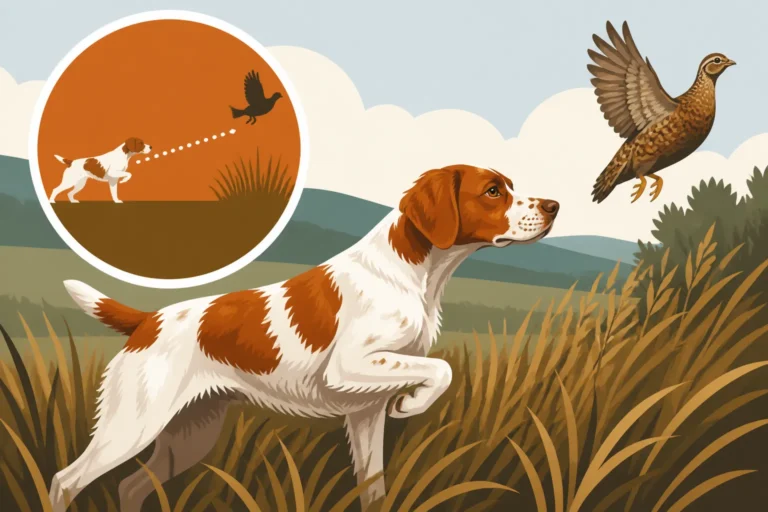
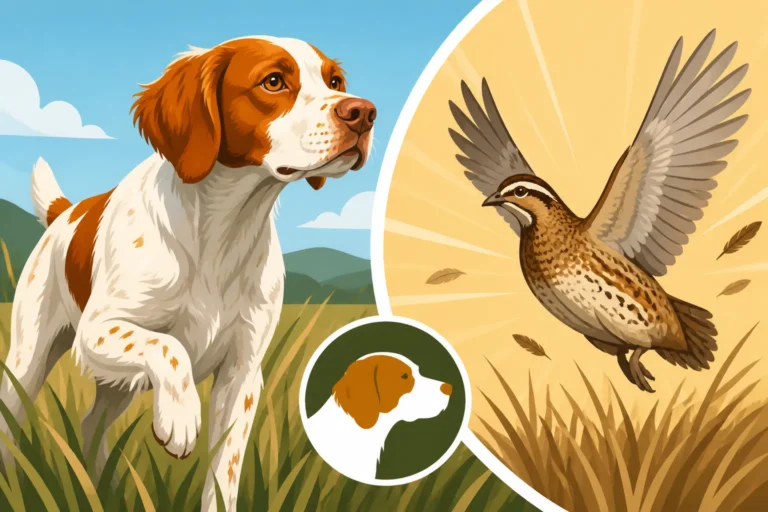
When a Brittany truly points, it's a magnificent sight. Their body often becomes rigid, almost statue-like. The head is usually high, nose pointed directly towards the bird or its scent cone. The tail might be held high, often straight out or with a slight curl, but it's typically stiff and still, not wagging. Their eyes will be locked, intense, and unblinking, conveying an almost profound concentration. They might lift one front paw, holding it daintily in the air. This entire posture communicates, "Human, there's a bird right here!" It's that moment where instinct takes over, and all other thoughts vanish.
Contrast this with a simple freeze of curiosity, where a pup might pause to look at something, but their body language remains looser, their tail might still have a slight wag, or their attention might be more easily diverted. A true point has an undeniable intensity and commitment to it. When you see it, you'll know. It's truly a magical moment for a Brittany owner, a confirmation of the breed's incredible heritage.
How to Respond (and How Not To)
Once you witness that first solid point, your reaction is critical. The absolute best thing you can do is… nothing, at first. Quietly observe and praise. You don't want to rush in, shout, or immediately release the bird. This can break their concentration or teach them that pointing means the fun is over. Instead, a soft, encouraging "Good boy/girl!" or "Yes, point!" is perfect.
The goal is to reinforce the act of pointing, not necessarily the immediate flush and retrieve, which comes much later in training. Many trainers will allow the puppy to hold the point for a few seconds, then quietly approach, praising gently. If you're working with a live bird, you might then gently flush it yourself, letting the puppy see it fly, but not necessarily chase it wildly at this stage. It's about building association: point = bird. If you're worried about over-correction or negative experiences, remember that How Sensitive a Brittany Is to Correction means you should always err on the side of gentle encouragement.
The Spectrum of "Normal": When to Expect a Point
It's natural to compare your puppy to others, especially with social media making it seem like every other pup is pointing pheasants at 12 weeks old. But the reality is, the age a Brittany puppy first points can be anywhere from a few weeks old (with very subtle behaviors) to well over a year. There isn't a "too late" for a healthy, well-bred Brittany with proper exposure.
The Later Bloomers: Patience and Persistence
Many truly great gun dogs didn't show their pointing prowess until they were 8, 9, or even 12 months old. Some pups need more time to mature physically and mentally. Their brains need to develop, their confidence needs to grow, and they need to build a stronger connection with their handler before they fully trust the process. If your puppy isn't pointing at 6 months, don't despair! It just means they're on their own timeline.
Focus on building a strong foundation of basic obedience, socialization, and positive experiences. Take your pup on walks in natural areas, letting them explore scents. Play scent games in the house. Ensure they're getting adequate exercise, but also plenty of calm, quiet time with you. Remember, a well-adjusted, confident puppy is much more likely to develop into a stellar bird dog, regardless of when the pointing instinct fully kicks in. Think of the long haul, as your Brittany could be with you for The Twelve to Fourteen Years a Brittany Gets.
Seeking Guidance: When to Ask for Help
If you're well past the 8-month mark and your Brittany still shows absolutely no interest in birds or pointing, despite gentle, consistent exposure, it might be time to seek advice from an experienced Brittany mentor or a professional gun dog trainer. They can offer a fresh perspective, identify potential issues, or suggest new approaches. Sometimes, it's simply a matter of the owner missing subtle cues or inadvertently creating too much pressure.
A good trainer won't try to "force" the point but will help you create conditions where the puppy feels safe and encouraged to express its natural instincts. They might use different types of birds, varied cover, or even simple tools like a fishing pole with a wing attached, which you can easily find on Amazon, to gauge and stimulate interest. They'll also consider How Long a Brittany's Training Session Should Be to ensure the pup isn't overwhelmed. Most importantly, they'll understand What a Brittany's Temperament Is Really Like and tailor their approach to suit your dog's individual personality.
At the end of the day, the age a Brittany puppy first points is a milestone, not a finish line. Enjoy the journey, celebrate every tiny step, and trust in the incredible instincts that make these dogs such cherished partners in the field and at home.
Disclaimer
This article is for general informational purposes only and does not constitute professional advice. Laws, prices and regulations vary by location and change over time. Consult a qualified professional for guidance on your specific situation.