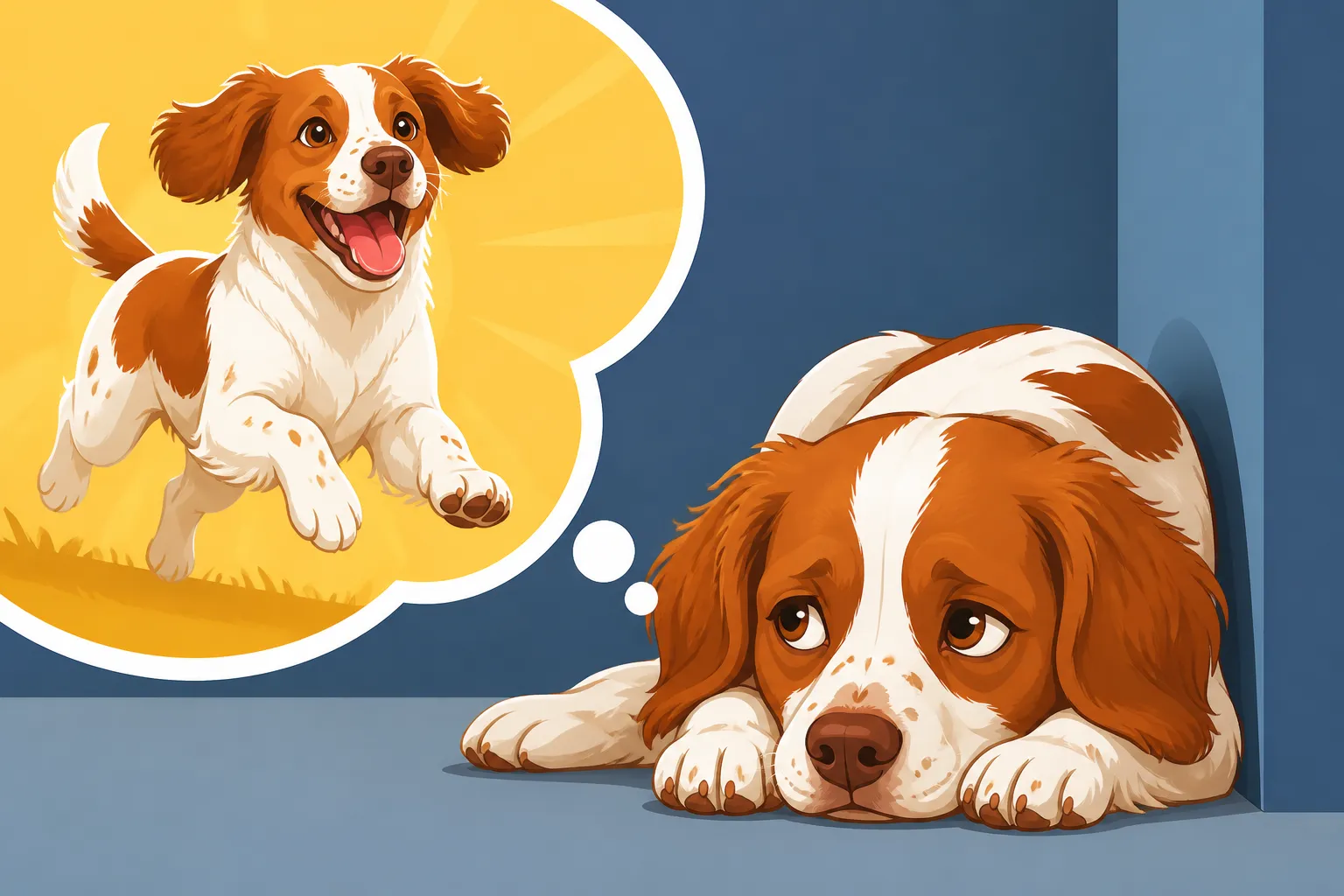
Whether a Brittany Sulks
It's a common, almost universal experience for dog owners to look at their canine companion, after a gentle reprimand or a missed walk, and think, "Are they sulking?" For us Brittany owners, with our sensitive, intelligent, and deeply connected dogs, this feeling can be even more pronounced. You might see your Brittany turn away, sigh dramatically, or retreat to their bed, leaving you to wonder if you've genuinely hurt their feelings or if they're holding a grudge. This guide will dive deep into understanding these behaviors, offering insights into whether Brittanys truly "sulk" in the human sense, and how best to interpret and respond to their emotional cues.
Understanding Brittany Sensitivity and Emotional Responses
Brittanys are renowned for their biddability and eagerness to please, but they also possess a distinct sensitivity that shapes their reactions to the world around them. Understanding this inherent trait is key to deciphering behaviors that might appear as "sulking."
The Brittany's "Soft" Nature: A Foundation for Emotional Reactions
When we talk about a Brittany's "softness," we're not implying weakness, but rather a profound sensitivity to corrections, tone of voice, and even subtle shifts in your mood. Unlike some breeds that might shrug off a firm "no" or a sharp tug on the leash, a Brittany can take such an interaction to heart. They are often quick to internalize negative feedback, which can manifest in behaviors that we, as humans, might interpret as sulking.
Imagine a scenario: your Brittany, full of youthful exuberance, has just counter-surfed for a forgotten sandwich. You walk in, see the evidence, and perhaps let out a frustrated sigh or a slightly louder-than-usual "No!" The Brittany might immediately drop its head, avert its gaze, and slowly slink away to its crate. To us, it looks like guilt or annoyance, but from the Brittany's perspective, it's more likely confusion, fear of disapproval, or a strong desire to de-escalate the perceived tension. They're not intentionally trying to make you feel bad; they're reacting to your energy and trying to avoid further conflict. Understanding How Sensitive a Brittany Is to Correction is crucial here; a mild correction to one dog might be overwhelming for a Brittany.
Are Brittanys Manipulative or Simply Communicating?
The human concept of "sulking" often carries a connotation of deliberate emotional manipulation – a way to make someone feel guilty or to get one's own way. Dogs, including Brittanys, don't operate with this kind of complex, long-term emotional strategy. Their emotional lives, while rich, are generally more immediate and reactionary.
When a Brittany exhibits behaviors that look like sulking, they are almost always communicating something about their current internal state. This could be:
- Discomfort or stress: They might be overwhelmed by a situation or a perceived correction.
- Confusion: They might not understand what you want or why you're upset.
- Desire to avoid conflict: They want to escape a situation where they feel your disapproval.
- Physical discomfort: Sometimes a dog will seem withdrawn if they're not feeling well.
Consider a dog who won't make eye contact after being told "off" the couch. An owner might think, "He's mad at me." But the dog is more likely showing deference and avoiding a direct challenge, which is a natural canine social behavior. They are not trying to make you feel guilty for enforcing boundaries; they are simply reacting to the correction and showing submission. This is part of What a Brittany's Temperament Is Really Like.
Common Scenarios That Might Look Like "Sulking" in a Brittany
Brittanys, with their expressive eyes and often close bond with their owners, can certainly appear to sulk. Let's break down some common situations where these behaviors arise and explore alternative, more canine-centric interpretations.
When a Brittany Disengages After a Correction
One of the most frequent "sulking" scenarios involves a Brittany shutting down or withdrawing after a perceived rebuke. You might have been working on a new obedience command, and your Brittany just wasn't "getting it," perhaps losing focus or offering incorrect behaviors. After a few increasingly frustrated attempts from you, or a slightly sharper tone in your voice, your Brittany might:
- Turn its head or entire body away from you.
- Lower its head and ears.
- Slow its movements, almost seeming to "freeze."
- Avoid eye contact entirely.
- Lie down, sometimes with a soft sigh, and seem utterly disinterested in continuing.
This disengagement isn't likely a calculated act of passive aggression. Instead, it's often a sign that your Brittany feels overwhelmed, confused, or has simply lost confidence. For a sensitive breed, repeated frustration or a harsh correction can be deeply discouraging. They might perceive your frustration as a punishment for trying, leading them to simply stop trying altogether. This is why understanding What a Brittany Does When It Is Corrected Too Hard is so important; it often leads to a shut-down response rather than improved behavior. They’re not being defiant; they’re trying to avoid further perceived reprimand.
The Brittany Who "Remembers" a Bad Training Session
Owners often recount stories of a Brittany seeming to "remember" a negative experience, perhaps avoiding a certain area of the house where they were scolded, or becoming reluctant to engage in a particular activity after a tough training session. This can certainly feel like your dog is holding a grudge or "sulking" over past events.
While dogs don't experience grudges in the same complex way humans do, they absolutely form associations. If a specific training exercise or location becomes consistently linked with frustration, harsh corrections, or a general feeling of stress, your Brittany will naturally develop an aversion to it. They're not intentionally trying to make you pay for past mistakes; they're simply responding to learned negative associations. For instance, if you've had a difficult time teaching "whoa" in a particular field, and used too much pressure, your Brittany might show reluctance to enter that field again, not because it's "sulking," but because it anticipates discomfort. This is about learning and avoidance, not resentment. How Long a Brittany Remembers a Bad Session emphasizes the lasting impact of negative experiences. The key here is to realize that these behaviors are a call for help, not an act of defiance, and require a change in your approach. Whether a Brittany Forgives a Mistake delves deeper into their capacity for moving past perceived wrongs, suggesting that patience and positive interactions are always the best path forward.
Nurturing a Resilient and Cooperative Brittany
Given their sensitive nature, fostering a strong, positive relationship with your Brittany is paramount. This involves prioritizing trust, clear communication, and gentle methods that encourage cooperation rather than instilling fear or confusion.
Building Trust Through Positive Reinforcement
Positive reinforcement is not just a training method; it's a philosophy, especially crucial for a Brittany. It means rewarding desired behaviors, so your dog is more likely to repeat them. When your Brittany feels consistently rewarded for trying and succeeding, their confidence soars, and their desire to engage with you grows exponentially. This approach minimizes the likelihood of them "shutting down" because they're focused on earning rewards, not avoiding punishment.
For example, when teaching a new command, start in a low-distraction environment. Break the command into tiny steps. As soon as your Brittany even attempts the right thing, reward them with a high-value treat, enthusiastic praise, or a quick game with their favorite toy. You can find a myriad of helpful training tools, from sturdy clickers to high-quality treat pouches, on platforms like Amazon. Consistent positive reinforcement builds a bank of positive associations, making your Brittany feel safe, understood, and eager to work with you. This also helps them understand that even if they make a mistake, it's not the end of the world, and they can always try again to earn a reward.
Effective and Gentle Correction Methods
While positive reinforcement forms the bedrock of Brittany training, there will be times when you need to address unwanted behaviors. The key is to do so gently and effectively, without causing your sensitive Brittany to withdraw or become fearful. Avoid harsh verbal reprimands, physical punishments, or prolonged "time-outs" that leave your dog confused and isolated. What Happens When You Shout at a Brittany can illustrate how detrimental this can be.
Instead, focus on:
- Interruption and Redirection: If your Brittany is doing something you don't want (e.g., chewing on furniture), gently interrupt the behavior with a neutral sound (a light clap, a quiet "oops") and immediately redirect them to an appropriate chew toy. Reward them when they engage with the correct item.
- Management: Prevent unwanted behaviors from happening in the first place. If your Brittany tends to counter-surf, ensure there's nothing tempting left on the counters. If they chew shoes, put the shoes away.
- Teaching an Alternative: Instead of just saying "no," teach your Brittany what to do. If they jump on guests, teach them to sit politely for attention and reward that behavior. This transforms a negative interaction into a positive learning opportunity.
The goal is to teach them boundaries without breaking their spirit. Your Brittany needs to trust that you are a benevolent leader, not an unpredictable punisher.
The Importance of Consistent and Clear Communication
One of the biggest culprits behind behaviors that look like sulking is inconsistent or unclear communication from the owner. Dogs thrive on predictability. If your rules change frequently, or if different family members have different expectations, your Brittany can become genuinely confused, which can lead to hesitation, anxiety, and behaviors that appear withdrawn.
For example, if sometimes jumping on the couch is allowed, and other times it results in a sharp reprimand, your Brittany won't understand the "why" behind your reaction. They might then exhibit what looks like "sulking" when they are corrected, but they are truly just processing conflicting information. Establishing clear, simple rules and consistently enforcing them in a calm manner is vital. Everyone in the household needs to be on the same page regarding commands, expectations, and how to respond to unwanted behaviors. For those looking for structured guidance, online programs like BAXTER & Bella offer comprehensive, positive-reinforcement-based curricula that can be invaluable in establishing this consistency and clarity in your training journey. Remember, How Long a Brittany's Training Session Should Be is also important; short, clear, and positive sessions yield far better results than long, drawn-out, confusing ones.
Addressing Perceived Sulking with Empathy and Training
When your Brittany exhibits behaviors that you might interpret as sulking, the most important thing you can do is pause, observe, and respond with empathy and a commitment to clear, positive communication.
Decoding Your Brittany's Body Language
Instead of projecting human emotions onto your Brittany, learn to read their specific canine body language. This will give you much greater insight into their true feelings and motivations. Are they truly "pouting," or are they trying to tell you something important?
Here's a quick guide to some common Brittany behaviors and their possible interpretations:
| Behavior | Common Human Interpretation ("Sulking") | More Likely Canine Interpretation | What to Look For |
|---|---|---|---|
| Averting Gaze/Turning Away | "He's ignoring me / being stubborn." | Deference, appeasement, avoiding conflict. | Soft eyes, lowered head, relaxed body posture. |
| Slow Movement/Slinking | "He's trying to make me feel guilty." | Stress, fear of punishment, seeking to de-escalate. | Lowered tail, tucked ears, tense or hunched body. |
| Retreating to Bed/Crate | "She's mad at me and needs space." | Seeking a safe, familiar place; disengaging. | May include sighing, careful entry into crate. |
| "Sighing" Loudly | "He's exasperated with me." | Relaxation, contentment, or sometimes mild frustration. | Context is key: a sigh after settling vs. after a command. |
| Lack of Eye Contact After Reprimand | "He won't look at me because he's mad." | Respect, submission, avoidance of direct challenge. | Generally a sign of acknowledging your authority. |
| Lip Licking / Yawning | "He's just tired/annoyed." | Stress signals, attempting to self-soothe. | Often seen with other subtle stress cues (head turn, tense body). |
Understanding these nuances helps you see your Brittany's actions through their eyes, allowing for a more appropriate and helpful response. When you recognize that their "sulking" is actually a sign of stress or confusion, you can adjust your approach to build their confidence. Whether a Brittany Reads Your Mood is a great reference here, as they are highly attuned to your emotional state.
Strategies for Re-engaging a Disinterested Brittany
If you find your Brittany withdrawing or disengaging in a way that looks like sulking, don't double down on corrections or try to force engagement. Instead, employ strategies that rebuild trust and make interaction positive again.
- Take a Break: If a training session isn't going well, simply end it. Go do something entirely different and enjoyable together, like a quick game of fetch with a favorite toy (which you can easily find on Amazon) or a short walk. This resets the mood and prevents negative associations from solidifying.
- Go Back to Basics: If your Brittany is struggling with a new concept, return to a command they know perfectly and reward them enthusiastically for it. This rebuilds their confidence and reminds them that they can succeed.
- Lighten the Mood: Use a happy, upbeat tone of voice. Engage in silly play. Get down on their level. Sometimes, simply changing your energy can make a huge difference in re-engaging a sensitive Brittany.
- Offer a Choice (When Appropriate): If your Brittany seems reluctant to do something, offer a choice between two acceptable options. For instance, "Do you want to practice 'sit' or 'down'?" This gives them a sense of agency and reduces pressure.
- Re-evaluate Your Approach: If a particular behavior repeatedly leads to your Brittany shutting down, it's a strong signal that your training method, environment, or timing needs adjustment. Perhaps the correction was too harsh, the task too difficult, or the session too long.
Ultimately, while your Brittany might display behaviors that look like sulking, they are most likely communicating stress, confusion, or a desire to avoid perceived conflict. By understanding their sensitive nature, employing positive reinforcement, using gentle correction methods, and learning to read their body language, you can foster a resilient, cooperative, and joyful companion who trusts you implicitly. It's not about overcoming their "stubbornness" or "grudges," but about building a relationship based on mutual understanding and respect.
Disclaimer
This article is for general informational purposes only and does not constitute professional advice. Laws, prices and regulations vary by location and change over time. Consult a qualified professional for guidance on your specific situation.