Whether a Brittany Needs a Tracking Collar in Heavy Cover
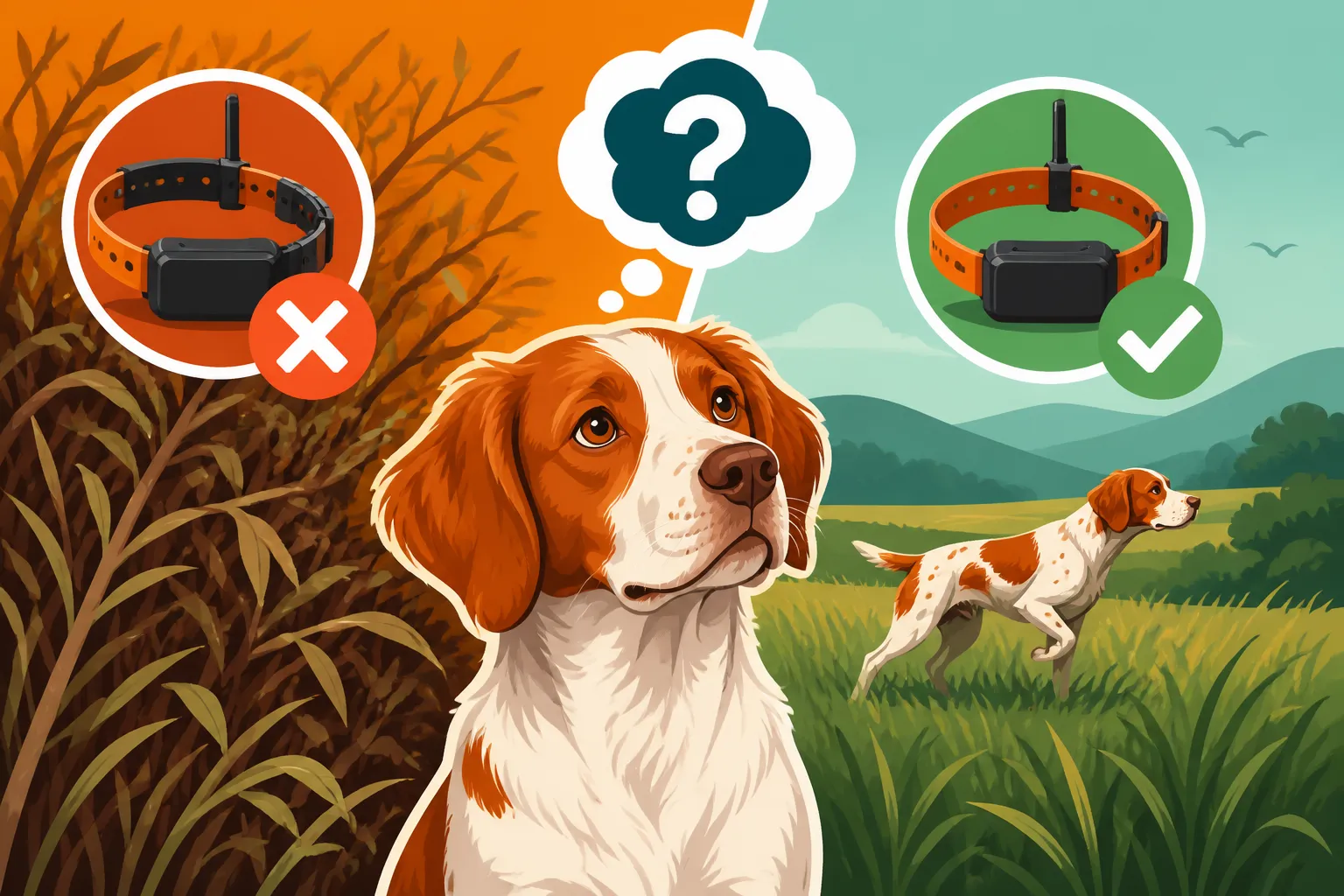
It's a familiar worry for any Brittany owner who hunts: that heart-stopping moment when your dog vanishes into a thicket of cover, the beeper goes silent, and you're left straining your ears, wondering where they've gone. The reality of hunting with these intelligent, wide-ranging dogs means they often push the boundaries of visibility, and dense vegetation can turn a momentary disappearance into a genuine panic. This guide will delve into why a tracking collar isn't just a luxury, but often a necessity for Brittanys working in heavy cover, helping you keep tabs on your beloved hunting partner and ensuring their safety.
The Brittany's Drive and the Demands of Heavy Cover
Brittanys are driven, energetic dogs bred for finding birds. Their natural inclination is to range out, covering ground with an enthusiasm that can sometimes take them further than you'd like, especially when they get hot on a scent. This is where the challenge of heavy cover truly comes into play.
The Brittany's Instinct to Range
Whether you have an American Brittany, known for its bigger cast, or a French Brittany that tends to hunt a bit closer, these dogs are built to cover ground. Their keen noses and boundless energy mean they'll often push through dense brush, tall prairie grass, or thick woodland undergrowth in pursuit of game. This drive is what makes them exceptional bird dogs, but it also means they can easily disappear from sight. How Far an American Brittany Ranges can be quite impressive, making visual contact difficult even in open fields, let alone in the kind of habitat where birds often hide. Similarly, while a French Brittany might work closer, How Close a French Brittany Hunts still means they can get out of sight quickly when focused.
Imagine working a field bordered by a dense stand of pines or a thick river bottom choked with alders and willows. Your Brittany, nose to the ground, might plunge into that cover and be out of earshot and sight in seconds. The silence can be deafening, and your mind immediately jumps to a hundred different scenarios, from finding a bird to getting snagged on a branch or worse.
Why Heavy Cover Makes Tracking So Difficult
Heavy cover isn't just about obscuring your dog; it also plays tricks with sound and terrain. A bell, often a staple for keeping track of close-working dogs, can become muffled or completely inaudible in dense foliage. Even a traditional beeper collar, which signals when the dog is on point, can be hard to pinpoint accurately when sound waves are bouncing off trees and absorbed by thick vegetation.
Furthermore, thick cover often means uneven terrain, hidden ditches, or water features that can be difficult for you to navigate quickly. While your agile Brittany might weave through it effortlessly, you're left struggling, trying to triangulate their position based on faint sounds or a distant signal that feels frustratingly vague. This isn't just an annoyance; it's a safety concern. Getting lost yourself while searching for your dog is a real possibility, and the longer your dog is out of sight, the greater the risk of them encountering hazards like roads, other hunters, or wildlife.
The Essential Role of a Tracking Collar for Brittany Safety and Recovery
Given the Brittany's hunting style and the challenges of heavy cover, a modern tracking collar often shifts from being a "nice-to-have" to an "absolute must-have." It's about more than just finding your dog; it's about peace of mind and proactive safety.
Pinpointing Your Brittany's Exact Location
The primary, undeniable benefit of a tracking collar is its ability to tell you exactly where your Brittany is, even when you can't see or hear them. GPS-enabled tracking collars provide real-time location data, displayed on a handheld device or even your smartphone. This means no more guessing games in the woods. When your dog goes on point in a dense briar patch or runs down a game trail out of sight, you know their precise coordinates.
Consider a typical scenario: your Brittany is working a field edge, and suddenly dives into a thick reed bed. The reeds are taller than your head, and you know there's a small ditch running through them. With a traditional bell, you might walk the entire perimeter, shouting, hoping for a jingle. With a tracking collar, a quick glance at your device shows a static arrow pointing directly into the reeds, indicating your dog is on point. You can then make a beeline, confidently navigating the cover knowing exactly where to aim. This level of precision is invaluable and drastically reduces the time and effort spent trying to locate a dog in challenging environments. This allows you to focus on the hunt itself, rather than constantly worrying about losing your companion.
Enhancing Safety in Unpredictable Environments
Beyond simply finding a lost dog, tracking collars significantly enhance your Brittany's safety. When hunting, especially in public areas or near roads, the ability to quickly locate and retrieve your dog can be life-saving. If your Brittany, caught up in the thrill of the chase, ranges across a property line or approaches a busy road, a tracking collar provides the immediate feedback you need to intervene. How to Bring a Wide Running Brittany In becomes much easier when you know exactly where "in" is.
Moreover, if your dog gets injured – perhaps a cut pad on sharp stubble or a nasty encounter with a porcupine – and can't make it back to you, the tracking collar ensures you can find them quickly. Delays in finding an injured dog can worsen their condition. You want to be able to reach them as swiftly as possible, assess the situation, and administer first aid from your What a First Aid Kit for a Brittany Should Hold. While we hope our dogs stay safe, being prepared for the unexpected is part of responsible hunting. For those who invest in pet insurance, like policies from Healthy Paws, knowing you can quickly locate your dog for emergency care can be a great relief, making sure claims are for treatable issues, not for dogs lost indefinitely.
Peace of Mind for the Hunter
Perhaps one of the most underrated benefits of a tracking collar is the profound peace of mind it offers. Hunting with a Brittany is a joy, a true partnership. But the constant underlying anxiety of "where's my dog?" can detract from the experience. Knowing you have a reliable way to locate your dog, no matter how thick the cover or how far they range, allows you to relax and enjoy the hunt more fully.
This peace of mind extends beyond the hunt itself. If your Brittany ever slips its leash at a rest stop on the way to the field, or bolts from the backyard fence at home, the tracking collar can be your fastest route to recovery. It's an extra layer of security for an adventurous breed that sometimes thinks the world is one big field to explore.
Key Features to Look For in a Brittany Tracking System
Not all tracking collars are created equal, and for a Brittany working in heavy cover, certain features become paramount. Choosing the right system can make all the difference in reliability and ease of use.
GPS vs. Radio Tracking Systems
When we talk about "tracking collars" today, most people immediately think of GPS systems. These are the most common and generally the most effective for wide-ranging dogs in varied terrain.
- GPS Tracking Systems: These collars send location data via satellite or cellular network to a handheld device or a smartphone app. They offer precise, real-time location updates, often with mapping capabilities that show your dog's track, speed, and status (e.g., pointing, running, treed). The range is typically excellent, often several miles, depending on the topography and specific device. Many modern GPS systems also integrate e-collar functions, allowing you to train and track with one device. Brands like Garmin and SportDOG offer robust GPS tracking systems specifically designed for hunting dogs. You might find a good selection of these on sites like Chewy, along with other hunting dog essentials. What a GPS Collar Costs a Brittany Owner can vary significantly depending on features, but it's an investment in safety.
- Radio Tracking Systems: These systems use radio frequencies to send signals from a transmitter on the dog's collar to a receiver held by the handler. They don't provide a precise map location but give a directional signal, stronger as you get closer to the dog. Their primary advantage is that they don't rely on cellular service or satellite signals, making them reliable in extremely remote areas where GPS might struggle. However, their range is often shorter, and finding the dog is more of a "hot or cold" game, which can be less efficient in truly dense, tangled cover where you can't easily follow a directional signal.
For a Brittany in heavy cover, a GPS system is generally preferred due to its precise mapping capabilities, which allow you to navigate directly to your dog even when physical obstacles make a directional hunt difficult.
Durability and Battery Life
A tracking collar for a Brittany needs to withstand the rigors of the field. This means it must be:
- Waterproof: Brittanys love water and will plunge into streams, ponds, or dewy cover without a second thought. Your collar needs to be fully submersible, not just water-resistant, to ensure it continues to function.
- Durable: It will get snagged on branches, dragged through mud, and bumped against rocks. Look for collars with robust casings and secure attachment points.
- Long Battery Life: A day of hunting can be long, and you don't want your collar dying halfway through. Most quality tracking collars offer 20-40+ hours of battery life on a single charge, which is usually sufficient for a full day or even a multi-day trip with proper charging between outings. Some systems also offer "rescue mode" features that extend battery life by reducing update frequency if the dog has been out of range for a long time.
Integrated Training Features (Optional but Recommended)
Many modern tracking collars come integrated with e-collar training functions. This means the same device on your dog can provide both tracking data and remote correction capabilities. For a Brittany, which is often described as a "soft" breed that responds best to gentle guidance, a mild e-collar can be an invaluable tool for reinforcing commands like "whoa" or "here" from a distance. Whether a Brittany Needs an E Collar at All is a common question, and for a hunting dog, many find it to be a crucial safety and training aid, used responsibly and gently. Having the tracking and training functions in one unit simplifies your gear and streamlines your communication with your dog in the field.
| Feature Type | Description | Pros for Brittany in Heavy Cover | Cons for Brittany in Heavy Cover |
|---|---|---|---|
| GPS Tracking | Real-time location on map, satellite/cellular based | Precise location, visual map guidance, wide range, often integrated with training | Can be affected by very dense canopy or lack of cellular signal (some models) |
| Radio Tracking | Directional signal (hot/cold) via radio waves, handheld receiver | Independent of cellular/satellite, good for extremely remote areas | Less precise, no map, shorter range, harder to navigate direct path in thick cover |
| Beeper Collar | Emits tone to indicate dog's movement or point | Simple, can combine with other systems, good for listening in open fields | Sound easily muffled in heavy cover, directional accuracy poor |
| Integrated E-Collar | Combines tracking with remote correction/vibration/tone capabilities | All-in-one device, allows long-distance communication and reinforcement | Requires careful, humane training; adds complexity and cost |
| Durability | Rugged, waterproof construction for active outdoor use | Withstands environmental abuse, ensures functionality in wet conditions | Adds to cost, can be bulky if not well-designed |
| Battery Life | Extended operational time for collar and handheld device | Reliable function during long hunts, less worry about power running out | Shorter battery life means more frequent charging or mid-hunt power loss |
Beyond the Collar: Other Considerations for Keeping Your Brittany Safe
While a tracking collar is a powerful tool, it's part of a larger strategy for ensuring your Brittany's safety and effectiveness in the field, especially when navigating heavy cover. Training, conditioning, and proper gear all play a role.
Consistent Training and Recall
No piece of equipment, however advanced, can replace solid training. A tracking collar is a recovery tool, not a substitute for teaching your Brittany excellent recall. Even in thick cover, you want your dog to respond to your commands. Working on How Often a Brittany Should Check In is vital. Regular recall practice in varied environments, gradually increasing distractions and distances, is paramount. This breed is highly intelligent and generally eager to please, making them quite biddable, but consistent reinforcement is key. If you can call your dog out of dense cover before they get too far, that's always the safest and quickest solution.
Consider using positive reinforcement techniques, and if using an e-collar, introduce it properly and ensure your dog understands the commands associated with it. The goal is a dog that chooses to come back, not one that is forced.
Conditioning and Physical Preparedness
A Brittany that is physically fit is better equipped to handle challenging terrain and avoid injuries that could leave them stranded. Before the season opens, make sure your dog is properly conditioned. This includes building endurance, strengthening muscles, and toughening their pads.
Heavy cover often means sharp sticks, thorns, and uneven ground. A dog that is out of shape is more prone to strains, sprains, and cuts. Regularly checking your dog's paws and body after a hunt, as detailed in What to Do With a Brittany After Every Hunt, is critical. Even with a tracking collar, you want to minimize the chances of your dog getting injured far from your reach. Ensuring your Brittany gets the right nutrition, perhaps a performance formula from a reputable brand like Ollie or Chewy that supports active dogs, can also contribute to their overall resilience and energy in the field.
High-Visibility Gear
While a tracking collar helps you find your Brittany, high-visibility gear can make them easier to spot by you and other hunters, reducing the chance of them disappearing in plain sight or being mistaken for game. Bright orange vests are common and highly recommended, especially during hunting season. This is particularly important for Brittanys, whose orange and white or liver and white coats can blend surprisingly well with fall foliage or brown grasses.
Combine a high-visibility vest with your tracking collar for maximum safety. The vest might help you get a quick visual on a dog skirting the edge of thick cover, while the tracking collar provides the exact location when they dive deep inside.
Understanding the Environment
Finally, take the time to understand the hunting environment before you release your dog. Study maps, note potential hazards like roads, deep water, or dangerous wildlife, and be aware of property lines. Knowing the lay of the land can help you anticipate where your Brittany might range and where they might encounter trouble. Even with a reliable tracking collar, forethought and preparation are your best defense against accidents in the field. A well-prepared hunter with a well-trained, well-equipped Brittany can enjoy many safe and successful days in heavy cover.
Disclaimer
This article is for general informational purposes only and does not constitute professional advice. Laws, prices and regulations vary by location and change over time. Consult a qualified professional for guidance on your specific situation.