Whether Insurance Covers a Brittany’s Hunting Injuries
It’s a heart-stopping moment every bird dog owner dreads: your beloved Brittany, full of drive and focused on a scent, suddenly yelps or comes up lame in the field. Hunting is an incredible bond and a natural outlet for these energetic dogs, but it also comes with inherent risks of injury. When these accidents happen, the financial burden of veterinary care can be staggering, leaving many owners wondering if their pet insurance will actually cover the costs. This comprehensive guide is here to shed light on whether your pet insurance truly has your Brittany's back when hunting injuries strike, and what you need to look for to ensure you're prepared.
Understanding the Risks: Common Brittany Hunting Injuries
As a Brittany owner, you know your dog is a dynamo in the field, bursting with energy and an instinct to hunt. This incredible drive, however, exposes them to a unique set of risks. The very environment that makes them thrive—dense cover, rocky terrain, and fluctuating weather—can also lead to injuries that are both painful for your dog and potentially costly for your wallet. Understanding these common field hazards is the first step in appreciating why robust pet insurance is so vital.
Cuts, Lacerations, and Punctures
Imagine your Brittany, nose to the ground, weaving through a dense thicket after a flushed pheasant. The sound of thorns scraping against their coat is familiar, but sometimes, a hidden danger lurks. Sharp stubble from harvested fields, discarded barbed wire, or jagged broken branches can inflict nasty cuts and lacerations. These aren't just superficial scrapes; they can be deep, requiring stitches, or worse, become infected if debris is left embedded. I've seen Brittanys come back with nasty gashes on their chests, bellies, or legs, turning a successful hunt into an emergency trip to the vet. For serious wounds, knowing How to Close a Brittany's Field Laceration can be a lifesaver, but professional veterinary care is often a must.
Puncture wounds are another silent threat. A run-in with a sharp stick or even a rusty nail hidden in tall grass can lead to a deep, narrow wound that seals quickly on the surface but harbors bacteria and infection deep within. These can be particularly insidious because they might not look severe initially, but the complications can be profound, sometimes even leading to abscesses or systemic infections. Whether it's Whether a Brittany Gets Barbed Wire Cuts or a less visible puncture, these injuries are a constant concern for hunting dogs.
Joint and Musculoskeletal Injuries
The athletic prowess of a Brittany is undeniable – they leap, turn on a dime, and cover ground with impressive speed. But all that dynamic movement puts immense strain on their joints, muscles, and ligaments. A misstep while jumping over a fallen log, an awkward landing in a hidden ditch, or repetitive impact on hard ground can lead to sprains, strains, or even more severe injuries like cruciate ligament tears. Just like human athletes, our Brittanys can suffer from acute trauma or chronic wear and tear.
Consider the force exerted on a Brittany's knee when it suddenly stops on point or twists to follow a bird's flight path. This kind of sudden torsion can lead to a Cruciate Tears in a Brittany, a common and extremely expensive injury requiring surgery and extensive rehabilitation. Less dramatic, but equally debilitating, are strains to leg muscles or a luxating patella, where the kneecap slips out of place, possibly covered in Patellar Luxation in a Brittany. These musculoskeletal issues can sideline your dog for weeks or even months, requiring veterinary diagnostics, pain management, and physical therapy. The costs add up quickly, making pet insurance a serious consideration.
Eye, Ear, and Paw Issues
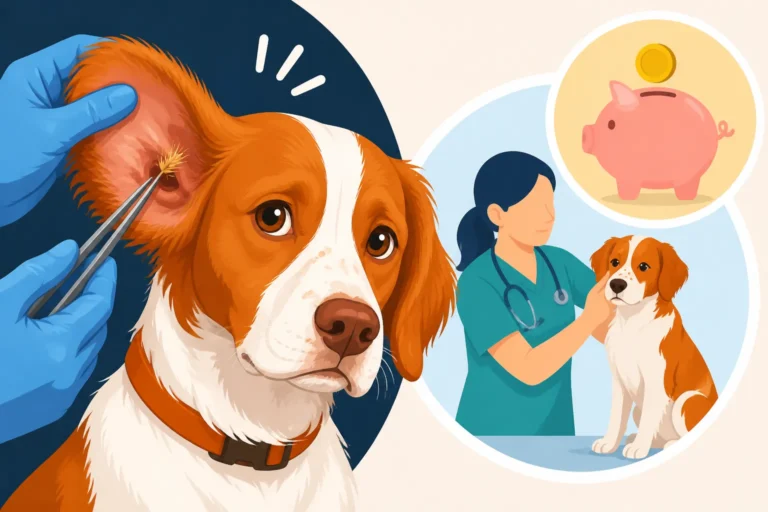
The Brittany's characteristic drop ears, while adorable, are also a magnet for trouble in the field. They can trap moisture, dirt, and foreign bodies, leading to painful ear infections, especially after a hunt in damp conditions. Why a Brittany's Ears Get Infected Every Season is a common lament among owners. Worse still, grass seeds or awns can work their way deep into the ear canal, causing irritation, infection, and sometimes even rupturing the eardrum. Knowing How Grass Seeds Get Into a Brittany's Ear is important, as removal often requires sedation and a veterinarian.
Their expressive eyes, too, are vulnerable. Running through dense cover can cause corneal abrasions from branches or foreign objects like seeds and dust. And then there are the paws – those hardworking, high-impact pads that bear the brunt of every step. Rough, abrasive terrain, sharp rocks, or even extreme temperatures can cause torn pads, cracks, or blistering. I've seen dogs hobble back to the truck after a long day with raw, bleeding pads, requiring careful cleaning, bandaging, and time off from hunting. Routine checks after every outing are crucial for prevention, as detailed in What to Check on a Brittany After Every Outing. However, even with the best care, accidents happen, and How to Treat a Brittany's Torn Pad is vital knowledge for any field enthusiast.
The Ins and Outs of Pet Insurance: What's Generally Covered?
Navigating the world of pet insurance can feel like trying to find your way through a dense briar patch without a compass. There are so many options, so many terms, and it’s easy to get confused. But understanding the basics of how pet insurance works in general terms is essential before we dive into the specifics of hunting injury coverage. It's about protecting your beloved Brittany and your financial peace of mind.
Accident-Only vs. Accident & Illness Plans
When you start looking into pet insurance, one of the first distinctions you’ll encounter is between "accident-only" and "accident and illness" plans. This choice is particularly relevant for active dogs like Brittanys, who face risks from both unexpected injuries and potential health conditions.
An accident-only plan is exactly what it sounds like: it provides coverage specifically for injuries resulting from accidents. Think broken bones, car accidents, cuts, ingestion of foreign objects, or, crucially for our discussion, many of the sudden, acute injuries your Brittany might sustain while hunting. These plans are generally more affordable, making them an attractive option for budget-conscious owners who primarily want protection against those "oops!" moments that inevitably happen with an active dog. If your Brittany suddenly yelps and comes up lame after a hard jump, an accident-only policy would typically kick in to cover the diagnostics and treatment.
On the other hand, an accident & illness plan offers a far broader safety net. Beyond covering accidents, these policies also extend to a wide range of illnesses, from common infections and allergies to more serious conditions like cancer, diabetes, or autoimmune diseases. For a Brittany owner, this means protection against not just the occasional barbed wire cut but also potential issues like Epilepsy in a Brittany Spaniel or immune system disorders like C3 Deficiency Is the Brittany's Own Genetic Disease, which can incur significant long-term veterinary costs. While these plans come with a higher premium, they offer comprehensive peace of mind, covering almost any unexpected veterinary expense that isn't a pre-existing condition. Given the Brittany's overall health, but also its susceptibility to specific issues, the broader coverage of an A&I plan often makes the most sense.
Deductibles, Reimbursement Rates, and Annual Limits
Beyond the type of coverage, understanding the financial mechanics of pet insurance is key. These three terms—deductibles, reimbursement rates, and annual limits—determine how much you’ll actually pay out of pocket when your Brittany needs veterinary care.
Your deductible is the amount you’ll need to pay upfront each policy period (usually annually) before your insurance company starts reimbursing you for claims. Deductibles can range widely, from a few hundred dollars to over a thousand. A lower deductible typically means a higher monthly premium, and vice-versa. For a dog that might have multiple minor incidents in a hunting season, a lower deductible might be appealing, but it's a trade-off with the monthly cost.
The reimbursement rate is the percentage of the covered veterinary bill that your insurance company will pay back to you after you've met your deductible. Common reimbursement rates are 70%, 80%, or 90%. So, if your vet bill is $1,000, your deductible is $250, and your reimbursement rate is 80%, you would first pay the $250 deductible. Of the remaining $750, the insurer would reimburse you 80%, which is $600. You would still be responsible for the remaining $150 (20% of the $750) plus your initial deductible. Companies like Healthy Paws, for example, often offer flexible options for both deductibles and reimbursement rates, allowing you to tailor a plan to your budget and desired level of coverage.
Finally, the annual limit is the maximum amount your insurance company will pay out in total within a single policy year. Some policies offer unlimited annual payouts, which is fantastic for catastrophic illnesses or multiple severe accidents. Others might have limits like $5,000, $10,000, or $20,000. While these might seem like high numbers, a single complex surgery, like repairing a Cruciate Tears in a Brittany or treating a severe infection, can easily push you close to or even exceed these limits, especially if follow-up care or specialists are involved. Choosing a higher annual limit, or an unlimited option, provides the most robust financial protection for those unforeseen, high-cost scenarios.
Hunting Exclusions and Specific Clauses to Watch For
This is where the rubber meets the road for Brittany owners. While pet insurance can be a lifesaver, many standard policies are not designed with the unique risks of a dedicated hunting dog in mind. You absolutely cannot assume that an "accident" clause automatically covers every single bump and bruise your Brittany might sustain while pursuing birds. The devil, as they say, is in the details – specifically, in the fine print of your policy document.
Activity Exclusions: A Hunter's Nightmare
This is arguably the most critical section for any hunting dog owner. Many pet insurance policies, tucked away in their terms and conditions, include specific exclusions for injuries sustained during certain activities. Common phrases you might encounter include "injuries arising from organized racing," "professional sport," "guard dog activities," or, chillingly, "hunting" or "field trials."
If your policy contains such an exclusion for "hunting," it means that any injury your Brittany sustains while out in the field—whether it's a deep laceration from barbed wire, a twisted ankle jumping a ditch, or a foreign object lodged in its ear—could be entirely denied. The insurer might argue that because the injury occurred during an excluded activity, it falls outside the scope of coverage. This can be a crushing blow when you're facing a multi-thousand-dollar vet bill after your dog was just doing what it was bred to do.
It’s crucial to understand that "hunting" can be interpreted broadly. Some policies might differentiate between casual upland hunting and formal field trials, but many simply use the general term. You must read every word of the policy document. If you’re unsure, and believe me, it's easy to be unsure, you need to contact the insurance provider directly and get clarity in writing. Don't rely on assumptions or a quick phone call that isn't documented. This exclusion is the biggest red flag for a hunting Brittany owner, and finding a policy without it, or one that offers a specific rider, is paramount.
Age and Pre-Existing Condition Limitations
Beyond activity exclusions, almost all pet insurance policies have strict rules regarding age and pre-existing conditions. These limitations can significantly impact whether a hunting injury is covered, especially if your Brittany isn't a young pup.
A pre-existing condition is any illness or injury that showed symptoms or was diagnosed before your policy's start date or during its waiting period. This is a nearly universal exclusion across all pet insurance providers. For a hunting dog, this could mean if your Brittany had a recurring paw issue or a diagnosed joint weakness before you enrolled them, a new injury to that same paw or joint in the field might be denied, even if it's a fresh incident. For instance, if your Brittany experienced a minor lameness event a few months before you bought insurance, and then developed a Cruciate Tears in a Brittany while hunting, the insurer might try to link the two. This highlights the importance of enrolling your Brittany in a policy when they are young and healthy, ideally before any minor issues arise.
Waiting periods are also standard. After you purchase a policy, there's typically a period (e.g., 14 days for accidents, 30 days for illnesses, or longer for orthopedic issues) before coverage actually begins. An injury sustained during this waiting period will not be covered.
Regarding age limitations, while most policies don't have an upper age limit for continuing coverage, many will have an age cut-off for new enrollments. This means if you wait until your Brittany is considered a senior dog – generally around The Age a Brittany Is Considered Senior, or even earlier for some policies – you might struggle to find new coverage, or the premiums could be prohibitively expensive. Older dogs are, unfortunately, more prone to injuries and illnesses, including those sustained in the field, so insurers become more cautious.
Breed-Specific Considerations and High-Risk Activities
While Brittanys are generally considered a robust and healthy breed, their inherent purpose as high-energy, driven bird dogs places them in a category of "high-risk activities" simply by virtue of their job. Unlike some breeds known for specific genetic weaknesses that might be excluded or limited by default (e.g., severe hip dysplasia in giant breeds, though responsible breeders screen for What Hip Screening Did for the Brittany Spaniel), a Brittany's main "risk" often comes from its active lifestyle.
Most general pet insurance policies don't typically have sweeping exclusions based solely on a breed being a "hunting dog" in the same way they might exclude specific genetic conditions. However, the activity exclusions discussed above are often an indirect way to manage the higher injury rate of working dogs. Insurers might scrutinize claims more closely if the activity described (e.g., "dog was running at full speed through dense cover") aligns with behaviors considered risky.
It's less about the Brittany breed itself and more about the vigorous nature of its work. A policy might not explicitly say "no coverage for Brittanys," but if it says "no coverage for hunting," it effectively impacts Brittanys disproportionately compared to a lap dog. This makes it absolutely essential to ensure that the policy you choose is tailored, or at least amenable, to the reality of your Brittany's life in the field.
Choosing the Right Plan for Your Hunting Brittany
After sifting through the complexities of pet insurance, you’re probably feeling a bit overwhelmed. But don't despair! Equipping yourself with the right knowledge and a methodical approach can help you find a plan that genuinely protects your hunting Brittany. It's not just about finding any policy; it's about finding the right policy that understands and supports your dog’s active, bird-chasing lifestyle.
Scrutinizing Policy Documents and Asking Key Questions
This might sound tedious, but it's the single most important step. Don't just glance at the promotional materials or a summary sheet. You need to get your hands on the full sample policy document and read it from front to back, paying particular attention to the exclusions section. Look for terms like "hunting," "field trials," "organized sporting events," or "professional activities." If you see any of these, immediately investigate further.
When you call an insurance provider, prepare a list of very specific questions. Don't be vague. Instead of asking, "Do you cover accidents?", ask:
- "Does this policy cover injuries sustained while my Brittany is actively hunting birds in the field, including upland and waterfowl hunting?"
- "Are injuries like lacerations from barbed wire, punctures from sticks, or foxtails lodged in ears covered if they occur during a hunt?"
- "Is there any difference in coverage for training sessions versus actual hunting trips?"
- "Are there any specific riders or add-ons I can purchase to ensure hunting injuries are covered?"
Get the answers in writing, whether through email correspondence or by having them point to the exact clause in the policy document that confirms their verbal statement. Some reputable providers, like Healthy Paws, are generally known for their comprehensive accident and illness coverage, but even with them, you need to understand their specific stance on activities like hunting. A general "accident" coverage doesn't always translate to "hunting accident" coverage.
Considering "Add-on" Coverage or Specialized Plans
While many standard policies might have exclusions, some forward-thinking insurance providers understand the needs of working dog owners. They might offer specific "add-on" packages or riders designed to cover high-risk activities like hunting, agility, or competitive sports. These specialized options often come with an additional premium, but that extra cost is usually a small price to pay for the peace of mind that your Brittany is truly covered when it's doing what it loves.
It’s worth seeking out companies that cater specifically to working dogs or those with a strong reputation for covering active breeds. Some smaller, niche insurers might have more flexible policies, or you might find that some larger providers offer tiered plans where a premium tier includes coverage for such activities. Don't overlook the possibility of separate "wellness plans" either. While these typically cover routine care like vaccinations and annual exams, which won't help with an acute injury, they can contribute to your Brittany's overall health and readiness for the field, reducing the likelihood of some minor issues that can escalate if left unattended.
Comparing Providers: Beyond the Basic Premiums
When comparing pet insurance providers, it’s tempting to simply look at the lowest monthly premium. However, for a hunting Brittany, that can be a grave mistake. The cheapest policy might be cheap precisely because it excludes the very scenarios you're most concerned about. Instead, you need to compare apples to apples (or, in this case, Brittanys to Brittanys!), focusing on the breadth of coverage, especially concerning field activities.
Here’s a breakdown of what to consider beyond just the price:
- Coverage for Hunting-Related Injuries: This is your non-negotiable first filter. If a policy explicitly excludes hunting, it's not the right fit.
- Deductible, Reimbursement Rate, and Annual Limit: As discussed, these define your out-of-pocket costs. Higher reimbursement rates and annual limits offer better protection for large expenses.
- Waiting Periods: Understand how long you have to wait before coverage kicks in, especially for orthopedic issues, which are common for active dogs.
- Customer Service and Claims Process: When your Brittany is injured, the last thing you want is a frustrating, drawn-out claims process. Look for providers with a reputation for excellent customer service and easy-to-use claims systems. Online portals and direct deposit for reimbursements can make a huge difference.
- Reputation: Read reviews from other working dog owners. Are they happy with their coverage when their dogs get injured in the field?
To help visualize the differences, here’s a table that breaks down how various policy types might handle common hunting injuries for your Brittany:
| Feature/Injury Type | Accident-Only (Typical) | A&I (Typical) | A&I with Hunting Exclusion (Specific) | A&I with Hunting Rider (Specific) |
|---|---|---|---|---|
| Broken Leg (Field) | Likely Yes | Likely Yes | No Coverage Likely | Yes |
| Laceration (Barbed Wire) | Likely Yes | Likely Yes | No Coverage Likely | Yes |
| Foxtail in Ear | Likely Yes | Likely Yes | No Coverage Likely | Yes |
| Cruciate Tear (Acute) | Likely Yes | Likely Yes | No Coverage Likely | Yes |
| Chronic Ear Infection (if related to field work) | No (Illness) | Likely Yes | Possible Denial/Scrutiny | Yes |
| Hip Dysplasia (Developed after policy start) | No (Illness) | Likely Yes | Yes (if not hunting related) | Yes |
| Pre-existing condition related to a field injury | No (Pre-existing) | No (Pre-existing) | No (Pre-existing) | No (Pre-existing) |
You might also find that online retailers like Chewy provide helpful comparison tools or guides to different pet insurance plans, allowing you to explore options from multiple providers side-by-side. Remember, the goal is to find a plan that aligns with your Brittany's lifestyle and gives you true peace of mind.
Beyond Insurance: Other Ways to Mitigate Costs and Risks
While pet insurance is a powerful tool for managing the financial impact of hunting injuries, it's just one part of a comprehensive approach to caring for your Brittany. As dedicated owners, we know that prevention, preparedness, and responsible practices can significantly reduce both the likelihood of injury and the out-of-pocket expenses, even with the best insurance plan in place.
Preventative Care and Field Preparedness
An ounce of prevention is worth a pound of cure, especially when it comes to a hunting dog. Proactive care is the cornerstone of keeping your Brittany healthy and resilient in the field.
First, pre-season veterinary checks are non-negotiable. Before opening day, your Brittany should have a thorough physical exam, ensuring they are in top condition. Your vet can identify any underlying issues that might be exacerbated by strenuous activity and make recommendations for vaccinations or parasite prevention. For instance, asking Whether a Brittany Needs a Preseason Vet Check is a smart move that could catch a minor problem before it becomes a major one.
Next, proper conditioning is crucial. A "couch potato" Brittany suddenly thrown into a full day of hunting is ripe for injury. Gradually increasing their exercise leading up to the season builds stamina, strengthens muscles, and toughens pads. Conditioning a Brittany Before the Season Opens should be a regular part of your routine, ensuring their body is ready for the demands of the field. This not only prevents injuries but also enhances their performance and enjoyment.
Finally, field preparedness involves both gear and habits. Always carry a well-stocked What a First Aid Kit for a Brittany Should Hold with you. This allows you to address minor cuts, scrapes, or burrs immediately, preventing them from escalating. After every outing, perform a meticulous full-body check on your Brittany. Pay close attention to their paws, ears, eyes, and any areas where burrs or ticks might hide. Learning What to Check on a Brittany After Every Outing helps you catch potential issues before they become serious veterinary concerns, saving you both worry and money. Ensuring your Brittany is on a high-quality, performance-appropriate diet, perhaps from a brand like Ollie, can also contribute to their overall health and recovery capacity.
Emergency Funds and Savings
Even with the most robust pet insurance plan, there will always be some out-of-pocket costs. These include your deductible, the percentage of the bill not reimbursed by your policy, and any treatments or conditions that might fall under an exclusion (such as certain hunting-related incidents if your policy has that clause). This is why having a dedicated emergency fund for your Brittany is an incredibly smart financial move.
Think of it as a safety net beneath your safety net. This fund can cover those initial emergency vet visits before your deductible is met, pay for medications or specialized diets not covered by insurance, or simply provide a buffer for unexpected, very high costs that might stretch even a generous annual limit. The peace of mind that comes from knowing you have accessible funds to immediately cover your Brittany's care, regardless of insurance particulars, is invaluable. You wouldn't want to make a difficult medical decision for your dog based solely on financial constraints.
Training and Safety Protocols
Good training and adherence to safety protocols are the best defense against many hunting injuries. A well-trained Brittany is a safer Brittany.
Reliable training is paramount. A dog with a solid recall, a steady point, and good handling skills is less likely to get into dangerous situations. If your Brittany consistently checks in with you, responds to commands, and doesn't chase blindly into hazards, you inherently reduce their risk. How Reliable a Brittany's Recall Is can directly prevent your dog from running onto a road, into a hidden fence, or too far ahead into unknown dangers.
Appropriate gear provides physical protection. Consider a protective vest in dense cover to shield your Brittany's chest and belly from cuts and abrasions. In very rough or icy terrain, Whether a Brittany Needs Boots in the Field can prevent torn pads and keep their feet healthy. Even a bright orange bandana or vest can increase visibility, reducing the risk of accidental injury from other hunters. Retailers like Chewy offer a wide array of such protective gear designed for active dogs.
Finally, being mindful of terrain and environmental conditions is a handler's responsibility. Don't push your Brittany in extreme heat or bitter cold, as overheating or hypothermia can be life-threatening. Whether a Brittany Overheats on an Early Season Hunt is a crucial consideration. Scout new hunting areas for hazards like old fences or steep drops. By combining diligent training, proper equipment, and careful planning, you'll provide your Brittany with the safest possible environment to enjoy their passion for the hunt.
Disclaimer
This article is for general informational purposes only and does not constitute professional advice. Laws, prices and regulations vary by location and change over time. Consult a qualified professional for guidance on your specific situation.