Cruciate Tears in a Brittany
It’s a heart-stopping moment for any Brittany owner: you’re out in the field, your dog is in full stride, making those incredible quick turns and stops that Brittanys are famous for, and then suddenly, a yelp. Or maybe it’s more subtle, a persistent limp that appears out of nowhere and just won’t go away. This immediate or lingering lameness in a hind leg is often the first, terrifying sign of a cruciate tear, a common and often debilitating injury that can sideline our active, high-energy companions. This guide will walk you through everything you need to know about cruciate tears in Brittanys, from understanding what they are to navigating treatment and recovery.
Understanding the Anatomy of a Brittany's Knee and Cruciate Ligaments
To truly grasp the impact of a cruciate tear, it helps to understand a bit about the knee itself. Think of your Brittany's knee joint, or stifle, as a complex hinge, much like our own. It’s designed for incredible flexibility and strength, allowing for the powerful propulsion and agile movements that make Brittanys such exceptional athletes in the field. This joint is held together by an intricate network of ligaments, tendons, and muscles.
The Crucial Role of the ACL/CCL
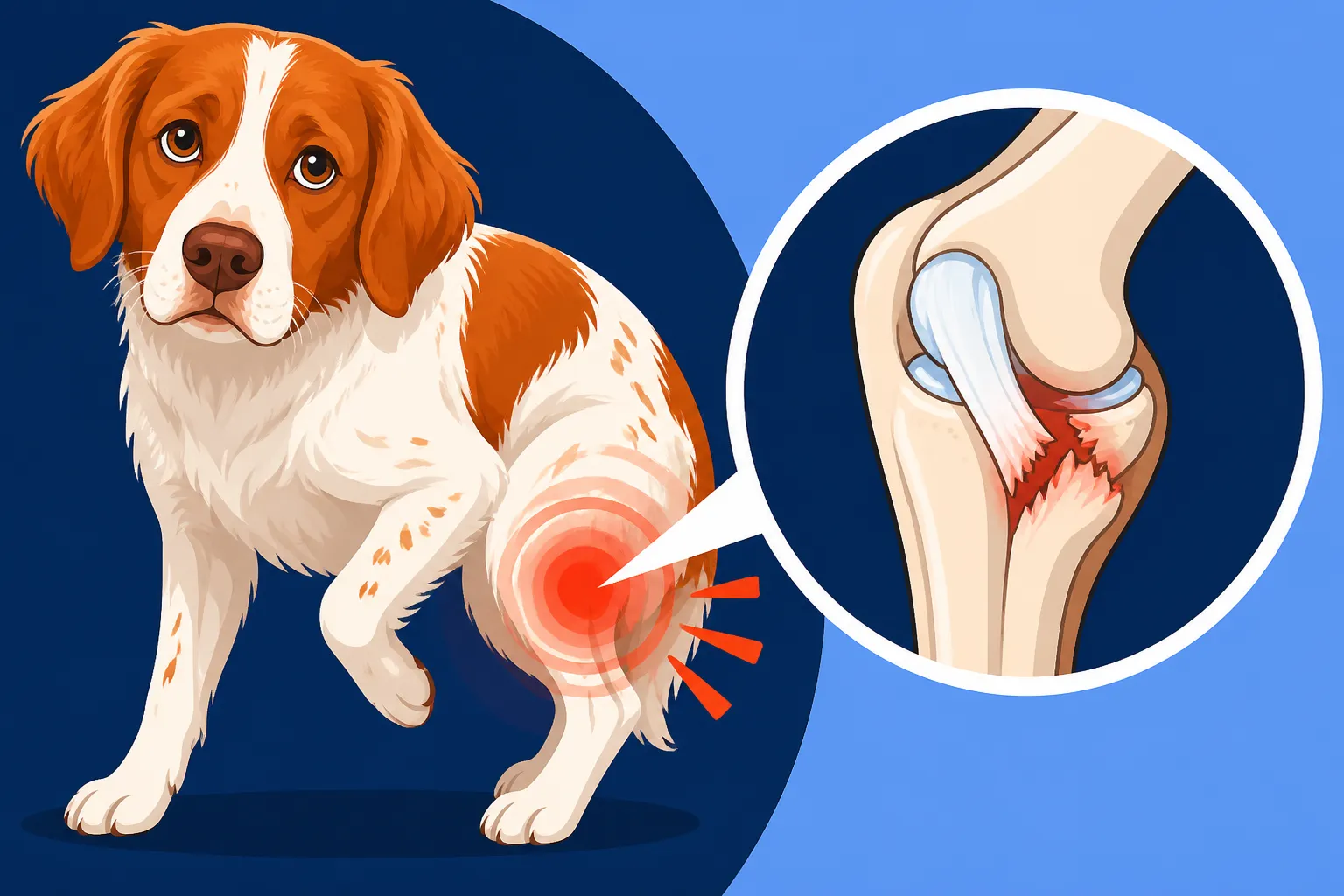
Within this complex joint, two specific ligaments are absolutely vital for stability: the cranial cruciate ligament (CCL) and the caudal cruciate ligament. In humans, we call the cranial cruciate ligament the anterior cruciate ligament, or ACL, and you've probably heard of athletes tearing theirs. For dogs, especially active breeds like the Brittany, the CCL is just as critical. It’s a strong band of fibrous tissue that connects the femur (thigh bone) to the tibia (shin bone), crossing inside the knee joint in an 'X' shape with the caudal cruciate ligament.
The CCL's primary job is multifaceted: it prevents the tibia from sliding forward relative to the femur, it limits internal rotation of the tibia, and it stops hyperextension of the knee. Imagine your Brittany, "Rusty," hurtling through tall grass, then suddenly slamming on the brakes to honor another dog’s point, or making a razor-sharp pivot to follow a flushed bird. That kind of explosive, lateral movement puts immense strain on the CCL. If this ligament is compromised, the knee becomes unstable, leading to pain, inflammation, and ultimately, debilitating lameness. When this ligament tears, whether partially or completely, it creates significant instability in the knee, making every step painful and difficult. This instability can also quickly lead to secondary issues like meniscal tears, which are tears in the cartilage pads that act as shock absorbers in the knee.
How Cruciate Tears Occur in Brittanys
Cruciate tears in Brittanys aren't always a dramatic, single-event injury, though they certainly can be. Many owners envision a dog yelping loudly and suddenly unable to put weight on a leg after a bad jump. While this can happen – an acute, traumatic rupture from a misstep, a fall, or a sudden twist during vigorous activity – it's often a more insidious process.
For many Brittanys, especially as they get a little older, the ligament actually degenerates slowly over time. Think of it like a fraying rope. Repetitive micro-traumas from all those quick starts, stops, jumps, and twists in the field can gradually weaken the ligament. Eventually, even a seemingly minor movement, like stepping off the couch or turning quickly in the yard, can cause the already weakened ligament to snap. This is often referred to as a chronic tear. Breeds like Brittanys, with their high drive and athletic lifestyle, are unfortunately prone to this kind of wear and tear.
Factors like obesity, genetics, and even other orthopedic issues can increase the risk. For instance, a Brittany who might also be dealing with Patellar Luxation in a Brittany (a kneecap that slips out of place) could put more stress on the CCL. Similarly, if your Brittany is carrying extra weight, the load on their joints, including their knees, is significantly higher, accelerating degeneration. Understanding Whether a Working Brittany Wears Its Joints Out is crucial, as the constant demands on their musculoskeletal system can predispose them to such injuries over time. It's a tough reality that the very activities we love to share with our Brittanys can contribute to these injuries.
Recognizing the Signs of a Cruciate Tear in Your Brittany
It can be incredibly distressing to see your energetic Brittany suddenly unable to move freely. Knowing what to look for can help you get them the care they need faster. The signs of a cruciate tear can vary depending on whether it's an acute, sudden injury or a more chronic, slowly developing problem.
Sudden Lameness and Non-Weight Bearing
The most obvious and alarming sign of a complete cruciate ligament rupture is sudden, acute lameness in a hind leg. Your Brittany might yelp in pain and immediately refuse to put any weight on the affected leg. They might hold the leg up, or if they attempt to walk, they'll adopt a characteristic "toe-touching" gait, gingerly putting just the tips of their toes down, if that. This is your dog’s way of trying to avoid putting pressure on the unstable and painful knee.
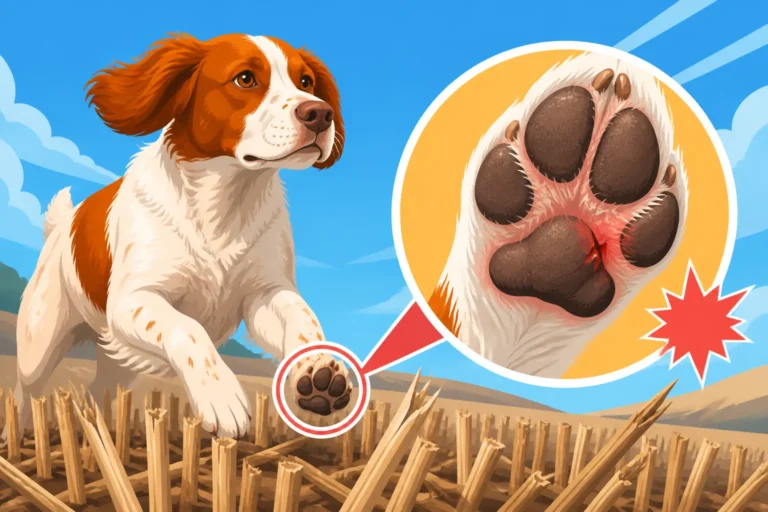
You might also observe your Brittany trying to walk on three legs, holding the injured limb up off the ground entirely, especially after activity or after resting. If you try to examine the leg, they might show signs of pain, perhaps guarding the area or whimpering. This sudden inability to bear weight is an emergency and warrants immediate veterinary attention. It’s very different from a minor paw scrape; the severity of the lameness points to a deeper issue.
Chronic Symptoms and Progression
Not all cruciate tears manifest as dramatic, sudden events. Many Brittanys experience partial tears or slow degeneration of the ligament, leading to more subtle, chronic symptoms that can easily be mistaken for general stiffness or mild arthritis. You might notice a mild limp that comes and goes, especially after exercise or first thing in the morning. This limp might seem to improve with rest, only to return with activity.
Over time, if the tear progresses, or the knee becomes more unstable, you might see muscle atrophy developing in the affected leg. The thigh muscles will look visibly smaller compared to the healthy leg, as your dog instinctively uses it less. They might struggle with everyday activities they once did with ease, such as jumping into the car, going up or down stairs, or even getting up from a lying position. You might hear or feel a "click" when your dog walks, which could indicate a meniscal tear alongside the CCL injury. Distinguishing this from other hind limb issues can be tricky; sometimes, these signs can overlap with Signs a Brittany's Hips Hurt, so a thorough examination is always necessary. Pay close attention to subtle changes in gait or reluctance to perform usual activities, as these are often early warnings.
Diagnosing a Cruciate Tear
When you bring your Brittany to the vet with suspected lameness, the diagnostic process usually begins with a thorough physical examination. Your veterinarian will carefully palpate your dog's leg, feeling for swelling, pain, and instability in the knee joint. The "cranial drawer test" and the "tibial compression test" are key diagnostic maneuvers. During the cranial drawer test, the vet will attempt to move the tibia forward relative to the femur, much like pulling open a drawer. If the ligament is torn, there will be abnormal movement. The tibial compression test involves flexing the ankle joint, which also puts stress on the knee. In many cases, especially with nervous or muscular dogs, sedation might be needed to get an accurate assessment without causing your dog undue stress or muscle tension.
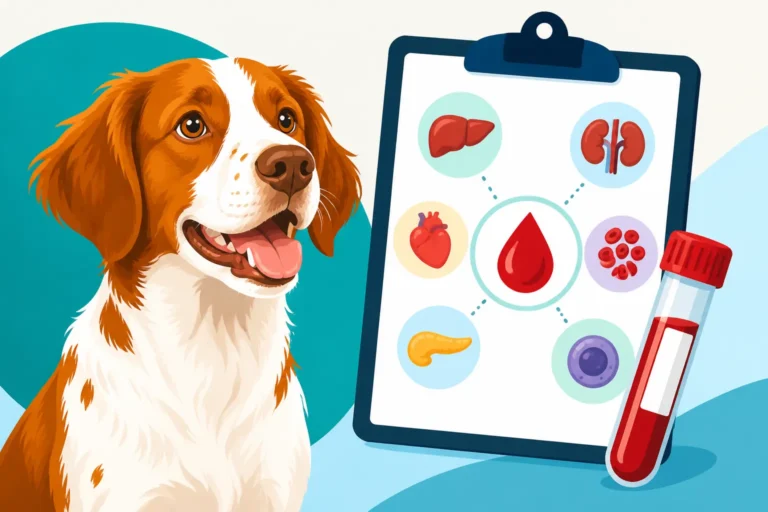
Beyond the physical exam, radiographs (X-rays) are usually taken. While X-rays don't directly show the ligaments themselves, they are invaluable for ruling out other causes of lameness, such as fractures, bone tumors, or severe arthritis. They can also show secondary signs of a cruciate tear, like effusion (fluid buildup) in the joint, or early signs of osteoarthritis that develop as a result of the knee's instability. Your vet might also recommend blood work to ensure your Brittany is healthy enough for any potential surgical procedures, as covered in topics like What a Brittany's Yearly Bloodwork Should Cover. A definitive diagnosis is crucial, as it dictates the most effective course of treatment for your beloved Brittany.
Treatment Options for Cruciate Tears in Brittanys
Once a cruciate tear is diagnosed, the conversation quickly turns to treatment. For a breed as active and athletic as the Brittany, making the right decision is paramount to ensuring they can return to a fulfilling life, ideally free from chronic pain.
Conservative Management
Conservative management, which means non-surgical treatment, is sometimes an option, but it comes with a lot of caveats, especially for a Brittany. It typically involves strict rest, anti-inflammatory medications (NSAIDs), pain relievers, and sometimes joint supplements. Physical therapy, which can include controlled leash walks, range-of-motion exercises, and hydrotherapy, might also be incorporated to help strengthen the surrounding muscles and improve joint function without stressing the healing ligament. Some owners explore knee braces, though their effectiveness can vary greatly; they primarily offer support but don't address the underlying instability caused by the torn ligament.
This approach is generally only recommended for very small dogs (under 15-20 pounds), dogs with very minor partial tears, or those for whom surgery is not an option due to other health concerns or financial constraints. For a Brittany, which is a medium-sized, high-energy working dog, conservative management is rarely successful as a long-term solution for a complete tear. The inherent instability in the knee makes it prone to further injury, meniscal tears, and rapid development of debilitating osteoarthritis. A Brittany will always want to run and play, and it’s incredibly difficult to keep such an active dog calm enough for this to be effective. Trying to treat a complete tear conservatively in a Brittany often leads to prolonged pain, significant muscle loss, and eventually, the need for surgery anyway, often with a more damaged joint.
Surgical Interventions: The Gold Standard
For most Brittanys with a cruciate tear, especially complete ruptures or significant partial tears, surgical intervention is considered the gold standard. The goal of surgery is to stabilize the knee joint, reduce pain, and prevent or slow down the progression of arthritis. There are several surgical techniques, each with its own advantages and considerations.
Tibial Plateau Leveling Osteotomy (TPLO): This is arguably the most common and successful surgery for cruciate tears in medium to large, active dogs like Brittanys. TPLO doesn't attempt to repair the torn ligament directly, which often fails in dogs. Instead, it changes the biomechanics of the knee. The surgeon cuts and rotates the top part of the tibia (the tibial plateau) and stabilizes it with a bone plate and screws. This rotation essentially neutralizes the forces that cause the tibia to slide forward, making the knee stable without relying on the CCL. TPLO has a high success rate, allowing many Brittanys to return to high-level activity. It’s particularly effective because it addresses the underlying cause of instability in a dog’s knee.
Tibial Tuberosity Advancement (TTA): Similar to TPLO, TTA is another osteotomy procedure that alters the biomechanics of the knee. In this surgery, the front part of the tibia (tibial tuberosity) is cut and advanced forward, also stabilizing the knee by changing the angle of the patellar ligament. This reduces the cranial tibial thrust, preventing the tibia from shifting forward during weight-bearing. TTA can be a good option for Brittanys, and some surgeons prefer it in certain cases, although TPLO remains more widely adopted.
Extracapsular Repair (Lateral Suture Technique): This is an older, less invasive technique often used for smaller, less active dogs, or sometimes for young dogs with smaller tears. In this procedure, a strong suture material (like fishing line) is placed outside the joint, mimicking the function of the torn CCL. It essentially acts as an artificial ligament, providing temporary stability while scar tissue forms to take over the long-term stabilization. While less invasive and often less expensive upfront, it may not provide the same long-term stability or return-to-function for a highly athletic Brittany compared to TPLO or TTA. Over time, the suture can stretch or break, and the knee may become unstable again, especially with the high demands of a working Brittany.
Choosing the right surgical procedure often depends on your Brittany’s size, activity level, the extent of the tear, and your surgeon’s expertise and preference. It’s a significant investment, both emotionally and financially, akin to What Hip Surgery Costs on a Brittany, and careful consideration with your veterinary surgeon is essential. The goal is always to get your dog back to their happy, active self, allowing them to continue doing the things they love.
Post-Surgery Care and Long-Term Recovery
Undergoing knee surgery for a cruciate tear is a big deal, and the surgery itself is only half the battle. The recovery period is absolutely critical and requires immense dedication and patience from you, the owner. Without proper post-operative care, even the best surgery can fail to yield optimal results.
The Critical Recovery Period
The first few weeks to months after cruciate surgery are paramount for healing and successful rehabilitation. Expect strict confinement protocols, typically involving crate rest or a small, enclosed area. Your Brittany will only be allowed short, controlled leash walks for bathroom breaks. This isn't just to prevent them from hurting themselves; it's essential for the bone and soft tissues to heal properly. You might need to adjust your routine significantly – no running, jumping, or roughhousing. This can be particularly challenging with a high-energy Brittany, who just wants to be active! Patience and consistency are your best friends here.
Medication management will be key, including pain relief, anti-inflammatories, and sometimes antibiotics. Your vet will provide a detailed schedule. Beyond medication, physical rehabilitation is a non-negotiable part of recovery for an active dog. This often begins with passive range-of-motion exercises, where you gently move your Brittany's leg to prevent stiffness. As they progress, hydrotherapy (underwater treadmill) is often introduced, allowing them to bear weight and build muscle with less impact on the joint. Specialized exercises gradually increase in intensity and duration, focusing on strengthening the quadriceps, hamstrings, and core muscles, which are all vital for knee stability. The recovery timeline can range from 8 to 16 weeks or even longer, depending on the surgery type, your dog's individual healing, and their adherence to the rehab plan.
This entire process, from surgery to extensive rehab, can be costly. This is where having a comprehensive pet insurance plan, like those offered by Healthy Paws, can be an absolute lifesaver. Knowing that a significant portion of these expenses – from the surgery itself to months of physical therapy – might be covered can alleviate a tremendous amount of stress and allow you to focus solely on your Brittany's recovery, rather than worrying about the bills. Healthy Paws and similar insurers understand the reality of these major orthopedic issues.
Preventing Future Tears and Managing Arthritis
Unfortunately, once a Brittany has torn a cruciate ligament in one knee, they have a significantly higher risk (up to 50-60%) of tearing the cruciate ligament in the other knee, often within 12 to 18 months. This happens because they compensate by putting more weight and strain on the "good" leg during recovery. Therefore, prevention strategies for the uninjured leg are just as important.
Maintaining a healthy weight is paramount. Even a few extra pounds dramatically increase the load on all joints. Regular, controlled exercise to build and maintain strong muscles around the knee is crucial. Your vet might recommend specific joint supplements containing ingredients like glucosamine, chondroitin, and MSM, which can support cartilage health. Omega-3 fatty acids, often found in fish oil, can also help reduce inflammation.
Even with successful surgery and diligent rehabilitation, a cruciate tear almost always leads to some degree of osteoarthritis in the affected knee over time. This is because the joint experiences trauma and changes in its mechanics. Managing this lifelong condition involves continued weight management, appropriate exercise, joint supplements, and sometimes long-term pain management medications as your Brittany ages. It’s an unfortunate reality that a serious injury can accelerate The Age a Brittany Gets Arthritis. Regular veterinary check-ups are essential to monitor joint health and adjust management strategies as needed. Discussing options for continued care with your vet and understanding how a plan from a provider like Healthy Paws can help cover ongoing arthritis management costs can provide peace of mind for the long haul. Ultimately, the goal is to keep your Brittany comfortable and active for as many years as possible, even if it means adjusting their hunting intensity later in life as discussed in Whether an Aging Brittany Still Wants to Hunt.
Surgical Options Comparison for Cruciate Tears
Here’s a quick overview of the primary surgical options for cruciate tears in Brittanys:
| Procedure Name | Primary Mechanism | Ideal Candidate for Brittanys | Pros | Cons | Average Recovery Time |
|---|---|---|---|---|---|
| TPLO | Alters tibial plateau angle to neutralize forces | Active, medium to large breeds; high success for working dogs | Highly stable joint; good return to athletic function; effective long-term | More invasive (bone cut); higher initial cost; longer initial healing time | 10-16 weeks |
| TTA | Advances tibial tuberosity to stabilize knee | Active, medium to large breeds | Good return to function; potentially less invasive than TPLO for some | Bone cut involved; can be less effective for very steep tibial plateau angles | 8-12 weeks |
| Extracapsular Repair | Uses suture material to mimic CCL function | Smaller, less active dogs; sometimes for young, less severe cases | Less invasive; lower initial cost | May not provide long-term stability for active Brittanys; higher re-tear rate | 8-12 weeks |
Disclaimer
The information provided in this guide is for general educational purposes only and should not be considered a substitute for professional veterinary advice. Always consult with a qualified veterinarian for any health concerns or before making any decisions related to your Brittany's medical care or treatment plan.