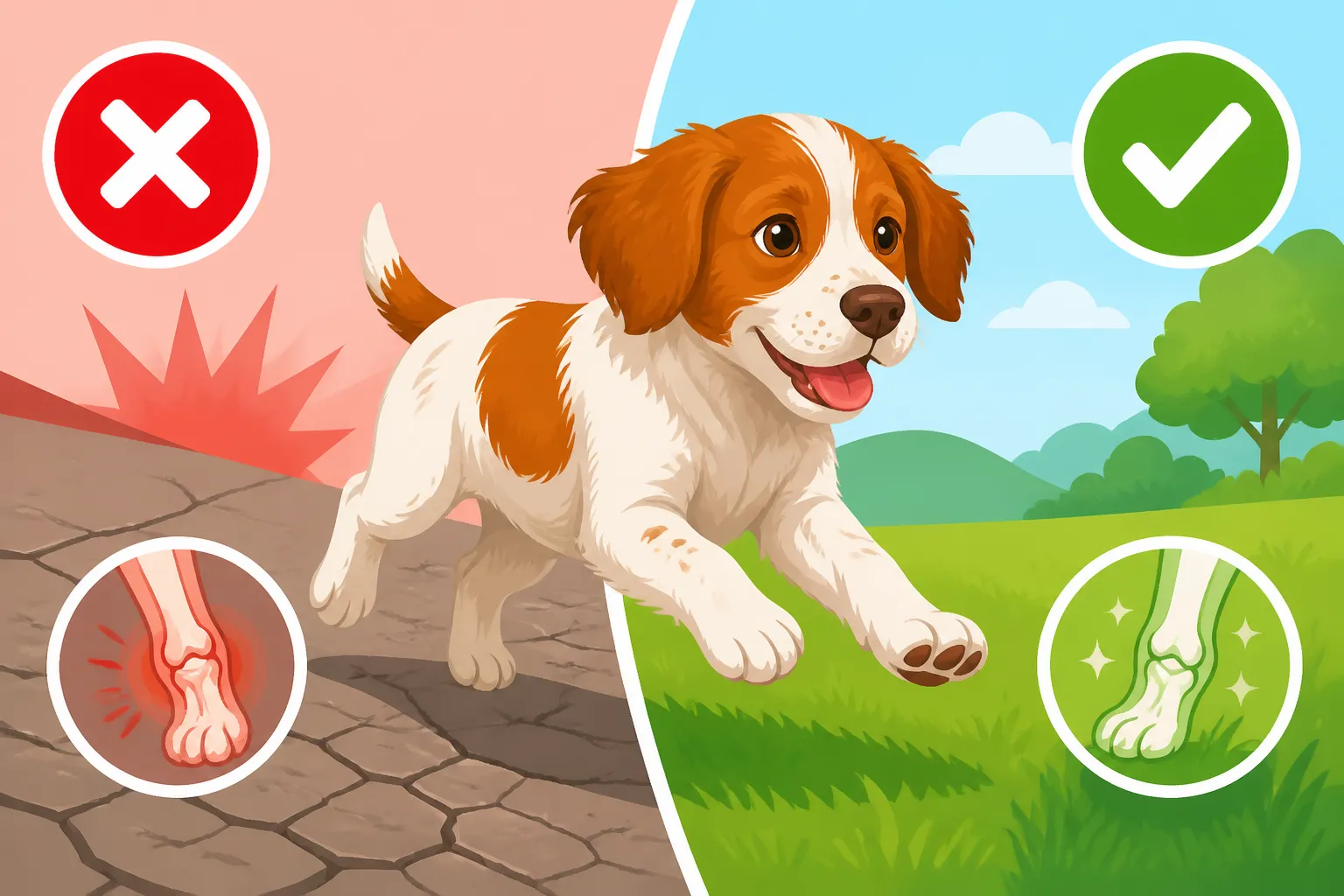
Whether a Brittany Puppy Should Run on Hard Ground
It’s a common dilemma for new Brittany owners, isn’t it? You’ve got this little dynamo, a fluffy bundle of energy that demands to run, jump, and explore, and your instinct is to let them go. But then that little voice of worry pipes up: "Is all this running on hard ground going to mess up their joints?" It’s a very real and valid concern, especially with a breed known for its athleticism but also for certain orthopedic predispositions. This guide is dedicated to demystifying the ins and outs of safe exercise for your Brittany puppy, ensuring their boundless energy doesn't come at the cost of their long-term health.
The Vulnerability of a Growing Brittany Puppy's Joints
When you look at your Brittany puppy, you see a miniature version of the magnificent adult they’ll become. But what you can’t see are the delicate structures still forming beneath their vibrant coat and eager paws. These are their growth plates, and they are incredibly important, yet incredibly vulnerable, during puppyhood.
Understanding Open Growth Plates
Imagine the bones in your puppy’s legs not as solid, unchanging structures, but as works in progress. At the ends of these long bones, near the joints, are areas of soft, developing cartilage called growth plates, or physes. Think of them like the "construction zones" of the skeletal system, where new bone tissue is continuously being laid down, allowing the bones to lengthen as your puppy grows taller.
These growth plates are significantly softer and more porous than the mature bone that will eventually replace them. They don't fully close and harden until your Brittany reaches physical maturity, which can be anywhere from 12 to 18 months of age, sometimes even a bit later for larger or slower-maturing individuals. Until that time, they are highly susceptible to injury. A hard impact or repetitive stress that an adult dog's solid bone could easily withstand might cause microfractures, inflammation, or even complete closure of a growth plate in a puppy. This can lead to deformities, limb length discrepancies, or long-term lameness. Understanding When a Brittany's Growth Plates Close is absolutely fundamental to making informed decisions about their exercise routine.
Why Hard Surfaces Pose a Risk
Now, let's talk about those hard surfaces – concrete, asphalt, even hard-packed dirt trails. When your Brittany puppy runs, jumps, or even just walks briskly on these unforgiving terrains, every step sends a shockwave up their legs. Unlike soft grass, loose dirt, or sand, which naturally absorb some of the impact, hard surfaces offer very little cushioning.
Consider the force involved. Each time your puppy lands, especially when running at speed or making quick turns, the force transmitted through their growing bones and joints can be substantial. For a developing skeletal system with open growth plates, this repetitive jarring can lead to cumulative microtrauma. It’s not necessarily one dramatic event, though that can happen, but rather the constant, day-in and day-out pounding that gradually takes its toll. This stress can inflame the growth plates, damage the cartilage, and interfere with the normal ossification process. It's like constantly hammering a delicate piece of machinery; eventually, something is going to give, or at the very least, develop prematurely worn parts.
Specific Orthopedic Concerns for Brittany Puppies
Brittanys are an active, athletic breed, and like many purebred dogs, they have certain predispositions to orthopedic conditions. While genetics play a significant role, how you manage your puppy's early exercise can heavily influence whether these conditions manifest or worsen.
Hip Dysplasia and Early Impact
Hip dysplasia is a frustrating and often painful condition where the hip joint doesn't form correctly, leading to a loose fit between the ball (femoral head) and socket (acetabulum). Over time, this poor fit causes wear and tear, eventually leading to degenerative joint disease or osteoarthritis. Unfortunately, Brittanys are among the breeds known to have a predisposition for this condition. While genetics are the primary driver, environmental factors during puppyhood can absolutely exacerbate a mild case or even accelerate the onset and severity of symptoms.
For a Brittany puppy genetically predisposed to hip dysplasia, excessive high-impact exercise, particularly on hard surfaces, can be a detrimental factor. The constant jarring and unnatural twisting motions on a poorly developed hip joint can prevent the proper seating and development of the femoral head within the acetabulum. Instead of allowing the joint to develop snugly and deeply, the stress can encourage the joint to loosen further, leading to more pronounced laxity and subsequent damage. It’s a vicious cycle where early stress contributes to greater instability, which in turn leads to more pain and deterioration later on. Many owners are keenly aware of How Common Hip Dysplasia Is in Brittany Spaniels, making them even more cautious about early exercise. If you notice your puppy showing Signs a Brittany's Hips Hurt, it's crucial to consult your veterinarian immediately.
Elbow Dysplasia and Other Joint Issues
Beyond the hips, a Brittany puppy's elbows are also areas of concern. Elbow dysplasia is another complex, inherited condition involving abnormal development of the elbow joint. It can manifest in several ways, including fragmented coronoid processes, osteochondritis dissecans (OCD) of the humeral condyle, or ununited anconeal processes. All of these involve abnormal bone or cartilage development within the joint, leading to pain, lameness, and eventual arthritis. Like hip dysplasia, while genetics are key, the physical demands placed on a puppy’s developing elbows can significantly influence the severity of the condition.
Activities that involve repetitive jumping, climbing, or running on hard surfaces can put undue stress on the elbow joints, potentially aggravating any underlying predisposition to Elbow Dysplasia in a Brittany. Imagine a puppy repeatedly jumping off a porch or an adult-sized bed onto a hard floor. The shock absorbed by those still-forming elbow joints can be considerable. Similarly, other joint issues like patellar luxation (where the kneecap slips out of place) or even minor soft tissue injuries can be worsened or triggered by inappropriate early exercise. These small injuries might seem insignificant at the time, but they can set the stage for chronic pain and mobility problems as your Brittany matures.
Safe Exercise Strategies for a Brittany Puppy
So, what’s a high-energy Brittany puppy owner to do? The key is providing appropriate outlets for their energy and mental stimulation while prioritizing their joint health. It’s all about working with their development, not against it.
Prioritizing Soft Surfaces and Controlled Play
The golden rule for Brittany puppy exercise is to favor soft, forgiving surfaces. Think lush grass, sandy beaches, natural dirt trails in the woods, or even carefully maintained, soft footing in an agility arena (when they're old enough for light agility, of course!). These surfaces provide natural cushioning, absorbing impact and reducing the stress on developing joints. Instead of long, sustained runs, opt for multiple short, supervised play sessions throughout the day.
Let your puppy engage in natural, self-directed play. This might include exploring scents in the yard, chasing rolling toys on the grass, or having brief, gentle romps with other well-socialized, equally-sized puppies on a soft lawn. Encourage sniffing and exploring, which is mentally stimulating and less physically demanding. If you have access to a safe, shallow body of water, swimming can be an excellent, low-impact exercise once your puppy is confident and comfortable in the water. Remember, the goal isn't to exhaust them with endless running, but to provide enriching experiences that build their body and mind gradually.
Avoiding High-Impact Activities and Repetitive Strain
While it’s tempting to let your Brittany puppy participate in everything, certain activities are best avoided or heavily modified until their growth plates have fully closed and their skeletal system is mature. Avoid long-distance running on hard surfaces like pavement or concrete. This isn't just about intense speed; even sustained trotting can be too much. Resist the urge to let them jump off high objects, like furniture, truck beds, or car trunks, as the landing force can be immense.
Similarly, highly repetitive activities with sudden stops and starts, such as intense, prolonged fetch sessions on hard ground, should be minimized. While a short, gentle game of fetch on grass is fine, don't throw the ball endlessly, causing them to slam on the brakes or twist sharply. These actions put significant torque and impact on all their major joints. Remember, their enthusiasm often outweighs their physical readiness. As for organized sports, patience is key. While your Brittany will excel in activities like field trials and agility, formal training involving demanding maneuvers should wait until they are physically mature. Even early training should focus on short, positive sessions, such as those recommended in Whether a Brittany Needs Puppy Class.
Mental Stimulation and Training
It’s easy to think of exercise purely in terms of physical activity, but for an intelligent breed like the Brittany, mental stimulation is just as vital and often just as tiring without putting stress on their joints. Engage your puppy with puzzle toys that dispense treats, teaching them basic obedience commands in short, fun sessions, or introducing them to scent games where they have to sniff out hidden treats.
These activities burn mental energy, build a strong bond between you and your puppy, and lay the foundation for future training, all without the wear and tear on their developing body. A mentally tired puppy is often a well-behaved puppy who is less likely to engage in destructive behaviors born of boredom. This approach ensures your Brittany's energy is channeled productively, preparing them for a life of adventure once their body is ready.
Long-Term Health and Smart Puppyhood Choices
The decisions you make during your Brittany's puppyhood have ripple effects that extend throughout their entire life. Investing in their joint health now means potentially avoiding costly and painful issues down the road.
The Benefit of Slow Growth
It might sound counterintuitive, but a slower, more controlled growth rate for your Brittany puppy is generally better for their long-term orthopedic health. Rapid growth spurts can put extra strain on developing bones and joints, making them more susceptible to problems like hip and elbow dysplasia. This doesn’t mean underfeeding your puppy, but rather ensuring they receive a balanced diet appropriate for their stage of life, avoiding overfeeding, which leads to excess weight and stress on their immature skeletal system.
Discussing your puppy's diet with your veterinarian is crucial. They can help you select a high-quality puppy food that supports steady, healthy growth without promoting excessive weight gain. You might want to explore topics like What a Brittany Puppy Eats at Four Months and the broader concept of Why a Brittany Puppy Should Grow Slowly to ensure you're providing the best nutritional foundation. Maintaining a lean body condition is one of the most impactful things you can do for your Brittany's joint health, alongside appropriate exercise.
Proactive Care and Veterinary Check-ups
Regular veterinary check-ups are your first line of defense in monitoring your Brittany puppy's development. Your vet can assess their gait, palpate their joints, and discuss any concerns you might have about their activity levels or growth. They can provide guidance tailored to your specific puppy’s individual needs and monitor for any early signs of orthopedic issues.
As your Brittany matures, you'll also want to consider screening tests for conditions like hip and elbow dysplasia. These certifications, often done around two years of age by organizations like the Orthopedic Foundation for Animals (OFA) or PennHIP, provide valuable information about your dog's joint health and can guide future breeding decisions or management strategies. Understanding What PennHIP Tells a Brittany Owner or What Hip Screening Did for the Brittany Spaniel can empower you to make informed choices.
Financially speaking, the potential costs associated with orthopedic issues can be substantial, ranging from ongoing pain management medications to complex surgeries like What Hip Surgery Costs on a Brittany. This is why many responsible Brittany owners consider pet insurance early on. Companies like Healthy Paws offer comprehensive accident and illness plans that can help alleviate the financial burden if your dog develops hip or elbow dysplasia or suffers an injury. Having a safety net from a reputable provider such as Healthy Paws means you can focus on providing the best care without undue financial stress. In an active breed like the Brittany, ensuring you have coverage from a company like Healthy Paws for potential orthopedic issues can be a realistic and wise investment in their future.
Safe vs. Risky Puppy Activities Table
| Activity Type | Safe for Brittany Puppies (with caveats) | Risky for Brittany Puppies (avoid until maturity) |
|---|---|---|
| Running Surfaces | Grass, soft dirt trails, sand, short agility mats | Concrete, asphalt, hard pavement, gravel roads |
| Play Sessions | Short, frequent play on soft ground; gentle fetch; supervised puppy play with appropriate partners | Long, intense fetch sessions with abrupt stops; repetitive jumping games |
| Jumping/Climbing | Low obstacles (e.g., puppy stairs); natural, gentle inclines | Jumping off furniture/trucks; long flights of stairs; high jumps |
| Mental Engagement | Puzzle toys; scent work; short obedience training sessions | Forced long walks/jogs on hard surfaces; intense agility training |
| Water Activities | Supervised swimming in calm, shallow water (after vaccine series) | Unsupervised swimming; jumping into water from height |
This table provides a quick reference, but always remember to observe your individual puppy's energy levels and comfort. Every dog is unique!
Disclaimer
The information provided in this article is for general informational purposes only and does not constitute veterinary advice. Always consult with a qualified veterinarian for any health concerns or before making any decisions about your Brittany Spaniel's health or treatment.