Whether a Brittany Is the Smallest Pointing Breed
A Brittany is often described as the smallest versatile pointing breed, but that phrase can be misleading if you take it to mean the smallest dog in every group that points. Its compact build makes it easier to live and travel with than many larger gun dogs, while still giving it the stamina to hunt. This guide explains what “smallest” really means and how the Brittany compares.
Is the Brittany the smallest pointing breed
What people mean by the smallest pointing breed
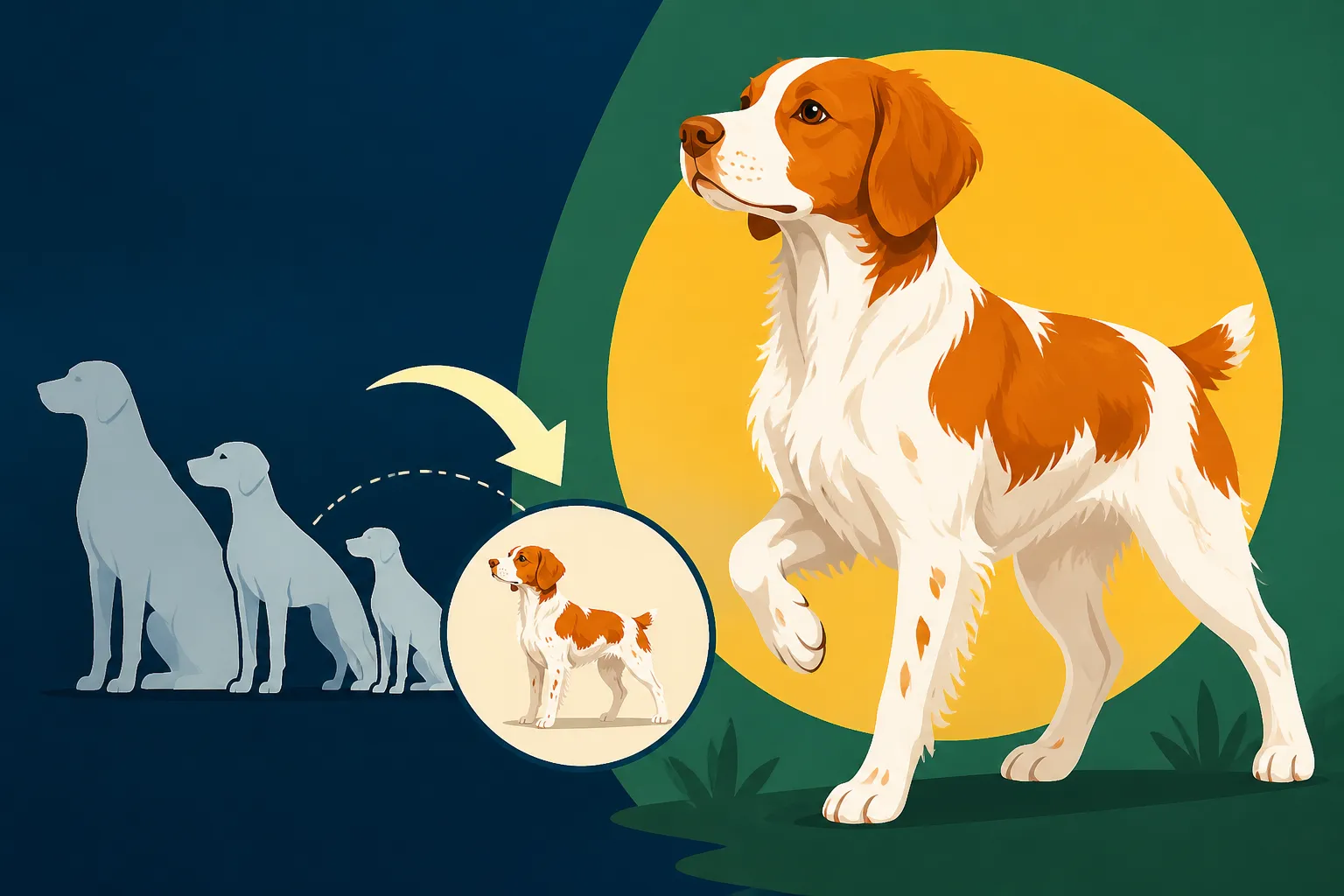
The Brittany is widely regarded as the smallest of the versatile pointing breeds: dogs bred to locate game by scent, hold a point, and work with a hunter in the field. “Versatile” matters here. It separates the Brittany from a broad universe of breeds that may point, flush, retrieve, or simply belong to the larger sporting-dog category. The phrase is about a useful hunting-dog comparison, not a definitive ranking of every breed that has ever pointed.
That distinction helps avoid a common mix-up. A small flushing spaniel may weigh less than a Brittany, but flushing and pointing are different jobs. A Brittany typically locates game and pauses to indicate where it is, rather than rushing in to make birds take flight. For an overview of its working role, see The Brittany Points, It Does Not Flush.
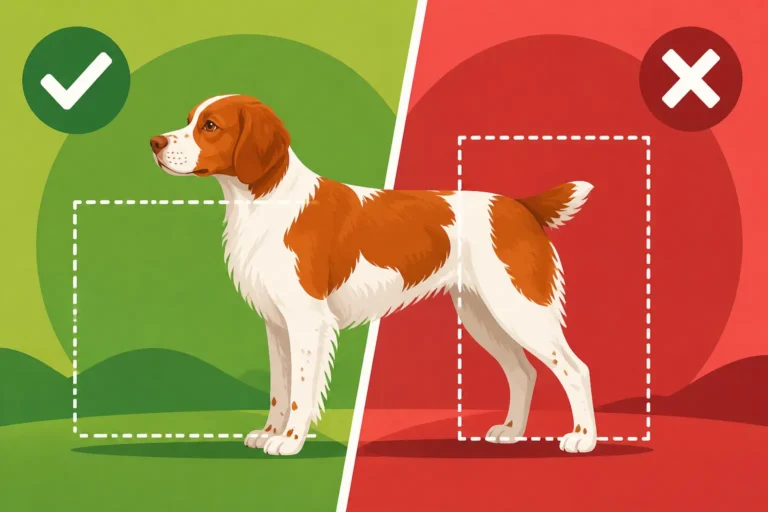
The breed’s reputation for being compact also doesn’t mean every Brittany is unusually tiny. Individuals vary in frame, muscle, and weight, and a lean hunting dog can look smaller than a heavier pet dog of the same height. If you are comparing dogs, look at mature height and build as well as the number on the scale.
How Brittany size compares with other pointing dogs
Brittanys are generally around 17.5 to 20.5 inches tall at the shoulder. Many weigh roughly 30 to 40 pounds, though an individual’s healthy weight depends on its frame, age, sex, and condition. Those proportions give the breed a relatively small footprint among versatile pointing dogs without making it a toy-sized or fragile dog. The details are covered in How Much a Brittany Weighs and How Tall It Stands.
A German Shorthaired Pointer, by comparison, is generally taller and heavier, with a longer-legged, more substantial outline. That difference can be noticeable when you lift a dog into a vehicle, fit a crate into a smaller car, or make room for a dog bed at home. For a fuller comparison of build and working style, see How a Brittany Differs From a German Shorthaired Pointer.
There is no single universal list of “pointing breeds” that makes a smallest-to-largest ranking simple. Breed categories and hunting traditions differ, and some smaller sporting breeds are not pointers. So the most accurate short answer is: the Brittany is commonly considered the smallest versatile pointing breed, not necessarily the smallest dog that can point or the smallest sporting dog.
What its compact size means in everyday life
Easier to handle does not mean low energy
A smaller frame can make everyday logistics easier. A Brittany may fit more comfortably in a family vehicle than a much larger pointing dog, and lifting one into a truck or onto a vet examination table can be more manageable for some owners. Its size can also be convenient for a hunter walking cover on foot, where a dog that works closely and can be moved around easily may suit the routine. For a direct look at that choice, see Which Brittany Type Suits a Foot Hunter Better.
But a Brittany’s manageable size should not be mistaken for a low-exercise lifestyle. This is an athletic hunting breed with stamina and a strong interest in movement, scent, and exploration. A short stroll around the block may meet a dog’s basic need to go outside without satisfying its need for meaningful activity. A bored, under-exercised Brittany can bring that unused energy indoors—sometimes as barking, restless pacing, or chewing.
For example, imagine a young dog that spends weekdays in a suburban home and gets only brief leash walks. It may be perfectly small enough to share the living room, yet still have enough drive to turn an unattended shoe or cushion into an outlet. A suitable routine usually combines exercise with training, sniffing, and opportunities to use its brain. The Brittany’s size makes it portable; it does not make it automatically easygoing.
Small enough for a home, still a working dog
Brittanys can adapt to different homes, but success depends more on daily routine and individual temperament than on square footage alone. A house with a large yard is not a substitute for time spent engaging with the dog, and a smaller home is not automatically unsuitable if the owner provides regular exercise and training. The breed’s social nature can also mean that long stretches without company are harder than its measurements suggest. For personality context, see What a Brittany's Temperament Is Really Like.
In a home, practical details matter. Choose a crate that lets the dog stand, turn around, and lie down comfortably, but avoid one so large that a puppy can use a corner as a bathroom area during housetraining. When buying a crate, bed, or travel setup, measure the individual dog rather than relying only on a breed label. Retailers such as Chewy offer a range of dog supplies, but sizing guidance is most useful when you have your dog’s actual measurements in hand.
The same goes for equipment used in the field. A vest or harness that fits a larger pointer may rub, shift, or interfere with a smaller dog’s movement. Check the fit while the dog is standing and walking, and make sure the gear does not restrict the shoulders or press on the throat. For a dog that runs through dense cover, inspect its skin and coat after outings as well as checking that its equipment stayed in place.
Comparing Brittany types and other sporting dogs
American and French Brittanys are not simply different sizes
People sometimes expect a French Brittany to be much smaller than an American Brittany. The labels refer to different breeding traditions and preferences, but they do not guarantee a particular height or weight for an individual dog. There is variation within both populations, and a breeder’s selection goals can matter as much as the label. For a closer explanation, see How a French Brittany Differs From an American One.
A prospective owner should ask about the parents’ actual size, build, energy, and hunting style rather than choosing based on a broad assumption. If you meet a puppy’s mother or adult relatives, their proportions can help you picture the sort of dog the puppy may become, though they cannot predict its exact mature size. A responsible breeder should be willing to talk about both the dogs’ health and the work they are suited to do.
The practical question is not simply “Which type is smaller?” It is “Which dog fits the way I live and hunt?” A walking hunter who wants a close-working partner may prioritize range and responsiveness. Someone who hunts larger spaces or has different field expectations may look for other traits. Size is part of the decision, but it should not eclipse temperament, training, health, and working style.
A Brittany and a Springer Spaniel do different jobs
A Springer Spaniel may be similar enough in overall household scale to prompt comparisons, but the breeds were developed for different field roles. Springers are flushing spaniels; Brittanys are pointing dogs. That difference affects how they search, respond to game, and work with a hunter. The distinction is more useful than trying to decide which breed is “smaller” based on a quick glance. See How a Brittany Differs From a Springer Spaniel for more on those differences.
A Brittany’s compact size can be appealing if you want a pointing dog that is easier to transport and handle than many larger breeds. Yet a Springer Spaniel’s size or coat should not be treated as a substitute for the Brittany’s hunting style, and vice versa. If you are choosing a dog for field work, consider the type of hunting you plan to do and what you expect the dog to do when it finds birds.
For people who are new to bird dogs, watching both breeds work can be more revealing than comparing descriptions online. Pay attention to how the dog searches, how it responds to its handler, and whether its pace suits your own. A smaller dog is not necessarily a better fit if its instincts, energy, or training needs don’t match your plans.
How to decide whether a Brittany’s size suits you
Match the dog to your daily routine
Start by picturing ordinary life, not just a day in the field. Consider where the dog will ride, how much room you have for a crate, who will exercise it, and how long it will spend alone. A Brittany’s size may be convenient in an apartment or suburban house, but it still needs regular activity and interaction. If you are comparing breeds mainly because you want a smaller dog, make sure you are also comfortable with the Brittany’s working-dog needs.
Think about handling, too. If you have trouble lifting a dog, ask to meet adult dogs of similar lines and assess what feels manageable. An active adult Brittany can be strong and energetic even though it weighs less than a large pointer. For everyday gear, measure the dog’s chest and body length before ordering a harness, coat, or bed. Chewy is one place owners may browse for supplies, but the measurements and fit checks should guide the choice—not a product’s “medium breed” label alone.
Finally, make room in your plan for changes as the dog grows. A puppy’s current size does not tell you exactly how tall or heavy it will be as an adult. Ask the breeder about mature relatives and keep up with veterinary checkups so growth and body condition can be assessed over time. If food or treats are part of training, Chewy’s product listings can help you compare options, while your veterinarian can advise on an appropriate diet for your dog’s age and activity.
Look beyond height and weight
A healthy Brittany should be evaluated as an individual, not as a set of breed averages. A dog that is too thin or too heavy may have a problem that has little to do with whether it is technically the smallest pointing breed. Learn to notice changes in body condition and activity, and ask your veterinarian what is appropriate for your dog’s frame. A healthy dog’s ribs should be possible to feel without being sharply prominent, but body condition is best judged with professional guidance.
Also consider the traits that affect daily compatibility: confidence, sociability, response to training, and intensity outdoors. A small dog with a strong hunting drive may require more planning than a larger, less driven companion. Brittany owners who understand the breed’s working background are usually better prepared to meet its needs. For a broader look at what the breed does well, see Whether a Brittany Is a Versatile Breed.
So, is the Brittany the smallest pointing breed? The useful answer is that it is commonly recognized as the smallest versatile pointing breed. Its compact size can be a real advantage for transport and foot hunting, but it does not make the dog low-energy or low-maintenance. Meet adult dogs, ask about the line’s build and temperament, and choose for the whole dog—not just its size.
Disclaimer
This article is for general informational purposes only and does not constitute professional advice. Laws, prices and regulations vary by location and change over time. Consult a qualified professional for guidance on your specific situation.