Whether a Black Brittany Is Standard
One of the most common questions and sometimes, the biggest source of confusion for prospective Brittany owners, or even those who already cherish one, revolves around their coat colors. Many people have seen photos or heard whispers of black Brittanys, leading them to wonder if this striking hue is part of the breed's official look. This guide is here to untangle the nuances of Brittany coat colors, especially the hotly debated topic of black, helping you understand what's considered "standard" by breed clubs and what truly matters in a magnificent hunting companion.
Understanding the Brittany Breed Standard
Every purebred dog breed has what's called a "breed standard." Think of it as the blueprint, meticulously crafted by the parent club to describe the ideal specimen of the breed. It covers everything from temperament and gait to size, structure, and, crucially for our discussion, coat color and markings. For the Brittany, particularly in North America, this standard is quite specific about what's accepted in the show ring.
What Is a Breed Standard, Anyway?
A breed standard isn't just a fancy set of rules; it's the historical document that preserves the integrity and characteristics of a breed. It's written to guide breeders in their efforts to produce dogs that embody the desired traits, both in form and function. For a working breed like the Brittany, the standard usually emphasizes traits that make them excellent in the field, alongside their physical appearance. It describes the dog's ideal proportions, how it moves, its personality, and of course, the accepted range of colors and patterns. Deviations from the standard might mean a dog can't compete in conformation shows, but it doesn't necessarily mean it's any less of a wonderful pet or a capable hunter. It's really about maintaining consistency in breeding lines.
The American Kennel Club's View on Brittany Colors
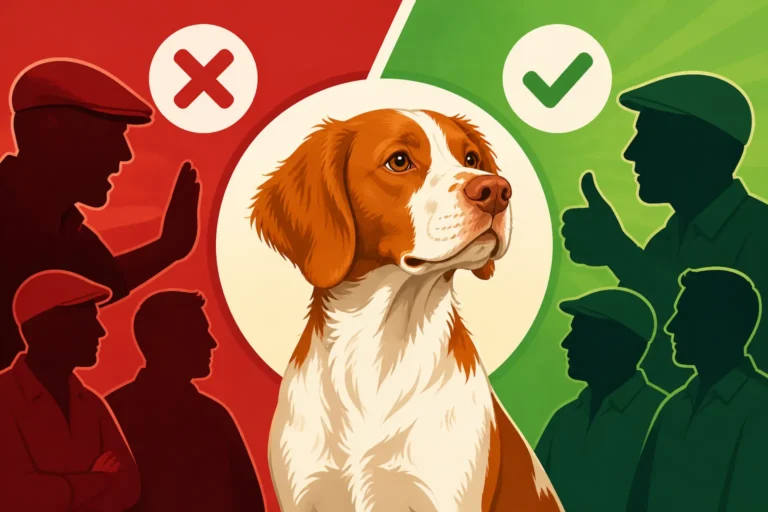
In North America, the American Kennel Club (AKC) sets the standard for the Brittany. And when it comes to color, the AKC standard is unequivocal: "Orange and white or liver and white in any of the usual patterns. Extensive ticking is desirable. Tricolors are permitted only if the third color is limited to a few orange or liver hairs in the eyebrows, around the muzzle, or on the legs. Black is a disqualification." Yes, you read that right – black is a disqualification. This means an otherwise perfect Brittany with even a single black hair would not be able to compete in an AKC conformation event. This strict stance has been a defining characteristic of the American Brittany for decades, shaping breeding programs and the visual identity of the breed on this continent. The standard reflects a historical decision made by American breeders to differentiate their lines, even if it meant diverging from their European cousins. For more on this, you might find American Brittany and Epagneul Breton Went Separate Ways an interesting read.
The French Standard's Perspective Epagneul Breton
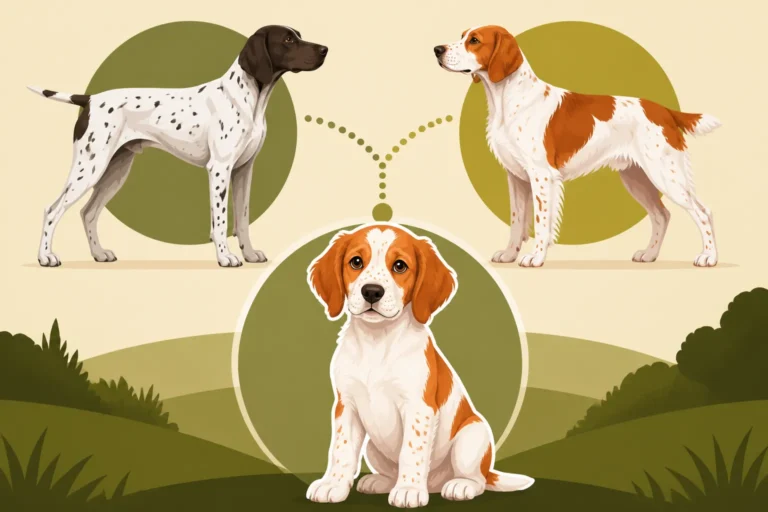
Now, let's hop across the Atlantic to the breed's homeland: France. The Brittany is known there as the Epagneul Breton. The French standard, maintained by the Club de l'Epagneul Breton and recognized by the Fédération Cynologique Internationale (FCI), takes a slightly different approach to color. While orange and white, and liver and white are certainly prominent and preferred, the French standard does allow black and white. It's important to understand that the American and French Brittanys, while sharing a common ancestor, have evolved with distinct breed standards. This is a crucial piece of information for anyone interested in the breed, as it directly addresses the question of black Brittanys. The allowance of black in the French standard means that if you see a truly black and white Brittany, it's likely of French lineage and conforms to their breed's ideal. This difference is a prime example of how two branches of the same breed can diverge over time, leading to varying aesthetic preferences and official recognition. You can learn more about this historical split by exploring What Epagneul Breton Means or How a French Brittany Differs From an American One.
The Colors a Brittany Should Be
Given the AKC's strict no-black rule, let's dive into the colors that are officially recognized and celebrated in the American Brittany. These are the hues you'll see in the vast majority of Brittanys from reputable North American breeders.
The Classic Orange and White
When most people picture a Brittany, they likely imagine an energetic dog with a striking orange and white coat. This is arguably the most iconic and prevalent color combination. The orange can range from a pale, almost cream apricot to a rich, deep red-orange. It’s often distributed in large patches, often over the ears, head, back, and sometimes spots on the legs and body. The white areas are typically pure and expansive, creating a beautiful contrast. Many orange and white Brittanys also display "ticking"—small, isolated spots of color within the white areas, which can vary in density. This ticking often becomes more pronounced as the dog ages. An orange and white Brittany stands out in the field, making them quite visible against varied cover, a practical advantage many hunters appreciate.
Liver and White: A Common Variation
Another widely accepted and admired color is liver and white. Liver, often described as a dark reddish-brown, replaces the orange patches. Just like the orange, the liver can vary in shade, from a lighter milk chocolate to a deep, dark brown. Liver and white Brittanys also exhibit ticking, where the spots in the white areas are liver-colored. While perhaps not as common as orange and white, liver and white Brittanys are equally stunning and conform perfectly to the AKC breed standard. They offer a slightly different aesthetic, preferred by many who appreciate the richness of the liver color. Both orange and liver are considered equally desirable in the show ring and in the field, as long as the dog meets all other aspects of the breed standard regarding temperament and conformation.
Roan and Tricolor: More Nuanced Patterns
Beyond the primary orange/liver and white, the Brittany standard also acknowledges roan and tricolor patterns. Roan refers to an intimate mixture of colored and white hairs, giving a speckled or mottled appearance. So, you might have an orange roan, where orange hairs are mixed into the white areas, or a liver roan, with liver hairs mixed in. This isn't just ticking; it's a more uniform intermingling of colored hairs that gives a softer, blended look to the coat.
Tricolor Brittanys are also permitted, but with very specific limitations. As mentioned earlier in the AKC standard, the third color must be very minimal, typically just a few orange or liver hairs. This usually appears as "tan points" over the eyes, on the cheeks, inside the ears, or on the legs. It’s not a widespread distribution of three distinct colors, but rather subtle accents. This contrasts sharply with many other tricolor breeds where the three colors are boldly and distinctly marked. For the Brittany, the tricolor designation is a very subdued affair, still dominated by the primary two colors. The emphasis remains on preserving the foundational two-color appearance with minimal deviation. To understand the full spectrum, looking at Orange, Liver and the Colors a Brittany Comes In provides great detail.
Here's a quick comparison of the main color standards:
| Color Combination | AKC (American Brittany) Standard | FCI (Epagneul Breton / French Brittany) Standard | Notes |
|---|---|---|---|
| Orange & White | Yes, fully accepted | Yes, fully accepted | Most common, classic Brittany look. |
| Liver & White | Yes, fully accepted | Yes, fully accepted | Also common and fully accepted. |
| Roan (Orange/Liver) | Yes, accepted as a pattern | Yes, accepted as a pattern | Speckled mixture of colored and white hairs. |
| Tricolor | Yes, but limited orange/liver spots | Yes, accepted | AKC: only minimal tan points. FCI: clearer definition. |
| Black & White | Disqualification | Yes, fully accepted | Key difference between American and French standards. |
| Solid Color | No | No | Brittanys are always patched/roan with white. |
The Black Brittany: A Point of Contention
The topic of black in Brittanys is perhaps the most divisive aspect of their coat color, purely because of the official breed standards. It's a key distinction that really highlights the divergence of the American and French lines.
Why Black Is Not Standard in American Brittanys
For the American Brittany, the reason black is not standard is deeply rooted in the history of the breed's development in the United States. When the Brittany was first introduced to America and the American Brittany Club was formed, a conscious decision was made to distinguish the American variety from its European counterparts. Part of this distinction involved solidifying the accepted color palette to exclude black. It became a defining characteristic, an almost immediate visual cue that you were looking at an "American" Brittany. This was enshrined in the AKC breed standard, making black a disqualifying fault for conformation shows.
This doesn't mean black Brittanys don't exist in the US; they absolutely do. Sometimes, a black puppy might appear in a litter from otherwise orange or liver parents, thanks to recessive genes. When this happens, such a dog cannot be shown in AKC conformation events, and ethical breeders will be transparent about this. However, a black Brittany can still be registered with the AKC and participate in performance events like hunt tests or field trials, where color is irrelevant to their working ability. So, while you won't see a black Brittany winning Best in Show at Westminster, a beautiful, black and white dog can certainly be an incredible hunting partner. The exclusion is purely aesthetic, based on a historical preference.
The Genetics Behind Brittany Color
Understanding why black sometimes pops up even in American lines, and why it's accepted in French lines, comes down to basic genetics. Dog coat color is controlled by several different genes. For Brittanys, the primary colors—orange (a type of red/phaeomelanin pigment) and liver (a dilute form of black/eumelanin pigment)—are determined by specific gene combinations. Black is also eumelanin, but without the dilution present in liver.
The key gene at play here is often the 'B' locus. A dog with two recessive 'bb' genes will be liver (brown). A dog with at least one dominant 'B' gene (BB or Bb) will express black pigment if other genes allow it. For the American Brittany, it's understood that only the 'b' allele (producing liver) or other genes that restrict black expression were historically selected for. However, the genetic potential for black can still exist, hidden as recessive genes within some lines. If two dogs carrying the recessive gene for black are bred, there's a chance a black puppy could be born, even if neither parent is black. This is why it's so important for breeders to understand the genetic makeup of their breeding stock. Whether an American Brittany Can Be Black discusses this further.
The French Exception: Where Black Is Accepted
As we touched on earlier, the Epagneul Breton in France, and recognized by the FCI, does accept black and white, as well as black roan and black tricolor. This is the fundamental difference that often surprises people new to the breed. In France, a black and white Brittany is a perfectly standard and cherished color. This acceptance stems from a different historical development and a less restrictive view on color in the foundational breeding stock. Many believe that some of the earliest dogs that contributed to the Brittany breed pool carried the gene for black, and French breeders simply chose not to eliminate it from their standard.
So, if you encounter a black and white Brittany, particularly one described as an "Epagneul Breton" or "French Brittany," it is entirely possible that it conforms perfectly to its own breed standard. This highlights the importance of understanding which standard a particular dog is being judged against. A black and white Epagneul Breton might be highly sought after in Europe and could even be imported to the United States. However, even if imported, it would still be disqualified from AKC conformation events if it exhibits black. This distinction is vital for understanding breed identity on an international scale and managing expectations if you're looking at a dog for showing purposes. For an in-depth look, consult Whether Black Is Allowed in a French Brittany.
What Does "Standard" Really Mean for a Hunter?
While breed standards are important for preserving aesthetics and genetic lines, for a hunter, the definition of "standard" often shifts from appearance to performance and health.
Performance Over Aesthetics in the Field
Ask any seasoned bird hunter, and they'll likely tell you that a dog's coat color pales in comparison to its drive, intelligence, nose, and biddability. In the field, whether a Brittany is orange and white, liver and white, or even black and white (if it's a French Brittany), makes absolutely no difference to its ability to find birds, hold a point, or retrieve. A dog that is "birdy" and possesses a strong natural instinct to hunt is far more valuable than one that simply looks "correct" according to a show standard. Many fantastic hunting Brittanys, even in America, might carry a minor conformational fault that prevents them from winning ribbons in the show ring, but they are superstars in the wild. The focus for a hunter is on the dog's athleticism, stamina, scenting ability, and trainability—qualities that are entirely independent of coat color. If you're looking for a hunting partner, prioritize the dog's pedigree for working ability and its individual potential over strict adherence to color rules. You can certainly find excellent training gear and performance food on sites like Chewy that cater to the needs of active hunting dogs, regardless of their color.
Health and Temperament: True Priorities
Beyond performance, the health and temperament of any Brittany, regardless of color, are paramount. No one wants a dog that is prone to chronic illness or has an unstable personality. Reputable breeders, whether they breed for the American or French standard, place a huge emphasis on health clearances and sound temperaments. They will screen their breeding stock for common breed-specific health issues like hip and elbow dysplasia, eye conditions, and certain genetic diseases. What a Brittany Breeder Should Have Tested provides a thorough list of what to look for.
A dog with a wonderful, stable temperament is also crucial, especially for a breed that lives so closely with its family. Brittanys are known for being affectionate, intelligent, and eager to please, but also sensitive. A good breeder will ensure their puppies are well-socialized and come from parents with excellent temperaments. These traits are far more indicative of a happy, well-adjusted companion and working dog than whether its coat is orange or liver. When considering a puppy, ask about the parents' health clearances, temperament, and how the puppies are raised. A breeder who focuses solely on color without addressing these vital aspects is a red flag.
Implications for Showing and Breeding
For those interested in showing in conformation events, the color standard is non-negotiable. If you intend to compete in AKC conformation shows, a black Brittany will be disqualified. This means that if you're seriously considering showing an American Brittany, you must choose one that conforms to the AKC's accepted colors (orange/white, liver/white, roan, or limited tricolor). Similarly, if you plan to breed American Brittanys with the goal of producing show-quality offspring, you would avoid breeding dogs that carry or express the black gene.
However, as mentioned, if you're primarily interested in hunt tests or field trials, color becomes irrelevant. A black Brittany can excel in these performance events, earning titles and demonstrating its incredible working ability. The AKC registration of a black Brittany would simply note that it is "black and white," and while it can't win a beauty pageant, it can certainly win in the field. This distinction is vital for setting expectations. Many dedicated owners prefer the focus on a dog's innate talents rather than its outward appearance, making field events a perfect avenue for all Brittanys.
Finding a Reputable Breeder: Beyond Color
The search for a Brittany puppy is an exciting journey, but it’s crucial to look past superficial traits like color. A truly reputable breeder prioritizes the health, temperament, and working ability of their dogs above all else.
Prioritizing Health Clearances
One of the most critical aspects of choosing a puppy from a reputable breeder is ensuring that the parents have undergone comprehensive health clearances. This isn't just about avoiding heart-wrenching vet bills down the line; it's about supporting ethical breeding practices that aim to improve the breed's overall health. For Brittanys, this typically includes hip and elbow evaluations (often through organizations like OFA or PennHIP), eye certifications (like CERF or OFA Eye Certification), and potentially thyroid and C3 deficiency tests. A breeder should be transparent and willing to show you proof of these clearances for both the sire and dam. They often provide documentation with OFA numbers and other certifications. Never settle for a breeder who tells you "our dogs are healthy" without providing verifiable proof. This due diligence can save you immense heartache and expense in the long run. The guide The CHIC Panel a Brittany Breeder Should Have Run details the specific tests recommended.
Evaluating Working Pedigrees
If you're looking for a hunting dog, examining the working pedigree of the parents is incredibly important. A reputable breeder who is passionate about hunting Brittanys will be able to show you titles (like Junior Hunter, Senior Hunter, Master Hunter, or Field Champion) in their dogs' lineage. They should also be able to describe the hunting style and natural abilities of their breeding stock. These titles are not just bragging rights; they are objective proof that the dogs possess the instinct, trainability, and conformation suitable for field work. Even if you're looking for a family pet, a strong working pedigree often correlates with a mentally sound, active dog that embodies the core traits of the Brittany breed. A well-bred Brittany, even if not explicitly destined for hunting, will thrive on activity and engagement. Websites like Chewy can be a great resource for researching dog breeds and finding information on their historical working roles.
Asking the Right Questions
When you connect with a potential breeder, don't be afraid to ask a lot of questions—and expect them to ask a lot of you! This is a good sign that they care about where their puppies go. Beyond health clearances and pedigrees, inquire about the parents' temperaments, how the puppies are socialized, their vaccination schedule, and their philosophy on breeding. Ask about their guarantee and return policy. A responsible breeder will be a lifetime resource for you and your Brittany, so you want to feel comfortable with them. If they seem evasive, rush you, or don't invite questions, it's probably best to look elsewhere. A good breeder is invested in the well-being of their puppies long after they leave for their new homes. For a comprehensive list, check out Which Questions to Ask a Brittany Breeder. Remember, a Brittany is a long-term commitment, often for The Twelve to Fourteen Years a Brittany Gets, so choosing wisely at the start makes all the difference.
Disclaimer
This article is for general informational purposes only and does not constitute professional advice. Laws, prices and regulations vary by location and change over time. Consult a qualified professional for guidance on your specific situation.