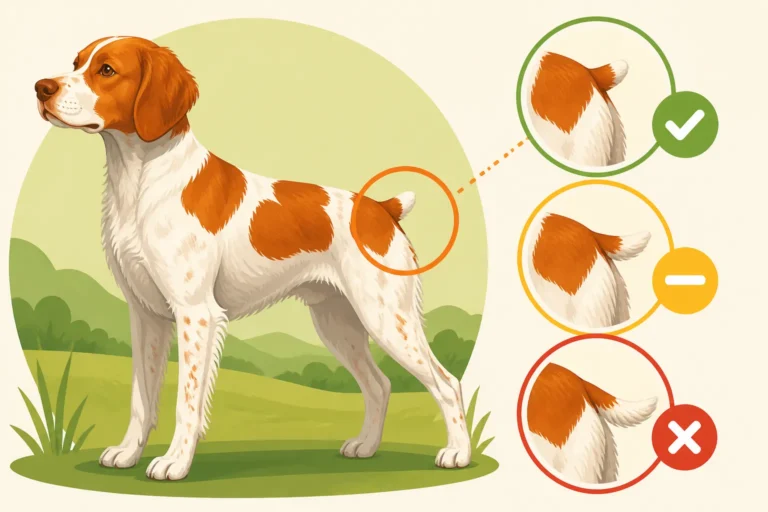
When the AKC Dropped Spaniel From the Brittany’s Name
It can be incredibly confusing, can't it? You hear "Brittany Spaniel" and then just "Brittany," and you're left wondering if they're talking about the same amazing dog, or if there's some subtle difference you're missing. This guide is here to clear up that historical confusion once and for all, explaining when and why the American Kennel Club officially decided to drop "Spaniel" from our beloved Brittany's name.
The Origins of the Brittany's Name: More Than Just a Region
Before we dive into why the "Spaniel" was dropped, it's really helpful to understand where the name "Brittany" even came from in the first place. This isn't just some random moniker; it's a direct reference to the breed's deep roots in the northwest corner of France.
A Nod to French Heritage
Our wonderful dogs hail from the historic region of Brittany in France. This isn't just a fun fact; it's fundamental to their identity. The original French name for the breed is "Epagneul Breton." If you're wondering what that means, "Epagneul" is a French term that historically referred to various pointing and flushing breeds, and "Breton" simply indicates its origin from Brittany. So, when these dogs first made their way across the Atlantic, it was natural for English speakers to translate it directly, hence "Brittany Spaniel." It literally meant "the spaniel-like dog from Brittany." It’s a simple, straightforward translation, but it inadvertently set the stage for later misunderstandings about the dog's true nature and working style. You might also be interested to learn What Epagneul Breton Means.
Why "Spaniel" Was Initially Included
When the Brittany first arrived in English-speaking countries, particularly in North America, there was a general understanding of certain types of hunting dogs. Spaniels were well-known for their bird-flushing and retrieving abilities, often working in dense cover relatively close to the hunter. The early Brittanys, with their compact size, energetic nature, and natural retrieving drive, shared some superficial characteristics with these spaniels. They were often smaller than the popular setters and pointers of the time, and their close-working style, particularly the French lines, made them seem similar to spaniels to the untrained eye. For a long time, the term "spaniel" was a convenient, if not entirely accurate, catch-all for certain types of versatile gun dogs. This early classification wasn't malicious; it was simply a product of the prevailing understanding of hunting dog roles at the time.
The Shifting Understanding of a Pointing Breed
Over time, as more Brittanys were imported and their unique hunting style became better understood by American hunters and dog enthusiasts, it became clear that the "spaniel" designation wasn't quite right. The core of a Brittany's work is distinct from that of a spaniel.
Distinguishing a Brittany's Hunting Style
The critical difference, the one that truly sets a Brittany apart, lies in its primary hunting function: it points. A spaniel, by definition, is bred to flush game birds from cover and often retrieve them. Think of a Springer Spaniel or a Cocker Spaniel bursting into a field, scattering birds. A Brittany, however, will scent a bird, lock up into an intense, motionless point, holding that position until the hunter arrives and flushes the bird. This distinction is paramount in the world of gun dogs. While Brittanys are also excellent retrievers and will often quarter the field much like a spaniel, their defining characteristic is that staunch point. This pivotal difference is why many argue that calling them a "spaniel" misrepresented their true nature and capabilities in the field. To fully appreciate this, take a deeper dive into The Brittany Points, It Does Not Flush. They are designed to locate and hold birds for the hunter, a very different job from simply flushing them.
The American Kennel Club's Role in Breed Classification
The American Kennel Club (AKC) is the governing body for purebred dog registries in the United States, and it plays a huge role in defining breed standards and classifications. Breeds are grouped based on their original purpose, characteristics, and historical roles. For a long time, the AKC, like many other kennel clubs, struggled with the precise classification of breeds that might seem to straddle categories. However, as the understanding of specific hunting styles evolved, so did the need for more accurate breed identification.
The Brittany, recognized as a highly efficient and successful pointing breed, simply didn't fit neatly into the spaniel category from a functional perspective. The AKC's Sporting Group, where the Brittany resides, includes a diverse array of dogs primarily used for hunting feathered game. Within this group, dogs are typically categorized as pointers, setters, retrievers, or spaniels, each with a distinct working style. For the Brittany to be truly recognized for its unique pointing ability, a re-evaluation of its name was necessary. This emphasis on accurate categorization is a big part of how the AKC aims to uphold the integrity of each breed's historical purpose. You can even check out various products and educational materials on sites like Chewy that cater to specific sporting dog needs, often distinguishing between pointing and flushing breeds.
The Official Name Change: When and Why it Happened
The move to officially drop "Spaniel" was not a snap decision but the culmination of years of discussion and a growing consensus among breeders and enthusiasts.
The Moment of Transition
The official change happened in 1982. This was the year the American Kennel Club formally removed "Spaniel" from the breed's registered name, henceforth recognizing it simply as the "Brittany." This moment was a significant milestone for the breed in America. It wasn't about disrespecting its heritage or denying any spaniel-like traits; it was about accurately reflecting its primary function as a pointing dog. The Brittany Club of America had long advocated for this change, feeling that the "spaniel" moniker was causing confusion, especially among new owners and those less familiar with the nuances of gun dog work. The name change was seen as a way to elevate the breed's true identity and place it correctly among its pointing brethren. For more on this specific event, you'll want to read When the AKC Dropped Spaniel From the Brittany's Name in 1982.
The Impact on Breed Identity and Perception
The dropping of "Spaniel" had a profound impact, especially within the hunting community and among serious breeders. It solidified the Brittany's identity as a distinct pointing breed, dispelling any lingering doubts about its role in the field. For those looking for a versatile pointing dog, the clarity was invaluable. It emphasized that while the Brittany is a wonderful companion, its design and instincts are fundamentally geared towards finding and pointing game.
The change also helped distinguish the American Brittany from other breeds and even from its European counterpart, the Epagneul Breton, which retains its more inclusive name in France. By shedding the "Spaniel" suffix, the breed in America was able to carve out its own clear identity, celebrated for its unique blend of intensity, biddability, and exceptional pointing ability. This reclassification also helped reinforce the breed standard and the characteristics that breeders aimed to preserve. Ultimately, it was a move that respected the breed's true calling. You might wonder Why the AKC Changed the Brittany's Name and this desire for accurate representation was at the heart of it.
Brittany or Brittany Spaniel: What's in a Name Today?
So, after all that, is it still okay to say "Brittany Spaniel"? The answer, like many things with dogs, is a bit nuanced!
Enduring Legacy and Common Usage
Even though the official name changed decades ago, you'll still hear many people, especially long-time Brittany owners or those from older generations, refer to them as "Brittany Spaniels." It's a term steeped in history, a carryover from how the breed was known for so many years. For many, it's a term of endearment, a familiar phrase that rolls off the tongue. It's not necessarily incorrect in casual conversation, especially if the person knows what breed you're talking about. It’s like how some people still call a cell phone a "car phone" – the original term sticks around even after the technology evolves. If you're curious about how widespread this still is, consider Whether People Still Say Brittany Spaniel. It's a testament to how deeply ingrained certain names become in our collective consciousness.
Official vs. Colloquial Terminology
When it comes to official matters – like registering a dog with the AKC, entering a field trial, or participating in conformation shows – the official name, "Brittany," is what's used. This is where precision matters, ensuring that the breed is categorized and judged according to its established standard as a pointing breed. However, in day-to-day life, especially when chatting with a fellow dog lover at the park or a pet store like Chewy, using "Brittany Spaniel" is unlikely to cause any confusion, nor is it considered offensive.
Think of it this way: officially, you have a "Brittany." Unofficially, you might affectionately refer to your "Brittany Spaniel." It's a distinction that often comes down to context and formality. As long as the meaning is clear and everyone understands which energetic, bird-crazy dog you're discussing, either term usually works in casual settings. Rest assured, Whether Brittany Spaniel Is Still Correct largely depends on whether you're filling out official paperwork or just gushing about your amazing dog!
The American Brittany vs. The Epagneul Breton
The name change in the U.S. also subtly underscored a growing divergence that was happening within the breed itself, leading to two distinct, yet related, lines.
Two Paths Diverge
While the "Brittany Spaniel" name was being dropped by the AKC, the breed was already evolving along different lines on either side of the Atlantic. The American Brittany, largely influenced by American hunting styles and the vast open spaces of North America, was selectively bred for a wider-ranging, faster pace to cover more ground. Hunters wanted a dog that could keep up with horseback field trials and find birds in expansive fields. Meanwhile, the original Epagneul Breton in France largely maintained its traditional, closer-working style, suited for foot hunters in often smaller, more dense cover. This difference in breeding focus meant that the dogs, while still sharing a common ancestor, began to develop distinct physical and working characteristics. The name change for the American breed helped signify this evolving identity. This divergence is a fascinating part of their history, explored further in American Brittany and Epagneul Breton Went Separate Ways.
Distinct Standards, Shared Roots
Today, while they are both essentially the same breed at their core, the American Brittany and the Epagneul Breton are often recognized as having slightly different breed standards, reflecting the emphasis on different traits by their respective parent clubs. For example, some French lines permit black coloring, which is not accepted in the American Brittany standard. The Epagneul Breton tends to be a bit more compact, often with a slightly shorter muzzle, and traditionally works closer to the hunter. American Brittanys, while still considered medium-sized dogs, typically exhibit a somewhat longer stride and greater stamina for covering extensive territory.
Despite these differences, both types share that incredible bird drive, biddability, and affectionate nature that makes the Brittany so beloved. They are both exceptional pointing dogs, true to their heritage, regardless of the subtle variations that have emerged over time. It's a testament to the versatility of the breed that it could adapt and thrive in different environments, creating variations while still holding onto its core identity. You can find many products on Chewy that cater to the needs of working dogs, regardless of whether they're American or French lines, as their fundamental drive remains the same. The fascinating distinctions are further detailed in How a French Brittany Differs From an American One.
| Feature | "Brittany Spaniel" (Historical/Colloquial) | "Brittany" (Current AKC Official) |
|---|---|---|
| Primary Association | Historically linked to spaniels (flushing breeds) | Primarily recognized as a pointing breed |
| Origin of Term | Direct English translation of "Epagneul Breton," with "spaniel" describing general type | Reflects specific pointing ability and French regional origin |
| Official Recognition | Name used by AKC until 1982 | Official AKC breed name since 1982 |
| Hunting Style Focus | Historically broad; often assumed to flush | Clearly defined as a pointing dog; holds game for hunter |
| Breed Identity | Sometimes confused with actual spaniel breeds | Distinct identity as a versatile pointing dog |
| Usage Today | Common colloquial term, especially among older enthusiasts | Formal and official designation for shows, trials, and registration |
Disclaimer
This article is for general informational purposes only and does not constitute professional advice. Laws, prices and regulations vary by location and change over time. Consult a qualified professional for guidance on your specific situation.