Whether an Orange and White Brittany Costs More
It’s a natural question to ask, especially when you’re embarking on the exciting journey of bringing a Brittany Spaniel into your home: "Does a specific color, like orange and white, somehow make a puppy more expensive?" Many prospective owners wonder if there's a premium attached to certain coat patterns or hues, perhaps due to perceived rarity or aesthetic appeal. This guide aims to clear up that common misconception, showing you what really influences the price of a Brittany puppy and why color is rarely a factor in reputable breeding.
The Core Factors That Truly Drive Brittany Puppy Prices
When you start looking for a Brittany puppy, it’s easy to get caught up in the adorable pictures and charming personalities. But beneath the surface, there are significant investments and dedicated practices that go into producing a healthy, well-tempered, and genetically sound companion, especially one bred for the field. These are the elements that dictate the true cost, not the shade of their coat. You might notice Why Brittany Prices Range From Eight Hundred to Three Thousand – and it's these underlying factors that create that wide gap.
Pedigree and Proven Working Ability
The single biggest driver of a Brittany's price, particularly for those looking for a capable hunting partner, is the proven performance and pedigree of its parents. A breeder isn’t just pairing two dogs; they’re selecting individuals with generations of documented bird sense, trainability, and conformation to the breed standard. This means investing heavily in their breeding stock.
Consider a puppy whose parents are titled in AKC (American Kennel Club) hunt tests or field trials. A "Master Hunter" or "Field Champion" title isn’t just a fancy designation; it signifies that the parents have demonstrated superior natural ability, intelligence, and a high level of training in demanding conditions. These titles prove that the dogs can find, point, and retrieve game reliably, and often means the breeder has spent countless hours and significant funds on training, entry fees, and travel to achieve them. This investment naturally trickles down to the value of their offspring. Similarly, if a dog comes from a line known for producing numerous Dual Champions – dogs excelling in both conformation and field – the demand and price for those puppies will reflect that extraordinary genetic heritage. Hunters seeking a dog for wild birds, in particular, will seek out these proven lines, understanding that the initial investment often pays off in a more capable and easier-to-train dog in the long run. To understand what this pedigree brings, it’s worth considering Which Brittany Line to Buy for Wild Birds.
Health Clearances and Ethical Breeder Practices
Another paramount factor influencing a Brittany puppy's price is the extensive health testing undertaken by responsible breeders. Anyone can breed two dogs, but an ethical breeder goes above and beyond to ensure they are not passing on known genetic health issues that could lead to heartache and massive vet bills down the line for new owners.
These health clearances are not cheap or simple. They involve specialized veterinary visits and diagnostic tests. For Brittanys, critical tests include hip and elbow evaluations for dysplasia, often submitted to organizations like the Orthopedic Foundation for Animals (OFA). We’re talking about X-rays and assessments that ensure the structural integrity of their joints. You might wonder What a Brittany's Hip Radiographs Cost for a breeder to perform. Beyond hips, reputable breeders also test for eye conditions, thyroid function, and a specific immune deficiency called C3 deficiency, which is known in the breed. Having a What the Brittany C3 DNA Test Costs and a clear result is a huge peace of mind for both the breeder and the future owner. These comprehensive health panels, often adhering to a Which Tests the Brittany CHIC Panel Requires program, demonstrate a commitment to the breed's long-term health. Breeders who invest in these tests and are transparent with the results are ensuring the health of their puppies, and this dedication is rightfully reflected in the price. It's a foundational component of responsible breeding that ensures a healthier start for your puppy and can save you from significant veterinary expenses down the road. Imagine the financial burden without it, even with pet insurance providers like Healthy Paws.
Breeder Reputation and Support
Beyond the dogs themselves, the breeder's reputation and the support they offer play a significant role in pricing. An experienced breeder doesn’t just sell you a puppy; they provide a lifetime of guidance and expertise. They invest time in socializing the puppies, providing early training foundations, and matching the right puppy to the right home based on temperament and your lifestyle.
A good breeder will be available for questions and advice long after you've taken your puppy home. They often have detailed contracts, health guarantees, and may even take back a dog at any point if circumstances change for the owner. This level of ongoing support, combined with years of experience and deep knowledge of the breed, is incredibly valuable. They know the breed inside and out, from specific training quirks to potential health considerations. They're often members of breed clubs and actively participate in events, continuously learning and contributing to the betterment of the breed. Asking Which Questions to Ask a Brittany Breeder will reveal the depth of their knowledge and commitment. This commitment to their dogs and their owners provides peace of mind and often justifies a higher initial cost. You're not just buying a dog; you're buying into a support network, which can be invaluable, especially for a first-time Brittany owner.
Brittany Coat Colors and the Breed Standard
It's completely understandable why someone might think that a certain color might command a higher price. After all, in some dog breeds, "rare" or unconventional colors sometimes do fetch a premium, albeit often from less ethical sources. However, with the Brittany, the breed standard is quite clear about accepted colors, and none are inherently more valuable than another.
Common and Accepted Brittany Colors
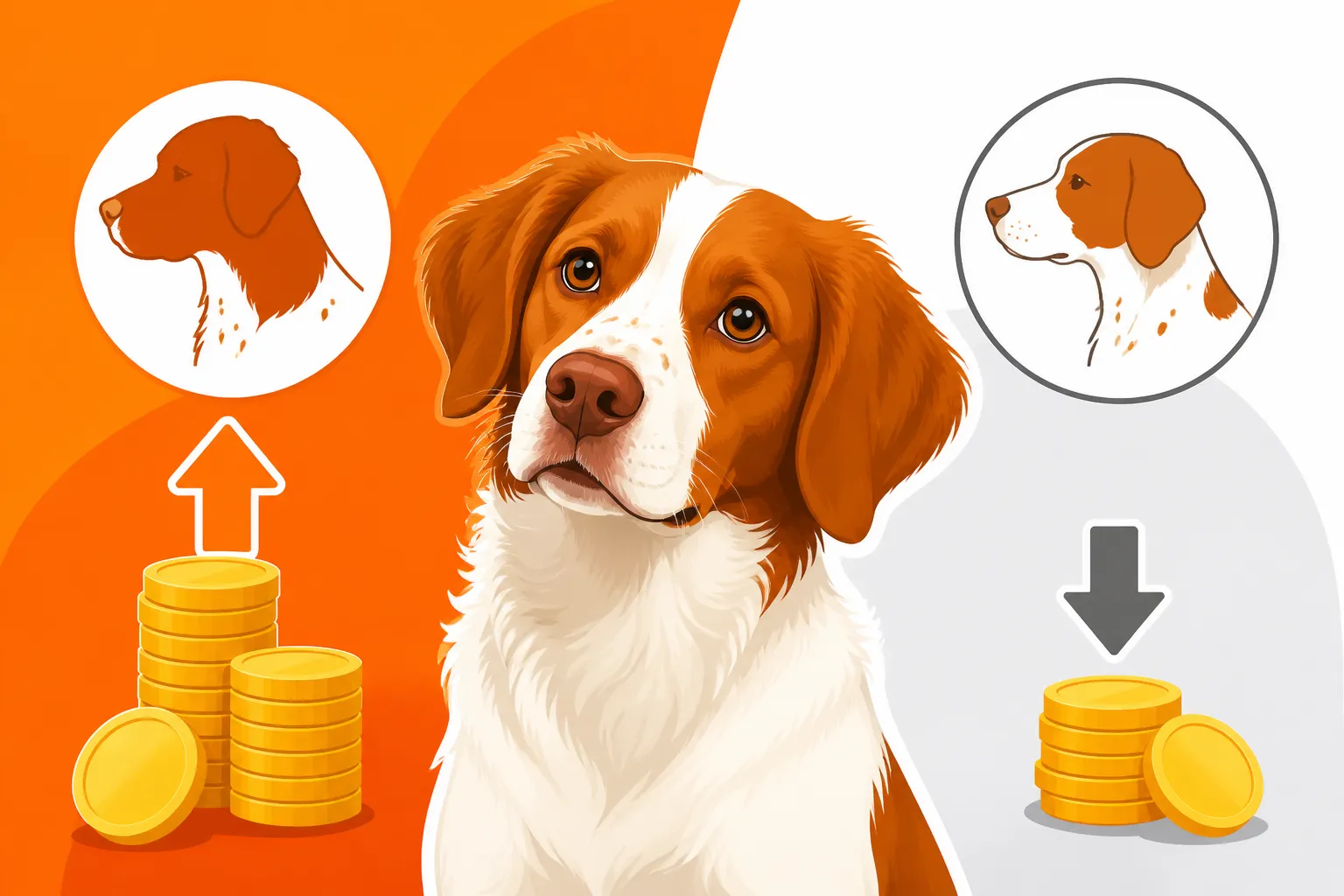
Brittanys come in a beautiful array of colors, all designed for camouflage in the field. The most widely recognized and popular color is undoubtedly orange and white. This striking combination, often with distinctive ticking (small flecks of color within the white areas), is what most people picture when they think of a Brittany.
However, orange and white is just one of the accepted variations. Liver and white is another common and beautiful color, ranging from a rich, dark brown to a lighter, almost reddish-brown. Beyond these two-tone combinations, you'll also find Brittanys that are roan – which means the colored and white hairs are so finely intermingled that they create a speckled or blended effect. So, you can have orange roan, where orange hairs are mixed with white, or liver roan, where liver hairs are mixed with white. Tricolor Brittanys are also accepted, featuring patches of orange or liver, white, and small black marks (often on the muzzle or eyebrows) that develop as they mature, though black is not an accepted color in the overall coat for American Brittanys. The point is, each of these color patterns, including your classic orange and white, is a legitimate and accepted part of the breed standard. None are deemed superior or inferior, and a well-bred dog can come in any of these approved combinations. The article Orange, Liver and the Colors a Brittany Comes In offers a deeper dive into these lovely variations.
Why Color Rarely Influences Price in Reputable Breeding
In the world of responsible Brittany breeding, the color of a puppy's coat is almost entirely secondary to its health, temperament, structure, and proven genetic heritage for hunting ability. The breed standard, which guides ethical breeders, focuses on these functional and health-related aspects, not on superficial aesthetics. For a working breed like the Brittany, the dog's ability to perform its historical function – finding and pointing birds – is paramount. A truly dedicated breeder prioritizes strong retrieving instinct, a solid point, biddability, and excellent conformation that allows for tireless work in the field.
Think about it: a pheasant isn't going to care if your dog is orange and white, or liver and white. What matters is the dog's nose, its stamina, and its brain. Therefore, an ethical breeder will price their puppies based on the quality of the pairing (parents' health clearances, titles, temperament, and genetic predictability), not on the specific color of the resulting litter. If a breeder tries to charge more for an orange and white puppy simply because it's "traditional" or "more popular," or conversely, less for a liver and white puppy, that should raise a red flag. It suggests they might be prioritizing appearance over the fundamental qualities that make a Brittany excellent. Their focus should be on producing sound hunting companions and wonderful family dogs, regardless of their visual presentation.
Understanding the Market: When Color Seems to Influence Price (and Why It Shouldn't)
While reputable breeders don't charge more for a specific color like orange and white, there are situations where prospective owners perceive that color affects price. These situations often stem from misinformation, clever marketing by less-than-scrupulous individuals, or simply personal preference. It's crucial to be aware of these dynamics to avoid making a decision based on flawed assumptions.
The Rarity Myth and Marketing Gimmicks
Occasionally, you might encounter breeders who attempt to capitalize on perceived "rarity" to inflate prices for certain colors. For instance, while not accepted in the American Brittany standard, some unscrupulous breeders might try to market a "black and white" Brittany as rare and therefore more expensive. This is a significant warning sign. The official AKC standard for American Brittanys does not recognize black as an acceptable primary color (though tricolors can have limited black markings). If a dog appears predominantly black, it likely indicates a mix with another breed, or a significant deviation from the established Brittany standard. An orange and white Brittany is a standard, classic color, and any attempt to charge a premium for it based on "rarity" within the breed is simply a marketing gimmick.
Responsible breeders focus on improving the breed as a whole, not on producing "designer" colors that fall outside the standard. Their goal is to maintain the health, temperament, and working ability that defines the Brittany, regardless of coat color. If you hear claims of "rare" colors driving up the price, remember that this often indicates a breeder more interested in profit than in upholding breed integrity. Always research the breed standard and look for breeders who transparently discuss their breeding practices and the specific health clearances of their dogs, rather than leading with claims of unique colorations. This is why it's so important to scrutinize breeder claims, particularly when they try to convince you that a certain coat color adds intrinsic value.
Regional Preferences and Personal Taste
It's a fact of human nature that we all have preferences. Some people simply adore the classic look of an orange and white Brittany, perhaps because it's the most common and recognizable color, or because it stands out beautifully in a green field. Others might find the deeper hues of a liver and white or the subtle blend of a roan more appealing. These personal preferences are perfectly valid and can certainly influence which puppy you choose from a litter, but they should not, and typically do not, impact the initial price set by the breeder.
For example, a breeder might have a litter with both orange and white and liver and white puppies. If an ethical breeder has done their job, all puppies in that litter will be priced similarly, reflecting the quality of the breeding, the health clearances, and the care provided. You might prefer the orange and white one and therefore choose it, but you shouldn't expect to pay more for it than for its liver and white sibling. The demand for specific colors can fluctuate regionally or based on current trends, but a reputable breeder will base their pricing on the overall quality of the litter and their breeding program, not on a transient fashion for a particular color. It's about finding the right dog with the right temperament and genetics for your lifestyle, not about chasing a specific aesthetic that might come with an artificial price tag.
Here's a quick comparison of what truly impacts Brittany pricing versus what usually doesn't:
| Factor Impacting Price (High to Low) | Description | Color Relevance |
|---|---|---|
| Proven Pedigree/Titles | Parents with hunt test titles (MH, FC) or conformation championships (CH), demonstrating superior genetics for working ability and conformation. | None |
| Health Clearances | Extensive testing for hip/elbow dysplasia (OFA), eye conditions (CERF), thyroid, and C3 deficiency, ensuring genetic health. | None |
| Breeder Experience & Support | Years of dedication, ongoing mentorship, health guarantees, extensive puppy socialization, and breed knowledge offered to new owners. | None |
| Initial Vet Care & Socialization | Early puppy vaccinations, deworming, microchipping, and careful exposure to various sights, sounds, and people. | None |
| Geographic Location | Cost of living and demand in different regions can slightly influence prices. | None |
| Perceived "Rarity" | Misleading: Some less ethical breeders attempt to charge more for specific colors based on false claims of rarity or uniqueness. | High |
| Personal Preference | Your personal favorite color might influence your choice from a litter, but should not affect the breeder's set price for puppies of similar quality. | High |
Making an Informed Decision: Prioritizing Substance Over Shade
When it comes to bringing a Brittany into your life, the color of its coat should truly be one of the last things on your mind. Your focus should be on acquiring a healthy, well-adjusted puppy from a breeder who has clearly demonstrated a commitment to the breed's integrity, health, and working abilities. Rushing into a decision based on a superficial trait like color can lead to unforeseen challenges down the road.
Questions to Ask Your Breeder
To ensure you're making a sound investment in a lifelong companion, arm yourself with a list of critical questions. A good breeder will welcome these inquiries and be eager to share information. Start by asking about the health clearances of both parents, not just one. Request to see the official OFA certificates for hips and elbows, CERF eye certifications, and C3 DNA test results for both the sire and the dam. Ask about their temperaments – are they stable, friendly, and biddable? A Brittany should be outgoing and eager to please, not shy or aggressive. You should also ask about the parents' working titles; Whether a Brittany Breeder Should Let You See the Dam Hunt is a perfectly reasonable request, as seeing a parent work provides invaluable insight into the genetic potential of their offspring.
Inquire about the puppy's early socialization: What steps has the breeder taken to expose the puppies to different sounds, textures, and people? Ask about their vaccination schedule and deworming protocols. Don't forget to understand the terms of their health guarantee and what their contract entails, including whether the puppy comes on Whether a Brittany Comes on Limited Registration. A responsible breeder will have clear answers for all these questions and be transparent about their practices.
What to Prioritize in Your Search
Ultimately, when you’re looking for a Brittany puppy, your top priorities should be:
- Health: This is non-negotiable. A healthy puppy from genetically screened parents is the best start to a long and happy life together. It means fewer worries and potentially fewer costly vet visits over the years. Even with excellent pet insurance like Healthy Paws, preventative measures through responsible breeding save heartache.
- Temperament: The Brittany is known for its sweet, eager-to-please, and biddable nature. Ensure the puppy and its parents exhibit these qualities. A good temperament makes for a wonderful family companion and a more enjoyable training experience.
- Proven Genetics/Working Ability: Especially if you intend to hunt, seek out lines with proven field performance. This ensures you're getting a dog with the innate desire and ability to do what Brittanys were bred for.
- Breeder Support: A dedicated breeder is a resource for life. Choose someone you feel comfortable communicating with, who genuinely cares about their puppies, and who stands behind their breeding program.
While you might have a favorite color, remember that the true value of your Brittany lies in its spirit, its health, and its ability to be a loving companion and a capable partner in the field. Don't let a superficial detail like coat color overshadow the foundational elements of responsible breeding. If you're looking for ongoing supplies for your new companion, companies like Chewy offer a wide range of food, toys, and gear, and for premium food options, consider services like Ollie, ensuring your Brittany gets the best nutrition from day one, regardless of their beautiful orange and white coat.
Disclaimer
This article is for general informational purposes only and does not constitute professional advice. Laws, prices and regulations vary by location and change over time. Consult a qualified professional for guidance on your specific situation.