Whether a Brittany’s Pads Burn on Hot Ground
One of the most concerning things for any Brittany owner, especially those with active hunting dogs, is the scorching summer pavement. We often underestimate just how hot surfaces like asphalt, concrete, or even sandy trails can get, leading to painful and potentially serious burns on our beloved companions' paw pads. This guide will walk you through exactly why your Brittany's paws are at risk, how to recognize the subtle and obvious signs of heat-related injury, and most importantly, what practical steps you can take to protect those precious paws from the brutal heat of the ground.
The Harsh Reality of Hot Ground and Paw Pad Vulnerability
It's a common misconception that a dog's paw pads are invulnerable. While they are certainly tougher than our skin, designed to withstand varied terrain and temperature, they are far from indestructible. A Brittany's paw pads, while robust from years of selective breeding for field work, are still made of skin, fat, and connective tissue, and they are susceptible to burns just like human skin.
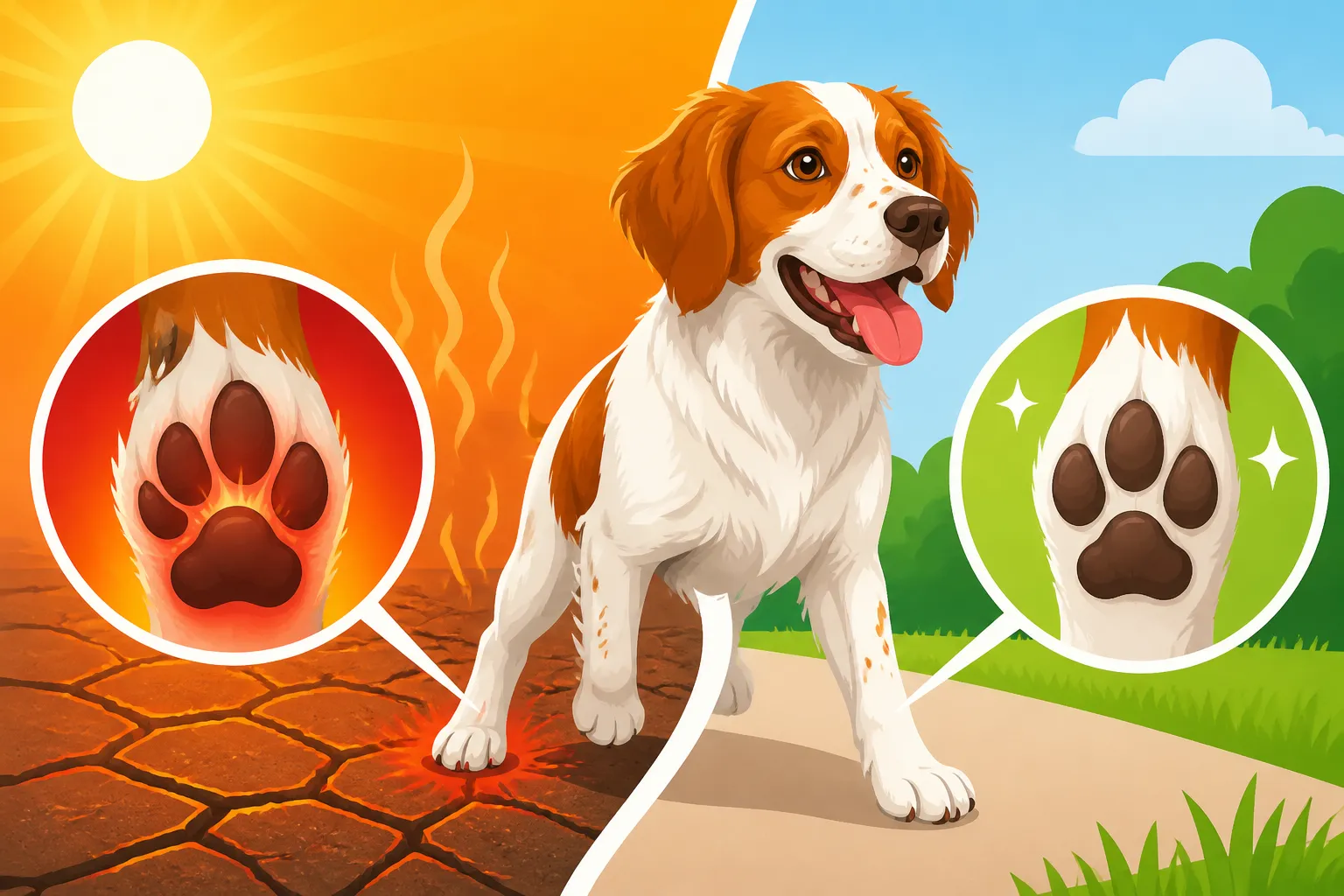
Think about it this way: on a warm, sunny day, you might be perfectly comfortable in shorts and a t-shirt, strolling along the sidewalk. But the air temperature is one thing, and the surface temperature is quite another. Dark asphalt can absorb and radiate heat at temperatures significantly higher than the ambient air. A sunny 75°F day can mean pavement temperatures of 125°F or more. At 85°F ambient, pavement can hit a blistering 140°F—hot enough to cook an egg in five minutes, and certainly hot enough to inflict second-degree burns on a dog's paw pads in under a minute. Our Brittanys, with their boundless energy and eagerness to please, might not show immediate discomfort until the damage is already done, making vigilance crucial.
The "five-second rule" is a widely shared piece of advice for a reason. Place the back of your hand flat on the pavement for five seconds. If it's too hot for you to hold it there comfortably, it's too hot for your Brittany's paws. This simple test can prevent a lot of pain and veterinary visits. Remember, your Brittany's pads don't dissipate heat as efficiently as our sweating skin, and they are in direct, constant contact with the hot surface for the entire duration of a walk or training session.
Understanding the Types of Paw Pad Burns
Just like with human skin, paw pad burns can range in severity. It's not always an immediate, dramatic blistering.
- First-degree burns: These are the mildest, affecting only the outermost layer of the skin. You might see redness, slight swelling, and some tenderness. Your Brittany might lick their paws more or show a slight reluctance to put full weight on one paw after a hot walk.
- Second-degree burns: These are more serious, damaging deeper layers of the skin. Blisters, often filled with fluid, are a classic sign. The pads might appear red, swollen, and extremely painful. The outer layer of the pad may start to peel or slough off, revealing raw, sensitive tissue underneath. This is where your dog will likely be noticeably limping or outright refusing to walk.
- Third-degree burns: These are the most severe, extending through all layers of the skin and potentially into underlying tissue. The paw pad might look charred, discolored (white or black), and the skin may be numb because nerve endings have been destroyed. These are excruciatingly painful and can lead to serious infection if not treated immediately by a veterinarian.
The danger is that a Brittany's natural toughness, their desire to keep going, can mask initial discomfort. They might push through a first-degree burn, only for it to worsen into a second-degree one without you realizing until later. This is why preventative measures and diligent checks are paramount.
Recognizing the Signs of Burned Paw Pads on Your Brittany
Your Brittany is a spirited companion, often eager to please and to keep moving, which can sometimes make it hard to spot discomfort immediately. However, even the most stoic Brittany will eventually show signs if their paw pads are hurting. Catching these signs early is key to preventing more severe injury and ensuring a quicker recovery.
Subtle Hints and Early Indicators
Sometimes, the initial signs of a burnt paw pad are quite subtle, especially if the burn is mild or just starting to develop. You might observe:
- Excessive Licking or Chewing: If your Brittany repeatedly licks, chews, or gnaws at their paws, particularly after coming in from outside, it's a strong indicator of discomfort. They're trying to soothe the irritation or pain.
- Reluctance to Walk or Stand: After a walk, your dog might be unusually hesitant to stand up, walk across a hard floor, or go out for another excursion. They might lie down more than usual or shift their weight constantly.
- Limping or Favoring a Paw: Even a slight limp, a momentary lift of a paw, or a tendency to walk gingerly on soft surfaces indoors could be a sign. It might not be a full-blown hop, but a subtle change in gait.
- Redness or Swelling: Upon closer inspection, you might notice the pads look redder than usual, or slightly swollen. They may also feel warmer to the touch compared to other parts of their paw.
These early signs should prompt an immediate and thorough examination of your Brittany's paws. Don't dismiss them as just "being tired" or "a bit sensitive."
Obvious Signs Requiring Immediate Attention
If the burn is more severe, the signs will be much more apparent and require urgent veterinary care.
- Blisters: The presence of blisters, either intact or burst, is a clear sign of a second-degree burn. These can be tiny or quite large and may be filled with clear or bloody fluid.
- Peeling or Sloughing Skin: If the outer layer of the paw pad is peeling away, revealing raw, red, and tender tissue underneath, it's a serious burn. This is incredibly painful and highly susceptible to infection.
- Darkened or Charred Pads: In very severe cases (third-degree burns), the paw pads may appear discolored, ranging from white to black. The skin might feel leathery or stiff. Your Brittany may not even feel pain in the affected area due to nerve damage, which can be deceivingly alarming.
- Whining or Crying: While Brittanys are often tough, intense pain from severe burns can cause them to vocalize their discomfort, especially if you touch the affected paw.
- Loss of Appetite or Lethargy: Any significant injury or pain can cause your dog to become withdrawn, lose interest in food or play, and generally appear lethargic. This is a systemic response to pain and stress.
It’s important to check all four paws, as heat can affect them all. After any outdoor activity on a warm day, make it a routine to gently feel and visually inspect your Brittany's pads. Look between the toes, too, as debris or even small burns can hide there. Early detection makes a huge difference in treatment and recovery. Remember, What to Check on a Brittany After Every Outing extends beyond burrs and ticks; paw pad health is critical.
Practical Steps to Protect Your Brittany's Paws from Heat
Protecting your Brittany's paw pads from hot surfaces isn't just about avoiding obvious dangers; it's about smart planning and consistent care. With a little foresight, you can ensure your dog's paws stay healthy and strong, ready for all their adventures, whether in the field or just around the neighborhood.
Strategic Timing and Surface Choices
The simplest and most effective way to prevent paw pad burns is to adjust when and where you walk your dog.
- Avoid Peak Heat Hours: During summer months, the sun is strongest and surfaces are hottest between 10 AM and 4 PM. Plan your walks for early mornings or late evenings when temperatures are cooler. This isn't just for paw pads; it helps prevent Whether a Brittany Overheats on an Early Season Hunt as well.
- Stick to Natural Surfaces: Prioritize walking your Brittany on grass, dirt trails, or shaded paths whenever possible. These surfaces absorb less heat than asphalt or concrete. Gravel can also be cooler but inspect it first to ensure there are no sharp rocks that could cause Why a Brittany Cuts Its Pads on Stubble. If you must walk on pavement, choose shaded sections or areas with lighter-colored concrete if available.
- The "Five-Second Rule" is Your Best Friend: Always, always test the ground with the back of your hand before you let your Brittany walk on it. If you can't hold it there comfortably for five seconds, it's too hot for their paws. This quick test can prevent immense pain.
Paw Protection and Conditioning Methods
Even with careful timing and surface selection, sometimes your Brittany needs extra protection.
- Protective Paw Boots: Dog boots are not just for snow or rough terrain; they are excellent for hot pavement. Introduce boots gradually, starting with short periods indoors, rewarding positive associations. There are many styles available, from lightweight summer boots to more robust hunting-specific options. You can find a wide variety of these on retailers like Chewy or Amazon, often with breathable materials for warm weather. Ensure they fit well – not too tight, not too loose – to prevent chafing or falling off. Whether a Brittany Needs Boots in the Field is a question that often comes up, and for hot pavement, the answer is a resounding yes.
- Paw Balms and Waxes: While not offering direct insulation from extreme heat, paw balms and waxes create a protective barrier that can help moisturize pads and prevent cracking, which makes them more resilient overall. Some products are formulated to be extra tough, designed to condition pads for harsh conditions. Regularly applying these can help toughen your Brittany's pads, preparing them for varied terrains and making them less prone to injury from milder heat exposure. Look for natural, non-toxic ingredients, easily found online.
- Conditioning Pads Gradually: Your Brittany's paw pads can toughen up over time, but it needs to happen gradually. Start with shorter walks on varied but safe surfaces and slowly increase duration and intensity as their pads adapt. Just like you wouldn't run a marathon without training, their paws need conditioning too. Consistent short exposures to slightly rougher, but not dangerously hot, surfaces can build resilience. This ties into general paw care, as covered in How to Toughen a Brittany's Pads.
First Aid for Burned Paw Pads
Despite your best efforts, sometimes accidents happen, and your Brittany might end up with burned paw pads. Knowing how to provide immediate first aid can minimize damage and alleviate pain, but remember that severe burns always warrant a visit to the veterinarian.
Immediate Cooling and Cleaning
Your first priority is to cool the burned pads and prevent further tissue damage.
- Cool Water Immersion: Immediately get your Brittany to a cool, shaded area. Gently rinse their paws with cool (not icy cold) water for at least 10-15 minutes. You can use a hose on a gentle setting or immerse their paws in a shallow basin of cool water. The goal is to bring down the tissue temperature. Avoid harsh scrubbing or using ice, as extreme cold can cause further damage.
- Gentle Cleaning: After cooling, very gently clean the paw pads with a mild antiseptic solution or warm water and a gentle, pet-safe soap if needed. Remove any dirt, debris, or small burrs that might have stuck to the damaged area. If there are any foreign objects embedded deeply, do not attempt to remove them yourself, as this could cause more harm.
- Do Not Pop Blisters: If blisters have formed, resist the urge to pop them. They provide a natural sterile covering for the damaged skin underneath. Popping them increases the risk of infection.
Bandaging and Veterinary Care
Once the pads are cool and clean, it's time for protection and assessment.
- Apply a Protective Barrier: You can apply a thin layer of a veterinary-approved antibiotic ointment or a plain, pet-safe aloe vera gel (ensure it's pure aloe and doesn't contain additives that could be toxic if licked). Then, loosely bandage the paw to keep it clean and protected. Use sterile, non-stick pads directly over the burn, followed by soft gauze, and then a self-adhering bandage tape. Ensure the bandage is snug enough to stay on but not so tight that it cuts off circulation. You should be able to slide two fingers underneath the bandage.
- Monitor and Prevent Licking: Dogs will instinctively try to lick and chew at injuries. This can lead to infection and re-injury. An Elizabethan collar (cone) or a recovery suit may be necessary to prevent your Brittany from interfering with the healing process.
- Seek Veterinary Attention Promptly: For anything beyond very minor, first-degree redness, you need to see your vet. Second and third-degree burns require professional medical attention. Your vet can properly assess the severity of the burn, clean the wound thoroughly, prescribe pain medication and antibiotics to prevent infection, and apply specialized wound dressings. They can also advise on appropriate aftercare and bandage changes. Untreated or improperly treated paw pad burns can lead to chronic pain, permanent scarring, and serious infections that can spread throughout the body. Don't delay a vet visit, especially if you see blisters, peeling skin, or signs of deep tissue damage. How to Treat a Brittany's Torn Pad also includes some general principles that apply to any paw injury.
Comparing Safe and Risky Ground Temperatures for Your Brittany
To give you a clearer picture of the dangers, here's a simple comparison of ambient air temperature versus typical surface temperatures. This isn't an exact science, as factors like humidity, wind, and cloud cover play a role, but it provides a good general guideline. Remember, the "five-second rule" is still your ultimate test.
| Air Temperature (Fahrenheit) | Asphalt/Pavement Temperature (Fahrenheit) | Risk Level for Paw Pads |
|---|---|---|
| 75°F (24°C) | 125°F (52°C) | Moderate to High |
| 80°F (27°C) | 135°F (57°C) | High |
| 85°F (29°C) | 140°F (60°C) | Very High |
| 90°F (32°C) | 150°F (66°C) | Extreme Danger |
This table vividly illustrates that even on what feels like a pleasant, warm day to us, the ground can be dangerously hot for your Brittany's sensitive paw pads. Always err on the side of caution. Consider that your Brittany's hunting drive means they might push through discomfort, making it even more important for you to be their advocate and protect them from unseen dangers like searing hot surfaces. How a Brittany Hides Pain is a real phenomenon, especially when they're excited about a hunt or a walk. Stay diligent, protect those paws, and your Brittany will thank you with many more happy, healthy miles.
Disclaimer
This article is for general informational purposes only and does not constitute professional advice. Laws, prices and regulations vary by location and change over time. Consult a qualified professional for guidance on your specific situation.