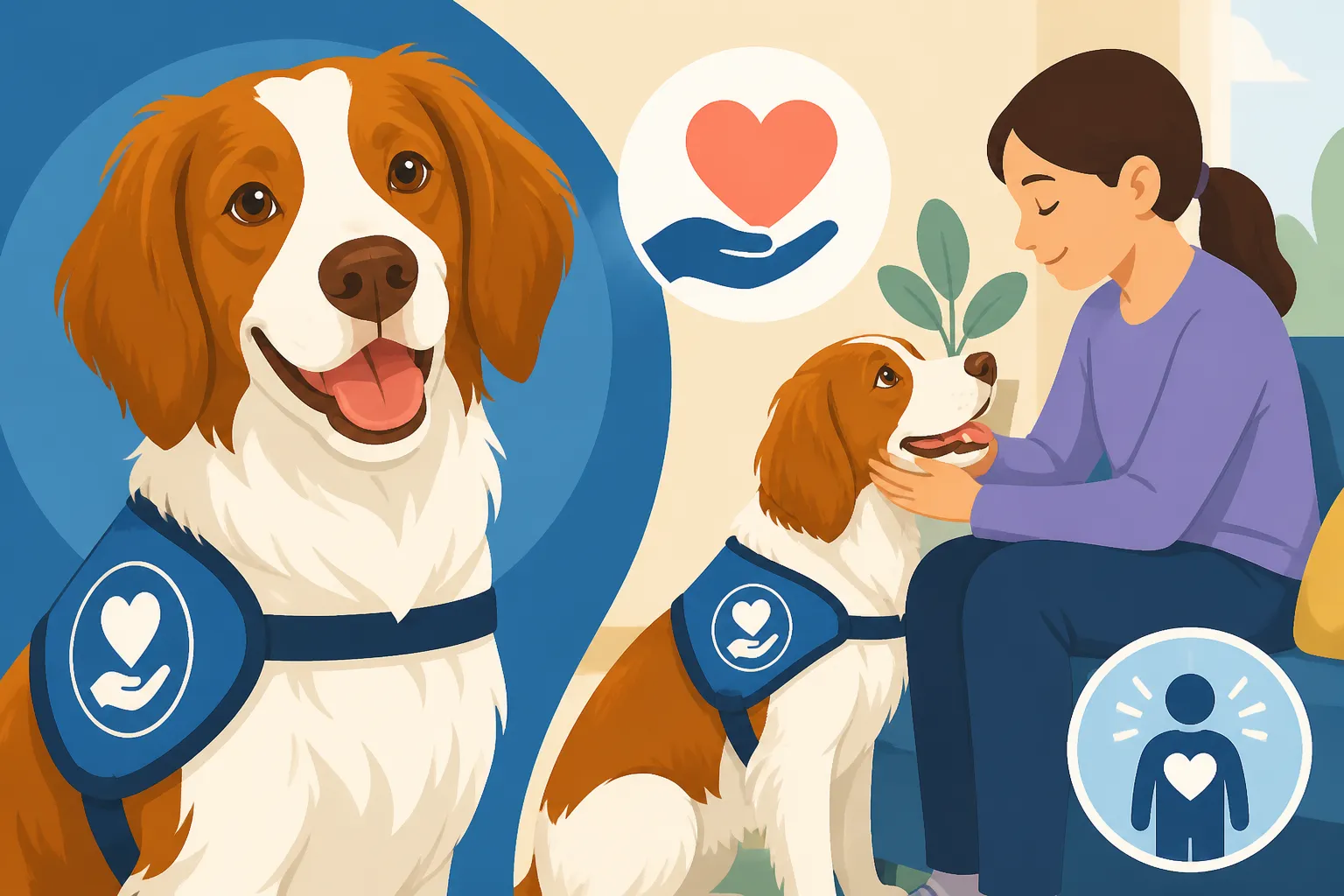
Whether a Brittany Can Be a Therapy Dog
Many Brittany owners look at their sweet, affectionate, and people-oriented dogs and immediately think, "My Brittany would make such a wonderful therapy dog!" It’s a completely understandable thought, given how incredibly sensitive and loving these dogs can be. While their natural disposition offers a fantastic starting point, becoming a certified therapy dog involves a specific journey of temperament assessment, rigorous training, and commitment from both handler and dog. This guide will walk you through what it takes and whether your beloved Brittany truly has what it takes to bring comfort to others in structured settings.
Understanding the Role of a Therapy Dog
Before we dive into the specifics of how a Brittany might fit into the world of therapy work, it’s crucial to understand what a therapy dog actually does. This isn't just about having a friendly dog; it's about a dog that can perform consistently and calmly in diverse, often challenging, environments, bringing a unique brand of comfort and connection to people who need it most.
What Exactly is a Therapy Dog?
Let's clear up some common misconceptions right off the bat. A therapy dog is not a service dog, nor is it an emotional support animal, though all three provide comfort and companionship. Service dogs are highly trained to perform specific tasks for individuals with disabilities, granting them public access rights under laws like the Americans with Disabilities Act. An emotional support animal provides comfort through its presence alone to its owner, often prescribed by a mental health professional, and typically doesn't require specialized training beyond basic good manners.
A therapy dog, on the other hand, is a volunteer animal, owned by an individual, that works with its handler to provide psychological or physiological therapy to others. These dogs visit hospitals, nursing homes, schools, airports, and disaster sites, interacting with a variety of people. They might comfort a child learning to read, reduce stress for college students during exams, or offer a soothing presence to patients recovering from surgery. The key distinction is that therapy dogs provide a service to many people, not just their owner, and they operate under the supervision of their handler within specific institutional guidelines. The focus is entirely on the well-being of the people they visit.
Key Traits for a Successful Therapy Dog
Not every dog, regardless of breed, is cut out for therapy work, and that's perfectly okay! The core requirement is an unflappable temperament. A therapy dog must be inherently calm, gentle, and tolerant. They need to genuinely enjoy interacting with strangers, including those who might be frail, loud, clumsy, or use medical equipment like wheelchairs and walkers. Picture your dog happily approaching someone in a hospital bed, not flinching at sudden movements, and patiently accepting a less-than-gentle stroke from a child.
Beyond a stellar personality, a therapy dog needs to be exquisitely trained in basic obedience and beyond. Commands like "sit," "stay," "down," "come," and "leave it" must be rock-solid, even amidst distractions. They shouldn't jump on people, bark excessively, or show any signs of aggression or fear. Furthermore, excellent leash manners are paramount. A therapy dog is often working in tight spaces, navigating equipment, and needs to be completely responsive to its handler’s cues. They also need to be comfortable with prolonged physical interaction, sometimes from multiple people at once, and recover quickly from unexpected stimuli.
Brittany Temperament: A Natural Fit for Therapy Work?
Now, let's talk about our beloved Brittanys. Anyone who has lived with one knows they possess many qualities that seem ideal for therapy work. They are often described as intelligent, eager to please, and highly affectionate. But how do these traits truly align with the specific demands of being a therapy dog?
The Brittany's Affectionate and Gentle Nature
It's absolutely true that many Brittanys are incredibly sweet and thrive on human connection. They are not typically aloof dogs; in fact, many adore being the center of attention and soaking up all the pets and praise they can get. This inherent desire to engage with people is a huge asset for therapy work. They often have a soft gaze and a gentle demeanor that can instantly put people at ease. They can be incredibly empathetic, seemingly sensing when someone needs a quiet presence versus a playful nudge. I’ve seen my own Brittany, Rusty, instinctively nuzzle into someone who was clearly having a tough day, offering comfort without any prompting. This kind of intuitive connection is invaluable in a therapy setting.
Furthermore, Brittanys tend to be less prone to aggression than some other breeds, especially when properly socialized. Their biddable nature means they often respond well to positive reinforcement training. They want to make you happy, and that translates well into wanting to make others happy too. Their size, being medium-sized, is often perfect for therapy work – large enough to be substantial and comforting, but not so large as to be intimidating or difficult to manage in small spaces. What a Brittany's Temperament Is Really Like delves deeper into these personality traits, confirming their potential for gentleness.
Energy Levels and Focus: Balancing Drive with Calmness
Here's where the rubber meets the road for many Brittanys in therapy work: their energy. Let’s be honest, these are hunting dogs, bred to cover ground tirelessly, full of boundless enthusiasm and drive. How Much Exercise a Brittany Needs Off Season and What an Under Exercised Brittany Does at Home paint a clear picture of their energy requirements. A bored or under-exercised Brittany is often a destructive or hyperactive Brittany, and that simply won't do in a quiet hospital ward or a calming reading program.
For a Brittany to be a successful therapy dog, that incredible energy needs to be channeled and managed effectively. This means a solid exercise routine before any therapy visits. A tired Brittany is a good Brittany, and a relaxed Brittany is a calm therapy dog. You'll need to develop an "off switch" in your dog, teaching them to settle calmly for extended periods. This isn't always innate for a breed so wired for action, but it's entirely trainable. Think of it as balancing their natural exuberance with the critical need for a serene presence. Their intense focus, usually directed towards birds, needs to be redirected towards remaining composed and attentive to their handler and the people they are interacting with.
Socialization and Handling New Environments
A therapy dog will encounter a dizzying array of sights, sounds, and smells. Wheelchairs whirring past, IV poles clanking, loud noises from children, the scent of antiseptic, strange hats, and different voices – all of this must be met with calm curiosity, not fear or over-excitement. This is where early and extensive socialization comes into play. Whether a Brittany Puppy Should Be Socialized Heavily is not just good advice for a well-adjusted pet, but an absolute necessity for a potential therapy dog.
Exposing your Brittany puppy to a wide variety of people, places, sounds, and textures from a young age is paramount. Take them to busy parks, pet-friendly stores, bustling outdoor cafes, and introduce them to people of all ages, sizes, and appearances. Make every experience positive, using treats and praise. This builds confidence and resilience, teaching them that new things are generally safe and interesting, rather than frightening. Without this solid foundation, even the most inherently sweet Brittany might become overwhelmed or anxious in a demanding therapy environment. This comprehensive exposure helps them develop the mental fortitude to remain relaxed and attentive no matter the situation.
Training Your Brittany for Therapy Work
Having a naturally good-natured Brittany is a wonderful start, but it’s just that – a start. The path to becoming a certified therapy dog is paved with consistent, patient, and often challenging training. It's about refining those innate qualities into reliable behaviors.
Foundational Obedience and Socialization
Every successful therapy dog stands on the bedrock of impeccable basic obedience. Your Brittany needs to respond instantly and reliably to core commands like "sit," "stay" (for several minutes, even with distractions), "down," "come," "leave it," and "heel." These aren't just parlor tricks; they are crucial safety commands that allow you to manage your dog responsibly in any situation. Imagine your dog dropping a dropped pill on command, or ignoring a tempting snack left on a low table. These skills protect your dog and the vulnerable people they visit.
Beyond commands, advanced leash manners are a must. Your Brittany should walk politely by your side, without pulling, lagging, or sniffing everything in sight. Remember, you might be navigating crowded hallways or small rooms. Loose-leash walking demonstrates control and professionalism. A resource like BAXTER & Bella offers excellent online obedience courses that can help lay this critical foundation, working through various distractions and scenarios from the comfort of your home. They provide structured lessons that build week by week, ensuring your Brittany masters each skill before moving on. Consistency is key here; short, frequent training sessions are far more effective than long, sporadic ones.
Specialized Therapy Dog Training Programs
Once your Brittany has mastered basic and advanced obedience, it’s time to consider specialized therapy dog training. Many organizations offer courses specifically designed to prepare dogs and handlers for the unique challenges of therapy work. These programs typically simulate real-world therapy environments, exposing your dog to:
- Medical equipment: Crutches, wheelchairs, walkers, oxygen tanks, beeping machines.
- Unusual sounds and sights: Loud noises, sudden movements, people wearing hats or scarves, people with unusual gaits.
- Different types of interactions: Gentle petting, awkward petting, accidental tail pulls, children hugging.
- "Leave It" in high-distraction situations: Ignoring dropped food, discarded tissues, or medical waste.
- The "lap dog" test: Can your Brittany calmly rest its head or body on someone's lap or bed for a sustained period?
These courses also train you, the handler, on how to recognize your dog's stress signals, advocate for your dog's needs, and effectively manage interactions. You'll learn how to read body language, both your dog's and the people you visit, to ensure a positive and safe experience for everyone. These classes are invaluable for building both your confidence and your Brittany's readiness.
The Certification Process
Certification is the final, crucial step to becoming a recognized therapy dog team. Various national and local organizations offer certification, each with slightly different requirements, but generally involving a comprehensive evaluation. This evaluation tests your Brittany's temperament, obedience, and ability to handle novel situations. They'll assess how your dog reacts to:
- Meeting strangers (friendly and less friendly)
- Being touched by strangers in various ways
- Loud noises and distractions
- Interacting with other dogs
- Walking on different surfaces
- Ignoring dropped food
- Performing basic commands reliably
Many organizations also require a Canine Good Citizen (CGC) certificate as a prerequisite, which is an excellent benchmark for a well-behaved dog. Whether a Brittany Can Pass a Canine Good Citizen Test affirms that this is an achievable goal for many Brittanys. Once certified, your Brittany will typically wear a vest or bandana indicating their status, making them easily identifiable as a working therapy dog. This certification is usually renewed periodically to ensure the team maintains its standards.
Here's a simplified look at the journey:
| Step | Description | Brittany Focus |
|---|---|---|
| Foundation | Early socialization, basic obedience (sit, stay, come, loose leash). | Expose to everything! Build rock-solid commands, especially "leave it" and "down-stay" for extended periods. |
| Advanced Training | Refining obedience, introducing distractions, proofing behaviors. | Channel high energy into focused work; teach calm demeanor. |
| Specialized Prep | Simulating therapy environments (medical equipment, varied interactions). | Desensitize to strange sights/sounds. Practice gentle interactions. Learn handler cues for stress. |
| CGC Certification | Basic temperament and obedience test (often a prerequisite). | Demonstrate reliability in public settings. |
| Therapy Dog Evaluation | Comprehensive test of temperament, obedience, and response to distractions. | Prove ability to remain calm and friendly under pressure, interact appropriately with diverse populations. |
| Ongoing Visits | Regular visits to facilities, maintaining skills and positive experiences. | Continue to manage energy, practice commands, and enjoy bringing joy to others. |
Real-World Considerations for Brittanys as Therapy Dogs
Even with proper training and a wonderful temperament, there are practical realities to consider when contemplating therapy work for your Brittany. It's a commitment that extends beyond the training classes.
Managing High Energy in Quiet Settings
This point can't be stressed enough: a Brittany's natural exuberance is a double-edged sword. While their enthusiasm can be infectious and uplifting, it must be carefully managed in environments that demand quiet calm. Visiting a hospital, for instance, requires a dog that can lie quietly under a bed, rest its head on a lap without wiggling, and move through hallways without pulling on the leash or lunging to greet everyone. This means a dedicated pre-visit routine.
Before every therapy visit, your Brittany absolutely needs a significant outlet for their energy. This could be a long run, a vigorous game of fetch, a brisk walk in a park, or some focused training sessions where they get to think and work. The goal is to arrive at the facility with a dog that is physically and mentally satisfied, ready to relax and engage in a calm, controlled manner. Think of it as burning off their "Brittany zoomies" so they can switch into "therapy mode." It’s an ongoing commitment, not a one-time fix.
Health and Longevity for a Working Therapy Dog
A therapy dog needs to be healthy and comfortable to perform its duties effectively and enjoyably. The Twelve to Fourteen Years a Brittany Gets is generally a good lifespan, but throughout those years, their health needs to be a priority. Regular veterinary check-ups are essential, as is maintaining a healthy weight and condition. Any pain or discomfort, even minor arthritis, can make a dog less tolerant of being touched or handled, potentially jeopardizing their therapy work.
Consider the physical demands: walking on hard floors, potentially being lifted onto a bed, navigating stairs, and spending extended periods in various positions. Your Brittany needs to be physically sound for this. Good preventative care, including proper nutrition and exercise, is crucial. Also, consider allergies. If your Brittany suffers from skin allergies or ear infections, these could flare up in different environments or with increased handling, making them uncomfortable and unable to work. Regular grooming and ear checks, as outlined in Why a Brittany's Ears Get Infected Every Season, become even more important.
Time Commitment and Dedication
Becoming a successful therapy dog team is a significant time commitment for the owner. It starts with countless hours of training, both at home and in specialized classes. Then there's the ongoing commitment to keep those skills sharp. But beyond that, there's the time involved in actual therapy visits. Most organizations require regular commitments, often weekly or bi-weekly. This includes travel to and from facilities, the visit itself (which can range from an hour to several hours), and the crucial pre-visit exercise and post-visit cool-down.
It’s not just about showing up; it’s about being present, engaging with people, and managing your dog throughout the visit. There’s administrative work too – scheduling visits, keeping records, and adhering to facility protocols. While incredibly rewarding, it’s not a casual undertaking. It requires dedication, patience, and a genuine desire to give back to the community through your dog. The joy and gratitude you’ll witness, however, often make every minute of that commitment feel incredibly worthwhile.
Disclaimer
This article is for general informational purposes only and does not constitute professional advice. Laws, prices and regulations vary by location and change over time. Consult a qualified professional for guidance on your specific situation.