How Discoid Lupus Is Diagnosed in a Brittany
Discoid lupus erythematosus in a Brittany causes nose depigmentation and crusting, leading to veterinary confirmation steps.
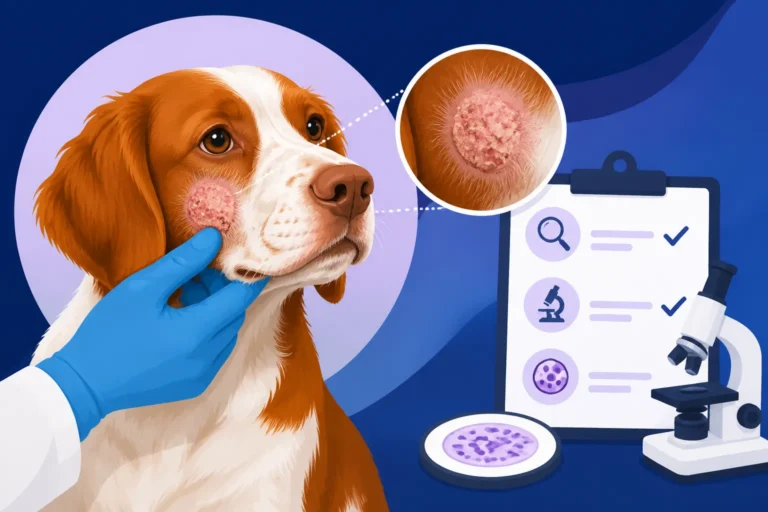
Discoid lupus erythematosus in a Brittany causes nose depigmentation and crusting, leading to veterinary confirmation steps.

Sunlight ultraviolet radiation triggers cellular damage and inflammation that worsens discoid lupus erythematosus in Brittanys.

Brittany nose depigmentation stems from harmless seasonal winter nose or autoimmune skin conditions like discoid lupus erythematosus.

Discoid lupus erythematosus in Brittanys typically begins on the nasal planum with early signs of depigmentation, redness, and scaling.

Autoimmune diseases in Brittany dogs, including lupus, hypothyroidism, and hemolytic anemia, explained with symptoms and management steps.

C3 deficiency in Brittanys affects their immune system, making vaccine response and infection fighting difficult for dogs.

C3 deficiency screening in Brittanys prevents inherited immune disorders that cause severe bacterial infections in kidneys and joints.

Researchers at the University of Pennsylvania identified the genetic mutation causing C3 deficiency in Brittany Spaniels.

C3 deficiency in Brittanys, an inherited immune disorder, and whether breeder efforts have eliminated it from the gene pool.

C3 Deficiency in Brittanys is an inherited immune disorder, with early carrier rates historically reaching ten to fifteen percent.