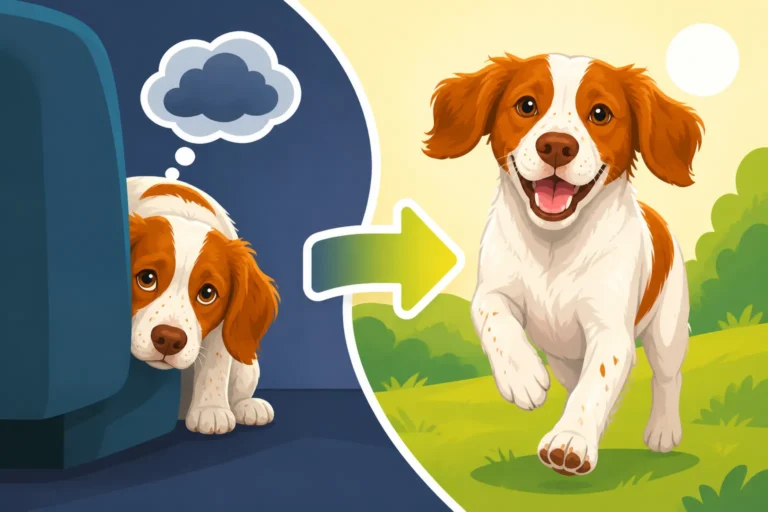
Whether a Brittany Can Be a Kennel Dog
Many Brittany owners wonder if their high-energy, affectionate dogs can thrive as "kennel dogs," especially if they live in more rural areas or have multiple dogs. It's a question that brings up a lot of concerns, especially around a Brittany's deep need for connection and exercise. This guide will dive deep into the Brittany's unique temperament, explore the challenges and potential solutions for kennel life, and help you understand if this living arrangement is truly the right fit for your beloved hunting companion.
The Brittany Temperament: Is "Kennel Dog" a Good Fit?
When we talk about a "kennel dog," it often conjures images of dogs living primarily outdoors in dedicated runs or structures. For many breeds, this can be a perfectly acceptable, even preferred, way of life. However, Brittanys are a special breed, known for their blend of athleticism and an incredibly sensitive, people-pleasing nature. Understanding these core traits is crucial before deciding on a kennel setup.
The Brittany's Innate Need for Connection
If there's one thing veteran Brittany owners will tell you, it's that these dogs are people dogs. They are often described as "velcro dogs" because of their tendency to stick close to their humans. They thrive on interaction, affection, and being an integral part of the family unit. This isn't just about wanting a belly rub (though they certainly love those!); it's deeply ingrained in their genetic makeup as a pointing breed developed to work in close partnership with a hunter. They want to be with you, to know what you're doing, and to offer their loyal companionship.
Leaving a Brittany alone for extended periods without meaningful human interaction can be incredibly detrimental to their mental well-being. They can become anxious, depressed, or even destructive as a coping mechanism for their loneliness and boredom. This isn't a breed that is typically content to simply exist in isolation; they need a job, a purpose, and, most importantly, a human connection. If you've ever wondered Whether a Brittany Is Clingy Like a Vizsla, you'll find they share a lot of those similar traits of devotion and closeness. This strong bond means that a traditional kennel setup, where a dog spends the vast majority of its time alone, can be incredibly difficult for a Brittany to adjust to, and it's a frustration many new owners encounter when they realize just how much companionship these dogs truly crave.
The Energy Equation: Beyond Just a Dog Run
Beyond their emotional needs, Brittanys are powerhouse athletes. They were bred to cover vast amounts of ground in search of birds, exhibiting remarkable stamina and speed. Even when not actively hunting, they possess an incredible amount of energy that needs a proper outlet. A common misconception is that a large kennel run alone is sufficient exercise. While a spacious run offers more room than a small crate, it rarely provides the mental stimulation or sustained physical exertion a Brittany truly requires.
Imagine a highly intelligent, physically fit human athlete confined to a small room; they might pace, but they won't truly get their workout. It's much the same for a Brittany. They need opportunities to run freely, chase, retrieve, and explore new scents. Without this, even a very large kennel can become a source of frustration and pent-up energy. An under-exercised Brittany is a recipe for trouble, and you'll quickly see What an Under Exercised Brittany Does at Home – and by extension, in a kennel. This breed demands daily, vigorous exercise, not just access to a static space, no matter how grand.
The Realities of Kenneling: Challenges and Considerations
While the idea of a "kennel dog" might imply a hands-off approach to housing, for a Brittany, it absolutely cannot be. Successfully keeping a Brittany in a kennel requires an even higher level of commitment to their physical and mental needs, not less. Without careful planning and dedicated effort, kenneling can lead to significant behavioral and health problems.
Potential Behavioral Issues in a Kennel Environment
A Brittany that is lonely, bored, or under-exercised in a kennel environment is likely to develop a range of undesirable behaviors. These aren't acts of spite, but rather manifestations of their unmet needs. Excessive barking is a very common complaint, as they try to communicate their distress or simply alleviate boredom. Digging can become rampant, as they seek an outlet for their natural instincts to explore and create. Destructive chewing, targeting anything from the kennel structure itself to any bedding or toys left inside, is another major issue. Owners often lament What a Bored Brittany Destroys.
Furthermore, separation anxiety can become a profound problem. While a kennel might be intended to provide a secure space, for a Brittany predisposed to separation anxiety, it can amplify their stress rather than reduce it. They may exhibit extreme distress when left alone, attempting escape, drooling excessively, or engaging in frantic vocalizations. Understanding Whether a Brittany Gets Separation Anxiety is key before committing to kennel life, as it might exacerbate such tendencies. This isn't just about inconvenience; it speaks to the emotional toll that isolation can take on such a sensitive breed.
Physical and Mental Enrichment: Essential for Kennel Life
If a Brittany must spend time in a kennel, whether for short periods or as their primary living space, providing consistent and intensive physical and mental enrichment is non-negotiable. This means much more than just throwing a ball for a few minutes. They need structured exercise sessions every single day that truly tire them out, both physically and mentally. This could involve long runs, vigorous games of fetch, or specific bird-work drills. Consider how much exercise a Brittany needs, especially How Much Exercise a Brittany Needs Off Season.
Mental stimulation is equally vital. Puzzle toys, KONGs stuffed with treats, and training sessions can help engage their intelligent minds. Even simple things like rotating toys can help keep them interested. For those looking to really engage their dog's mind, training programs like BAXTER & Bella offer online resources that can provide structure and ideas for mental stimulation, which is particularly important if a dog is spending more time in a kennel. Without this dual approach to enrichment, a kennel becomes a psychological pressure cooker for a Brittany.
Making a Kennel Work for Your Brittany (When Necessary)
Sometimes, a kennel setup is a practical necessity due to safety concerns, local regulations, or the specific demands of a hunting lifestyle. If you find yourself in this situation, it's crucial to approach it with a deep understanding of your Brittany's needs and a commitment to making their kennel life as enriching and comfortable as possible. This isn't about setting up a structure and forgetting about it; it's about creating a safe haven that is complemented by extensive interaction.
Choosing the Right Kennel Setup
Not all kennels are created equal, especially for a Brittany. A suitable kennel should be spacious enough for the dog to stand, turn around, and stretch comfortably. For outdoor kennels, it must provide protection from the elements – shade in summer, shelter from wind and rain, and warmth in winter. Insulation, elevated beds, and even heating elements might be necessary in colder climates. The material should be sturdy and secure to prevent escapes, given a Brittany's athleticism and persistence.
Consider a multi-area setup if possible: a covered sleeping area and an attached outdoor run. This offers more variety and space than a single enclosed box. For security and durability, many owners opt for heavy-gauge wire or chain-link kennels, often found on sites like Amazon, ensuring they are escape-proof and robust enough to withstand a determined Brittany. Think about features like anti-dig skirting around the perimeter to prevent them from tunneling out, which can be a real issue with these intelligent dogs.
| Kennel Type | Pros | Cons | Best for… |
|---|---|---|---|
| Outdoor Run | Ample space, fresh air | Weather exposure, potential for digging | Highly active dogs with secure enclosures and daily interaction |
| Indoor Crate | Secure, aids housetraining, climate controlled | Limited space, not a long-term solution | Temporary confinement, travel, short periods throughout the day |
| Kennel Building | Excellent weather protection, insulation | Higher cost, less natural light | Cold climates, multiple dogs, security needs |
| Attached Run & House | Best of both worlds, easy access | Requires secure integration, can be costly | Dogs needing access to both indoor comfort and outdoor space |
Training and Routine for a Successful Kennel Dog
A Brittany destined for kennel life needs diligent training from a young age to accept their space as a positive, safe place. This involves positive reinforcement, making the kennel a rewarding experience with treats, toys, and praise. Never use the kennel as punishment, as this will quickly create negative associations. Establish a consistent routine for feeding, exercise, and potty breaks. Predictability helps reduce anxiety and fosters a sense of security.
Gradual introduction is key. Start with short periods, gradually increasing the duration as your Brittany becomes comfortable. Ensuring they are thoroughly exercised before being kenneled will help them settle down and rest. Regular interaction, training sessions, and playtime outside the kennel are paramount. Remember, the kennel is a place to rest and be secure, not where all their life happens. You might want to consider resources like BAXTER & Bella for structured training guidance that can help make kennel time more palatable for your dog. A well-trained "whoa" command, for instance, can translate to a calm demeanor even in a confined space.
The Importance of Socialization and Daily Interaction
No matter how well-equipped or secure a kennel is, it cannot replace human companionship and socialization for a Brittany. These dogs thrive on being part of the pack, which for most Brittanys means their human family. Daily, quality interaction is not a luxury; it's a necessity. This means spending dedicated time with your dog, whether it's through training, play, grooming, or just quiet companionship.
Regular socialization with other dogs (if appropriate and safe) and people outside the family is also vital to prevent fear or aggression stemming from isolation. If your Brittany is kenneled, you need to make an even greater effort to ensure they get out, explore, and interact with the world around them. This level of commitment ensures that while they may live in a kennel, they are not just a kennel dog, but a cherished member of your family and a well-adjusted companion. It's a huge undertaking to ensure Whether an Aging Brittany Still Wants to Hunt if they've spent their life in relative isolation; connection fuels their spirit.
Beyond the Kennel: Alternative Living Arrangements
While some Brittanys may adapt to a kennel environment with significant effort from their owners, for many, full-time kennel life goes against their very nature. It's worth exploring alternatives that better suit their social, energetic, and intelligent personalities. Often, what initially seems like a challenge can be reframed into a more harmonious living solution for both dog and owner.
Crating as a Temporary Solution, Not a Lifestyle
Crating can be an incredibly useful tool for Brittany owners, particularly for housetraining puppies, managing adolescent energy, ensuring safety during travel, or providing a secure den for short periods. A well-introduced crate becomes a safe, comfortable space for your Brittany to relax. It's a fantastic method for ensuring your dog is contained when you can't directly supervise them, preventing destructive habits or accidents. You might find a sturdy, well-ventilated crate on Amazon that suits your Brittany perfectly.
However, a crate is fundamentally different from a full-time kennel. A crate is typically used for finite periods, usually inside the home, allowing the dog to be part of the family at other times. Expecting a Brittany to spend most of their day, every day, in a crate is unfair and will inevitably lead to the same behavioral issues as prolonged kennel isolation, if not worse, due to the even more restrictive space. It's a tool for management and safety, not a primary living arrangement. Just consider How Many Hours a Brittany Can Be Left in a crate before you risk their mental and physical well-being.
The Benefits of Indoor Living for a Brittany
For the vast majority of Brittanys, living indoors as part of the family offers the most well-rounded and fulfilling life. It naturally provides the constant human interaction they crave, reducing the likelihood of loneliness and separation anxiety. They learn house manners, become accustomed to the sights and sounds of a busy home, and can easily participate in daily family activities. This integration fosters a strong bond and a well-adjusted temperament.
Indoor living doesn't mean they don't need outdoor access or exercise. On the contrary, it emphasizes that their primary social environment is within the home, with their people. Regular walks, trips to the dog park, dedicated playtime in a securely fenced yard (which is often a necessity, as Whether a Brittany Needs a Yard is a frequent question), and, of course, field work during hunting season, all complement their indoor life. Providing a comfortable bed (or even allowing them to sleep on your bed, as many owners find Whether a Brittany Sleeps on the Bed becomes the norm!) allows them to truly relax and feel safe within their family unit. Ultimately, a Brittany who lives indoors is more likely to be a happier, calmer, and more responsive companion, ready to work hard in the field and cuddle up with you at the end of the day.
Disclaimer
This article is for general informational purposes only and does not constitute professional advice. Laws, prices and regulations vary by location and change over time. Consult a qualified professional for guidance on your specific situation.